The Love of a Good Samaritan

The parable of the Good Samaritan is well-known, even by those who aren’t Christian.  Briefly, it goes like this: a man is robbed, beaten, and left for dead on the side of a road.  First a priest, and then a Levite, passed him by.  But a Samaritan, a member of a group despised by many Jews, stopped and helped the man, getting him to help and paying the necessary expenses.

Jesus told the parable in response to a man who said to inherit eternal life, “You shall love the Lord your God with all your heart and with all your soul and with all your strength and with all your mind, and your neighbor as yourself.”[1]  But then “desiring to justify himself,” he asked Jesus, “And who is my neighbor?”  He was looking for loopholes, for people he did not need to love.

Now, there are multiple words in New Testament Greek that translate as “love” in our English Bibles, and the love being discussed in this parable is agape love.  This love is a self-sacrificial love that puts the interests of others above the interests of self, even if those others don’t love you.  Agape motivates acts of benevolence or charity and is epitomized by the cross.

So, why did the priest and the Levite not love the man left on the side of the road?  These men were very religious and should have been interested in doing the right thing according to God.

It could have been that if the man actually looked dead, or would be soon, they didn’t want to risk becoming ceremonially “unclean.”  Numbers 19:11-13 says:

“Whoever touches the dead body of any person shall be unclean seven days.  He shall cleanse himself with the water on the third day and on the seventh day, and so be clean. But if he does not cleanse himself on the third day and on the seventh day, he will not become clean.  Whoever touches a dead person, the body of anyone who has died, and does not cleanse himself, defiles the tabernacle of the LORD, and that person shall be cut off from Israel; because the water for impurity was not thrown on him, he shall be unclean. His uncleanness is still on him.”

The last thing they may have wanted to do was defile the Temple, or to be kept away from worship for seven whole days.  They had to keep up appearances after all.

It might have been that they just didn’t consider the man to be their neighbor, or a member of their “tribe”.  The Reformation Study Bible notes that “First-century Jews had various ideas about who was included in the category of ‘neighbor,’ whether marking its boundaries by community or clan affinities or by religious party affiliation (a Pharisee’s neighbors would be other Pharisees). Yet at its widest extent, the circle of “neighbors” was confined to Israel.”  Tribalism was alive and well in ancient Israel, and neither Samaritans nor near-dead men in need of help belonged.

In either case, they passed by the person because they had rules that told them it was ok to desert him.  These rules may have been faulty applications of Scripture, or just cultural rules, but the rules resulted in situations where it was preferred to not love someone, even in very desperate need.

A lesson Jesus wanted us to take from the parable is that the person who loves whoever needs love, even if they are a Samaritan or from a different “tribe” than ours, is the one who will inherit eternal life.  We don’t get to decide who is our neighbor, and therefore who to love.

American culture is increasingly condemning any rules restricting who we should have erotic love (Greek eros) for, but it is also increasingly welcoming of rules limiting who we should have sacrificial love (agape) for.  American culture is also increasingly permissive of hate toward people in other political parties or those who don’t think the same way about issues.  We are getting better at identifying our enemies, while getting worse at loving them.

However, from the story of the Good Samaritan, Jesus makes clear that any rules that tell us when it ok to ignore agape love are bad rules.  In true righteousness, Jesus would rather die on the cross than leave a man stranded on the side of the road to follow some rule.  Jesus was the only one who could live a perfect life of live, but He also said, “Whoever does not bear his own cross and come after me cannot be my disciple.”[2] Therefore, show agape love to your neighbor, no matter who they are.  Be the good neighbor.  And when (not if) you can’t, trust in God’s mercy and his love for you, which never fails.


[1] Luke 10:27
[2] Luke 14:27

The Fog God Hath Wrought – History for August 30

Photo by Carsten Stalljohann on Unsplash

On March 5th, 1776, a sudden change in the weather led to a decisive victory for the American Revolutionary Army and an end to the British occupation of Boston (see my post on that date here).  On this date, August 30, in 1776, weather intervened again.  The American Revolution could have ended in bitter loss, but for “a peculiar providential occurrence” – Pea-soup fog.  “So very dense was the atmosphere,” remembered Benjamin Tallmadge, “that I could scarcely discern a man at six yards’ distance.”  For the book “What Ifs? Of American History”, historian David McCullough wrote a chapter describing the significance of these events.[1]

After a humiliating loss in Brooklyn (including more than 1,000 surrendered troops), George Washington found himself and his 9,000-man army cornered at the end of a peninsula by a British force numbering over 30,000, plus a vast navy.  Left with few options and overwhelming odds, George Washington quickly ordered the army to evacuate Brooklyn overnight by anything they could find or make that would float, across the East River to Manhattan.  The escape depended entirely on the element of surprise and the cover of darkness.  The scale and boldness of the escape was enormous – one Connecticut man recalled crossing the river 11 times that night, ferrying troops and equipment across.  The evacuation continued well into the morning, when the British might easily have seen what was happening, close in, and utterly destroy Washington’s army.

However, the escape remained concealed under a different kind of darkness, because “a heavy fog settled in over the whole of Brooklyn, concealing everything no less than had the night”[2]  By the time the fog cleared, the escape was complete, and the British, expecting a victorious day, were instead astonished by another overnight, weather-assisted, disappearing act by the American army.

McCullough says that without the fog: “Washington and half the Continental Army would have been in the bag, captured, and the American Revolution all but finished. Without Washington there almost certainly would have been no revolution.”  Because of the fog, “the entire force, at least nine thousand troops, possibly more, plus baggage, provisions, horses, field guns, everything but five heavy cannon that were too deep in the mud to budge, had been transported over the river in a single night with a makeshift emergency armada assembled in a matter of hours. Not a life was lost.”

This was not the first time, nor would it be the last time, that weather – or Providence – would play a key role in the American struggle to break away from British rule.  Therefore, let every people and nation seek the LORD this day, who can wield nature itself in favor of – or against – the very nations.

“Are there any among the false gods of the nations that can bring rain?
Or can the heavens give showers?
Are you not he, O LORD our God?
We set our hope on you,
for you do all these things.” – Jeremiah 14:22


[1] From “What the Fog Wrought.” David McCullough and Robert Cowley.  What Ifs? Of American History (2003).  P. 52-54.
[2] McCullough, David.  1776 (2005).  P. 191.

Worship: Why I Blog

Daily writing prompt
Why do you blog?

Today I’m answering another writing prompt: “Why do you blog?”  This is a great question, because I shouldn’t be spending so much time on this blog without good reasons!  But first, a broader question is: “Why write at all?”  After that, choosing to blog is a second issue.

Why I write
First, we are made to be creative.  We are not random accidents with no creator and no purpose.  Before man existed, the Bible describes God Himself as creative, taking a universe that was “without form and void”[1] and making it into something orderly.  Then He put mankind in a garden, which was meant as a model for what we should turn the rest of the world into.  Writing is a way to take formless ideas and turn them into something orderly.  Creativity goes beyond what we typically consider art.  It is using our God-given abilities to make this world more like Paradise.

Second, we are told to “test the spirits to see whether they are from God.”[2]  Writing is a way to force myself to think through ideas I have or that I’ve come across.  Everyone has in their conscience a variety of voices, or influences, that they follow.  If we don’t take intentional time to consider why we believe what we believe and do what we do, we aren’t testing the spirits.  We’re just doing whatever seems to come naturally, which isn’t the best approach.

Lastly, I write because I enjoy it and want to get better at it.  Saint Augustine wrote: “I endeavor to be one of those who write because they have made some progress, and who, by means of writing, make further progress.”

Why I blog
Many people write things and keep them private, and I also keep some of what I write private, but the only way writing can be useful to others is to write publicly, and blogs are about as public as it gets – I don’t filter who reads these.  It also forces me to put things in a more “final” form than I otherwise might.

Christianity includes “speaking the truth in love.”[3]  If I’ve found something truthful and beneficial to me, it could be beneficial to someone else, and I should share it.  My writing motto is to be compelling and clear, but most of all charitable, meaning written for the benefit of the audience.  Hopefully what I write here is worthwhile to others!

When writing, I keep in mind:

“Whatever you do, work heartily, as for the Lord and not for men, knowing that from the Lord you will receive the inheritance as your reward. You are serving the Lord Christ.” – Colossians 3:23-24


[1] Genesis 1:2
[2] 1 John 4:1
[3] Ephesians 4:15

When We Are Faithful, All Failure is Temporary

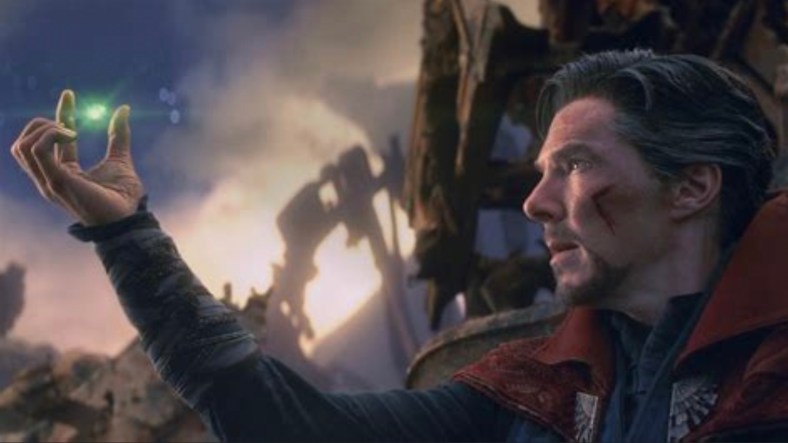
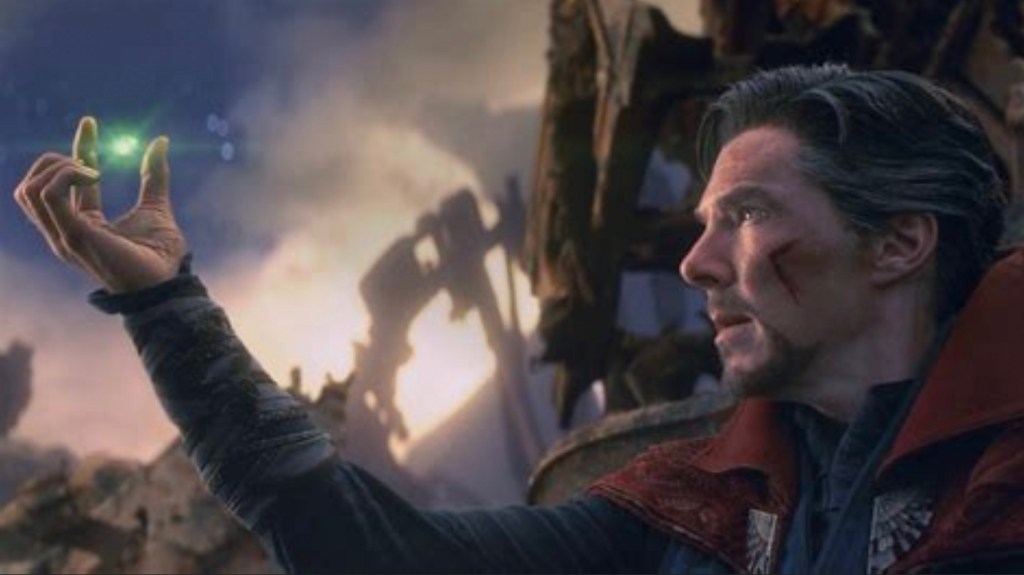
Doctor Strange with the Time Stone

In the Marvel movie Avengers: Infinity War, Doctor Strange uses a powerful Time Stone to watch millions of possible future outcomes and find one where the Avengers win.  The solution involves huge, almost unconscionable losses, including giving the villain, Thanos, exactly what he needs to commit genocide.  The movie was part one of two, and the second wasn’t released until a full year later.  Infinity War ends with Thanos victorious, and audiences had to wait to see if Strange’s decisions and sacrifices would work.  Would the trust the Avengers put in him be rewarded and lead to their deliverance?  It didn’t look good at the time, and it was actually a pretty grim movie.

Marvel’s story had cast Strange in the role of a prophet, except that Strange himself saw the future, and decided himself what to report back to the others, who had to trust what he said he saw, his judgement in what to share, and be willing to stick with it no matter what.  In the Old Testament, Jeremiah’s call from God to be a prophet in Jeremiah 1:8-10 has some interesting comparisons with Marvel’s story line.  The verses are:

“Do not be afraid of them,
            for I am with you to deliver you, declares the LORD.
Then the LORD put out his hand and touched my mouth. And the LORD said to me,
            “Behold, I have put my words in your mouth.
See, I have set you this day over nations and over kingdoms,
            to pluck up and to break down,
            to destroy and to overthrow,
            to build and to plant.”

Unlike Doctor Strange, Jeremiah did not have the big picture; he could not pick and choose what to say.  God would “put…words in your mouth,” words specifically chosen from perfect and infinite knowledge to be exactly what was needed.  Strange was able to act on his plan, although the others didn’t understand and resisted.  In Jeremiah’s case, Israel did not listen to him, and God actually told Jeremiah they wouldn’t, but he prophesied anyway.  He was created for that purpose, and in the verses above he was assured to “not be afraid of them.”

While Strange promised that his plan would work, we had to wait for the sequel to see it.  God promised Jeremiah, who also told the people, that his plan would work, and that the words God gave Jeremiah would determine the fates of “nations” and “kingdoms”, who God would “pluck up” and “break down.”  But Jeremiah died waiting for the sequel.  During his lifetime, Israel was plucked up by the Babylonians and sent into exile as punishment for their rejection of God, which was also a rejection of Jeremiah.  His life was like a pretty grim movie, but his story was not finished, as we now know.

In his lifetime Jeremiah may have looked like a failure, but in the years after and in eternity, his work as a prophet and also his personal experience of God has provided invaluable lessons for millions.  God knew this from the beginning because He didn’t have to wait a year to see the sequel.  He has already seen them all.  Therefore, we can trust what He sees, His judgement in what to share, and be willing to stick with it no matter what, because His story and ours does not end in this lifetime.

“It is not your business to succeed, but to do right. When you have done so the rest lies with God.” – C. S. Lewis

(Prior posts on Jeremiah’s call are here and here)

10 Movies I Like a Lot

Daily writing prompt
What are your top ten favorite movies?

As a change of pace today, I’ve decided to answer my first writing prompt: “What are your top ten favorite movies?” I don’t really have a top ten list, but I’ll share ten that I could probably watch over and over and not get tired of. So, here we go…

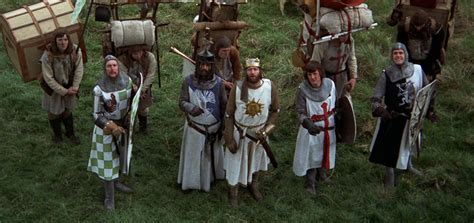
Monty Python visit the French.

Monty Python and the Holy Grail
Most of these won’t be ranked but this one is definitely #1. There’s no other movie where I’m laughing constantly before things even happen because I know what’s coming. People probably don’t like watching it with me. Sure, the ending is terrible, but it’s so much fun along the way!

Braveheart
This one is the clear #2, but the other 8 are in no particular order. Not many movies are 3 hours long, and you don’t mind it or feel it at all. There’s no wasted time in this one, and it’s a great story.
The Lord of the Rings: The Fellowship of the Ring
This is my favorite of the books, and my favorite of the movies. The scenes from Weathertop on through the Mines of Moria are probably my favorite sequence within any book or movie. None other shall pass!
The Matrix
This was so stunning when it came out in terms of special effects and also the big ideas in it. Philosophically, it’s still an ugly mess but it remains interesting long after you see it. It may seem like you’ve been living two lives.
Spider Man: No Way Home
The Marvel Cinematic Universe movies are a mixed bag, but this one was definitely made for the true Spider Man fanboys. He was my favorite for the short time I collected comics, and this movie was chock full of references without seeming contrived. I left the theater saying I wanted to walk right back in and watch it again.
Tenet
This one makes the list ahead of Inception partly because of when I saw it, in November 2020 in the theater. Times were tough during the Covid-19 pandemic and I needed to get out and escape. The complicated and bizarre premise and plot of this movie got my mind off of everything else for a while. It also made me want to borrow a fire truck.
Harry Potter and the Prisoner of Azkaban
This one is in the same camp as Fellowship above, my favorite book and movie in a series. The scenes in and around the shrieking shack part are so well-paced and move the story forward so much in a short time.
Star Wars: The Empire Strikes Back

Many other people are much bigger Star Wars fans than I am. I like only a few of the movies, but this was the first one I saw when it was new in the theater! Full of iconic moments and lines, I think this is where Star Wars peaked those many years ago.
Shawshank Redemption
A true classic and one of the best movies ever made. The sequence of revelations at the climax of the movie, while seeing how diligently Andy overcome the injustice of his situation, is fiendishly clever. Also, Red is one of Morgan Freeman’s best roles.
Singin’ in the Rain

Last but definitely not least, another true all-time classic. This movie just makes you laugh and smile all the way through it, and Make ‘Em Laugh does exactly what it says. I love that they gave Donald O’Connor a moment to shine, because Gene Kelly tends to steal every scene he’s in.

And there they are, 10 movies I really like a lot. Which of these are your favorites too?