Wisdom, “in Quotes”

Corporate training booklets are great sources of interesting quotes.  I came upon this one from Greek philosopher Socrates (470 to 399 B.C.) in a training session on presentations: “The beginning of wisdom is the definition of terms.”  This makes a lot of intuitive sense because if people can’t agree on something as basic as definitions, it’s difficult to move forward.

However, I think there’s something even more fundamental – closer to the real beginning of wisdom -than the “definition of terms,” and that is: who gets to define the terms?  Doing that requires wisdom, so we can’t really be wise until we find someone worthy to define the terms.  Socrates probably considered himself a good candidate to provide it!  For most of us, in moments of honesty, we might admit that most of the time we are either trusting our own judgment, or maybe just improvising.

There’s another necessary factor.  If we find someone we can trust to define wisdom for us, but when it comes time to act we go against their advice, their definitions do us no good.  Therefore, we don’t begin to be wise without having the will to choose rightly.  Although we say we trust someone’s wisdom, by not acting on it we disrespect them, and perhaps Wisdom itself, by not following through.  We might have more knowledge, but not more wisdom.

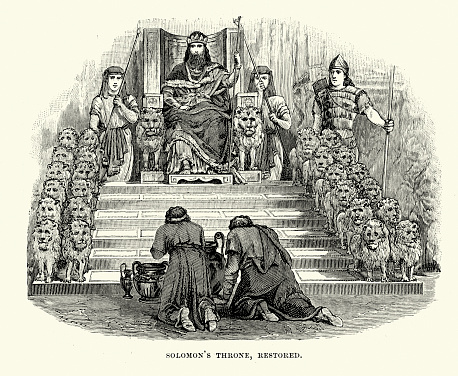
So, I’ll suggest a better quote (there were no Bible verses in my training booklet).  In the Old Testament book of Proverbs, Solomon – another historical figure (like Socrates) famous for wisdom – wrote that:

The fear of the LORD is the beginning of wisdom,
         and the knowledge of the Holy One is insight.” – Proverbs 9:10

Solomon neatly fills in what the earlier quote is missing, because:

  • There is a Holy One, whose very character of holiness is the definition of terms we need.  His decision making has no flaw and is trustworthy.
  • He is the LORD, who has authority, and uses it to lovingly advise His people on how to live wisely.
  • Fear of the LORD means that respect for Him is required for us to not just go off on our own, but to follow His perfect advice.  This fear turns the abstract knowledge into useful wisdom.

Wisdom ignored isn’t wisdom.  As I’ve written earlier, “Wisdom is about taking the right action, not about accumulating facts.”  The verses leading up to Solomon’s above saying are Proverbs 9:7-9, which say:

Whoever corrects a scoffer gets himself abuse,
         and he who reproves a wicked man incurs injury.
Do not reprove a scoffer, or he will hate you;
         reprove a wise man, and he will love you.
Give instruction to a wise man, and he will be still wiser;
         teach a righteous man, and he will increase in learning.”

We cultivate wisdom by considering God’s works and His will for our lives (through the law and the Holy Spirit).  We cultivate wisdom by allowing Him to define our terms as only He can.  It is the presence of the fear of God – respect for His wisdom – that determines whether we scoff at correction (verses 7-8 above) or increase in learning (last verse).

The fear of the LORD is the beginning of wisdom;
         all those who practice it have a good understanding.
         His praise endures forever!” – Psalm 111:10

Redeeming the Time

Photo by Jon Tyson on Unsplash

Roman Stoic philosopher Seneca said that “People are frugal in guarding their personal property; but as soon as it comes to squandering time they are most wasteful of the one thing in which it is right to be stingy.”  Unlike other resources, time cannot be replaced.  If I waste a dollar of my income, another dollar can be earned to replace it.  If I waste a minute, it’s gone forever.

Psalm 101, penned by David, contemplates what is worthy of our time.  Verses 1-4 say:

I will sing of steadfast love and justice;
            to you, O LORD, I will make music.
I will ponder the way that is blameless.
            Oh when will you come to me?
I will walk with integrity of heart
            within my house;
I will not set before my eyes
            anything that is worthless.
I hate the work of those who fall away;
            it shall not cling to me.
A perverse heart shall be far from me;
            I will know nothing of evil.

In our modern, media- and current event-focused culture, the statement “I will not set before my eyes anything that is worthless” may be the most challenging.  Reading this verse recently, I had to ask myself whether the reason I look at worthless things is that I don’t think they are worthless?  If to “confess” means to say the same thing about something that God does, I have a lot to learn about what is valuable and worthy of attention.

Today, let us learn to love what God loves and hate what He hates.  Let us confess what really matters, and “sing of steadfast love and justice.”  Let us also “ponder the way that is blameless” that we may “know nothing of evil.

There’s no time to waste.

The Work of Our Hands

Psalm 90 is the only one out of 150 that was written by Moses.  Psalm 90 is also the first in book 4 of the Psalms, which some say carries many of the themes and ideas from the 4th book of the Pentateuch, the book of Numbers.  That book tells of the consequences of Israel’s disobedience and grumbling on their journey to the Promised Land.  The nation of Israel spent 40 years wandering, seemingly aimlessly, in the wilderness and only Joshua and Caleb from the prior generation actually entered the Promised Land.

As noted in a recent post, the Psalm begins by saying we are only home when we are with God, but the Psalm ends with this petition to God for us:

Let your work be shown to your servants,
            and your glorious power to their children.
Let the favor of the Lord our God be upon us,
            and establish the work of our hands upon us;
            yes, establish the work of our hands!

Photo by Jamie Street on Unsplash

It may seem easy, or even natural, to just go with the flow of our surrounding cultures while in this world, but that would really be like wandering in the wilderness instead of getting God’s promised blessing.  Instead, do we seek that God’s “work be shown to your servants,” and that He “establish the work of our hands upon us”?  Do we seek “the favor of the Lord,” and experience His “glorious power”?  This is what Moses asks for in this prayer, that we find our purpose in Him by doing His work.  We all have “worldly” responsibilities we need to take care of in this world, but none of them are the ultimate goal.

In other words, the best way to spend our short lives here is to do work that matters in eternity, which God has laid out for us to do:

For we are his workmanship, created in Christ Jesus for good works, which God prepared beforehand, that we should walk in them.” – Ephesians 2:10
So teach us to number our days
            that we may get a heart of wisdom.” – Moses, in Psalm 90:12

The God of Intended Consequences

Case studies, detailed write ups of real-life business situations, are a common teaching tool for business students.  From these examples, students are supposed to draw lessons for their own job and for management.  One case study I read covered Nordstrom; a large retailer famous for their strong customer service[1].  At the time studied in the case, Nordstrom had recently hired an up-and-coming manager with a strong track record and trusted him with a lot of power to run the business.  Since the purpose of a retailer is to sell things, management decided to pay every employee in every store more if they sell things.  Seemed to make sense.

However, there’s a thing called the “Law of Unintended Consequences,” or more simply, a lack of foresight.  In the Nordstrom case study, this Law led to disaster.  Employees stopped cleaning the store.  They stopped stocking shelves and organizing displays.  Customers couldn’t find what they wanted, but they were hounded by enthusiastic employees who were eager to sell them something (and get credit for it).  Instead of each employee doing what they specifically needed to do, they all swarmed around annoyed customers.

Photo by Viktor Bystrov on Unsplash

Not only did sales go down as a result, but Nordstrom damaged what had been its key strength of customer service.  This happened decades ago, and Nordstrom has recovered, but what an interesting story.  More recently, JC Penney had a similar disaster when they decided to back off their aggressive discounting strategy – the entire reason many people shopped there.  A lack of foresight can lead to disastrous unintended consequences.

Nordstrom’s problem was what economists call a “coordination problem,” where a group of people aren’t properly organized to achieve a goal.  Even if you have a theory that sales are the sole objective, making everyone focus on sales might not be the right way to coordinate.  As Yogi Berra apparently said: “In theory there’s no difference between theory and practice. But in practice, there is.”  Humans don’t usually behave the way theory says they will.

Ecclesiastes 3:9-11, titled “The God-Given Task” in my study Bible, says this:

“What gain has the worker from his toil?  I have seen the business that God has given to the children of man to be busy with.  He has made everything beautiful in its time. Also, he has put eternity into man’s heart, yet so that he cannot find out what God has done from the beginning to the end.”

The point is the scope of man’s awareness, in his business, or economically.  Man works, and sometimes it looks like pointless toil, and sometimes it is beautiful.  But, as an image-bearer of God, man knows there is more to it – eternity in his heart.  Therefore, we have some sense of a bigger picture, but the whole picture can’t be seen, only bits of it.

God on the other hand sees all, and nothing appears as unpredictable chaos to Him.  His foresight includes all future circumstances, and everything is predictable.  In the movie Jurassic Park, Jeff Goldblum’s character explains chaos by putting drops of water on the back of someone’s hand and saying there’s no way of knowing which direction the water will flow.  But, when God watches Jurassic Park, he knows exactly which way the water would go.  Every.  Single.  Time.  And not because He’s seen the movie before.  We look at water and see chaos, but God looks at it and says “Peace!  Be still!”

Proverbs 3:19 tells us:

“The LORD by wisdom founded the earth;
            by understanding He established the heavens;
 by His knowledge the deeps broke open,
            and the clouds drop down the dew.”

Because the world was created with wisdom (and not by accident), gravity does what it’s supposed to do, photosynthesis does what it’s supposed to do, and likewise with many “laws” of science.  God as omnipotent creator orchestrates all those laws of science how He wants, but in terms of people He has the same raw material as the managers of Nordstrom.

However, God doesn’t get blindsided by anything, including but not limited to:
People not doing what they’re told – He can, and does, include this in His plan.
Second- and third-order effects of rules, such as employees not stocking shelves.
Theory that might not apply in practice.

Managers of your company or organization don’t have perfect foresight.  They can’t be certain that their strategy is correct, and they probably don’t know what every employee does on a daily basis, but God as CEO of the entire universe knows all and has a personal relationship with every member of the “company” – and all its competitors.

He has a plan, and while He doesn’t tell us the entire plan, He “has put eternity into man’s heart” that we may learn to trust Him and know that everything will be fixed in the end.  Therefore, dedicate more of your time, treasure, and talent to God and see what happens.  He intends that there will eternally be good consequences, and when He intends something, it happens.  Guaranteed.

Our God is the God of Intended Consequences.


[1] I can’t find the case online or in my files so I’m going from memory here.  Forgive me if I go astray, or if you work at Nordstrom.

The Lord is Not Looking For “The Good Face”

One of my favorite books is Moneyball, which is about Billy Beane’s career as General Manager of the Oakland Athletics baseball team in the late 1990s and early 2000s.  Beane ran a winning team on a shoestring budget by pioneering the use of precise measurement, data, and analytics, in contrast to sometimes-arbitrary eyewitness reports from talent scouts.  Author Michael Lewis notes that in the late 1990s, “Some of the scouts still believed they could tell by the structure of a young man’s face not only his character but his future in pro ball. They had a phrase they used: ‘the Good Face.’”[1]  Billy Beane himself had “the Good Face” when he was a prospect and yet had a mediocre career as a player; therefore, his own career arc suggested that there might be a better way to find good players.

Photo by Mick Haupt on Unsplash

Reliance on “The Good Face” isn’t just a baseball phenomenon.  Many politicians, celebrities, businesspeople, news personalities, and others succeed by having “The Good Face,” but the Bible warns us not to rely on “The Good Face.”  One such warning is the story of King Saul, who was “a handsome young man. There was not a man among the people of Israel more handsome than he.  From his shoulders upward he was taller than any of the people.”[2]

Samuel, the LORD’s prophet, was impressed by Saul and was led to anoint him Israel’s king.  However, when Samuel called the people together to announce Saul’s rule, something strange happened: “So they inquired again of the LORD, ‘Is there a man still to come?’ and the LORD said, ‘Behold, he has hidden himself among the baggage.’”[3]  Saul should have responded “Here am I”, but instead shamefully hid.  Being so large, it must have taken some effort to find a place to hide, but he managed it in an attempt to avoid God’s call.  This became a pattern with Saul, because when Israel’s army was challenged by the giant Goliath, “Saul and all Israel heard these words of the Philistine, they were dismayed and greatly afraid.”[4]  Saul, while having “The Good Face,” was unwilling to trust God when He called.  He was faithless and a coward.  Perhaps “tall, dark, and handsome” but not useful to God, and not a good leader for God’s people.

When looking for Saul’s successor, Samuel, as God’s talent scout, almost repeated the mistake of picking “The Good Face.”  Samuel was to pick as king one of the sons of Jesse, and he wanted to pick Eliab after he “looked on” him.  “But the LORD said to Samuel, “Do not look on his appearance or on the height of his stature, because I have rejected him. For the LORD sees not as man sees: man looks on the outward appearance, but the LORD looks on the heart.[5]  After this warning, David, the youngest son of Jesse, is chosen as the next king.  David also had many admirable qualities, being not only handsome, but also “skillful in playing [the lyre], a man of valor, a man of war, prudent in speech, and a man of good presence,” but most importantly, others reported that “the LORD is with him[6] and it was true.  David knew that everything that really mattered about him came from God (see Psalm 139:13-16 for example) and he could only succeed by relying on Him.  If God called, he would come, and if the world challenged God, David would defend Him.  David slew Goliath without hesitation.

Today, the power of Christ living through us is what matters, not having “The Good Face.”  Therefore, be concerned about having “The Good Heart.”  Be not concerned about whether you are photogenic, or handsome, or tall, or well-dressed, or anything else the world may value.  According to the prophet Isaiah, even Jesus didn’t have “The Good Face”: “He had no form or majesty that we should look at Him, and no beauty that we should desire Him.” – Isaiah 53:2b

When God calls, come, and you will have “The Good Heart.”  When you fail, God, whose heart is perfect, will create in you a new clean heart[7], as David learned time and time again.

Therefore do not be anxious, saying, ‘What shall we eat?’ or ‘What shall we drink?’ or ‘What shall we wear?’  For the Gentiles seek after all these things, and your heavenly Father knows that you need them all.  But seek first the kingdom of God and his righteousness, and all these things will be added to you.” – Matthew 6:31-33


[1] Lewis, Michael.  Moneyball (2003).  P. 7.
[2] 1 Samuel 9:2
[3] 1 Samuel 10:22
[4] 1 Samuel 17:11
[5] 1 Samuel 16:7
[6] 1 Samuel 16:18
[7] Psalm 51:10