In the United States, today is “Super Tuesday,” when citizens in 15 of the 50 states vote in their state primaries, which decide who will be the nominee for President from each political party. 15 states in one day are far more than on any other day, and why the day gets a special name. In observance of this day, here is another “Quint of Quotes” from my collection, on the theme of democracy:
“Democracy is the recurrent suspicion that more than half of the people are right more than half of the time.” – E.B. White
“Democracy is the theory that the common people know what they want, and deserve to get it good and hard.” – H.L. Mencken
“Mankind will in time discover that unbridled majorities are as tyrannical and cruel as unlimited despots.” – John Adams
“Your representative owes you, not his industry only, but his judgment; and he betrays instead of serving you if he sacrifices it to your opinion.” – Edmund Burke
“No one pretends that democracy is perfect or all-wise. Indeed it has been said that democracy is the worst form of Government except for all those other forms that have been tried from time to time.…” – Winston S. Churchill
Do you ever just feel like complaining about the bad things and people in this world? While we might hold back complaining to God, thinking He prefers ACTS prayers – focused on Adoration, Confession, Thanksgiving, and Supplication – He is infinitely and steadfastly loving and patient, and will listen to whatever we have to say. David shared Psalm 64 with us as an example.
Read how David begins the Psalm:
“Hear my voice, O God, in my complaint; preserve my life from dread of the enemy.”
Basically, David begins this Psalm by letting God know what’s coming: a series of complaints. In the next verses, David complains about evil plots against him happening in secret, and those who can’t wait to ambush him. David complains about how good evildoers are at what they do. He writes:
“Hide me from the secret plots of the wicked, from the throng of evildoers, who whet their tongues like swords, who aim bitter words like arrows, shooting from ambush at the blameless, shooting at him suddenly and without fear. They hold fast to their evil purpose; they talk of laying snares secretly, thinking, ‘Who can see them?’ They search out injustice, saying, ‘We have accomplished a diligent search.’ For the inward mind and heart of a man are deep.”
By “diligent search” they have found every method available and used every skill they have to attack David, and the evildoers are impressed with their ability to be unjust and to attack “the blameless”, “shooting at him suddenly and without fear.” A lot of time and effort has been put into these secret plots.
The blog’s mascot: Ebenezer, the “But God” squirrel.
How will David stand against such attacks? He won’t, but God[1] will, as David continues in verses 7 through 9:
“But God shoots his arrow at them; they are wounded suddenly. They are brought to ruin, with their own tongues turned against them; all who see them will wag their heads. Then all mankind fears; they tell what God has brought about and ponder what he has done.”
The wicked, after much “diligent search,” gathered their “swords” and “arrows,” the words they would use to attack David and God’s people. But because we have God, when we complain in prayer we don’t stop once our complaints have been aired – we continue with the “but God” part of the prayer, which comes with these three main implications:
First, that we need not respond in kind, because God needs only one arrow to bring them “suddenly” to ruin. We are saved by His strength.
Second, we need not respond in degree – If our enemies are extraordinarily diligent or skilled in their plots, we do not need to match their effort, because it is God who takes care of us. All the time and effort put in by the wicked in brought to nothing in a moment, and in that moment, “all mankind fears.” We need not be intimidated.
And finally, any success of God’s enemies is temporary. Someday He will resolve every complaint of injustice and silence every accusation against His people.
Therefore, as the Psalm ends:
“Let the righteous one rejoice in the LORD and take refuge in him! Let all the upright in heart exult!”
Below are the chapters to read this week if you’re following along in my Bible in a year schedule, divided into morning and evening readings. Follow along any way you want: just do the evening reading, flip the morning and evening, read it all. Whatever works for you and your schedule!
Not everyone has a good friend they can talk to anything about at any time. But we always have God. As David tells us in Psalm 62:8 –
“Trust in him at all times, O people; pour out your heart before him; God is a refuge for us. Selah”
When do we need a refuge? When we have troubles. He wants to hear from us at all times and strengthen and guide us. Martin Luther, commenting on the verse, wrote:
“Strength fades, courage fails; God remains firm. If you are lacking something, well, here is good advice: ‘Pour out your heart before him’ Voice your complaint freely, and do not conceal anything from him. Regardless of what it is, just throw it in a pile before him, as you open your heart completely to a good friend. He wants to hear it, and he wants to give you his aid and counsel. Do not be bashful before him. Out with everything.”[1]
The word Selah at the end of the verse is mysterious, but many believe it is a signal to pause and reflect. What do you want to “throw in a pile before him” now?
[1] Quoted in McKim, Donald K. Everyday Prayer with the Reformers (2020). P. 37.
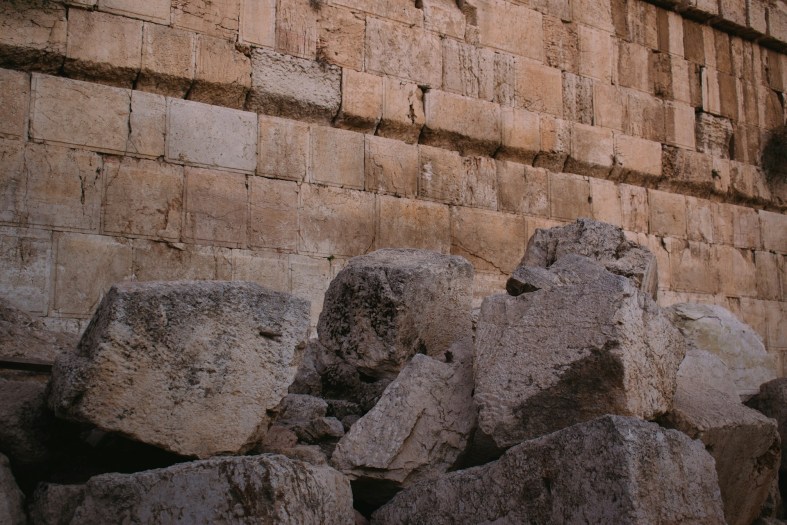
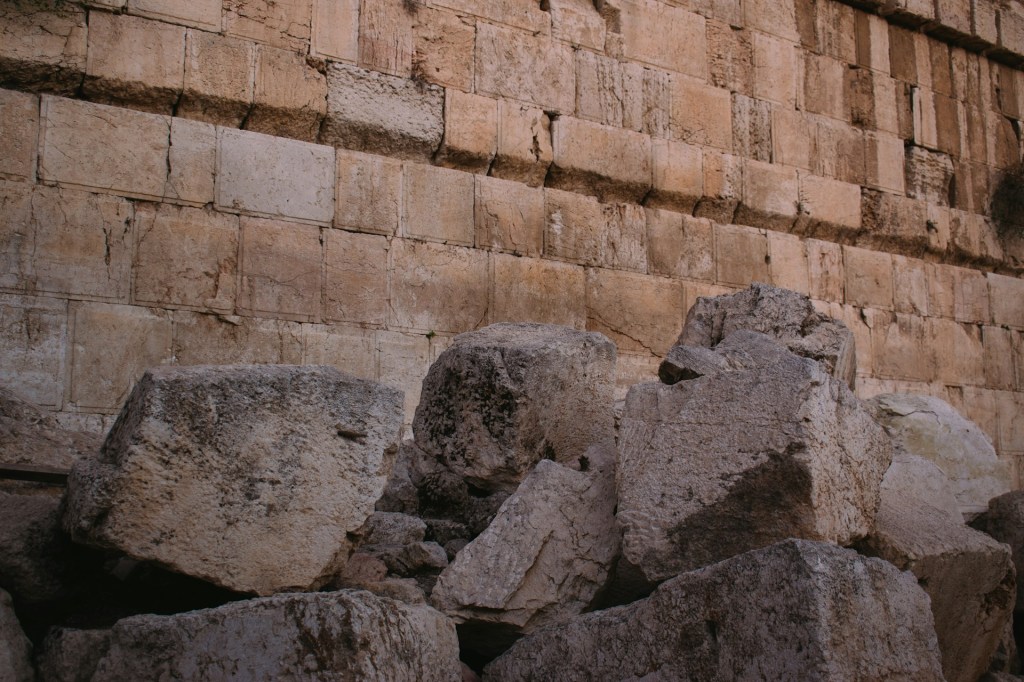
Haggai was a prophet during the time shortly after the end of the Babylonian exile. His main focus was encouraging the people to complete the rebuilding of the Temple, which had been destroyed at the beginning of the exile, in 586 B.C. After returning to Israel, the people had become lazy and complacent about God’s house, the Temple, saying “the time has not yet come to rebuild the house of the LORD,”[1] and made excuses not to rebuild it. But Haggai challenged them, in true prophetic fashion, asking “Is it a time for you yourselves to dwell in your paneled houses, while this house lies in ruins?”[2] The problem was that the people took great care of their own houses with fancy paneling, yet weren’t concerned that the Temple was still a ruin. “The time has not yet come,” they said.
Haggai told the people: “Go up to the hills and bring wood and build the house, that I may take pleasure in it and that I may be glorified, says the LORD.”[3] This would involve a lot of hard work, God knows what it takes to build His Temple, and He also knows that it needs to be done and should be a priority.
Today, the equivalent of the Temple is the body of believers known as the church. 1 Peter 2:5 says, “you yourselves like living stones are being built up as a spiritual house, to be a holy priesthood, to offer spiritual sacrifices acceptable to God through Jesus Christ.” God’s goal for the church is to perfect it in Jesus’ likeness, therefore no matter what condition the church is in here, it always needs to be built up. We may be tempted to say “the time has not yet come” because we won’t be perfected until eternity, but He says ““Go up to the hills and bring wood and build the house, that I may take pleasure in it and that I may be glorified, says the LORD.”
Building the church (God’s house) may feel as difficult as climbing hills, gathering and transporting wood from forests to build a literal, physical Temple. It’s not easy and we shouldn’t expect it to be. But God will build His church and He wants our help.
When writing of our diverse spiritual gifts, Paul wrote in 1 Corinthians 14:12 – “So with yourselves, since you are eager for manifestations of the Spirit, strive to excel in building up the church.” Has the time come to build His church? Yes, it has.



 Driving Toward the Morning Sun