Dear fellow travelers,
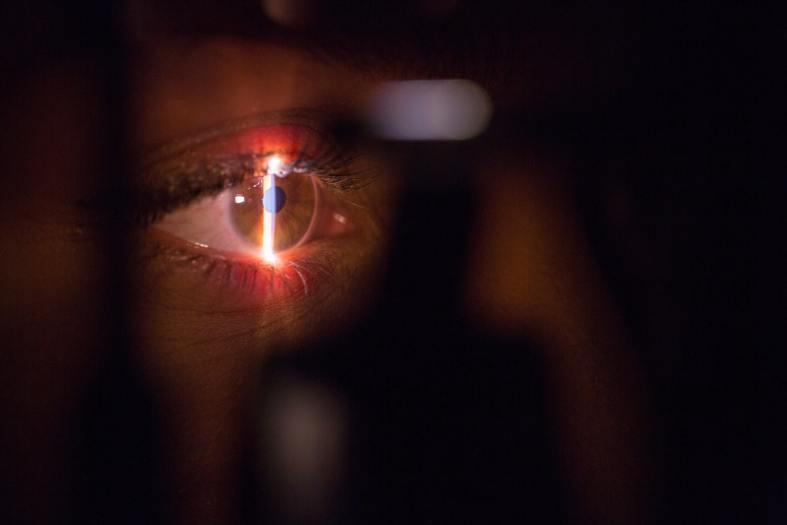
Yesterday’s post started to discuss Jesus’ words in Matthew 7:3-5 – “Why do you see the speck that is in your brother’s eye, but do not notice the log that is in your own eye? Or how can you say to your brother, ‘Let me take the speck out of your eye,’ when there is the log in your own eye? You hypocrite, first take the log out of your own eye, and then you will see clearly to take the speck out of your brother’s eye.”
Jesus was telling His followers that they should help each other move closer to God, but only to remove specks from others’ eyes after dealing with their own logs. The first lesson, covered yesterday, was to make sure our motive is right. The second (today’s topic) is to learn from our own experience fighting the logs in our own eyes. When I think about these logs, and really try to remove them, I realize it’s a lot harder than I might assume about specks in other people’s eyes.
First, being told I have a log in my eye might be counterproductive. The hardest logs to get rid of are the ones we already know are wrong, and possibly because we know they are wrong. Paul gives an example in Romans 7:7b-8a, saying “For I would not have known what it is to covet if the law had not said, ‘You shall not covet.’ But sin, seizing an opportunity through the commandment, produced in me all kinds of covetousness.” Being told my log is a sin isn’t necessarily going to get it out of my eye. It might make things worse.
Second, the most stubborn logs might be there because I’ve decided, at least subconsciously, that I am better off with the log than I am without it. Until we are perfected in heaven, part of us wants to listen to “the woman Folly,” who cries out that “Stolen water is sweet, and bread eaten in secret is pleasant” in Proverbs 9:17. Even though Wisdom offered a feast of meat and wine in Proverbs 9:2, our flesh is drawn to the bread and water because they are “stolen” in “secret.” Whatever “bad” the log does to me, I sometimes prefer it to the “good” represented by the alternative. Being told my log is bad for me might not overcome that.
Third, I know that Jesus said, “You hypocrite, first take the log out of your own eye, and then you will see clearly to take the speck out of your brother’s eye,” and I’m tempted to think the log in other people’s eyes give them no right to be judgmental. As noted yesterday, for some, the lesson of Jesus’ words is about how to identify a hypocrite. For others, the lesson may be that people should mind their own business. Of course, once I think that, I’m trying to remove a speck from their eye, judging them and saying their behavior should be changed. Maybe in writing this, I’m being judgmental myself. Avoiding being judgmental is perhaps the hardest thing for a person to do, while graciously accepting the imperfect love of a brother can sometimes be harder.
So, what’s the solution? There may not be a magic formula, but in examining our own logs, we learn to approach others in loving service, not judgment, understanding what Paul said at the beginning of 1 Corinthians 10:13, that “No temptation has overtaken you that is not common to man.” Fighting sin is hard. For all of us. It requires overcoming our natural response to rules, requires trust that His way is better than ours (proof isn’t always possible), and requires relationships that nurture meaningful involvement – even around the parts of our lives that, like our eyes, we fiercely protect. We won’t often let anyone near the speck in our eye who hasn’t proven their love by tangible acts. People can tell when (or imagine that) our motivation is our own anxiety, envy, or anger.
Me First (Redux)
Immediately after the version of the speck and log story in Luke’s gospel, Luke records Jesus saying: “For no good tree bears bad fruit, nor again does a bad tree bear good fruit, for each tree is known by its own fruit. For figs are not gathered from thornbushes, nor are grapes picked from a bramble bush. The good person out of the good treasure of his heart produces good, and the evil person out of his evil treasure produces evil, for out of the abundance of the heart his mouth speaks.”[1]
I believe Luke puts this here because removing our own logs makes us more like a good tree that can produce good fruit. Only by knowing and relying on God can we approach the specks in our brother’s eyes inspired by grace not legalism, concern not unwelcome intrusiveness, and love not judgment.
God, the only righteous judge, forgave us our sins by taking the judgment we deserved upon Himself on the cross. Instead of fretting over evildoers, He sought to save them. Knowing our Lord and how He approaches us in our sin as our Savior helps us see more clearly to help our brothers remove the specks from their eyes. Only He can heal us, but sometimes He wants us to participate in His work.
“…first take the log out of your own eye, and then you will see clearly to take the speck out of your brother’s eye.”
[1] Luke 6:43-45