God, Our Eternal River

When comparing Genesis and Revelation, we find similarities between the Paradise man lost and the Paradise to come.  Consider these verses about each:

Genesis 2:8-9: “And the LORD God planted a garden in Eden, in the east, and there he put the man whom he had formed.  And out of the ground the LORD God made to spring up every tree that is pleasant to the sight and good for food. The tree of life was in the midst of the garden, and the tree of the knowledge of good and evil.  A river flowed out of Eden to water the garden, and there it divided and became four rivers.
Revelation 22:1-2: “Then the angel showed me the river of the water of life, bright as crystal, flowing from the throne of God and of the Lamb through the middle of the street of the city; also, on either side of the river, the tree of life with its twelve kinds of fruit, yielding its fruit each month. The leaves of the tree were for the healing of the nations.

A stream in Llanberis, Wales.

In each description is the tree of life, and also a river. Rivers are greatly beneficial to the growth of cities and civilizations, providing benefits for agriculture, trade, travel, etc.  Even today, most large cities that don’t border a large body of water have a navigable river nearby or flowing through it.  A big city without one is rare: in the United States, Dallas, Texas, and Charlotte, North Carolina, may be the only major cities not located near a significant river.

Rivers are mentioned a lot in the Bible, including in this Psalm about God being our refuge and fortress.  An unnamed river in the “city of God” is mentioned:

There is a river whose streams make glad the city of God,
            the holy habitation of the Most High.” (Psalm 46:4)

However, Jerusalem, the place Jews in the Old Testament period would have considered the “city of God” does not have a river.  The Psalmist certainly knew this, so their point is about something else, that the “city of God” has, well, it has God, as described in the next verses:

“God is in the midst of her; she shall not be moved;
            God will help her when morning dawns.
The nations rage, the kingdoms totter;
            he utters his voice, the earth melts.
The LORD of hosts is with us;
            the God of Jacob is our fortress.  Selah” (Psalm 46:5-7)

Jerusalem may not have a river, but it has God who provides all it needs and more.  No river required.  Even though the literal, ancient Jerusalem was eventually destroyed by the Babylonians, and later by the Romans, the eternal City of God will never be moved.  All other nations “rage” and “totter,” but God’s kingdom is forever secured by the One whose voice melts the earth.  Hebrews 1:10-12 (quoting from Psalm 102:25-27):

You, Lord, laid the foundation of the earth in the beginning,
            and the heavens are the work of your hands;
they will perish, but you remain;
            they will all wear out like a garment,
like a robe you will roll them up,
            like a garment they will be changed.
But you are the same,
            and your years will have no end.”

Do you worry that you lack things others have?  Things that would provide benefits for your business, spare time, or other pursuits?  With God as our fortress and refuge, we don’t need a river, but in Paradise He will provide one anyway.

Fret not, for you have God, our eternal river.
A Mystery in the Good Samaritan Parable

The parable of the Good Samaritan is well-known, even by those who aren’t Christian.  Briefly, it goes like this: a man is robbed, beaten, and left for dead on the side of a road.  First a priest, and then a Levite, passed him by.  But a Samaritan, a member of a group despised by many Jews, stopped and helped the man, even bringing him to help and paying the necessary expenses.

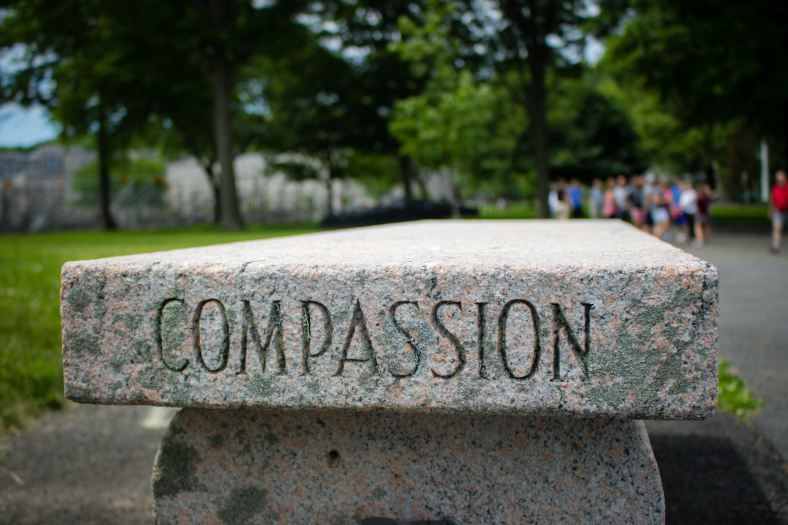
There’s a great contrast made between these people, but another interesting question is what they have in common in the story: they are all identified by their cultural “tribe.”  This brings up another interesting contrast: the man, left bloodied on the side of the road, was not identified as anything other than a “man,” or broadly, a human being.  The only thing we know about this person is that “he fell among robbers, who stripped him and beat him and departed, leaving him half dead.[1]  What else was there to know?

By not defining this person, Jesus was not letting His audience limit their responsibility.  According to the Reformation Study Bible: “First-century Jews had various ideas about who was included in the category of ‘neighbor,’ whether marking its boundaries by community or clan affinities or by religious party affiliation (a Pharisee’s neighbors would be other Pharisees). Yet at its widest extent, the circle of ‘neighbors’ was confined to Israel.”  In short, the Jews were using tribalism to exclude people from the definition of neighbor, in a similar way people use concepts like intersectionality to include people over others today, but in the Good Samaritan parable, nobody is excluded.

To Jesus, the identity of the victim is not relevant – the neighborly thing to do isn’t to help because of who the person is (whether they belong to your own clan or tribe), but because they are a person – made in God’s image – who is hurt.  In other words, if there’s a bloody man on the road in front of you, don’t say God didn’t require you to deal with it because the man is not your neighbor, by some narrow definition.

Photo by Dave Lowe on Unsplash

Jesus was making the broadest interpretation possible.  When we consider the situation of each person on Earth – damaged by sin, robbed of their dignity, and left for spiritual death – isn’t everyone like this man by the side of the road?

While we can’t expect to help every hurting person we see, the message Jesus wanted us to hear by not identifying this victim is that we shouldn’t have any pre-defined rules about who is our neighbor when obeying the command: “You shall love your neighbor as yourself.[2]  Too often we create moral shortcuts about who to care for or not to care for, based on whatever our culture or group of friends agree on, allowing us to ignore obvious problems right in front of us.

If you find someone beat up and bloody on the side of the road, literally or metaphorically, help them if you can.  No matter who they are.  No shortcuts or pre-defined rules are allowed.


[1] Luke 10:30b
[2] From Matthew 22:39

The God of Intended Consequences

Case studies, detailed write ups of real-life business situations, are a common teaching tool for business students.  From these examples, students are supposed to draw lessons for their own job and for management.  One case study I read covered Nordstrom; a large retailer famous for their strong customer service[1].  At the time studied in the case, Nordstrom had recently hired an up-and-coming manager with a strong track record and trusted him with a lot of power to run the business.  Since the purpose of a retailer is to sell things, management decided to pay every employee in every store more if they sell things.  Seemed to make sense.

However, there’s a thing called the “Law of Unintended Consequences,” or more simply, a lack of foresight.  In the Nordstrom case study, this Law led to disaster.  Employees stopped cleaning the store.  They stopped stocking shelves and organizing displays.  Customers couldn’t find what they wanted, but they were hounded by enthusiastic employees who were eager to sell them something (and get credit for it).  Instead of each employee doing what they specifically needed to do, they all swarmed around annoyed customers.

Photo by Viktor Bystrov on Unsplash

Not only did sales go down as a result, but Nordstrom damaged what had been its key strength of customer service.  This happened decades ago, and Nordstrom has recovered, but what an interesting story.  More recently, JC Penney had a similar disaster when they decided to back off their aggressive discounting strategy – the entire reason many people shopped there.  A lack of foresight can lead to disastrous unintended consequences.

Nordstrom’s problem was what economists call a “coordination problem,” where a group of people aren’t properly organized to achieve a goal.  Even if you have a theory that sales are the sole objective, making everyone focus on sales might not be the right way to coordinate.  As Yogi Berra apparently said: “In theory there’s no difference between theory and practice. But in practice, there is.”  Humans don’t usually behave the way theory says they will.

Ecclesiastes 3:9-11, titled “The God-Given Task” in my study Bible, says this:

“What gain has the worker from his toil?  I have seen the business that God has given to the children of man to be busy with.  He has made everything beautiful in its time. Also, he has put eternity into man’s heart, yet so that he cannot find out what God has done from the beginning to the end.”

The point is the scope of man’s awareness, in his business, or economically.  Man works, and sometimes it looks like pointless toil, and sometimes it is beautiful.  But, as an image-bearer of God, man knows there is more to it – eternity in his heart.  Therefore, we have some sense of a bigger picture, but the whole picture can’t be seen, only bits of it.

God on the other hand sees all, and nothing appears as unpredictable chaos to Him.  His foresight includes all future circumstances, and everything is predictable.  In the movie Jurassic Park, Jeff Goldblum’s character explains chaos by putting drops of water on the back of someone’s hand and saying there’s no way of knowing which direction the water will flow.  But, when God watches Jurassic Park, he knows exactly which way the water would go.  Every.  Single.  Time.  And not because He’s seen the movie before.  We look at water and see chaos, but God looks at it and says “Peace!  Be still!”

Proverbs 3:19 tells us:

“The LORD by wisdom founded the earth;
            by understanding He established the heavens;
 by His knowledge the deeps broke open,
            and the clouds drop down the dew.”

Because the world was created with wisdom (and not by accident), gravity does what it’s supposed to do, photosynthesis does what it’s supposed to do, and likewise with many “laws” of science.  God as omnipotent creator orchestrates all those laws of science how He wants, but in terms of people He has the same raw material as the managers of Nordstrom.

However, God doesn’t get blindsided by anything, including but not limited to:
People not doing what they’re told – He can, and does, include this in His plan.
Second- and third-order effects of rules, such as employees not stocking shelves.
Theory that might not apply in practice.

Managers of your company or organization don’t have perfect foresight.  They can’t be certain that their strategy is correct, and they probably don’t know what every employee does on a daily basis, but God is CEO of the entire universe knows all and has a personal relationship with every member of the “company” – and all its competitors.

He has a plan, and while He doesn’t tell us the entire plan, He “has put eternity into man’s heart” that we may learn to trust Him and know that everything will be fixed in the end.  Therefore, dedicate more of your time, treasure, and talent to God and see what happens.  He intends that there will eternally be good consequences, and when He intends something, it happens.  Guaranteed.

Our God is the God of Intended Consequences.


[1] I can’t find the case online or in my files so I’m going from memory here.  Forgive me if I go astray, or if you work at Nordstrom.

The Rebellion at Babel

The story of the Tower of Babel, recorded in just 9 verses in Genesis 11, has a lot more to say than its length might suggest.  It’s not just the story of a tower being built, or a story about the origin of different languages.  It is also a story of why the tower was built and what it meant about the builders’ relationship with God.

The Tower of Babel was mankind’s best effort at achieving salvation, a path to heaven, based on their own works.  In the tower we see man declaring his independence from God, his lack of need for the God, or any god.  This act of rebellion was similar to Adam and Eve’s sinful desire to know good and evil for themselves in the garden of Eden, because the builders of the tower were saying that they know better than God.  “We’ll get to perfection on our own,” they thought.  They were the progressives of their day, believing in the infinite potential of mankind.

Also, verse 4 tells us that part of the motivation for building the tower was to prevent man from being “dispersed over the face of the whole earth,” but God had told His people to “fill the earth,”[1] not to settle down in one spot.  In the next chapter God would tell Abraham that he would become a nation, and that through that nation, “all the families of the earth shall be blessed.[2]  God’s people are not meant to hide in their own dwellings, but to bless the world by telling it of God’s love and by living out that love to “all the families of the earth.”  Babel’s builders had the wrong priorities.

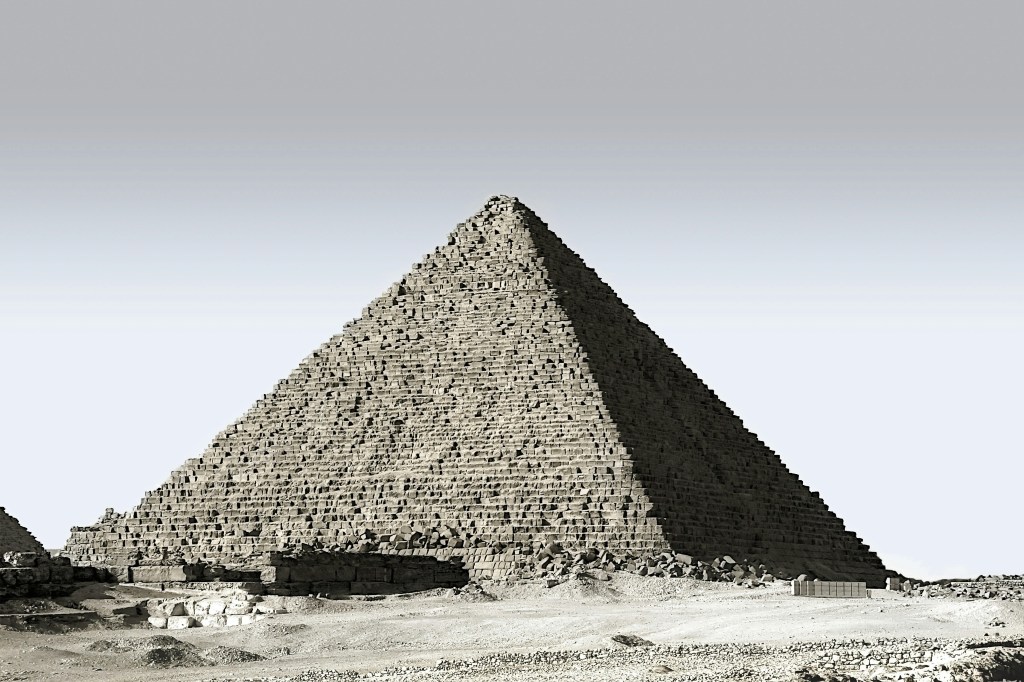
Photo by Simon Berger on Unsplash. The Tower of Babel may have been a ziggurat or a pyramid.

The story of the Tower also tells us that our best efforts will always fall short.  In the story, note that “the LORD came down to see the city and the tower.”  Mankind intended for this tower to reach heaven, but God had to “come down” to see it.  Our best efforts fall way below God’s standards and intention for us.  While we might achieve a lot and take pride in it, but it’s never as good as what God can do for us, and we know that “God opposes the proud but gives grace to the humble.”[3]  Later in history, He would show us that only He, in Christ Jesus, could be the path that gets us to heaven.  There is no other way no matter how hard we try.

Another subtle point from the story is that the materials we decide to work with are never better than what God has already given us.  Babel’s builders “had brick for stone,” meaning the tower was built with manmade bricks, not stones.  We might think of stones as “natural” but really, they’re what God created in the form He created it, and they’re much stronger than bricks.  In the same way, if we follow God’s intention for our lives rather than inventing our own ways, we will find that His ways are better and stronger than anything else available.

Lastly, the tower’s very name, Babel, is a form of “Babylon,” which is a literal city, but also in Revelation 17-18 Babylon represents any society where man attempts to live independently of God.  To seek perfection without Him and by His righteousness.  Revelation also tells us that Babylon will be destroyed, and everything that Babylon represents.

God has given us everything we need to live and to glorify Him today.  Will we use it, or try to go our own way?


[1] Genesis 1:28, Genesis 9:1
[2] Genesis 12:3
[3] James 4:6, 1 Peter 5:5

Letting God Set the Agenda

One of the most significant ways the media influence us is by what’s called “agenda setting,” which means is that they tell us what is important and what we should care about by choosing what issues or topics to cover most often and most prominently.  For example, if a topic appears regularly on the front pages of newspapers or the covers of magazines or in the “Breaking News” of a TV news program, those editors have decided those items are more important, and want us to feel the same.  Unfortunately, there’s also an old saying in journalism that “if it bleeds, it leads,” meaning that bad news should get more coverage because it’s good for the business of journalism.

Related, but not the same, is “framing” which means the way the media covers something (the words they use, the sources they cite, etc.) affects our attitudes about it.  When the media consistently use words like “radical” or “extreme” to represent only the other side, or if they lump all the news that bleeds to a specific group of people and not another, they’re employing framing.

The problem is that the same issues aren’t always as important to all people, and often the media’s agendas don’t align with what should be each person’s agenda.  It’s like news coverage is designed to make us think the world is so evil that we can’t do anything about it, but also that very little is our own responsibility (or fault).  As Corrie ten Boom wrote about her time in a Nazi concentration camp: “this was the great ploy of Satan in that kingdom of his: to display such blatant evil that one could almost believe one’s own secret sins didn’t matter.”

Is it really good or healthy to feel all the world’s problems are on our shoulders? However, all media have to make choices about what to cover and how to cover it, so there is no avoiding these problems…unless you have another source for your agenda and the framing of it.  That source is God, and here are some verses from His word that can guide us:

Cast Your Anxieties
Humble yourselves, therefore, under the mighty hand of God so that at the proper time he may exalt you, casting all your anxieties on him, because he cares for you.” – 1 Peter 5:6-7

We can recognize that there is a sovereign God, and ultimately His agenda is the only one that matters.  With that knowledge, we know that there are many times where all we can do is pray to the One who sees all the bad news we do, and much more.  He is in control.

If It’s Worthy, It Leads
Finally, brothers, whatever is true, whatever is honorable, whatever is just, whatever is pure, whatever is lovely, whatever is commendable, if there is any excellence, if there is anything worthy of praise, think about these things.” – Philippians 4:8

We can recognize that good news isn’t always easy to find, but we should seek it out, even if it’s in our own homes, families, or neighborhoods.  There is always something worthy of praise to pay attention to.

Frame Your Responsibility Locally
For we are his workmanship, created in Christ Jesus for good works, which God prepared beforehand, that we should walk in them.” – Ephesians 2:10

Too much attention to the big picture problems of the world can distract us from the work God has put right in front of us, which we were created to do.  God wants us to be faithful, not to save the world (He has already done that!)

I agree with C.S. Lewis, who wrote: “I think each village was meant to feel pity for its own sick and poor whom it can help and I doubt if it is the duty of any private person to fix his mind on ills which he cannot help. This may even become an escape from the works of charity we really can do to those we know. God may call any one of us to respond to some far away problem or support those who have been so called. But we are finite and he will not call us everywhere or to support every worthy cause. And real needs are not far from us.”

Yes, global problems matter and there is always a lot of bad news, but today let God set your agenda and frame it through the lens of His eternal victory in Christ.