Godly Competition

For people with competitive personalities, their competitiveness can get out of hand when it leads to boasting or belittling others.  Some people may think the competitiveness itself is to blame and ask, is it ok for Christians to be competitive?  Or is it only bad to be overcompetitive?  Are there better ways to compete?  In Romans 12:10, the apostle Paul gives us one example of where we should be as competitive as we possibly can:

Love one another with brotherly affection. Outdo one another in showing honor.

Photo by Meghan Hessler on Unsplash

When Paul says we should “outdo one another” he’s setting up a competition among believers, using a Greek word that means “to lead the way for others”[1]  Paul is saying we should be trying our best to show more honor to others than others do.  It’s a competition where everybody wins but doesn’t require participation trophies.  We aren’t competing in worldly ways, to win honor for ourselves, but to honor others, or to esteem others as being of great value to us.

But also, I think Paul is referring to what came before in the verse: “Love one another with brotherly affection”.  In this phrase, Paul combines two Greek words for love: one that means love for our figurative brothers, or people like us, and another that means love for our literal brothers, or close relatives.  In the context of the church, this means to love other Christians as you love your own blood relatives.  This makes sense because our Christian brothers and sisters are all permanent relations in Christ – maybe more permanent than our actual blood relatives.

Back to the full verse:

Love one another with brotherly affection. Outdo one another in showing honor.

Together, these phrases are telling us to do our best to love our fellow Christians as well as we possibly can, competing to do it better than others and to lead by example.  We are to honor them because they are Christ’s, not because we get something in return.

So, yes, its ok to be competitive.  Sometimes it’s even encouraged!  Consider how to outdo others in love and showing honor today.  Do your best to win today.


[1] Strong’s Dictionary

Praying for Our Leaders

King David was known as a man who sought God’s will in all things, even though he often failed.  The Psalms record many of his prayers for God to guide him and make him a good leader.  Psalm 26 is one of these prayers, and verses 8-10 include good objectives for any leader:

O LORD, I love the habitation of your house
            and the place where your glory dwells.
Do not sweep my soul away with sinners,
            nor my life with bloodthirsty men,
in whose hands are evil devices,
            and whose right hands are full of bribes.”

Sometimes we may not know how to pray “for kings and all who are in high positions,[1] as Paul suggests, but in this cry to God, David gives us at least 3 things to pray about.  He lists qualities he wanted to pursue, and some he wanted to avoid, but which are good for any leader.  Therefore, on the model of Psalm 26, we can pray for the leaders of our countries and communities today.

We can pray for political leaders who:

  • worship God (who “love the habitation of your house”)
  • do not seek violence and vengeance (who are not “bloodthirsty men”), and
  • are not corrupted by money (whose hands are not “full of bribes”)

All leaders can use our prayers today!


[1] 1 Timothy 2:2

Only God Gets the Glory for Gomer’s Goods

Photo by David Köhler on Unsplash

In the story of the Old Testament prophet Hosea, God told him to marry a prostitute named Gomer to teach a lesson about idolatry, but also God’s steadfast love and mercy.  Gomer was not only a prostitute physically, but also spiritually, worshipping other gods, which isn’t limited to literal, physical idols.  Hosea 2:8-9 explains that idolatry includes giving credit to other gods (or no gods) for things that the LORD had actually provided.  God said through Hosea:

And [Gomer] did not know
            that it was I who gave her
            the grain, the wine, and the oil,
and who lavished on her silver and gold,
            which they used for Baal.
Therefore I will take back
            my grain in its time,
            and my wine in its season,
and I will take away my wool and my flax,
            which were to cover her nakedness.”

In other words, if Gomer (who represents all of Israel) doesn’t recognize the true source of her blessings, God is fully justified in taking them away.  Fortunately, He is a God of love and mercy, who provides for our nakedness – both physical and spiritual, beginning all the way back in Genesis 3:21, which says: “And the LORD God made for Adam and for his wife garments of skins and clothed them.”  Adam and Eve had fallen and became ashamed of their condition, expecting God to judge them, but instead He covered them physically, but also set in place a plan to redeem His people by the blood of Jesus.

In Gomers case, “And the LORD said to me, ‘Go again, love a woman who is loved by another man and is an adulteress, even as the LORD loves the children of Israel, though they turn to other gods and love cakes of raisins.’  So I bought her for fifteen shekels of silver and a homer and a lethech of barley.”  (Hosea 3:1-2)

Fifteen shekels was not a lot of money, meaning other people didn’t value Gomer much, but God and Hosea were faithful and loved her.  The real price of God’s people – His own Son – was much steeper, but He decided we’re worth it even though we are unfaithful.  It is His faithfulness that really matters.

Therefore, today be thankful!  For the One who gives us “the grain, the wine, and the oil” and the “silver and gold” is the same One who died for us to make us His own people.

Soli Deo Gloria

Bible in a Year: Week of October 28 – November 3

Fellow travelers:

Below are the chapters to read this week if you’re following along in my Bible in a year schedule, divided into morning and evening readings.  Follow along any way you want: you can just do the evening reading, flip the morning and evening, or read it all.  Whatever works for you and your schedule!  It doesn’t have to be Bible in a Year for everyone.

The morning readings for the rest of the year will alternate between the minor prophets and the rest of the New Testament.  In the evening, Isaiah will take a while at one chapter a day, and then we’ll finish the year with Daniel.

Monday, October 28
Morning: Hosea 4-5
Evening: Isaiah 14

Tuesday, October 29
Morning: Hosea 6-7
Evening: Isaiah 15

Wednesday, October 30
Morning: Hosea 8-9
Evening: Isaiah 16

Thursday, October 31
Morning: Hosea 10-11
Evening: Isaiah 17

Friday, November 1
Morning: Hosea 12-14
Evening: Isaiah 18

Saturday, November 2
Morning: 1 Thessalonians 1-3
Evening: Isaiah 19

Sunday, November 3
Morning: 1 Thessalonians 4-5
Evening: Isaiah 20

Attention to God’s Details

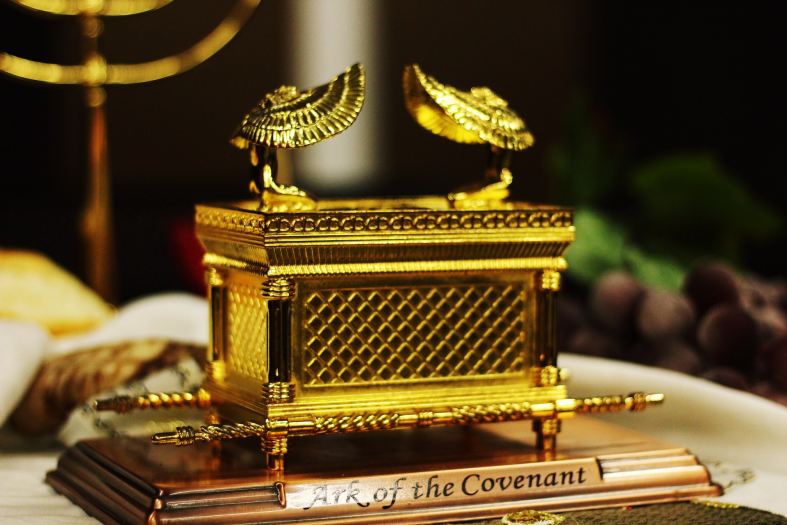
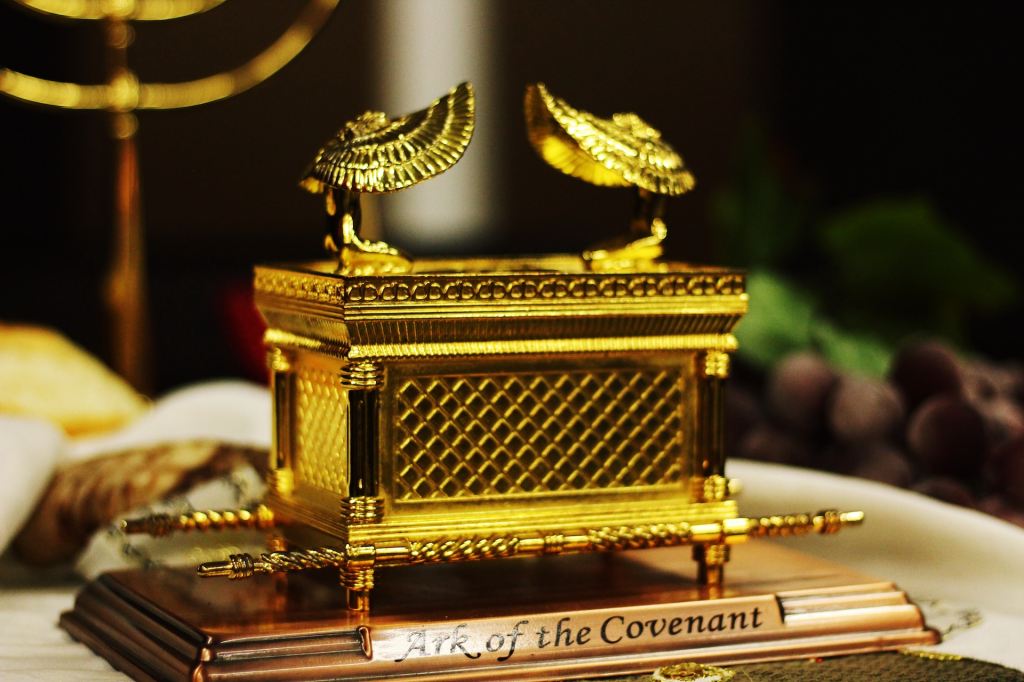
Bezalel made the ark of acacia wood. Two cubits and a half was its length, a cubit and a half its breadth, and a cubit and a half its height.” – Exodus 37:1

The ark in miniature. Photo by Igor Rodrigues on Unsplash

Most of Exodus chapters 36-40 cover the many, many details of the construction of the tabernacle and all of its utensils and other parts.  We may tire of reading chapters of details, but the point is that Bezalel and others put a massive amount of care (and obedience) into the implementation of God’s pattern for the tabernacle, as shown to Moses on the mountain.

What does it mean for us now?  That we should put as much care into learning what God wants of us and put it into action in our lives.

“For whatever was written in former days was written for our instruction, that through endurance and through the encouragement of the Scriptures we might have hope.  May the God of endurance and encouragement grant you to live in such harmony with one another, in accord with Christ Jesus, that together you may with one voice glorify the God and Father of our Lord Jesus Christ.”  – Romans 15:4-6