Daily Readings for August 31 – September 6

Fellow travelers:

For those looking for a Bible reading plan, each week I post 2 chapters to read per day as a main reading plan, and for anyone who wants to read the whole Bible in 2026, I’ll post the extra chapters to read that week.  The main readings will include nearly all of the New Testament, plus Psalms, Proverbs, Ecclesiastes, the Prophets, and a few other Old Testament books.

Reading 3 chapters a day on weekdays and 4 on weekends almost exactly covers the 1,189 chapters of the Bible, so the “extra” readings will be about 9 chapters per week.  These readings will cover the Pentateuch, the OT histories, a few other OT books, plus Jude and Revelation from the NT.

Regardless, I hope this schedule encourages others to read and study their Bible more, whatever parts they decide to read.  Follow along (or not) any way you choose!

2 chapter a day plan:

Monday, August 31: Isaiah 63 – 64
Tuesday, September 1: Isaiah 65 – 66
Wednesday, September 2: 2 Corinthians 1 – 2
Thursday, September 3: 2 Corinthians 3 – 4
Friday, September 4: 2 Corinthians 5 – 6
Saturday, September 5: 2 Corinthians 7 – 8
Sunday, September 6: 2 Corinthians 9 – 10

Extra chapters for those reading the whole Bible in 2026:
2 Kings 2 – 10

Time for a Change 2026 (7 of 9)

Fellow travelers,

Are there small changes we can make to improve our lives?  For some people, making New Year’s resolutions or celebrating Lent is a good time to work on changes like these, sometimes permanent and sometimes temporary.  My habit is a bit different.  Instead of making New Year’s resolutions or celebrating Lent, every 40 days I try to make a small, but permanent change in my life habits.  This habit of changing habits has been helpful to me and might be to you, even if you have your own way of doing it.

Today is the 40th day since the last one.  I’ll be making a small change, and I invite you to participate.  If you do, keep a record of what you’re changing.  As the months and years pass, hopefully the cumulative change becomes enormous.

This is all voluntary, so I don’t criticize myself for missing a deadline or going back on something.  If I fail at some of the changes, the successful ones still add up to a significant shift over time.  I don’t always do “spiritual” changes, just something small I think will make my life better, permanently.  For example, one of my prior goals was a small change with how I handle my finances, and it’s been a big win.

The next date on the schedule (40 days later) is 10/8/26, and I have a couple of things under consideration for then.  I’ll be posting a reminder at about that time; if you want to participate, start making a list of things you might want to do more or less of, and let’s see what we can accomplish!

When We Feel Downcast

We all have bad days.  Sometimes on those days it’s hard not to dwell on what’s gone wrong.  It’s hard not to make a list of the reasons why we’re feeling bad and focus on them.  It’s hard not to think about ways to immediately fix whatever problem we’re having.  However, Psalm 42 recommends a different approach.  Verse 6 of that Psalm ends with:

“My soul is cast down within me;
            therefore I remember you
from the land of Jordan and of Hermon,
            from Mount Mizar.”

When we feel like our “soul is cast down,” we might say therefore we need to spend our time thinking about why.  We might say therefore I’ll just feel bad for myself.  We might say therefore the world is a bad place, or therefore the universe is conspiring against us.

But I got helpful advice from a friend years ago that when you find a “therefore” in the Bible, you should ask what it’s there for.  Everything in the list above are not what this “therefore” is there for.

According to Psalm 42, the right “therefore” is to remember God.  The therefore is there to give us something to think about when we feel “cast down.”  But what does it mean to “remember” God?  How is it helpful?  It means to meditate on God’s works, in the world, in the Bible, and in our lives, as reminders that He is bigger than our problems.

We may have many, many reasons to feel down, and the Psalmist knows this.  In verse 7 is written:

“Deep calls to deep
            at the roar of your waterfalls;
all your breakers and your waves
            have gone over me.”

Breakers and waves – difficulties in life – can constantly come one after the other and can seem to have no end, especially if we dwell on them, but note that the Psalmist refers to the breakers and waves as “your breakers” and “your waves.”  They belong to God, and do not come to us without His permission.  Often its more natural for us to think “I need a solution” than to think “I need God,” but He is always what we need.

While difficulties can go on and on, God’s love has no end either, as written in verse 8:

“By day the LORD commands his steadfast love,
            and at night his song is with me,
            a prayer to the God of my life.”

His love is steadfast, meaning He cares for us “by day … and at night.”  He is always with us and ready to remind us of His love, even when all we can see are waves crashing over us.  If your soul is cast down, remember Him and His works.

Amen.

Let Them See

Dear fellow travelers,

If Jesus was such a good person – a perfect person – why was He killed?

Ultimately it was because He claimed to be God and King, which was blasphemy to the religious leaders and rebellion to the political leaders.  But the hate many people had for Him was also ironically driven by His good deeds.  I suspect that if Jesus had done less good, He might have been hated less.  Why is that?  He often loved the kinds of people that the religious leaders preferred to keep away from, people like tax collectors, prostitutes, and so on.  Jesus also did good deeds in what those who hated Him would consider the “wrong” way, for example by healing on the Sabbath.  Yet, centuries later some call Him a “good teacher” or something similar because they can’t deny His goodness completely.

This isn’t just how Jesus lived His life, but it is also a model for anyone who follows Him.  The apostle Peter wrote in 1 Peter 2:12 that we should:

“Keep your conduct among the Gentiles honorable, so that when they speak against you as evildoers, they may see your good deeds and glorify God on the day of visitation.”

When Jesus began His public ministry, every person was a “Gentile” in the sense meant by Peter.  He was referring not to non-Jews but to non-Christians.  Jesus lived His life almost entirely among that type of person, yet He kept His conduct “honorable.”  Instead of acting the way everyone else does, or acting the way they expect Him to act, He loved as God loves and as we also should, and His many “good deeds” are the evidence of that.

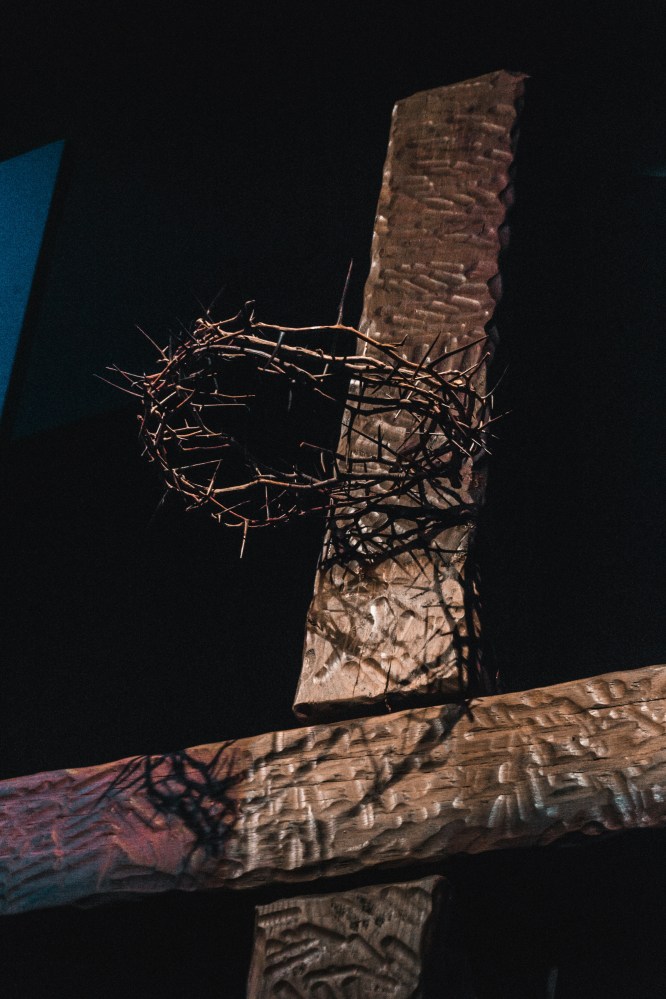
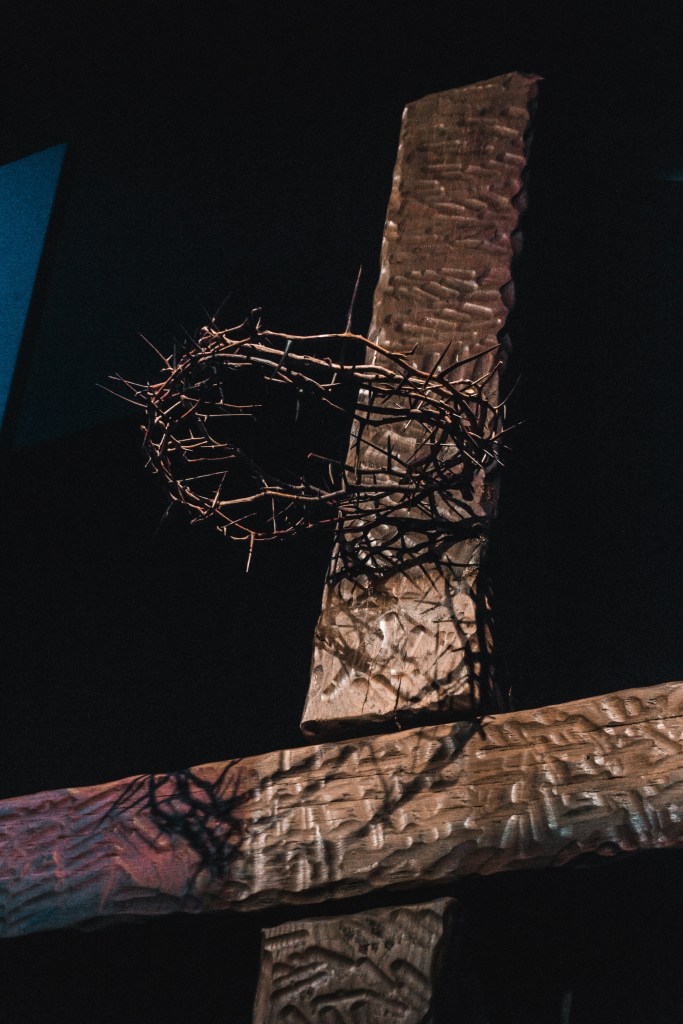
Photo by Ismael Paramo on Unsplash

Yet many slandered Jesus, including saying that He had a demon or that He was doing the devil’s work.  Others hated Him because He was not the kind of Messiah they expected or wanted.  Jesus did not respond in kind, fighting fire with fire, but He kept doing what His Father told Him to do: live the perfect life so that He could be our role model, but more importantly so He could be the perfect sacrifice for our sins.  He loved even those who hated Him, expecting nothing in return.

At the time Peter was writing, Christians faced a lot of opposition, and widespread, official persecution under Nero was coming very soon.  Christians were called disloyal citizens for refusing to participate in the cult of Caesar, cannibals[1], dangerous to the economy[2], and more.  As Jesus was treated, so are His people, for He said, “A servant is not greater than his master.’ If they persecuted me, they will also persecute you.”[3]  Christians still face opposition today, and what should we do?

Following God’s commands and Jesus’ example results in “good deeds” that cannot be denied by outsiders, and the ability to love even our enemies is a powerful testimony to a world that doesn’t think that way.  When our faith benefits others, Jesus’ impact on our lives may become undeniable even to outsiders, but just as when Jesus was here, the world is happy to accept His benefits but reject His lordship.  The world will hate us for claiming another Lord and for not hating the enemies they want us to hate.  So, as Peter wrote:

“Keep your conduct among the Gentiles honorable, so that when they speak against you as evildoers, they may see your good deeds and glorify God on the day of visitation.”


[1] The Lord’s Supper was misunderstood by many, probably from hearsay and rumor rather than firsthand experience.
[2] See Acts 19:23-41
[3] John 15:20


Things God Counts

Fellow travelers,

Are you ever so fearful or anxious about something that you lose sleep about it? Are there things out of your control that you toss and turn over? Maybe it’s so bad that you even cry. If you’re like this, you’re definitely not alone, and in fact, King David struggled with this kind of anxiety.

In Psalm 56, David laments that his enemies are constantly out to get him, and then in verse 8, David wrote about God:

“You have kept count of my tossings;
            put my tears in your bottle.
            Are they not in your book?”

What David means is that God sees all of our anxiety and every detail about how it affects us.  He counts every time we toss and turn at night.  He counts every tear you cry, and keeps track of them all, because he cares.

This realization causes David to write in verses 10 and 11:

“In God, whose word I praise,
            in the LORD, whose word I praise,
in God I trust; I shall not be afraid.
            What can man do to me?”

Prayer or any religious practice won’t always cure anxiety, but as long as we suffer, God knows and cares about it.  We can trust Him to provide for us, sometime between now and eternity.

As Paul wrote about the glory of our salvation:

“If God is for us, who can be against us?  He who did not spare his own Son but gave him up for us all, how will he not also with him graciously give us all things?”[1]

Amen


[1] Romans 8:31b-32