Strength in Trials: A Quint of Quotes

Dear fellow travelers,

Here is another “Quint of Quotes” from my collection, on the theme of suffering and trials:

“God had one Son without sin; but He has no son without temptation.” – Charles Spurgeon, on Luke 11:4

“When God permits His children to go through the furnace, He keeps His eye on the clock and His hand on the thermostat.” – Warren Wiersbe, on 1 Peter 1:6-7

“God whispers to us in our pleasures, speaks in our conscience, but shouts in our pains: It is His megaphone to rouse a deaf world.” – C.S. Lewis, in The Problem of Pain

“Some things in the economy of grace are measured; for instance our vinegar and gall are given us with such exactness that we never have a single drop too much, but of the salt of grace no stint is made” – Charles Spurgeon

“Cheer up; you’re a lot worse off than you think you are, but in Jesus you’re far more loved than you could have ever imagined.” – Jack Miller

“Consider Well Her Ramparts”: Participating in the Psalms

Reading the Psalms is a great devotional habit, and every now and then a Psalm or a section of a Psalm gives instructions to its reader.  The author is inviting us to participate in something about God that they have experienced by taking specific actions.  Earlier posts on participating in the Psalms (here, here, and here) have covered Psalms 96 and 100, which asked us to sing a new song and to give thanks, respectively.  Today’s post is about Psalm 48, which is a little harder to see how to participate.  Most of the Psalm praises God by talking about His city, Jerusalem, and His mountain, Mount Zion.  If our God’s dwelling place is worthy of praise, then He must be as well.  The “participating” part comes at the end, with verses 12-14:

“Walk about Zion, go around her,
            number her towers,
consider well her ramparts,
            go through her citadels,
that you may tell the next generation
            that this is God,
our God forever and ever.
            He will guide us forever.”

The Psalmist wrote in ancient times that it was worth it to take the time to walk around Zion, to consider the things of God and not just gloss over them quickly, but how do we do that when Christians do not consider Jerusalem and Mount Zion to be the dwelling place of God?  How do we “consider well her ramparts”?

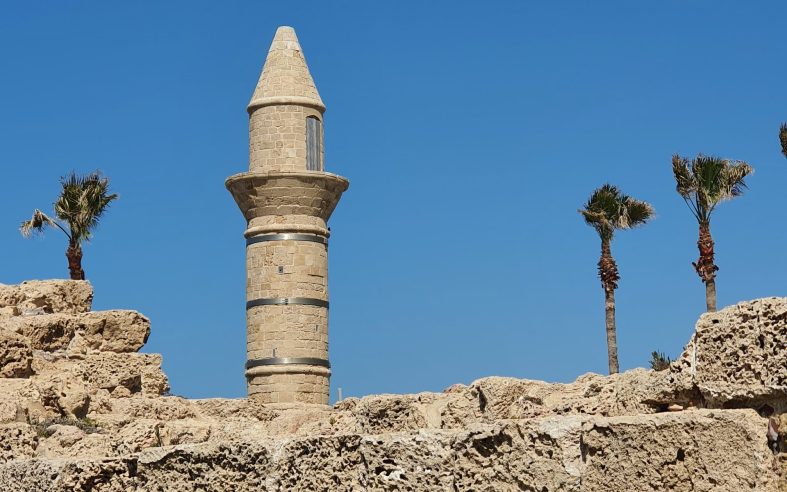
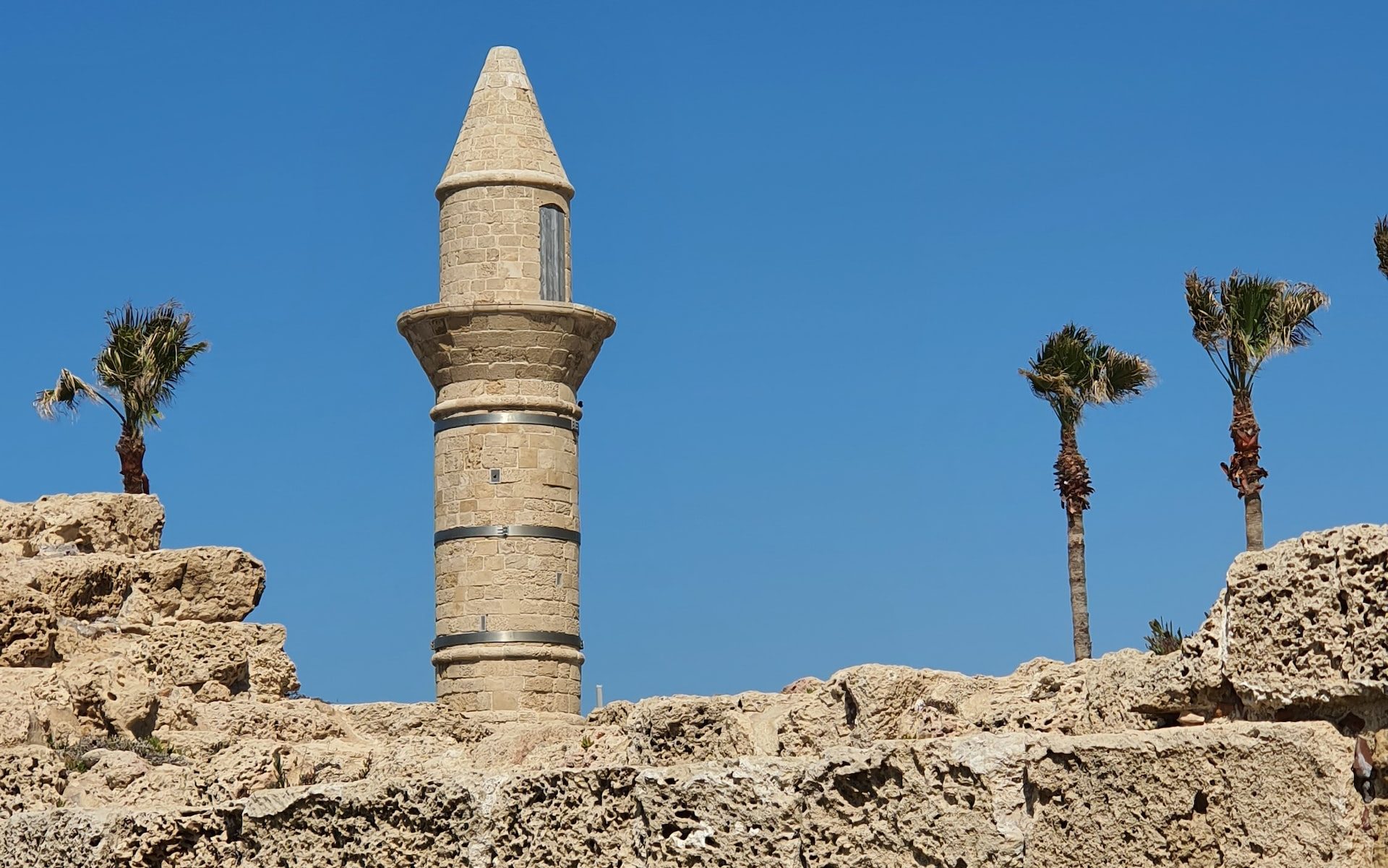
Photo by Boris Izmaylov on Unsplash

Currently, what was represented by the temple in Jerusalem on Mount Zion is represented by His body of believers, indwelt by His Holy Spirit.  Peter wrote that members of the church, “like living stones are being built up as a spiritual house, to be a holy priesthood, to offer spiritual sacrifices acceptable to God through Jesus Christ.”[1]  Therefore, do we participate in this Psalm by considering God’s strength through the church throughout history?  When we consider the “towers”, “ramparts”, and “citadels” of the church, do we consider the great “cloud of witnesses” listed in Hebrews 12, in addition to the faithful members of the church through the centuries since then?

Do we consider well not only the strength God has given His church through history, but also the strength that He protects it with even now?  Do we consider our own “ramparts” – the armor of God listed in Ephesians 6:13-17 –

“Therefore take up the whole armor of God, that you may be able to withstand in the evil day, and having done all, to stand firm.  Stand therefore, having fastened on the belt of truth, and having put on the breastplate of righteousness, and, as shoes for your feet, having put on the readiness given by the gospel of peace.  In all circumstances take up the shield of faith, with which you can extinguish all the flaming darts of the evil one; and take the helmet of salvation, and the sword of the Spirit, which is the word of God.”

Consideration takes time, so to participate in this Psalm take some time, if not today then soon, to consider God’s strength as shown through a person in the Bible, in church history, or even your own community or family.  Praise God for His strength and protection over His faithful!

As the “Sons of Korah” who wrote Psalm 48 believed, it’s worth the time and effort to:

“Walk about Zion, go around her,
            number her towers,
consider well her ramparts,
            go through her citadels,
that you may tell the next generation
            that this is God,
our God forever and ever.
            He will guide us forever.”

Many of this blog’s posts on History (click here) are a decent starting point.


[1] 1 Peter 2:5

Weekly Readings for February 24 – March 2

Fellow travelers:

Here is the list of readings for this week.  Each week I will post 2 chapters to read per day as the main reading plan, and for anyone who wants to read the whole Bible in 2025, I post the extra chapters needed for that goal.  Reading 3 chapters a day on weekdays and 4 on weekends almost exactly covers the 1,189 chapters of the Bible, so the “extra” readings are about 9 chapters per week.

Follow along (or not) any way you choose!  I will often re-post old blogs that comment on the chapters in this schedule.

Monday, February 24: Psalm 55, Matthew 5
Tuesday, February 25: Psalm 56, Matthew 6
Wednesday, February 26: Psalm 57, Matthew 7
Thursday, February 27: Psalm 58, Matthew 8
Friday, February 28: Psalm 59, Matthew 9
Saturday, March 1: Psalm 60, Matthew 10
Sunday, March 2: Psalm 61, Matthew 11

Additional readings if you want to read the whole Bible this year:
1 Kings 16 – 2 Kings 2

Worship Does Not Come Naturally: Intro to the “Psalms of Ascent”

Today begins a weekly, Saturday series on the “Psalms of Ascent.”  But what are they and why write about them?

Each Psalm from 120 to 134 is titled as a “Psalm of Ascent,” referring to pilgrimages to the three annual feasts of Passover, Pentecost, and the Feast of Booths, where every male (often bringing their extended families) was required to “ascend” up to Jerusalem.  Together, these Psalms form a type of hymnal or liturgy that these groups could sing or recite on their way to these festivals from the sometimes-distant areas where they lived.

These were reminders that their well-being depended on God’s blessing, that even though they were living in the “Promised Land” they were still pilgrims in this world, and that in spite of affliction and persecution they could rely on God to deliver them, if they worshiped Him faithfully.

Driving Toward Morning is a place to “set your minds on things that are above, not on things that are on earth” (Colossians 3:2), and also about encouragement “to stir up one another to love and good works” (Hebrews 10:24).  Local churches are the ideal place to do the same and discussing these Psalms here will hopefully prepare pilgrims everywhere for their weekly (and daily) worship and fellowship.

Just like the travelers in ancient Judah and Israel, who could not just show up at the temple in Jerusalem and expect God to magically transform them, the church today does not benefit from merely physically showing up to church.  The three annual pilgrimages were time-consuming, costly, and deliberate.  They provide us a model for intentional preparation for group worship.

In the words of early 20th century evangelist Billy Sunday: “Going to church doesn’t make you a Christian any more than standing in a garage makes you a car”

Promises of Life, Godliness, and Excellence

Fellow travelers,

“His divine power has granted to us all things that pertain to life and godliness, through the knowledge of him who called us to his own glory and excellence, by which he has granted to us his precious and very great promises, so that through them you may become partakers of the divine nature, having escaped from the corruption that is in the world because of sinful desire.” – 2 Peter 1:3-4

We do not, and cannot, depend on our own merit to convince God to love us, therefore:
“This consolation I would wish all Christians in their prayers: the testimony of a good conscience to assure them of God’s promises. But to obtain what they ask must only depend upon him, all opinion and thought of our own justice being laid aside.” – John Knox

Today in prayer, seek His power in His promises.  He wants us to have “all things that pertain to life and godliness” and He is faithful.


Post inspired by McKim, Donald K.  Everyday Prayer with the Reformers (2020).  P. 115.