Who Do We Serve?

Some people think they aren’t serving anyone, but this is never true.  We are all at least serving our own desires.  We may also desire to serve our employers, our spouses, our friends, our country, our ambitions, and many other masters, in addition to ourselves.  Someone or something is determining what we do.  Nobody is without a master.

The apostle Paul was clear in the Bible who his master was.  In the first verse of 3 of the epistles he wrote – Romans, Philippians, and Titus – Paul opens by calling himself a “servant” of God and of Jesus.  Given his status as a Roman citizen and his heritage and accomplishments as a Jew[1], it may have been hard for Paul to see himself as a servant, but he knew there was no other kind of person, or Christian.  We’re all servants.

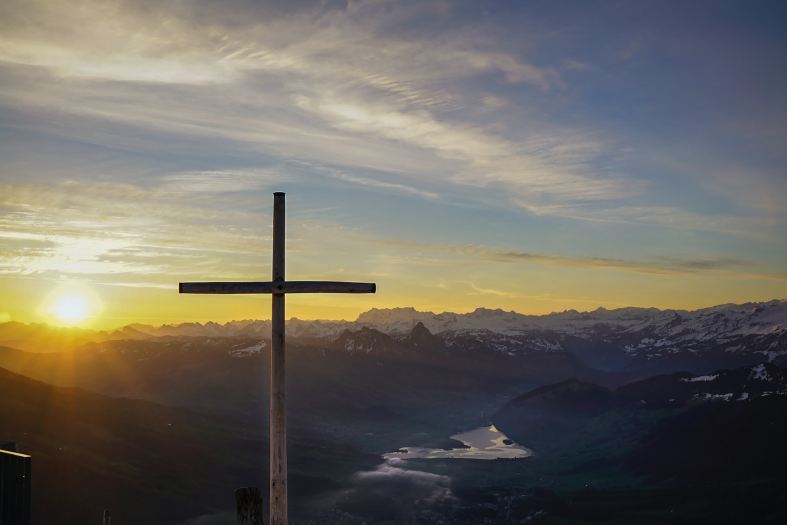
Photo by Ben White on Unsplash

We are not saved by being servants, we are saved by God’s grace and mercy, but when we are saved, we take on a new identity.  In Paul’s case, he writes in Romans and Titus that he was “called to be an apostle”[2] and that he was “an apostle of Jesus Christ.”[3]  Paul knew that he served only one Master, and that Master determined his priorities and required him to turn from other masters.  Likewise, unless we first acknowledge that we are servants, we will not answer our call to be set apart for God’s purpose in us.

We are not called to be apostles, but as servants, we are called to be something, in service to Him. This does not mean we all need to go into full-time ministry, but it does mean that we need to bring God’s priorities to love Him and to love our neighbor into our daily lives and activities.  Into our homes, our workplaces, our neighborhoods, our churches, and anywhere else we go.  It means we let Jesus decide our priorities and how we treat the people around us.

Paul wrote in Romans that “if you confess with your mouth that Jesus is Lord and believe in your heart that God raised him from the dead, you will be saved.”[4]  So, faith that leads to salvation includes the acknowledgement that Jesus is Lord and therefore that Christians are His servants.

Today, someone will be your master.  Choose wisely and ask Jesus how you can serve Him today.

“We can do no great things, only small things with great love.” – Mother Teresa
“No one can do everything, but everyone can do something” – Max Lucado


[1] Philippians 3:4-6
[2] Romans 1:1
[3] Titus 1:1
[4] Romans 10:9

The Sins That Matter Most: A Quint of Quotes

Dear fellow travelers,

Here is another “Quint of Quotes” from my collection on the theme of sin, which is all around us, but also within us:

“God had one Son without sin; but He has no son without temptation.” – Charles Spurgeon, on Luke 11:4

“Oh, this was the great ploy of Satan in that kingdom of his: to display such blatant evil that one could almost believe one’s own secret sins didn’t matter” – Corrie ten Boom, speaking of the Holocaust

“What good was the Promised Land if the Israelites were just as wicked as the nations already living there?” – Life Application Study Bible, on Deuteronomy 1:1-2

“I have more trouble with D. L. Moody than with any man I know.” – D.L. Moody

“If we say we have no sin, we deceive ourselves, and the truth is not in us.  If we confess our sins, he is faithful and just to forgive us our sins and to cleanse us from all unrighteousness.” – 1 John 1:8-9

Persevering on the Cross

The Passion stories at the end of each Gospel can be difficult to read.  When you love Jesus, it’s hard to see Him suffer such injustice in multiple trials before the Jews and the Romans, to suffer abuse such as flogging and being spit upon, but mostly to read about His crucifixion.  It’s also frustrating to read about those who abused Him and wonder, how did they not know better?  After all the compassion Jesus showed to the needy and the many miracles He performed, how could people not at least respect Him for that?  How could so many misunderstand Him?  A great example of misunderstanding is found in Matthew 27:40, where people passing by Jesus on the cross say:

You who would destroy the temple and rebuild it in three days, save yourself! If you are the Son of God, come down from the cross.”

Jesus had already done many miracles to show that He was the Son of God, yet the people demanded one more.  Ironically, Jesus was in the process, while on the cross, of fulfilling His own prophecy about the temple, by which He meant His own body.  While coming down would have been the popular thing to do, impressing the crowds, it was not the will of the Father, so Jesus had to take this abuse knowing it was wrong.  Therefore, Jesus remained on the cross.

Having convicted Jesus by unrighteous means, through false accusations and the testimony of unreliable witnesses, the people wanted Him to prove His identity to them by unrighteous means, which coming down from the cross would have been.  It would be disobedience to the Father and therefore an act of unrighteousness.  It was only by our Savior’s perseverance on the cross that He could pay the penalty for our sins and save us.  Thank God for this!

Jesus took on the cross that only He could bear: the cross of God’s judgement for our sins.  But we have crosses to bear too.

Jesus said, “whoever does not take his cross and follow me is not worthy of me.  Whoever finds his life will lose it, and whoever loses his life for my sake will find it.” (Matthew 10:38-39)

What are our crosses?  They can be the service our Lord demands, and the trials that come along with that service.  They are the cost of loving God and our neighbor.  But sometimes we’d prefer another way.  How often when we’re going through difficult times do we essentially say, “if you are the Son of God, take away my cross!”  How often do we think that if Jesus was all-powerful, He would make our lives easy?  How often do we wish God (and our neighbors) would make less demands of us?  When we suffer injustice and abuse, do we want to put down our cross?  It may seem easier to just do what the world does in order to avoid suffering, and none of us are immune from these temptations.

However, like Jesus, we must bear our cross.  An easy life was not the plan for Jesus, and it’s not the plan for His followers either.  Pray for God to help us carry our cross today.

Beloved, do not be surprised at the fiery trial when it comes upon you to test you, as though something strange were happening to you.  But rejoice insofar as you share Christ’s sufferings, that you may also rejoice and be glad when his glory is revealed.” – 1 Peter 4:12-13

The Lord Cares Even for Your Wilderness

If you are like me, some days feel very eventful and productive, but other days remind me of the saying: “If a tree falls in a forest and no one is around to hear it, does it make a sound?”  There are times when we all wonder: Who cares about what I did today?  Did today matter?  Did anyone notice?

When recently reading Psalm 29, verse 8 struck me, which says: “The voice of the Lord shakes the wilderness; the Lord shakes the wilderness of Kadesh.”  Why is this verse here?  Earlier in the Psalm, the voice of the Lord thunders, shatters the tall cedars of Lebanon, and flashes like fire.  Who cares about the wilderness?  It reminded me of the tree falling with nobody around.  Why does it matter?

It matters because the Psalmist (David) wants us to know that God’s power exists even where we can’t see it and in ways we may see as inconsequential.  However, to Him, nothing is inconsequential, and no detail is too small.  Jesus tells us in Matthew 10:30 that “even the hairs of your head are all numbered.”  If a tree falls in the wilderness, God cares about it even if nobody else does.

Psalm 29 closes with “May the LORD give strength to his people!  May the LORD bless his people with peace!”  His strength and peace are available on good days and bad.  On days we feel motivated and days we don’t.  On eventful days and on days we feel we are in the wilderness with nobody to hear.

Today, God will notice you, and will work in ways that you may only know when you look back on them from eternity.  No tree falls without His knowing about it.

May His strength and peace be with you always.

“God is always doing 10,000 things in your life, and you may be aware of three of them.” – John Piper

Daily Readings for February 2 – 8

Fellow travelers:

For those looking for a Bible reading plan, each week in 2026 I will post 2 chapters to read per day as a main reading plan, and for anyone who wants to read the whole Bible in 2026, I’ll post the extra chapters to read that week.  The main readings will include nearly all of the New Testament, plus Psalms, Proverbs, Ecclesiastes, the Prophets, and a few other Old Testament books.

Reading 3 chapters a day on weekdays and 4 on weekends almost exactly covers the 1,189 chapters of the Bible, so the “extra” readings will be about 9 chapters per week.  These readings will cover the Pentateuch, the OT histories, a few other OT books, plus Jude and Revelation from the NT.

I hope this encourages others to read and study their Bible more, whatever parts they decide to read.  Follow along (or not) any way you choose!

This week we finish another book (Genesis), moving on to Exodus next time.  Personally, I’m way behind on Genesis as I wade through Warren Wiersbe’s 3-book commentary on it.

2 chapter a day plan:

Monday, February 2: Psalm 33, Ecclesiastes 5
Tuesday, February 3: Psalm 34, Ecclesiastes 6
Wednesday, February 4: Psalm 35, Ecclesiastes 7
Thursday, February 5: Psalm 36, Ecclesiastes 8
Friday, February 6: Psalm 37, Ecclesiastes 9
Saturday, February 7: Psalm 38, Ecclesiastes 10
Sunday, February 8: Psalm 39, Ecclesiastes 11

Extra chapters for those reading the whole Bible in 2026:
Genesis 43 – 50