Bible in a Year: Week of January 15-21

Fellow travelers:

Below are the chapters to read this week if you’re following along my Bible in a year schedule.  Reading 3 chapters a day on weekdays and 4 on weekends almost exactly covers the 1,189 chapters of the Bible.  I study the morning chapters and only read (or sometimes use an audio Bible for) the evening ones, but you can follow along any way you want.

2024 starts with Psalms and 1 Samuel in the morning, since so many Psalms are based on David’s life, which is covered in 1 and 2 Samuel.  The evenings will start with the Pentateuch.

Monday, January 15
Morning: Psalm 15, 1 Samuel 19
Evening: Genesis 15

Tuesday, January 16
Morning: Psalm 16, 1 Samuel 20
Evening: Genesis 16

Wednesday, January 17
Morning: Psalm 17, 1 Samuel 21
Evening: Genesis 17

Thursday, January 18
Morning: Psalm 18, 1 Samuel 22
Evening: Genesis 18

Friday, January 19
Morning: Psalm 19, 1 Samuel 23
Evening: Genesis 19

Saturday, January 20
Morning: Psalm 20, 1 Samuel 24-25
Evening: Genesis 20

Sunday, January 21
Morning: Psalm 21, 1 Samuel 26-27
Evening: Genesis 21

Glory Days Have Not Passed You By

One of my favorite books of the Bible is Ecclesiastes, and chapter 7 in particular is full of practical wisdom, such as:

“Be not quick in your spirit to become angry, for anger lodges in the heart of fools. Say not, ‘Why were the former days better than these?’ For it is not from wisdom that you ask this. – Ecclesiastes 7:9-10

People commonly refer to the “glory days” of their past.  When they were an athlete.  When they were younger.  Before they had responsibilities.  Before they experienced a loss of a loved one, job/career, home, or anything they held valuable.  Before the Covid-19 pandemic.  Somehow the past looks better.

In these verses, Solomon, who lived a life where he gained and lost far more than nearly anyone else ever will, categorically says this is foolish. He’s not doing this to criticize, but to keep others from repeating his own mistakes. To advise against anger for the wrong reasons about things that can’t be changed or fixed.

God’s mercies are new every morning, and with the path we’ve taken before today, He has prepared us for the day ahead in a way no other path could. Strive for what is ahead – your true “glory days” in Him! Start from here and listen for Him. Perfection lies ahead.

“Give us each day our daily bread” – Luke 11:3

Only God Has Tamed the Tongue

In many Psalms, the authors complain about the evils in the world and compare them with God and His perfect attributes.  Psalm 12 is one of these, and begins with David lamenting the ungodliness he sees in the world in the first verse:

Save, O LORD, for the godly one is gone;
            for the faithful have vanished from among the children of man.”

What is David so upset about?  James 3:7-8 tells us: “For every kind of beast and bird, of reptile and sea creature, can be tamed and has been tamed by mankind, but no human being can tame the tongue. It is a restless evil, full of deadly poison.”  David is upset by people’s inability to “tame the tongue,” which he describes in verses 2 through 4:

Everyone utters lies to his neighbor;
            with flattering lips and a double heart they speak.
May the LORD cut off all flattering lips,
            the tongue that makes great boasts,
those who say, ‘With our tongue we will prevail,
            our lips are with us; who is master over us?’”

David says the words of the unfaithful are lies, flattering, duplicitous, boasting, proud, and rebellious.  These adjectives also describe much of what we see and hear today, and if we’re honest, much of what we say.  How often do we say things just because they came to mind?  And if they are bad things, but we get away with it or get something we want from it, are we emboldened to continue?  After all, “no human being can tame the tongue.”

There is One, however, who has tamed the tongue.  David contrasts His words with ours in verses 6 and 7:

The words of the LORD are pure words,
            like silver refined in a furnace on the ground,
            purified seven times.
You, O LORD, will keep them;
            you will guard us from this generation forever.”

These words are pure, refined, purified, kept, and preserved.  The number seven in the Bible is often used to indicate perfection, so if His words are “purified seven times”, they are perfectly considered and constructed before they are delivered to us.  God keeps all His promises, and His word never expires.

Even when the world is full of people who speak ungodly words, the Lord’s words are pure and can be trusted. Because of this we know He will “guard us from this generation forever.”  Someday our words will be like His words.

Amen

The Body of Christ is Irreducibly Complex

Among the various camps in the debate between creation and evolution is a set of ideas called intelligent design (ID).  A key part of ID is “irreducible complexity,” a term that comes from the book Darwin’s Black Box, by Lehigh professor Michael Behe.[1]

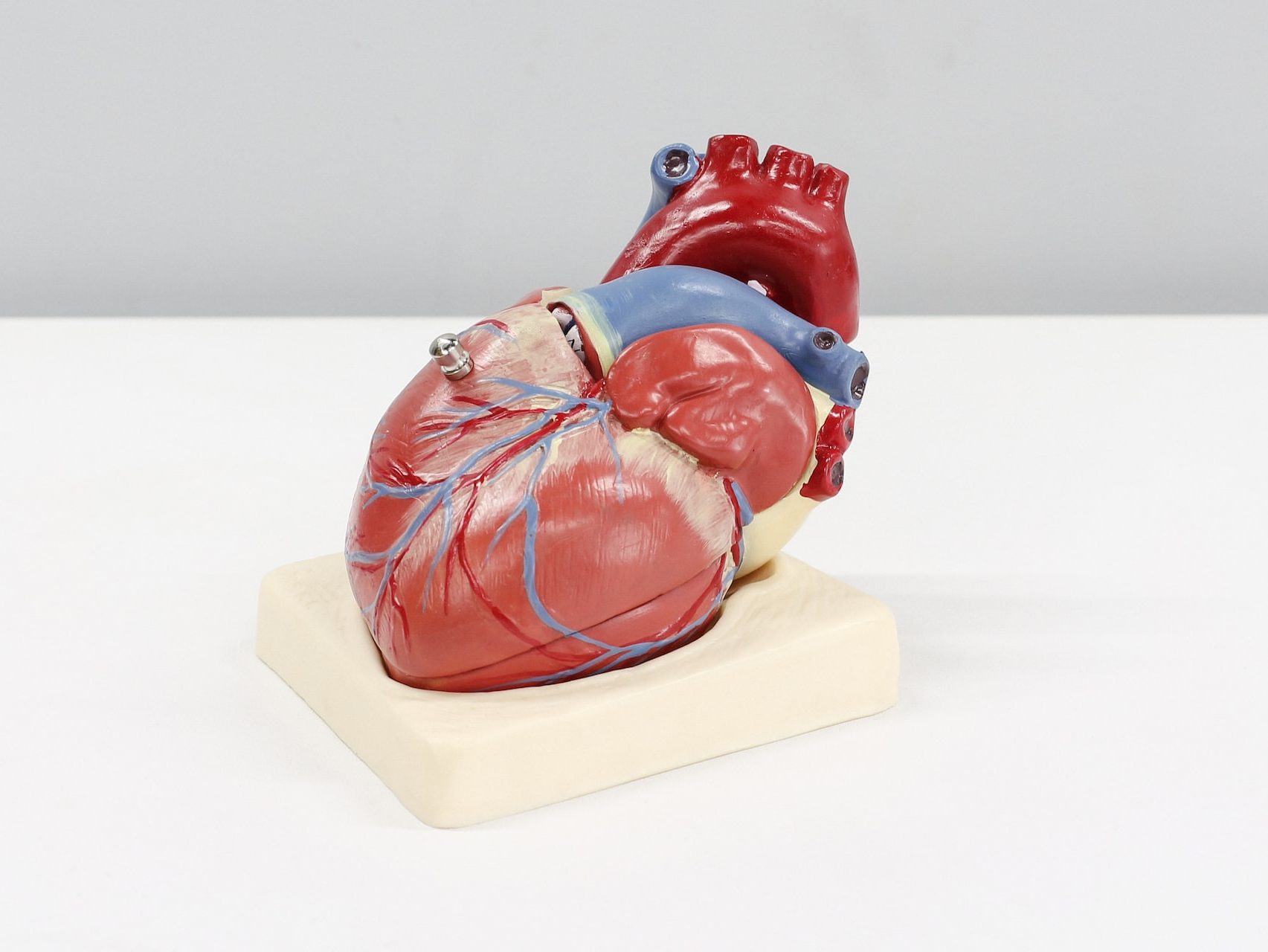
In short, irreducible complexity argues that evolution by chance, without an intelligent designer driving it, is unreasonable because the multiple systems in a complex organism like a human body – circulatory, digestive, endocrine, muscular, respiratory, and so on – are all interdependent on each other.  The circulatory system alone, with the heart pumping blood through an elaborate system of arteries and veins, is difficult to imagine developing by chance occurrence, but a chance evolution of that system alongside all the other parts it is dependent on is even more far-fetched.  All systems evolving together in lockstep without failing is a much more difficult problem to explain scientifically without a Creator.  The circulatory system takes what the respiratory and digestive systems take in and deliver it to the other systems that use it.  Without the other parts, it has no function and cannot survive and further evolve.

An isolated, inanimate, heart. Photo by Ali Hajiluyi on Unsplash

However, my intent here is not to prove intelligent design, but to consider the apostle Paul’s words about the church as the body of Christ.  In 1 Corinthians 12:12, he wrote: “For just as the body is one and has many members, and all the members of the body, though many, are one body, so it is with Christ.”  He continues that no part of the body can say it is not a part of the body because it has a different function than another part (1 Cor. 12:15-16), and also that no part of the body can say it doesn’t need all of the other parts (1 Cor. 12:21).  Those who are in Christ Jesus cannot be divided.

Paul follows his description of the body with 1 Corinthians 13, a powerful statement on the supremacy of love, and in context a gentle rebuke to the idea that a body can survive as individual, unrelated units.  In a human body, any part can only survive by serving the other parts.  Even an organ as incredibly complex and important as a heart cannot survive if it decided to pump blood only for itself.  Where would it get its nutrients?  How would it flee from danger?  As Paul wrote: “If the whole body were an eye, where would be the sense of hearing? If the whole body were an ear, where would be the sense of smell?” (1 Cor. 12:17).  Even an organ as important as the heart is useless in isolation.  It gets its very life and purpose by what it does for the body.

As Jesus said to His disciples in John 13:34-35 – “A new commandment I give to you, that you love one another: just as I have loved you, you also are to love one another.  By this all people will know that you are my disciples, if you have love for one another.

As the song says, they will know we are Christians by our love, and the church Jesus came to build is irreducibly complex.  There is no appendix[2] in the church, which is the body of Christ.


[1] Behe, Michael.  Darwin’s Black Box (1996).
[2] While we commonly think of this organ as useless, God as our Maker didn’t put it there by accident.

Strengthen What Remains

Does your church seem alive and vigorous in its faith?  Be thankful if it does because there are many churches that are struggling.  There are many churches that appear to be faithful, but their faith might only be skin-deep.

In Revelation chapters 2 and 3, John is given messages from Jesus to bring to seven churches in different cities: Ephesus, Smyrna, Pergamum, Thyatira, Sardis, Philadelphia, and Laodicea.  One of these – Sardis – fit the description above of a church where faith was only an appearance.  Jesus’ words to Sardis begins in Revelation 3:1-2:

And to the angel of the church in Sardis write: ‘The words of him who has the seven spirits of God and the seven stars.  ‘I know your works. You have the reputation of being alive, but you are dead. 2 Wake up, and strengthen what remains and is about to die, for I have not found your works complete in the sight of my God.

The church in Sardis looked good – it had “the reputation of being alive,” but in the sight of God who sees the internal and true reality, the church was “dead.”  Many churches today are like Sardis: they appear Christian but haven’t really embraced Christ.

However, there is still hope, because in verse 2 it says the work is not complete, and verse 4 says there remain some truly faithful in Sardis: “Yet you have still a few names in Sardis, people who have not soiled their garments, and they will walk with me in white, for they are worthy.”  Many people are in situations like this today: spiritually alive but in “dead” churches.

What message is given to those faithful few?  “Wake up, and strengthen what remains.” 

There are two parts to this instruction, the first being don’t give up.  Stay alert!  Some might be tempted to give up; to either to stop trying, or to leave and find another church.  Finding another church might be a good option in some cases, but for those who choose to stay, giving up on the church is not an option according to this message.  “Wake up.

The second part is to “strengthen what remains.”  There is work to be done in any church, even where little genuine faith remains.  Hebrews 10:24-25 advises us: “And let us consider how to stir up one another to love and good works, not neglecting to meet together, as is the habit of some, but encouraging one another, and all the more as you see the Day drawing near.”

Therefore, if you feel your church is dead, remain faithful and “strengthen what remains.”  Don’t give up but encourage others to “love and good works.”  By word and by example.  But if your church is spiritually alive, also remain faithful and strengthen what you have.

He who has an ear, let him hear what the Spirit says to the churches.” – Revelation 3:6