Two Words That Might Save Your Soul

Being human is difficult, but sometimes a pause to reflect can make a big difference.  Ephesians 2:4 says: “But God, being rich in mercy, because of the great love with which he loved us…”  Pastor James Boice jumps on those first two words as a key turning point: “But God! Here is where the beauty and wonder of the Christian gospel comes in.”

Ephesians 2 begins with people following “the course of this world,” chasing whatever “passions” and “desires” came to mind.  Before “but God”, we were all “dead” (v 1) and “by nature children of wrath” (v 3).  All of our efforts are doomed to failure.

The story does not stop there.  For God’s people it never does.  After “but God”, we have been made alive together with Christ (v 5), we are shown the immeasurable riches of His grace (v 7), and we are enabled to do the good, meaningful works He has prepared for us (v 10).

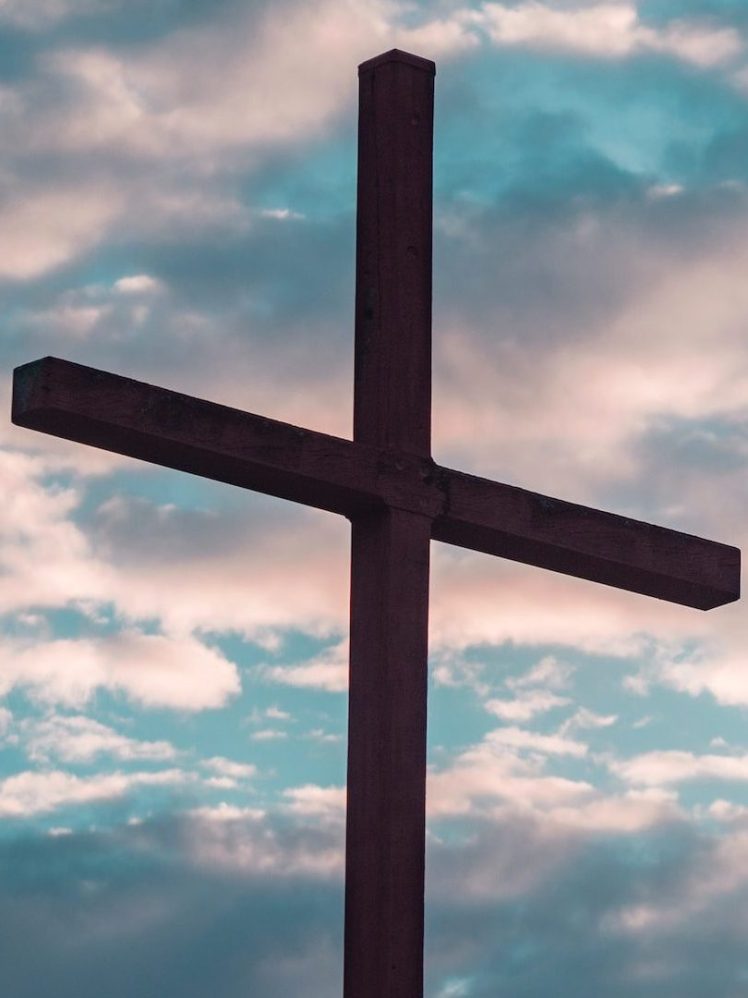
When we wonder whether this world is all there is and that this is the best we can do, we respond “But God…” When frustrated with yourself, with others, or with the world in general, bring to mind the words “but God.”  These words are relevant to every situation because He has not left things as they are, but He intervened through Jesus on the cross and through His Spirit in our lives every day.  “The words ‘but God’ show what God has done. If you understand those two words – ‘but God’ – they will save your soul. If you recall them daily and live by them, they will transform your life completely.”[1]

Call the words “but God…” to mind whenever you’re overcome with negativity.  Say “but God…” to others who are struggling.  For every situation, He can fill the “…” with hope if you pause and give Him the opportunity.  But also, when you see God’s blessings in your daily life, think “but God” because He has not left us alone.


[1] From “November 7.” James Montgomery Boice and Marion Clark. Come to the Waters: Daily Bible Devotions for Spiritual Refreshment.  (2017).

Coming Soon: Bible in a Year

Fellow travelers,

Have you ever read the Bible in a year?  If you haven’t, have you ever wanted to?  If you cover 3 chapters a day on weekdays and 4 on weekends, it almost exactly comes to the 1,189 total chapters over a full year.  2024 is a leap year, so there’s an extra day.

Beginning on Sunday, I’ll be posting here every week a guide for the following Monday – Sunday.  My personal approach is to study 2-3 chapters per day in the morning along with a study bible or commentary, and just read or listen to audio for the remaining chapter at night.  I start every year with one Psalm a day, plus something else in the morning, and a different book in the evening.  I find the variety helpful.  It doesn’t always work out that way, but that’s the plan.

Weekly I will post Morning and Evening chapters, but readers could follow along any way they want.  They could just read the one chapter per day (the “Evening” reading), or just the 2-3 chapters (the “Morning” reading).  They could use an audio Bible for all or part of it.  They could swap the Morning and Evening chapters if that’s a better schedule.  Everyone knows best what works for them and what they’re likely to stick with, even if it’s not the whole Bible in a year.

This year will start with Psalms and 1 Samuel in the morning, since so many Psalms are based on David’s life, which is covered in 1 and 2 Samuel.  The evenings will start with the Pentateuch.

Looking forward to 2024!

Participating in the Psalms: Thanksgiving Edition

Often the writers of the Psalms aren’t just trying to teach us about God, but they are trying to share their experience of Him.  As in Psalm 96 and 100, included in earlier posts, Psalm 136 opens with encouragement, or even instructions, to join the Psalmist in thanksgiving:

Give thanks to the LORD, for he is good,
     for his steadfast love endures forever.
Give thanks to the God of gods,
     for his steadfast love endures forever.
Give thanks to the Lord of lords,
     for his steadfast love endures forever” – Psalm 136:1-3

All 26 verses of this Psalm end with the phrase “for his steadfast love endures forever,” following something about God that is worthy of praise and thanksgiving.  This constant repetition is a reminder that it is “his steadfast love” for His people that drives His acts of creation, His works in history, and ultimately His death on the cross.  His works are all done by a person, for a people.  What God really desires is relationship with us. We are not alone in the universe.

Giving thanks only makes sense if someone exists to thank, who is good, and has the power to provide what we are thankful for.  If creation is a mere accident, if wicked acts are never corrected and righteous acts are never rewarded, and if mankind can only hope in themselves, there is no reason to give thanks to someone, or something, else.  Many religions seem to acknowledge this, giving personality and reverence to created things – trees, the sun, the harvest, and so on – but in Christ we can know the Person who is behind it all, and who actually is a Person that loves us.

Therefore, today give thanks to the Lord who is good, and is above any god or lord of this world.  As we celebrate Thanksgiving today in the United States, be thankful above all else that Someone exists to thank, that He is good, and that He has the power, and love, needed to care for His people.  Now and forever.

Amen.


Earlier posts on Participating in the Psalms are here, here, and here.

Perspective on Feasts

Sometimes Proverbs seems like a collection of sayings in a random order but sometimes taking one out of context can change the meaning entirely.  Take for example Proverbs 15:15 –

All the days of the afflicted are evil,
            but the cheerful of heart has a continual feast.”

One way of reading this might be that if we have a continual feast, we will of course be cheerful, while affliction will sour our attitude.  However, the following two verses tell us that what we consider to be a feast is a matter of the perspective we bring to it, not the contents of the meal:

Better is a little with the fear of the LORD
            than great treasure and trouble with it.
Better is a dinner of herbs where love is
            than a fattened ox and hatred with it.”

When we choose the fear of the Lord, and to live in love for those we feast with, even a small meal of herbs can be a feast!  From a heart of thankfulness, we can be satisfied with whatever manna and daily bread the Lord provides, instead of begging Him for quail.

Therefore, “the cheerful of heart has a continual feast” not because of an elaborate, expensive, multi-course meal, but because of a heart of love that reveres the Lord. If today serves you nothing but herbs, be thankful instead of being like this sad dwarf.

No Confidence in the Flesh

Today is the last post in a 5-part series on the first Beatitude from Matthew 5:3 – “Blessed are the poor in spirit, for theirs is the kingdom of heaven.”  Today’s thought begins with how the Apostle Paul, who met Jesus on the road to Damascus[1], emphasized how being “poor in spirit” is universal across all demographic characteristics:

There is neither Jew nor Greek, there is neither slave nor free, there is no male and female, for you are all one in Christ Jesus.” – Galatians 3:28
Here there is not Greek and Jew, circumcised and uncircumcised, barbarian, Scythian, slave, free; but Christ is all, and in all.” – Colossians 3:11

Paul wrote two different lists, meaning they are not comprehensive.  He simply couldn’t include every possible example of the ways Christ eliminates barriers, but provided examples of the main point, which is “all.”  Prior to these verses, he writes that “in Christ Jesus you are all sons of God, through faith” (Galatians 3:27) and that we “have put on the new self, which is being renewed in knowledge after the image of its creator.” (Colossians 3:10) This “new self” is the new identity, which is the only one that matters, that we are “sons of God”.

What does this have to do with “Blessed are the poor in spirit”?

Paul knows that Jesus provides – in full – the only way for salvation, on the cross and through His resurrection.  What we think are accomplishments “in the flesh” do not make us “rich” in spirit, and in fact may make us worse off.  Paul expands on this in Philippians 3:4-7, discarding any confidence he has in the flesh as “loss”:

Though I myself have reason for confidence in the flesh also. If anyone else thinks he has reason for confidence in the flesh, I have more: circumcised on the eighth day, of the people of Israel, of the tribe of Benjamin, a Hebrew of Hebrews; as to the law, a Pharisee; as to zeal, a persecutor of the church; as to righteousness under the law, blameless. But whatever gain I had, I counted as loss for the sake of Christ.”

In other words, Paul is saying that his obedience to the ceremonial law of the Old Testament, his genealogy, his denomination, his nationality, and his recognition as a religious expert provided no value, in fact negative value (“loss”), toward his salvation in Christ.  From the earlier verses we can add gender and economic status to the list.  His identity in earthly terms is a negative whenever it gets in the way of his identity in Christ.  When he counted on these things for salvation, they only clouded his view of what was really needed and were in the way of accepting it.  They were a distraction, a waste of time.  This applies not just to Paul, but to anyone: religious pedigree, ethnicity, nationality, or any other accomplishment is a negative contribution if it causes us to refuse His free offer of His righteousness.

It also affects how we present Christ to others.  If our own definition of “poor in spirit” includes a complete lack of faith in our “flesh”, it becomes easier to offer the gospel to “all” others, to approach them in love, and therefore to reflect the kingdom of heaven.  To love our neighbor includes not limiting who our neighbor is.  In the parable of the Good Samaritan, the person beaten and abandoned on the side of the road is only identified as “a man.”[2]  If we know that our identity also did not matter in our salvation, that it may have made us even poorer in spirit, the identity of our neighbor will not matter either.  The unity and outreach of the church depend on the idea that all are equally “poor in spirit.”

Pray for Christ to enable you to embrace your new identity, your new spirit, and provide new motivation to be a more faithful subject in His kingdom.

For if you forgive others their trespasses, your heavenly Father will also forgive you, but if you do not forgive others their trespasses, neither will your Father forgive your trespasses.” – Matthew 6:14-15
Blessed are the poor in spirit, for theirs is the kingdom of heaven.” – Matthew 5:3


[1] Acts 9:3-9
[2] Luke 10:30