Standing Firm

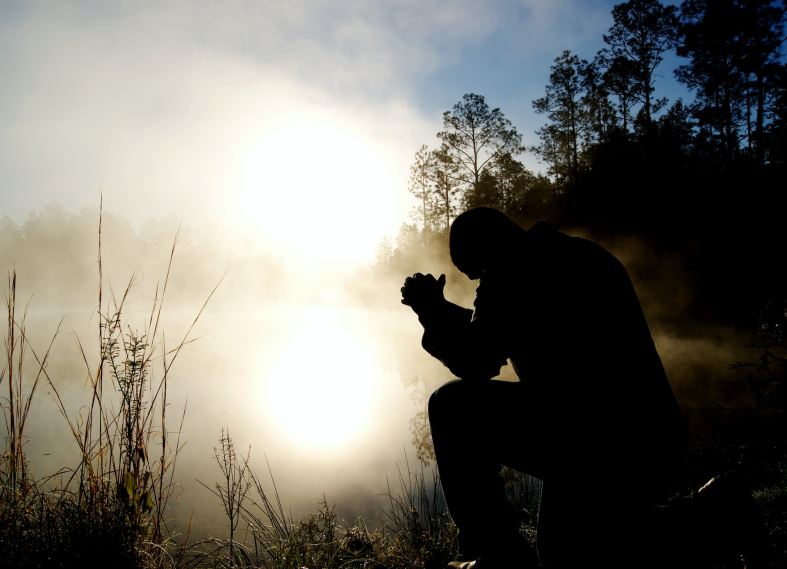
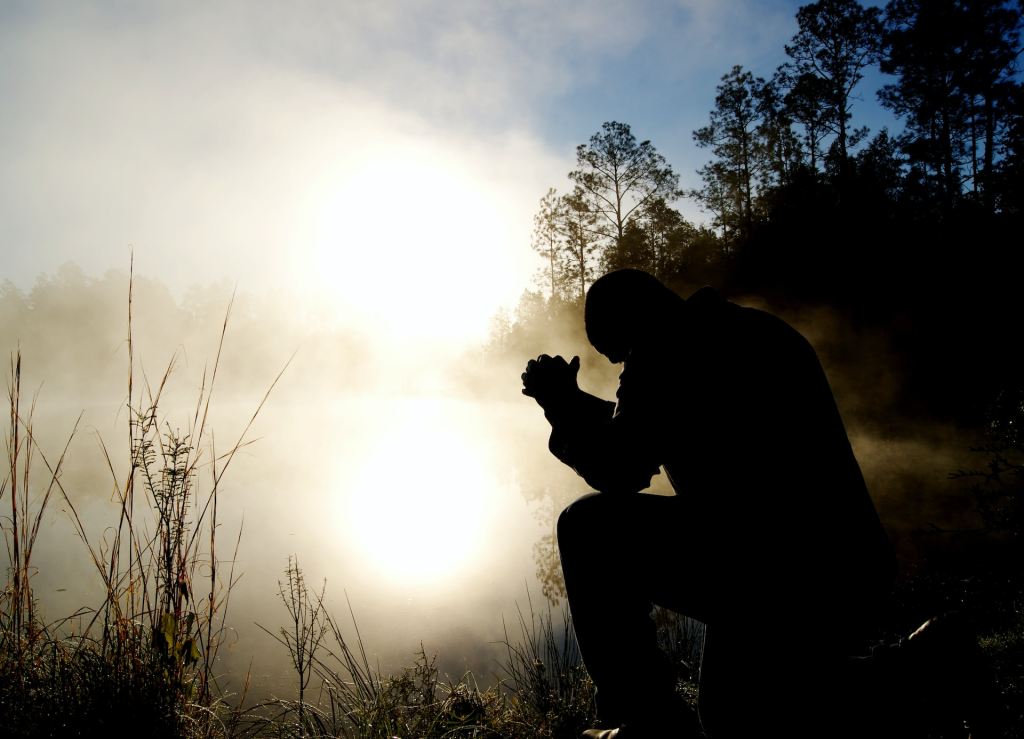
“Only let your manner of life be worthy of the gospel of Christ, so that whether I come and see you or am absent, I may hear of you that you are standing firm in one spirit, with one mind striving side by side for the faith of the gospel, and not frightened in anything by your opponents. This is a clear sign to them of their destruction, but of your salvation, and that from God.” – Philippians 1:27-28

Romans 12:20 says when we love our enemy, we “heap burning coals on his head.”  Alternatively, panic in the face of opposition is what happens when we rely on our own strength and methods.

May He be strong in us.

God is Jealous: Spurgeon

Today’s post comes from Charles Spurgeon’s “Morning and Evening” devotional.  The September 12 (morning) entry was based on part of Nahum 1:2 – “God is jealous”.

Read the entire entry below:

Your Lord is very jealous of your love, O believer. Did He choose you? He cannot bear that you should choose another. Did He buy you with His own blood? He cannot endure that you should think that you are your own, or that you belong to this world. He loved you with such a love that He would not stop in heaven without you; He would sooner die than you should perish, and He cannot endure that anything should stand between your heart’s love and Himself. He is very jealous of your trust. He will not permit you to trust in an arm of flesh. He cannot bear that you should hew out broken cisterns, when the overflowing fountain is always free to you. When we lean upon Him, He is glad, but when we transfer our dependence to another, when we rely upon our own wisdom, or the wisdom of a friend—worst of all, when we trust in any works of our own, He is displeased, and will chasten us that He may bring us to Himself. He is also very jealous of our company. There should be no one with whom we converse so much as with Jesus. To abide in Him only, this is true love; but to commune with the world, to find sufficient solace in our carnal comforts, to prefer even the society of our fellow Christians to secret intercourse with Him, this is grievous to our jealous Lord. He would fain have us abide in Him, and enjoy constant fellowship with Himself; and many of the trials which He sends us are for the purpose of weaning our hearts from the creature, and fixing them more closely upon Himself. Let this jealousy which would keep us near to Christ be also a comfort to us, for if He loves us so much as to care thus about our love we may be sure that He will suffer nothing to harm us, and will protect us from all our enemies. Oh that we may have grace this day to keep our hearts in sacred chastity for our Beloved alone, with sacred jealousy shutting our eyes to all the fascinations of the world!

The Destiny of the Wealth of Nations

Here in the United States, the year 1776 is celebrated as the political beginning of the nation, because the Declaration of Independence was approved on July 4 of that year.  Also in 1776, The Wealth of Nations by economist and philosopher Adam Smith was published and is foundational to our nation’s economy.  Its full title of An Inquiry into the Nature and Causes of the Wealth of Nations shows its purpose was to explore what makes some nations more well-off than others, with Smith concluding that capitalism, especially the elements of free trade and competition, was the best system.  I won’t argue here for capitalism or about where wealth comes from, but about where wealth is destined to end up.

Interestingly, the phrase “wealth of the nations” appears in the Bible 3 times, all in Isaiah 60 and 61, and the phrase “wealth of all the surrounding nations” appears once, in Zechariah 14.[1]  All of these references describe the future reign of the Messiah when all nations and peoples will acknowledge Him as Lord and dedicate their wealth in tribute to Him.

Isaiah 60:4-5 is the first mention of the phrase, and it says:

“Lift up your eyes all around, and see;
            they all gather together, they come to you;
your sons shall come from afar,
            and your daughters shall be carried on the hip.
Then you shall see and be radiant;
            your heart shall thrill and exult,
because the abundance of the sea shall be turned to you,
            the wealth of the nations shall come to you.”

The next few verses read like an inventory of goods (camels, gold, flocks, ships, lumber) and places (Midian, Sheba, Kedar, Tarshish, Lebanon), showing that no thing and no place is excluded from the tribute to God.  Wealth from every source belongs to Him.

In the same chapter, verse 11 declares about the eternal city of God:

“Your gates shall be open continually;
            day and night they shall not be shut,
that people may bring to you the wealth of the nations,
            with their kings led in procession.”

When we inquire into future of wealth, rather than its past and its sources, we find that the wealth of the nations is all His.  We own nothing.  We are only stewards and caretakers, regardless of what economic system we live in or believe in.

“The earth is the LORD’S and the fullness thereof,
                        the world and those who dwell therein” – Psalm 24:1

Soli Deo Gloria


[1] It may be where Smith got his title idea, or it may just be coincidence.

He Humbles and Exalts Nations

In a parable about humility, Jesus said in Luke 14:11: “For everyone who exalts himself will be humbled, and he who humbles himself will be exalted.”  While the parable is about individual people, elsewhere God also makes clear that he can humble or exalt entire nations.  While Luke 14:11 may contradict much of what we see in our world today, at the final judgment the truth of the verse will be made manifest, and God promises it will be so.

As an example, the Old Testament prophet Isaiah spoke of God’s power over the nations.  Around 605 B.C., Babylon invaded Judah and carried them into captivity, and about 70 years later, Judah was allowed to return home by Cyrus the Mede, who had defeated Babylon.  Over a century before Babylon’s invasion, Isaiah prophesied their entire rise and fall around 700 B.C., when Babylon was not yet even a world power.  Isaiah described the final destinies of both Babylon and of God’s people in startling images.

As recorded in Isaiah 47:1-3, God’s vengeance on Babylon was described, probably before they even considered capturing Jerusalem:

“Come down and sit in the dust,
            O virgin daughter of Babylon;
sit on the ground without a throne,
            O daughter of the Chaldeans!
For you shall no more be called
            tender and delicate.
Take the millstones and grind flour,
            put off your veil,
strip off your robe, uncover your legs,
            pass through the rivers.
Your nakedness shall be uncovered,
            and your disgrace shall be seen.
I will take vengeance,
            and I will spare no one.
Our Redeemer—the LORD of hosts is his name—
            is the Holy One of Israel.”

This is contrasted to the future of God’s people in Isaiah 52:1-2:

“Awake, awake,
            put on your strength, O Zion;
put on your beautiful garments,
            O Jerusalem, the holy city;
for there shall no more come into you
            the uncircumcised and the unclean.
Shake yourself from the dust and arise;
            be seated, O Jerusalem;
loose the bonds from your neck,
            O captive daughter of Zion.”

Did you notice the parallels?  In Isaiah 47, Babylon is disgraced, cast down from the throne and made to do menial labor.  Babylon is stripped of their beautiful clothes and publicly shamed, sitting in the dust.

Contrast to Isaiah 52, which describes the daughter of Zion as rising up from the dust of disgrace under Babylon, from whom she has been freed.  She dwells in peace, awakening and dressing herself in beautiful clothes.  What a beautiful future!

Photo by Aaron Burden on Unsplash

However, note that God removes Babylon’s temporary throne but does not put His people on a throne.  That honor belongs only to Him, and Babylon’s presumption in taking that place is the reason they need to be humbled.  By humbling themselves before God’s throne, His people follow the example Jesus gave at the wedding feast in verse 10 of the Luke 14 parable: “But when you are invited, go and sit in the lowest place, so that when your host comes he may say to you, ‘Friend, move up higher.’ Then you will be honored in the presence of all who sit at table with you.”  God will honor the humble.

By demonstrating power over entire nations in history, He has proven He has power over nations now and in the future.  And if He has power over nations, He has power over whatever frustrations we have with the state of the world.  He alone is on His throne.

So, if you are frustrated with the powerful and influential who puff themselves up in defiance of God, or if you wonder whether being humble is really a better alternative, remember:

“For everyone who exalts himself will be humbled, and he who humbles himself will be exalted.”

For people as well as nations.

On Spiritual Mood Swings

Photo by Kenny Eliason on Unsplash

Life is often a battle with inconsistency.  We go from feeling good about our situations and God’s favor, to feeling like we are in a spiritual desert, and back again like a pendulum.  Knowing this, God provides verses like Psalm 126:4-6, which says:

“Restore our fortunes, O LORD,
            like streams in the Negeb!
Those who sow in tears
            shall reap with shouts of joy!
He who goes out weeping,
            bearing the seed for sowing,
shall come home with shouts of joy,
            bringing his sheaves with him.”

The metaphor is a comparison to the south of Israel, which has a very dry climate, yet experiences flooding in a rainstorm.  The Negeb also is mentioned in the story of Caleb and his daughter Achsah.  Her inherited land was in the infertile Negeb, and she asks him also for springs of water, which he gives her.[1]

Like Achsah’s father Caleb, our Father God also provides for us in our seasons of trouble.  Here, the Psalmist compares tears to seeds, reminding us that in the dry times as well as the times of overflowing blessing, God is with us, using those circumstances.  Our current loss is future gain, and our current time of suffering is bound and measured by God’s will, like the Babylonian exile was measured at 70 years[2] and the year of Jubilee came after every 49 years[3].  After our time, we will enter His rest and rejoice eternally.

In this life we may experience spiritual and emotional extremes, like drought and flood in the desert.  Don’t overreact to the pendulum swing but count your tears as seeds.  Pray that He will restore your fortunes and thank Him that our seasons are in His hands.

“Blessed are those who mourn, for they shall be comforted.” – Matthew 5:4


[1] Joshua 15:18-19
[2] Daniel 9:2, 9:24
[3] Leviticus 25:8