Time to Build the Church

What’s more important, your house or God’s?

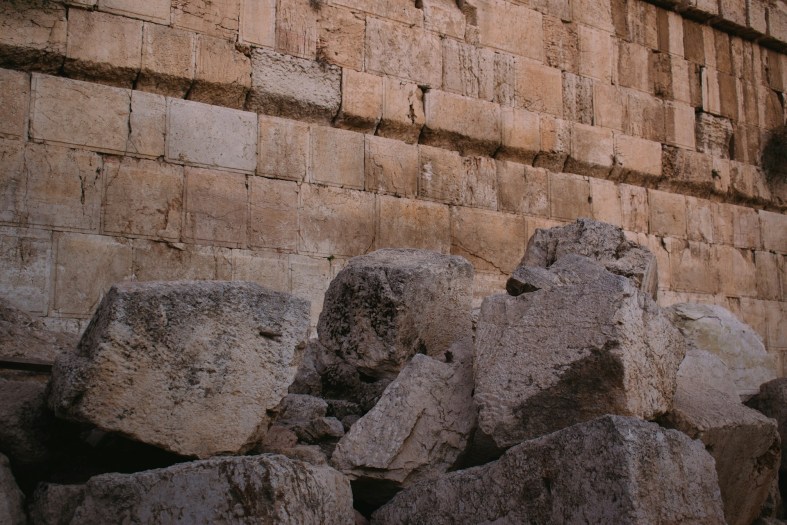
Haggai was a prophet during the time shortly after the end of the Babylonian exile.  His main focus was encouraging the people to complete the rebuilding of the Temple, which had been destroyed at the beginning of the exile, in 586 B.C.  After returning to Israel, the people had become lazy and complacent about God’s house, the Temple, saying “the time has not yet come to rebuild the house of the LORD,[1] and made excuses not to rebuild it.  But Haggai challenged them, in true prophetic fashion, asking “Is it a time for you yourselves to dwell in your paneled houses, while this house lies in ruins?[2]  The problem was that the people took great care of their own houses with fancy paneling, yet weren’t concerned that the Temple was still a ruin.  “The time has not yet come,” they said.
Haggai told the people: “Go up to the hills and bring wood and build the house, that I may take pleasure in it and that I may be glorified, says the LORD.”[3]  This would involve a lot of hard work, God knows what it takes to build His Temple, and He also knows that it needs to be done and should be a priority.

Today, the equivalent of the Temple is the body of believers known as the church.  1 Peter 2:5 says, “you yourselves like living stones are being built up as a spiritual house, to be a holy priesthood, to offer spiritual sacrifices acceptable to God through Jesus Christ.”  God’s goal for the church is to perfect it in Jesus’ likeness, therefore no matter what condition the church is in here, it always needs to be built up.  We may be tempted to say “the time has not yet come” because we won’t be perfected until eternity, but He says ““Go up to the hills and bring wood and build the house, that I may take pleasure in it and that I may be glorified, says the LORD.”

Building the church (God’s house) may feel as difficult as climbing hills, gathering and transporting wood from forests to build a literal, physical Temple.  It’s not easy and we shouldn’t expect it to be.  But God will build His church and He wants our help.

When writing of our diverse spiritual gifts, Paul wrote in 1 Corinthians 14:12 – “So with yourselves, since you are eager for manifestations of the Spirit, strive to excel in building up the church.” Has the time come to build His church?  Yes, it has.

Strive to excel.”


[1] Haggai 1:2
[2] Haggai 1:4
[3] Haggai 1:8

Prayer Before Study

If you’re a writer, or creative in some other way, how do you prepare to work and dedicate the work to God?  Surely there are as many ways to do this as there are people doing it!  If you don’t already have a routine, the prayer below from St. Thomas Aquinas (originally in Latin) is an excellent place to start.  I use this “Prayer Before Study,” or some other form of it often, especially if I’m struggling to write.

“Ineffable Creator,
You are proclaimed the true font of light and wisdom,
and the primal origin raised high beyond all things.

Pour forth a ray of your brightness into the darkened places of my mind;
disperse from my soul the twofold darkness into which I was born:
sin and ignorance.

You make eloquent the tongues of infants.
Refine my speech and pour forth upon my lips
the goodness of your blessing.

Grant to me keenness of mind,
capacity to remember,
skill in learning,
subtlety to interpret,
and eloquence in speech.

May you guide the beginning of my work,
direct its progress,
and bring it to completion.

You who are true God and true Man,
who live and reign, world without end. Amen.”

God’s Justice is Good

Many of the Bible’s Psalms are beautiful songs of praise, but some are harder to read, including what are called “imprecatory” Psalms.  To “imprecate” is to curse, and in the case of these Psalms, the writers curse the enemies of the writer and of God.  Psalm 58, written by David, uses some very harsh language, such as “O God, break the teeth in their mouths” (in vs. 6) or “Let them be like the snail that dissolves into slime, like the stillborn child who never sees the sun.” (vs. 8).  These harsh phrases may be hard to read, but they’re part of the Bible and worth taking some time to understand.

These curses have a context, and for the imprecations in Psalm 58, the context is injustice due to bad worldly judges.  Verses 1 and 2 say:

“Do you indeed decree what is right, you gods?
            Do you judge the children of man uprightly?
No, in your hearts you devise wrongs;
            your hands deal out violence on earth.”

Every day in the news we can easily find injustices to complain about, just as David did, and in many of our hearts, we feel some of the emotions David must have felt.  Much of what passes as news today might be categorized as imprecatory.  David’s curses continue in verses 3 through 8, including the phrases quoted above, but in verse 9, after writing of how wicked and dangerous his enemies are, David notes how quickly God (not David) can sweep them away if He chooses:

Sooner than your pots can feel the heat of thorns,
            whether green or ablaze, may he sweep them away!

This image is not chosen at random, but to make a specific point.  Dry thorns catch fire very quickly, and so when God judges, the unjust judges will be swept away “Sooner than your pots can feel the heat”. Not sooner than the food in your pot cooks, or sooner than the water in your pot boils, but much sooner than that.  A watched pot never boils, they say, but here the result is immediate.

The Psalm closes in vs. 11 with relief that ultimately, there will be true and complete justice, and:

Mankind will say, ‘Surely there is a reward for the righteous;
            surely there is a God who judges on earth.’”

God’s justice is good because when God judges, He judges rightly, unlike the imperfect, or corrupt, judges of the world from the beginning of the Psalm.  If the things on the news we complain about are truly unjust, God will take care of them “Sooner than your pots can feel the heat.”  Also, when people pursue right actions instead of injustice, God will reward them “Sooner than your pots can feel the heat.”  Judgment by God is good news because He is fully just.  Without such a perfect judge, we only have imperfect judges to judge the imperfections and evils of the world.

Another part of the context is that when David prays in vs. 7 – “Let them vanish like water that runs away; when he aims his arrows, let them be blunted” – he is not vowing to take vengeance himself, but being honest about his frustration and trusting that God will take care of everything when the time comes.  On verse 7 John Calvin commented: “Let us not cease to pray, even after the arrows of our enemies have been fitted to the string, and destruction might seem inevitable.”

Therefore, trust God to take vengeance on evil, even when it seems powerful and triumphant.  Each and every sin will be borne by either the sinner or on the cross.  None will be ignored, and in God’s time, all will be resolved “Sooner than your pots can feel the heat.”  Until then, justice is delayed while God calls His people back to Himself with an offer of patient grace and mercy.

Listen to His call, not only to return to Him, but to patiently trust Him to deal out perfect justice.

Daily Readings for June 23 – 29

Fellow travelers:

Here is the list of readings for this week: 2 chapters to read per day as the main reading plan, and extra chapters for anyone who wants to read the whole Bible in 2025.  Reading 3 chapters a day on weekdays and 4 on weekends almost exactly covers the 1,189 chapters of the Bible, so the “extra” readings are about 9 chapters per week.

Follow along (or not) any way you choose!

Monday, June 23: Proverbs 24, Luke 13
Tuesday, June 24: Proverbs 25, Luke 14
Wednesday, June 25: Proverbs 26, Luke 15
Thursday, June 26: Proverbs 27, Luke 16
Friday, June 27: Proverbs 28, Luke 17
Saturday, June 28: Proverbs 29, Luke 18
Sunday, June 29: Proverbs 30, Luke 19

Additional readings if you want to read the whole Bible this year:
Isaiah 15 – 23

Be a Cloud of Witness – Psalms of Ascent #8

Photo by Aaron Burden on Unsplash

The last post on the Psalms of Ascent ended with God’s people dealing with “the scorn of those who are at ease” and “the contempt of the proud” at the end of Psalm 123.  That Psalm emphasized the Lordship of the Lord, who is “enthroned in the heavens.”  Those who follow the kingdoms of the world often have contempt and scorn for those who follow another way, who declare another Lord.  However, Psalm 124 explains that our Lord has not left us alone:

“A Song of Ascents. Of David.

If it had not been the LORD who was on our side—
            let Israel now say—
if it had not been the LORD who was on our side
            when people rose up against us,
then they would have swallowed us up alive,
            when their anger was kindled against us;
then the flood would have swept us away,
            the torrent would have gone over us;
then over us would have gone
            the raging waters.

Blessed be the LORD,
            who has not given us
            as prey to their teeth!
We have escaped like a bird
            from the snare of the fowlers;
the snare is broken,
            and we have escaped!

Our help is in the name of the LORD,
            who made heaven and earth.” (emphasis mine)

This Psalm speaks of times when we know only the Lord could have saved us, and we’ve learned that, “When all you have is God, He is enough.”  Sometimes life is hard because of circumstances that force us to depend on Him, and we learn to trust Him and Him alone.  The best way to know for ourselves that He is good is to act on our trust in Him, even when it’s hard or doesn’t make sense.  When God works wonders for us, we should keep a record of God’s power and faithfulness in your life, like the memorial stones Israel placed after crossing the Jordan.[1]

The other thing to notice about Psalm 124 is that it is entirely written with plural pronouns.  David, the author, is telling us that the works of God in our lives, especially when there seemed no other way forward, are to be shared with the community of believers.  “Let Israel now say” is something we do together.  The church must be a community of people who share God’s work in their lives, as a contrast to “the proud” and “those who are at ease.”  The One we serve – and the One they ridicule – wants us to testify to His salvation, and not any other hoped-for salvation.

John Calvin notes on the last verse (8): “The contrast between the help of God, and other resources in which the world vainly confides, as we have seen in Psalm 20:7, ‘Some trust in chariots, and some in horses, but we will remember the name of the Lord our God,’ is to be noticed, that the faithful, purged from all false confidence, may betake themselves exclusively to his succor, and depending upon it, may fearlessly despise whatever Satan and the world may plot against them.”

We know what God has done for us, but as a community we amplify the common witness of God being faithful.  Hebrews 11 chronicles the faith of God toward His people in the Bible, in order that we may have a “cloud of witnesses” encouraging us not to “grow weary or fainthearted” as we endure hostility from sinners for serving our Lord.[2]  Psalm 124 is part of a liturgy for ancient Israelites traveling to corporate worship in Jerusalem and can be applied to corporate worship today.  God calls all of His people to join the cloud of witnesses.

Therefore, when you attend worship this week, find a way to join someone else’s cloud of witness.  Tell them what God has done for you, that only He could do.  Then tell someone else.  If you need encouragement yourself, pray that God would meet your need.

Dear fellow travelers: Be a cloud of witness.  Show others your memorial stone.


[1] See Joshua 4
[2] See Hebrews 12:1-4