He is Always Abba, Father

Fellow travelers,

Just before being betrayed by Judas and arrested, Jesus sought some solitude in the garden of Gethsemane, where “he fell on the ground and prayed that, if it were possible, the hour might pass from him.  And he said, ‘Abba, Father, all things are possible for you. Remove this cup from me. Yet not what I will, but what you will.’” (Mark 14:35-36). Jesus knew He was soon to die.

Donald McKim notes that “In Aramaic, the language Jesus spoke, Abba is the word for ‘Father.’ It is a term that expresses the closest and deepest intimacy of the relationship of parent and child.”[1]  Jesus knew this intimacy even on the way to the cross.

McKim also quotes Philip Melanchthon, who said: “’Abba, Father’. By this he taught us that these two things are required in prayer, namely, the ardent affection of the mind and the faithful trust of children toward God: these two words testify that both of these aspects were present in Christ.”

The Father loves us always, even on our most difficult days.  Trust Him in prayer today.


[1] McKim, Donald K.  Everyday Prayer with the Reformers (2020).  P. 73.

A Psalm of God’s Strength and Power

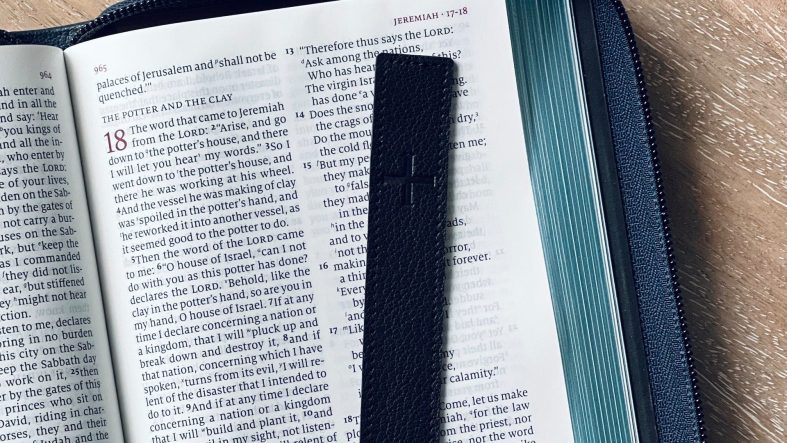
The Bible software I use (Accordance) has the ability to highlight text, but so far I’ve only used it once, for Psalm 21.  In just 13 verses, David wrote “you” or “your” 25 times, referring to God as the source of his success and blessings, past, present, and future.  The short 13 verses of Psalm 21 provide a plethora of praises we can offer to confess that God is powerful, faithful and just.  Here is the entire Psalm, and I’ve bolded all the “you”s and “your”s, which I highlighted in Accordance:

“To the choirmaster. A Psalm of David.

O LORD, in your strength the king rejoices,
            and in your salvation how greatly he exults!
You have given him his heart’s desire
            and have not withheld the request of his lips. Selah
For you meet him with rich blessings;
            you set a crown of fine gold upon his head.
He asked life of you; you gave it to him,
            length of days forever and ever.
His glory is great through your salvation;
            splendor and majesty you bestow on him.
For you make him most blessed forever;
            you make him glad with the joy of your presence.
For the king trusts in the LORD,
            and through the steadfast love of the Most High he shall not be moved.

Your hand will find out all your enemies;
            your right hand will find out those who hate you.
You will make them as a blazing oven
            when you appear.
The LORD will swallow them up in his wrath,
            and fire will consume them.
You will destroy their descendants from the earth,
            and their offspring from among the children of man.
Though they plan evil against you,
            though they devise mischief, they will not succeed.
For you will put them to flight;
            you will aim at their faces with your bows.

Be exalted, O LORD, in your strength!
            We will sing and praise your power.”

What statements did you focus on while reading this?  Did you take the time to think about all 25 “you” statements (and the rest of the Psalm)?  Read it again.

The first section in this Psalm describes how our God is “faithful” in some ways, and the second describes “just.”  The first may come easier, with David giving God credit for all of his strength and success, but the middle section on justice may come across as harsh and harder to swallow.  However, it reminds us that only He knows for sure who His (and our) enemies are.  “Your hand will find out all your enemies.”  Only He determines the fates of others, including some who look like enemies now, but will come to faith in Him later.  With any enemy we can “wait upon the Lord”, as David often urges us, knowing God will either save them, or their plans will come to ruin by His design.

Yet, for those in Christ, “he is faithful and just to forgive us our sins and to cleanse us from all unrighteousness.”  Therefore, we echo David:

“Be exalted, O LORD, in your strength!
            We will sing and praise your power.”

Daily Readings for April 7 – 13

Fellow travelers:

Here is the list of readings for this week.  Each week I will post 2 chapters to read per day as the main reading plan, and for anyone who wants to read the whole Bible in 2025, I post the extra chapters needed for that goal.  Reading 3 chapters a day on weekdays and 4 on weekends almost exactly covers the 1,189 chapters of the Bible, so the “extra” readings are about 9 chapters per week.

Follow along (or not) any way you choose!

Monday, April 7: Psalm 97, Exodus 19
Tuesday, April 8: Psalm 98, Exodus 20
Wednesday, April 9: Psalm 99, Exodus 21
Thursday, April 10: Psalm 100, Exodus 22
Friday, April 11: Psalm 101, Exodus 23
Saturday, April 12: Psalm 102, Exodus 24
Sunday, April 13: Psalm 103, Exodus 25

Additional readings if you want to read the whole Bible this year:
1 Chronicles 23 – 2 Chronicles 2

We’re All Little Pharaohs

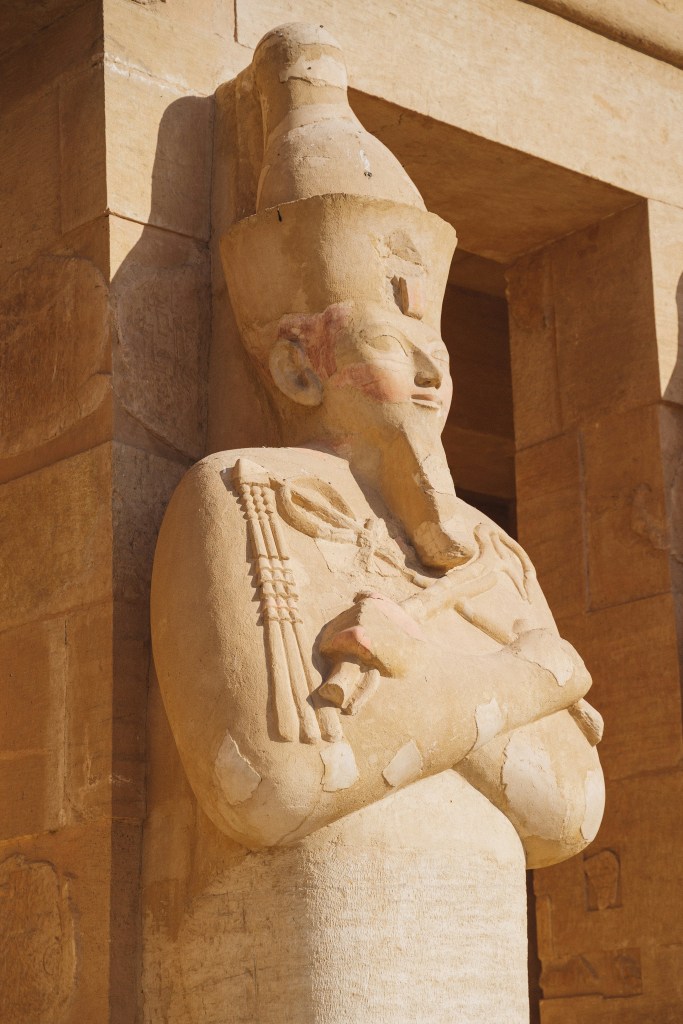
Anyone who knows the story of the Exodus knows who the bad guy is: Pharaoh.  As the leader of Egypt, he is primarily to blame for the enslavement of Israel.  Eventually, through Moses and Aaron, God tells Pharaoh to free the Israelites from slavery, and time and again Pharaoh refuses.  Clearly, Pharaoh is God’s enemy.  However, in his resistance to God, I think Pharaoh fell into some habits any of us could fall into.

First, Pharaoh admitted his need for God only when things were going wrong but shut God out when things were going well.  In Exodus 8:8, Pharaoh asked Moses to “Plead with the LORD to take away the frogs from me and from my people” but once the frogs were gone, Exodus 8:15 tells us that “when Pharaoh saw that there was a respite, he hardened his heart” and refused to do God’s will.  The same thing happens in chapter 9, during the plague of the hail.  Seeing the destruction caused by the hail, Pharaoh says “Plead with the LORD, for there has been enough of God’s thunder and hail” in verse 28, but in verse 34, “when Pharaoh saw that the rain and the hail and the thunder had ceased, he sinned yet again and hardened his heart.

Photo by Alex Azabache on Unsplash

Next, Pharaoh repeatedly negotiated with God to define the scope of His influence.  Faced with the plague of flies, Pharoah said to Moses and Aaron “Go, sacrifice to your God within the land.”[1]  But staying “in the land” was not what God wanted His people to do.  In response to the plague of locusts, Pharoah said “the men among you” could leave and worship God, but he wouldn’t let the “little ones[2] go.  Also, after the plague of darkness, Pharoah said “Go, serve the LORD; your little ones also may go with you; only let your flocks and your herds remain behind.”[3]  In these 3 responses, Pharaoh insisted on limits to where the people should worship, which people should worship, and what they could (and couldn’t) use in worship.

Third, Pharaoh also tried to limit the scope of his own sin, and which sins he would be accountable to God for.  In Exodus 9:27, Pharaoh said, “this time I have sinned” and in 10:17 said “forgive my sin, please, only this once.”  In reality Pharaoh was sinning every time he refused to listen to God, but he wasn’t willing to admit that.  He only admitted a minority of the times he disobeyed.

If you’re like me, this all might sound familiar.  Often our prayers are more fervent and sincere when we need help than they are when we have something to praise God for, or when times are good.  Often, we allow God to govern some parts of our life, but we keep other parts for ourselves, to do what we want with.  Also, we often only admit some of our sins and choose which ones to care about.  We’re all a bit like Pharaoh, the bad guy in the Exodus story.

Fortunately for us, we have something else in common with Pharaoh: the true, Almighty God will defeat all of the “gods” we follow.  Every single one.  Behind the battle between Moses and Pharaoh was a contest between our God and Pharaoh’s gods.  As the Life Application Study Bible notes: “As each gloomy plague descended upon the land, the Egyptian people realized how powerless their own gods were to stop it. Hapi, the god of the Nile River, could not prevent the waters from turning to blood. Hathor, the crafty cow-goddess, was helpless as Egyptian livestock died in droves. Amon-Re, the sun-god and chief of the Egyptian gods, could not stop an eerie darkness from covering the land for three full days.”

When we choose not to obey God, we harden our hearts against Him and follow the “gods” we choose for ourselves, but God will ultimately defeat them all.  God’s purpose in saving us is to deliver us from all other gods, as He delivered Israel from Egypt.  He will deliver us from our slavery to every sin that binds us and make us not follow Him wholeheartedly.

We may be more like Pharaoh than we’d like to admit, but the Pharaoh in us has been killed, nailed to the cross with Jesus. When we reach heaven, all of our other “gods” will be gone and we will be perfected in our obedience to the one, true God, for our good and for His glory!

That’s a deliverance worth looking forward to and praising God for!

Amen.


[1] Exodus 8:25
[2] Exodus 10:10-11
[3] Exodus 10:24

The Meaning of the Bible in Sign Language

As a hearing child of deaf parents myself, I was thrilled in 2022 to see the movie CODA win best picture, deaf actor Troy Kotsur win best supporting actor, and Siân Heder win for best adapted screenplay.  CODA stands for Children of Deaf Adults and the story centers around Ruby Rossi, a hearing teenage girl who is an amazing singer but is the only hearing member of her family.  There are good lessons in the movie about overcoming differences and obstacles through some compassion and creativity.

It was a great movie but be aware: “Mr. Kotsur used the versatility of sign language to enhance Frank’s dialogue, which is sometimes salty enough to push the limits on the movie’s PG-13 rating.”[1]  There’s one scene in particular where Frank Rossi embarrasses his daughter Ruby in front of a boy with some improvised, erotic sign language.  Versatility has negatives but also positives…

Multiple words for love in Greek (eros, agape, etc.) conceal layers of meaning when translated to English.  After watching CODA, I was reminded of an example where the expressiveness of sign language also adds layers of meaning beyond spoken English. (maybe spoken English is just a bad language?)  Not all sign language is the same – there are many dialects – but the sign for Bible I use is actually two signs: “Jesus” followed by “book.”  Every time I sign what I would just speak as “Bible,” there’s a reminder built right in that the Bible is a book about Jesus.  From start to finish, the Bible is a record of why He needed to come, what He was like when He did, and what His followers should believe, know, and do.  Jesus Christ is described right in the sign for Bible!

But there’s still another layer.  In the book of 1 Corinthians, the apostle Paul defends his ministry saying that his message needs to focus on “Christ crucified”[2], not on performing miracles to those who want signs and impressing with fancy speech those who love wisdom.  To sign “Jesus”, I touch the middle finger of my right hand to the palm of my left hand, then the middle finger of my left to the palm of my right.  What does that signify?  It’s an expressive reminder of the crucifixion of Jesus, and the nails that were barbarically driven into his hands.  Thomas, one of the 12 main disciples of Jesus, said after the first Easter that he would not believe Jesus had risen from the dead “Unless I see in his hands the mark of the nails, and place my finger into the mark of the nails, and place my hand into his side.”  Eight days later, Jesus presented Himself to Thomas and said “Put your finger here, and see my hands; and put out your hand, and place it in my side. Do not disbelieve, but believe.”  To which Thomas replied: “My Lord and my God!”  (John 20:24-29).  I don’t know if this was intended by the person who created the sign for Jesus, but it may be a liturgy recalling this encounter, reminding us that Jesus was crucified, yet lives!

So, whenever you think of the Bible, think of it in sign language where every single time you sign it, there is a reminder that the Bible is the book about Christ crucified.  After Thomas declared who Jesus was, Jesus responded: “Have you believed because you have seen me?  Blessed are those who have not seen and yet have believed.”  Every time I sign “Bible,” it testifies to those who have not seen Jesus of what He has done for them.


One Last Thing
By the way, to sign “book” you place your hands together flat, palms facing each other, in front of you, then open them as if your hands were the front and back of a book.


[1] Jurgensen, John. “Troy Kotsur of ‘CODA’ Wins Best Supporting Actor Oscar.” The Wall Street Journal, 27 March 2022.
[2] 1 Corinthians 1:23