Sometimes Life is Hard on Purpose

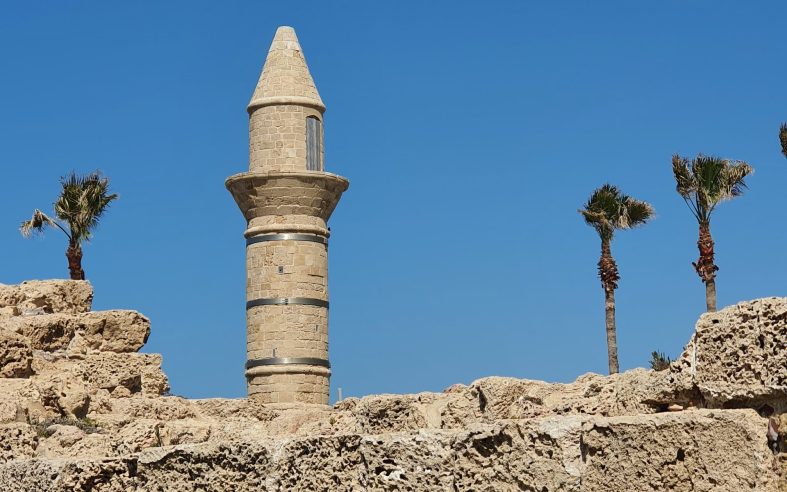
Photo by ål nik on Unsplash

Joshua, Moses’ hand-picked successor, was very aware of the consequences of failing to trust God.  After being delivered from Egypt, Israel was led to Canaan – their promised land – and God had Moses “Send men to spy out the land of Canaan, which I am giving to the people of Israel.[1]  The purpose of the spy mission was not to decide whether or not to move into the land.  God promised to give it to them.  However, when the 12 spies returned, 10 of them said “We are not able to go up against the people, for they are stronger than we are.[2]  Only Joshua and Caleb said they should take the land anyway, because God’s promise and strength was enough for them.  Because the people rebelled, trusting 10 disloyal spies rather than Him, God said Israel must wander the wilderness for years and only Joshua and Caleb would live long enough to enter the land.

After taking 40 years to make what could have been an 11-day journey[3] to the Jordan River where Israel would enter the land, God knew, and Joshua knew, that divided loyalties could doom everyone to another 40-year wilderness adventure.

Arriving at the flooded Jordan River, some people may have doubted whether Joshua get them across.  Joshua had just become their leader, and perhaps the failure of Moses, who recently died, meant the failure of their dreams of the promised land.  After all, they saw the Red Sea part for Moses.  Could Joshua get them over this river?

Then in Joshua 3:15 we find this note: “(now the Jordan overflows all its banks throughout the time of harvest)”.  Why is this phrase important?  Israel arrived at the Jordan at the most difficult time to cross.  The river would be as deep and as wide as ever, and likely the current would be stronger as well.  A sensible person would avoid crossing at this time, but God chose the most “difficult” time to perform this miracle to show that nothing is difficult for Him.  This phrase is there because entering the promised land should glorify God and God alone.

By coming to the Jordan specifically when it “overflows all its banks” God wanted to remind His people that only He can and will deliver them.  The Red Sea wasn’t parted because of Moses; it was parted because of God.  God could deliver Israel without Moses, but Moses couldn’t deliver Israel without God.  It was never about Moses.  Likewise, Joshua wasn’t going to get them to their land; God was.  The flood gave the people no reason to credit Joshua for their success.

As instructed, this is how they crossed the flooded river: “as soon as those bearing the ark had come as far as the Jordan, and the feet of the priests bearing the ark were dipped in the brink of the water (now the Jordan overflows all its banks throughout the time of harvest), the waters coming down from above stood and rose up in a heap very far away, at Adam, the city that is beside Zarethan, and those flowing down toward the Sea of the Arabah, the Salt Sea, were completely cut off. And the people passed over opposite Jericho.  Now the priests bearing the ark of the covenant of the LORD stood firmly on dry ground in the midst of the Jordan, and all Israel was passing over on dry ground until all the nation finished passing over the Jordan.” – Joshua 3:15-17

Joshua was very clear about giving God credit, and it’s a lesson for Christians in all times and places.  When God raises up leaders, He also reminds us that they are but men and tools in His hand.  They are also profoundly fallible.  10 out of 12 human leaders being wrong left Israel wandering for 40 years.  Only God leads anyone to salvation and only when they trust Him alone for it.  He often works through fallen human leaders, raising them up to lead His people, not because He prefers sinful leaders over virtuous ones, but because there is no other kind of person and because He is jealous for His own glory.

Is there a flooded river God wants you to cross?  When we attempt things that only make sense because God told us to do them, we may be more likely to do or witness something that glorifies God and God alone, because only He could do it.

Are there rivers you have crossed in the past?  Like God told Joshua after this crossing to lay memorial stones so they would never forget (see Joshua 4), make sure to keep a record of God’s power and faithfulness in your life.

Sometimes life is hard on purpose.
Sometimes the river is flooded because God wants to show you something awesome.

Therefore, “Be strong and courageous.  Do not be frightened, and do not be dismayed, for the LORD your God is with you wherever you go.” – Joshua 1:9b
[1] Numbers 13:1
[2] Numbers 13:31
[3] Deuteronomy 1:2

“Consider Well Her Ramparts”: Participating in the Psalms

Reading the Psalms is a great devotional habit, and every now and then a Psalm or a section of a Psalm gives instructions to its reader.  The author is inviting us to participate in something about God that they have experienced by taking specific actions.  Earlier posts on participating in the Psalms (here, here, and here) have covered Psalms 96 and 100, which asked us to sing a new song and to give thanks, respectively.  Today’s post is about Psalm 48, which is a little harder to see how to participate.  Most of the Psalm praises God by talking about His city, Jerusalem, and His mountain, Mount Zion.  If our God’s dwelling place is worthy of praise, then He must be as well.  The “participating” part comes at the end, with verses 12-14:

Walk about Zion, go around her,
            number her towers,
consider well her ramparts,
            go through her citadels,
that you may tell the next generation
            that this is God,
our God forever and ever.
            He will guide us forever.

The Psalmist wrote in ancient times that it was worth it to take the time to walk around Zion, to consider the things of God and not just gloss over them quickly, but how do we do that when Christians do not consider Jerusalem and Mount Zion to be the dwelling place of God?  How do we “consider well her ramparts”?

Photo by Boris Izmaylov on Unsplash

Currently, what was represented by the temple in Jerusalem on Mount Zion is represented by His body of believers, indwelt by His Holy Spirit.  Peter wrote that members of the church, “like living stones are being built up as a spiritual house, to be a holy priesthood, to offer spiritual sacrifices acceptable to God through Jesus Christ.”[1]  Therefore, do we participate in this Psalm by considering God’s strength through the church throughout history?  When we consider the “towers”, “ramparts”, and “citadels” of the church, do we consider the great “cloud of witnesses” listed in Hebrews 12, in addition to the faithful members of the church through the centuries since then?

Do we consider well not only the strength God has given His church through history, but also the strength that He protects it with even now?  Do we consider our own “ramparts” – the armor of God listed in Ephesians 6:13-17 –

Therefore take up the whole armor of God, that you may be able to withstand in the evil day, and having done all, to stand firm.  Stand therefore, having fastened on the belt of truth, and having put on the breastplate of righteousness, and, as shoes for your feet, having put on the readiness given by the gospel of peace.  In all circumstances take up the shield of faith, with which you can extinguish all the flaming darts of the evil one; and take the helmet of salvation, and the sword of the Spirit, which is the word of God.

Consideration takes time, so to participate in this Psalm take some time, if not today then soon, to consider God’s strength as shown through a person in the Bible, in church history, or even your own community or family.  Praise God for His strength and protection over His faithful!

As the “Sons of Korah” who wrote Psalm 48 believed, it’s worth the time and effort to:

Walk about Zion, go around her,
            number her towers,
consider well her ramparts,
            go through her citadels,
that you may tell the next generation
            that this is God,
our God forever and ever.
            He will guide us forever.

Many of this blog’s posts on History (click here) are a decent starting point.


[1] 1 Peter 2:5

Weekly Readings for February 24 – March 2

Fellow travelers:

Here is the list of readings for this week.  Each week I will post 2 chapters to read per day as the main reading plan, and for anyone who wants to read the whole Bible in 2025, I post the extra chapters needed for that goal.  Reading 3 chapters a day on weekdays and 4 on weekends almost exactly covers the 1,189 chapters of the Bible, so the “extra” readings are about 9 chapters per week.

Follow along (or not) any way you choose!  I will often re-post old blogs that comment on the chapters in this schedule.

Monday, February 24: Psalm 55, Matthew 5
Tuesday, February 25: Psalm 56, Matthew 6
Wednesday, February 26: Psalm 57, Matthew 7
Thursday, February 27: Psalm 58, Matthew 8
Friday, February 28: Psalm 59, Matthew 9
Saturday, March 1: Psalm 60, Matthew 10
Sunday, March 2: Psalm 61, Matthew 11

Additional readings if you want to read the whole Bible this year:
1 Kings 16 – 2 Kings 2

Worship Does Not Come Naturally: Intro to the “Psalms of Ascent”

Today begins a weekly, Saturday series on the “Psalms of Ascent.”  But what are they and why write about them?

Each Psalm from 120 to 134 is titled as a “Psalm of Ascent,” referring to pilgrimages to the three annual feasts of Passover, Pentecost, and the Feast of Booths, where every male (often bringing their extended families) was required to “ascend” up to Jerusalem.  Together, these Psalms form a type of hymnal or liturgy that these groups could sing or recite on their way to these festivals from the sometimes-distant areas where they lived.

These were reminders that their well-being depended on God’s blessing, that even though they were living in the “Promised Land” they were still pilgrims in this world, and that in spite of affliction and persecution they could rely on God to deliver them, if they worshiped Him faithfully.

Driving Toward Morning is a place to “set your minds on things that are above, not on things that are on earth” (Colossians 3:2), and also about encouragement “to stir up one another to love and good works” (Hebrews 10:24).  Local churches are the ideal place to do the same and discussing these Psalms here will hopefully prepare pilgrims everywhere for their weekly (and daily) worship and fellowship.

Just like the travelers in ancient Judah and Israel, who could not just show up at the temple in Jerusalem and expect God to magically transform them, the church today does not benefit from merely physically showing up to church.  The three annual pilgrimages were time-consuming, costly, and deliberate.  They provide us a model for intentional preparation for group worship.

In the words of early 20th century evangelist Billy Sunday: “Going to church doesn’t make you a Christian any more than standing in a garage makes you a car”

Minding Our Own Business

Have you heard the term “virtue signaling”?  The Merriam-Webster dictionary defines it as “the act or practice of conspicuously displaying one’s awareness of and attentiveness to political issues, matters of social and racial justice, etc., especially instead of taking effective action.”  The phrase seems like it’s been around a long time, but the first use of it may have been as recent as 2013.[1]

Maybe the words “virtue signaling” are new, but the idea is at least as old as the Bible.  In chapter 26, verses 6-13 of Matthew’s gospel, he tells the story of a woman who came to Jesus with “an alabaster flask of very expensive ointment” which she poured on Jesus’ head in front of the disciples.  In Jesus’ view “she has done a beautiful thing to me…to prepare me for burial.”  But the disciples didn’t see it the same way Jesus did.  They indignantly said “Why this waste?  For this [ointment] could have been sold for a large sum and given to the poor.

Jesus responded how it was “a beautiful thing”, but also made another comment that made it clear the disciples were virtue signaling.  He told them not to “trouble the woman.”  “For you always have the poor with you, but you will not always have me.”  I think Jesus had at least 3 points in this phrase, related to virtue signaling.

The first is that knowing what to do isn’t enough.  In fact, it just increases our responsibility.  James 4:17 says: “So whoever knows the right thing to do and fails to do it, for him it is sin.”  Although the disciples knew that giving to the poor was good, in this case were more concerned about sharing that knowledge than about using it.  Today, we might call such people virtue signalers, but the Bible calls them “busybodies” and “meddlers[2]  People who go from person to person evaluating and criticizing their work instead of minding their own responsibilities.  These people are common on social media.

Second, that there is always an opportunity to help the poor – they always will exist and aren’t hard to find – and each disciple surely missed opportunities every day.  On what basis could they pick on someone else’s failure to help the poor?  By criticizing the woman, they revealed that virtue signaling was more important to them than actually being virtuous.

The last point is that service flows from worship, not the other way around.  When we worship Jesus, the ultimate servant, our own ability to sincerely serve others increases as a result.  The woman with the ointment knew this may be the only opportunity to anoint Jesus for burial, and knew she shouldn’t miss it.  On the other hand, the disciples wanted Jesus to punish the woman when they should have been minding their own business.  An internal posture of worship may be the best antidote to hypocrisy and the temptation to merely signal virtue.

The phrase “mind your own business” usually is said to someone we want to leave us alone, but the words actually mean that we should consider our own activities and motives more important than the policing of other people’s activities and motives.  We “always have the poor” with us and fall far short of the standard we need to meet to judge other people’s use of resources.

When we all stand before God in judgment, Jesus will tell the blessed: “I was hungry and you gave me food, I was thirsty and you gave me drink, I was a stranger and you welcomed me, I was naked and you clothed me, I was sick and you visited me, I was in prison and you came to me.’”  In other words, the blessed minded their own business instead of just criticizing others (virtue signaling).  Jesus notices when we take effective action and doesn’t care much about our opinions of others’ effectiveness.

Therefore, pray that we can all mind our own business, in worshipful service, “for you always have the poor with you,” and thank God for His forgiveness, because I know I don’t mind my own business nearly as often as I should.  Sometimes I just blog about it.


[1] https://www.merriam-webster.com/dictionary/virtue signaling
[2] 1 Timothy 5:13; 1 Peter 4:15