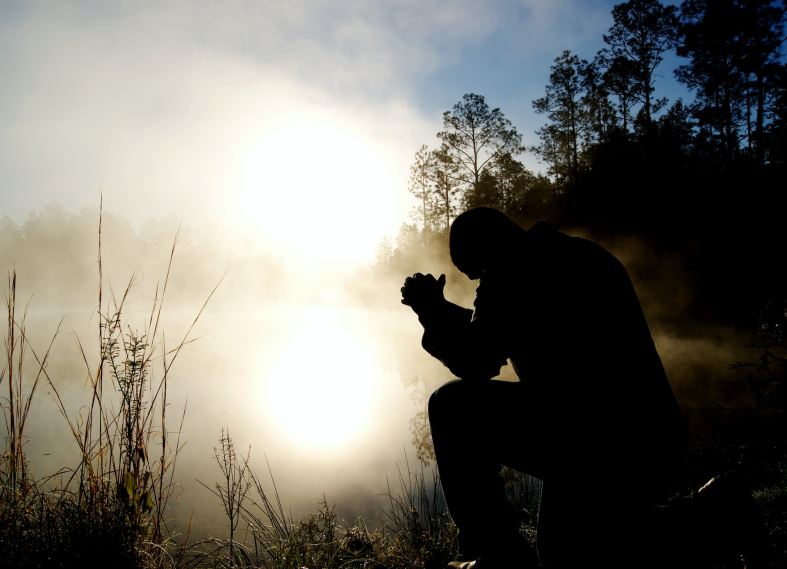
God is Faithful in Trouble

Fellow travelers,

Psalm 71 was likely written by an old man, looking back over his life and the many instances of God’s faithfulness.  Looking back over a lifetime of walking with God strengthens his current faith, and he writes to strengthen ours.  Although some might expect a testimony of God’s faithfulness to talk about uninterrupted good fortune and all the good times the Psalmist has had, in verse 20, they write:

“You who have made me see many troubles and calamities
            will revive me again;
from the depths of the earth
            you will bring me up again.”

This man’s life, like most people’s lives, was filled with “many troubles and calamities,” yet these only strengthen his faith because God has rescued him every time in the past.  Without allowing us to experience trouble, how could God develop a track record of rescuing us?  John Calvin comments on this verse that:

“Had he always enjoyed a uniform course of prosperity, he would no doubt have had good reason to rejoice; but in that case he would not have experienced what it is to be delivered from destruction by the stupendous power of God. We must be brought down even to the gates of death before God can be seen to be our deliverer.”

God is always faithful, but we experience it especially in bad times.

Amen.

Christianity is Not in Decline. Ever.

The tomb is still empty!

Too much of what we hear and read in this world is filled with phrases like “post-Christian world,” or “Christianity’s decline.”  Or we could read that we’re “living in the ruins of Christendom.”  However, because Hebrews 11:1 says, “Now faith is the assurance of things hoped for, the conviction of things not seen,” our hope is not based on any ruin or decline we see in the communities and world around us.  While other things may end up in ruins or in decline, Christianity does not.  It was not in decline on Good Friday when Jesus died on the cross and it is not in decline now.

The best of the kingdom of God is always in the future, never in the past.  His kingdom is advancing daily.

Today, many will hear the good news of the kingdom of Jesus, and some may hear and be saved!  Also today, none will be snatched out of His hand! (See John 10:28)

Daily Readings for September 8 – 14

Fellow travelers:

Here is the list of readings for this week: 2 chapters to read per day as the main reading plan, and extra chapters for anyone who wants to read the whole Bible in 2025.  Reading 3 chapters a day on weekdays and 4 on weekends almost exactly covers the 1,189 chapters of the Bible, so the “extra” readings are about 9 chapters per week.

Follow along (or not) any way you choose!

Monday, September 8: Joshua 9-10
Tuesday, September 9: Joshua 11-12
Wednesday, September 10: Joshua 13-14
Thursday, September 11: Joshua 15-16
Friday, September 12: Joshua 17-18
Saturday, September 13: Joshua 19-20
Sunday, September 14: Joshua 21-22

Extra chapters for those reading the whole Bible this year:
Jeremiah 48-52, Lamentations 1-4

God Breaks Out of All Boxes

Written around 600 B.C., the Old Testament book of Habakkuk outlines a conversation between the prophet Habakkuk and God, in the few years prior to Judah’s exile in Babylon.  The book begins with Habakkuk’s complaint that evil was running rampant in Judah.  Habakkuk cries out to God about the prevalence of “violence” and “iniquity.”  He cries out about how people are ignoring God’s law, yet nothing is being done about it.  There was no justice.[1]  He’s tired of seeing nothing but evil in the world every day and is frustrated that God doesn’t seem to be doing anything about it.

Then comes Habakkuk 1:5, which to me is one of the most shocking verses in the Bible:

“Look among the nations, and see;
            wonder and be astounded.

For I am doing a work in your days
            that you would not believe if told.”

Why is this verse shocking?  Because next, God tells Habakkuk that He has arranged for Babylon, a “dreaded and fearsome”[2] nation that does not respect God and that lives by the creed that might makes right, to conquer Judah.  Basically, Habakkuk asks God why He was allowing evil to prosper in Judah, and God answers that He will allow an even more evil nation to prosper and conquer Judah.  Habakkuk must have been perplexed, and God knew it.  He knew Habakkuk would “wonder and be astounded” and we probably feel that way sometimes too.

Habakkuk had expectations about what God could and couldn’t do, but here God says He can, and will, do things that shock us.  Things that we cannot understand, but things that will teach us to trust instead of understand.  Sometimes God doesn’t behave in line with our theological doctrine, but He always does so for a reason.

Another example of shock at God’s out-of-the-box behavior comes from John 13, one of my favorite New Testament stories.  Mere days before going to the cross, “Jesus, knowing that the Father had given all things into his hands, and that he had come from God and was going back to God, rose from supper. He laid aside his outer garments, and taking a towel, tied it around his waist. Then he poured water into a basin and began to wash the disciples’ feet and to wipe them with the towel that was wrapped around him.”[3]

Photo by Photoholgic on Unsplash

Peter was shocked.  This was not what he expected from the Messiah, the incarnate Son of God.  So, when we get to verse 8, we read: “Peter said to [Jesus], “You shall never wash my feet.” Jesus answered him, “If I do not wash you, you have no share with me.””

Peter was reluctant to accept a God that would serve him by washing his feet, but what Jesus was trying to tell the disciples was that if they wanted to follow Him as their master, they would have to serve as He served, even if it wasn’t what they expected from God.  They needed to be washed, and then to wash others.

Peter was learning that if Jesus is doing something, don’t question it!  His actions are right by the mere fact that He is doing it, whatever our reason or expectations tell us.  In the Old Testament, God decided to send His people to a Promised Land, then to cause a heathen nation to kick them out of the Promised Land.  In the New Testament, He showed us that His Messiah would be a suffering servant, to teach us to be suffering servants.

God will never do anything that contradicts His character as revealed in the Bible, but the Bible also says, “Who has measured the Spirit of the LORD, or what man shows him his counsel?” in Isaiah 40:13.  God does not fit within our boxes, our expectations and rules.  We don’t fully understand Him.  Therefore, pay close attention to Jesus the Master, and be ready to follow where He goes, even though it might be shocking!

“Look among the nations, and see;
            wonder and be astounded.

For I am doing a work in your days
            that you would not believe if told.”


[1] Habakkuk 1:2-4
[2] Habakkuk 1:7
[3] John 13:3-5

Surprising Answers to Prayer

Jesus told many parables, often in response to situations or people He came across.  These parables are full of great lessons, but sometimes there’s also a lesson in the prelude to the parable.  One such example happens in Luke 12:13-15, which says:

“Someone in the crowd said to him, “Teacher, tell my brother to divide the inheritance with me.”   But he said to him, “Man, who made me a judge or arbitrator over you?”  And he said to them, “Take care, and be on your guard against all covetousness, for one’s life does not consist in the abundance of his possessions.””

Jesus goes on to tell the “parable of the rich fool,” who loses his soul because he only cares about worldly goods.  The parable is a lesson about coveting, greed and priorities, but I believe there’s also a broader lesson about prayer in the 3 verses above before the parable even starts.

We can put ourselves in the place of the “someone in the crowd,” who wants something, and brings it to Jesus.  Unlike him, we don’t meet Jesus physically on the street, but we come to Him in prayer all the time.  We want something and we pray about it.  When we pray, we often we want to get a particular answer, hopefully giving us what we want.

In the case of “someone” in the Luke 12 story, he wanted part of the family inheritance.  In our case, we could want any number of things like financial gain, an end to a societal problem, better governance from our leaders, success for our children or others, a safe business trip or vacation, etc.  God wants us to pray to Him about all things, and we do.  “Humble yourselves, therefore, under the mighty hand of God so that at the proper time he may exalt you, casting all your anxieties on him, because he cares for you.”  (1 Peter 5:6-7)

However, we often aren’t ready to listen to a different answer than the one we want.  In the story, Jesus didn’t respond to “someone” with a direct answer, but with an answer that challenged the attitude behind the question.  “You shall not covet”[1] is one of the Ten Commandments after all, and Jesus was letting “someone” know the condition of his heart was more important than the condition of his bank account.

God can respond to our prayers in the same way.  Instead of solving what we think is the problem, He may try to reveal to us a deeper problem we need to deal with.  But if we’re focused on the answer we want, we might miss the point He wants to make.  To God, our sanctification is more important than our gratification but often get that backwards.

When we pray for financial gain, God may respond by challenging our priorities, our diligence, our spending habits, etc.  In the Luke story, Jesus confronted the man’s covetousness.

When we pray for an end to societal problems, God may respond by telling us to care for a single mother[2], or support a homeless ministry, or volunteer at a food bank.

When we pray for better governance from our leaders, God may respond by telling us to control what we can control, by reminding us of His sovereignty, or by giving us practical means to work on the problems we want the politicians to solve, but on a smaller scale.

And so on.  Sometimes we do get what we ask for in prayer, but sometimes God will use prayer to do what He promises to do: make us more like Jesus.  Again, our sanctification is more important than our gratification, but sometimes we miss the point because we’re focused on our needs.

It’s ok to bring all of our needs and concerns to God in prayer, and sometimes we get what we want. However, don’t be surprised if He responds in surprising ways, but how?  He can speak to us any way He chooses, but in my experience, He usually points things out in His word, through our circumstances, and through other believers.

Listen and be open to His answers.  No matter what they might be.

“The majority of us begin with the bigger problems outside and forget the one inside.  A man has to learn ‘the plague of his own heart’ before his own problems can be solved” – Oswald Chambers

“The heart of every problem is the problem in the heart.” – Warren Wiersbe


[1] Exodus 20:17; Deuteronomy 5:21
[2] James 1:27