The Fog God Hath Wrought – History for August 30

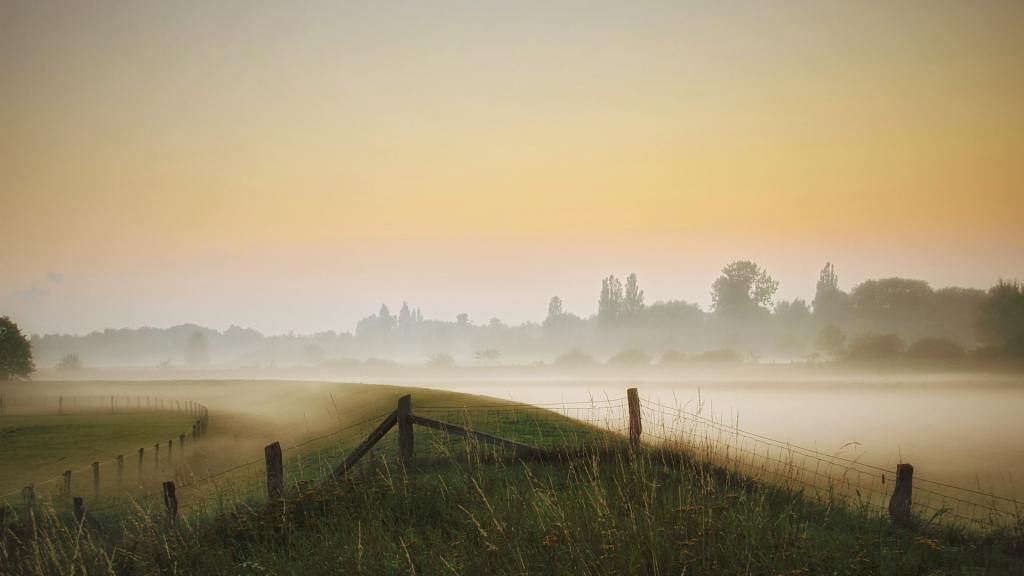
Photo by Carsten Stalljohann on Unsplash

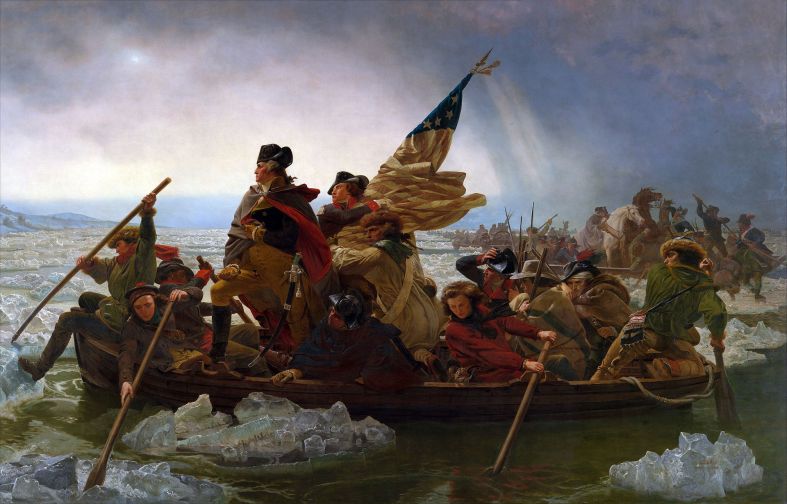
On March 5th, 1776, a sudden change in the weather led to a decisive victory for the American Revolutionary Army and an end to the British occupation of Boston (see my post on that date here).  On this date, August 30, in 1776, weather intervened again.  The American Revolution could have ended in bitter loss, but for “a peculiar providential occurrence” – Pea-soup fog.  “So very dense was the atmosphere,” remembered Benjamin Tallmadge, “that I could scarcely discern a man at six yards’ distance.”  For the book “What Ifs? Of American History”, historian David McCullough wrote a chapter describing the significance of these events.[1]

After a humiliating loss in Brooklyn (including more than 1,000 surrendered troops), George Washington found himself and his 9,000-man army cornered at the end of a peninsula by a British force numbering over 30,000, plus a vast navy.  Left with few options and overwhelming odds, George Washington quickly ordered the army to evacuate Brooklyn overnight by anything they could find or make that would float, across the East River to Manhattan.  The escape depended entirely on the element of surprise and the cover of darkness.  The scale and boldness of the escape was enormous – one Connecticut man recalled crossing the river 11 times that night, ferrying troops and equipment across.  The evacuation continued well into the morning, when the British might easily have seen what was happening, close in, and utterly destroy Washington’s army.

However, the escape remained concealed under a different kind of darkness, because “a heavy fog settled in over the whole of Brooklyn, concealing everything no less than had the night”[2]  By the time the fog cleared, the escape was complete, and the British, expecting a victorious day, were instead astonished by another overnight, weather-assisted, disappearing act by the American army.

McCullough says that without the fog: “Washington and half the Continental Army would have been in the bag, captured, and the American Revolution all but finished. Without Washington there almost certainly would have been no revolution.”  Because of the fog, “the entire force, at least nine thousand troops, possibly more, plus baggage, provisions, horses, field guns, everything but five heavy cannon that were too deep in the mud to budge, had been transported over the river in a single night with a makeshift emergency armada assembled in a matter of hours. Not a life was lost.”

This was not the first time, nor would it be the last time, that weather – or Providence – would play a key role in the American struggle to break away from British rule.  Therefore, let every people and nation seek the LORD this day, who can wield nature itself in favor of – or against – the very nations.

“Are there any among the false gods of the nations that can bring rain?
Or can the heavens give showers?
Are you not he, O LORD our God?
We set our hope on you,
for you do all these things.” – Jeremiah 14:22


[1] From “What the Fog Wrought.” David McCullough and Robert Cowley.  What Ifs? Of American History (2003).  P. 52-54.
[2] McCullough, David.  1776 (2005).  P. 191.

A Great Festival in Zimbabwe – History for June 18

Each June 18 in in the African nation of Zimbabwe, a festival is held to remember the service of Bernard Mizeki and his martyrdom on this date in 1896.  As recently as 2005, almost twenty thousand attended the festival at a time when Zimbabwe had massive food shortages and an unemployment rate of 80 percent!

As profiled in the book “Clouds of Witnesses” by Mark Noll and Carolyn Nystrom[1], Mizeki found Christ, was baptized, and became a missionary under the influence of an Anglican order in Cape Town, South Africa.  He planted[2] a one-man mission among the Shona people in an area then known as Theydon, now part of Zimbabwe.  The Shona worshiped a creator-deity they called Mwari and sometimes practiced the killing of twin babies and the murder of those identified as sorcerers by their leaders.

Mizeki befriended Shona Chief Mangwende, learned their language in one year, translated key Biblical texts and Christian creeds, held Anglican services, and sought to reform the practices mentioned above.  He also identified with and invested in the Shona by marrying a Shona woman, teaching children and others to sing, and providing medical care.  His work prospered, and many came to believe.

However, opposition to his work began to grow, especially from those who saw his work as an assault on their culture and authority.  On the night of June 17th, 1896 he was assaulted in front of his home and had a spear driven into his side.  It seems Mizeki’s removal of some “sacred trees” was the last straw.  Then the account gets truly interesting.

Multiple accounts by Africans and Europeans attest to a “great and brilliant white light” and “a noise ‘like many wings of great birds’” around the hut where Mizeki was laid while his friends cared for him, seemingly near death.  There was a “strange red glow” around Mizeki’s hut and afterward his body was gone, never to be seen again. Jean Farrant, who documented witness accounts in her book on Mizeki, says each person must decide what to make of this, but that “something happened that night which to the Africans was beyond explanation, which frightened them very much, and left a deep impression”[3]  This event is still celebrated today, and others have taken up Mizeki’s work.

Soli Deo Gloria!


[1] Noll, Mark A.; Nystrom, Carolyn.  Clouds of Witnesses: Christian Voices from Africa and Asia (2011).  This post is drawn from chapter 1.
[2] John 12:24 – “Truly, truly, I say to you, unless a grain of wheat falls into the earth and dies, it remains alone; but if it dies, it bears much fruit.”
[3] Farrant, Jean.  Mashonaland Martyr: Bernard Mizeki and the Pioneer Church (1966).  P. 216-22.  Cited in Clouds of Witnesses P. 30.

The Affair of the Sausages: History for March 9

The idea that the Protestant Reformation began with Martin Luther nailing the ninety-five theses to the door of All Saints’ Church in Wittenberg, Germany is fairly well known.  Less known is that the spark for Reformation in nearby Switzerland was a controversy over sausages.

March 9th was the first day of Lent in 1522, and Huldrych Zwingli, a pastor in Zurich, Switzerland, was the guest of printer Christoph Froschauer, who published some of Zwingli’s sermons and later his translation of the Bible into German.  Froschauer, working long hours with his staff, invited Zwingli to dinner on March 9th and served slices of smoked sausage to fortify everyone for the work ahead.  However, during Lent eating meat was illegal under the Catholic church-run government at the time, and Zwingli was arrested along with others at the dinner.

Photo by Rich Smith on Unsplash

Zwingli said he did not eat any sausage and so was spared the indignity of arrest, but the event was a turning point for him, and about one month later he preached a sermon titled “Freedom of Choice and Selection of Food” where he argued for freedom of conscience regarding observance of Lent.  The sum of the sermon was: “if you want to fast, do so; if you do not want to eat meat, don’t eat it; but allow Christians a free choice.”[1]

Zwingli, having previously been only loosely connected to Martin Luther and other Reformation figures and ideas, was appalled by the prioritization of state and priestly authority over the authority of God in each person’s heart:

“If you would be a Christian at heart, act in this way. If the spirit of your belief teaches you thus, then fast, but grant also your neighbor the privilege of Christian liberty, and fear God greatly, if you have transgressed his laws, nor make what man has invented greater before God than what God himself has commanded…You should neither scorn nor approve anyone for any reason connected with food or with feast days whether observed or not.”

Also in the sermon, Zwingli emphasizes the “why” a Christian does what he does over the “what”:

“Here is another sign of the times. I think that there is danger of this age being evil and corrupt rather than reaching out towards everlasting righteousness. Further, simple people think everything is all right if they go to confession in Lent only, observe the fast, take Communion and thus account for the whole year. God should, however, be acknowledged at all times and our life should be one of piety, whereas we act to the contrary when we think that it is quite enough if we pay attention only to the times of fasting whereas Christ says, ‘Be vigilant: for you know not the day or the hour’”

In an earlier post on Lent, I wrote that whatever our liturgy, it is useless as a “bargaining chip” with God, and that “if we do not value the prize – God Himself – nothing we give up for Lent will make us – or God Himself – happy.”  Zwingli became a forceful voice during the Reformation arguing that external pressure from church and state can strip us of grace and enslave us to legalism, but he also recognized with Paul that “Every athlete exercises self-control in all things[2]  Self-control cannot be forced by others, but in search of an “imperishable” prize, each should prayerfully consider the disciplines that help them better serve God, in accordance with His word, while showing grace towards others who God may ask to behave differently.  Not all athletes compete in the same events and train the same way.

Closing Note
I once considered naming this blog “Lenten Sausages” after the events described above, but that might have defined the blog as what it’s against.  Instead, the current name emphasizes the common destiny of all for whom Christ was crucified.  Every Christian became one because of Christ.  Before there were Protestants there were Christians.  Many of them.  After there were Protestants there are Catholic believers and Protestant nonbelievers, and vice versa.  One man’s liturgy is sometimes another man’s legalism.  Regardless of what’s on the sign in front of your church, it’s what’s inside that matters.

Soli Deo Gloria


[1] Zwingli, Huldrych.  “Freedom of Choice and Selection of Food.”  (1522)
[2] 1 Corinthians 9:25

Victory by Storm: History for March 5

During the American Revolutionary war, British troops besieged Boston leading to a long stand-off with troops led by George Washington.  Seeking a decisive move to gain advantage and end long weeks of inactivity that weighed on troop morale, George Washington ordered his men to fortify Dorchester Heights, a hill overlooking Boston, in the middle of the night.  These fortifications included artillery that had been painstakingly snuck down from Fort Ticonderoga over rough winter terrain by boat and sleds pulled by oxen.  These cannons had earlier been abandoned by the French.  The date of March 5th was intentionally chosen by Washington in part because it was the 6-year anniversary of the Boston Massacre, giving it symbolic meaning and motivating the troops.

On the morning of March 5th, the British awoke to find the Heights fortified, “with an expedition equal to that of the genie belonging to Aladdin’s wonderful lamp”, according to an unattributed letter to London newspapers.  Some, remembering losses sustained at Bunker Hill, urged retreat, but British General Howe was determined to drive the Americans off the Heights.  However, sudden, sustained storms including high winds and sleet, caused Howe to reconsider, leaving no option but to evacuate Boston.[1]

Because of this sudden change in weather, a long, deadly battle was avoided, and Boston was surrendered by the British without loss of life on either side.  This would not be the last time that weather – or Providence – would play a key role in the American struggle to break away from British rule.

Let every people and nation seek the LORD this day, who can wield nature itself in favor of – or against – the very nations.

“Are there any among the false gods of the nations that can bring rain?
            Or can the heavens give showers?
Are you not he, O LORD our God?
            We set our hope on you,
            for you do all these things.” – Jeremiah 14:22


[1] McCullough, David.  1776 (2005).  P. 90-97.

Let Justice Roll: History for Today

On January 15, 1929, Dr. Martin Luther King Jr. was born in Atlanta, Georgia.  A leader in the U.S. civil rights movement in the 1950’s and 60’s, he is the only non-president to have a national holiday in his name, celebrated on the 3rd Monday of every January. During this holiday, many will cite positives and negatives from King’s life and legacy, and here I will focus on one, specific positive.

His father and maternal grandfather had both been pastors of Ebenezer Baptist Church in Atlanta, and he carried this religious heritage into his own studies and activism.  In pastor Tim Keller’s book “Making Sense of God” he writes that the strength of King’s arguments comes from his knowledge “that human rights have no power if they are simply created by a majority or imposed by judicial fiat. They have power only if they are really ‘there,’ existing on their own, dependent only on the fact that the wronged person before you making the claim against you is a human being.”[1]

King applied the teaching that “God created man in His own image” from Genesis 1:26-27 to argue that this image gives every person: “a uniqueness, it gives him worth, it gives him a dignity. And we must never forget this as a nation: there are no gradations in the image of God. Every man from a treble white to a bass black is significant on God’s keyboard, precisely because every man is made in the image of God.”[2]

A mighty stream. Photo by Daniel J. Schwarz on Unsplash

In one of my favorite quotes from King, he cites the American institutions of democracy and its founding documents, but knows that even these must be rooted in religious truth to be effective: “One day the South will know that when these dis­in­her­ited chil­dren of God sat down at lunch coun­ters, they were in re­al­ity stand­ing up for what is best in the Amer­i­can dream and for the most sa­cred val­ues in our Ju­deo-Chris­t­ian her­itage, thereby bring­ing our na­tion back to those great wells of democ­racy which were dug deep by the found­ing fa­thers in their for­mu­la­tion of the Con­sti­tu­tion and the De­c­la­ra­tion of In­de­pen­dence.”[3]

Keller continues in his chapter titled “A Justice That Does Not Create Oppressors” that “Martin Luther King Jr. did not ask white America to make African Americans free to pursue rational self-interest, their own individual definitions of a fulfilling life. Rather, quoting Amos 5:24, he called them to not be satisfied until ‘justice rolls down like waters, and righteousness like a mighty stream.’[4]  God provides, and demands, more than “life, liberty, and the pursuit of happiness.”

While His justice and righteousness will only be made fully manifest in eternity, when we bring a bit of it into this world, we provide something available no other way to our neighbors, communities and beyond.  We should not be satisfied with anything less.


[1] Keller, Timothy.  Making Sense of God (2016).  P. 199.
[2] From a sermon King preached at Ebenezer Baptist Church in Atlanta, Georgia on July 4, 1965.  Cited in Making Sense of God, P. 199.
[3] From “Letter from Birmingham Jail”, dated April 16, 1963.
[4] From King’s “I Have a Dream” speech in Washington, DC on August 28, 1963.  Cited in Making Sense of God, P. 199.