
“For God so loved the world, that he gave his only Son, that whoever believes in him should not perish but have eternal life.” – John 3:16
“We have this as a sure and steadfast anchor of the soul, a hope that enters into the inner place behind the curtain, where Jesus has gone as a forerunner on our behalf, having become a high priest forever after the order of Melchizedek.” – Hebrews 6:19-20
We have all seen the John 3:16 signs. At seemingly every sporting event, someone with a spot guaranteed to be on camera has one. T-shirts, bumper stickers, frisbees, and probably even iPhone cases have this verse. This verse is so popular because it is a concise and easy to remember summary of God’s message to humanity: although the world has turned on Him in rebellion, He has not given up on it, but loves His people enough to make the ultimate sacrifice of His own Son to save them from perishing.
But what’s “eternal life”? What is God offering?
It’s not that those who believe in Jesus will simply live forever, because that’s actually true for everyone. The Bible explains this, but I like this quote from C.S. Lewis[1]:
“There are no ordinary people. You have never talked to a mere mortal. Nations, cultures, arts, civilizations – these are mortal, and their life is to ours as the life of a gnat. But it is immortals whom we joke with, work with, marry, snub and exploit – immortal horrors or everlasting splendors.”
So, this “eternal life” is different than just biological existence for all time. In a different post, I wrote: “Wisdom is the ability to choose between the path of righteousness and the path of the wicked.” However, the Bible also contrasts the two paths as representing “life” and “death”. If “life” is being on the path of righteousness, then eternal life means that the destiny of those who follow Jesus is to eternally choose the path of righteousness. This eternal life is also lived in community where everyone else is always on that path, and everything that exists in that world will reflect righteousness. Every decision we make will be in the Spirit; we will always have the right Answer. This does not mean that we will be robots following orders, but it means that our morality and creativity will be unconstrained by our fallen nature. Righteousness and justice will “come naturally”.
In the meantime, Christians can taste this future, but incompletely, as they imperfectly try to follow Jesus. It can be quite frustrating as nobody can meet the standard no matter how hard they try.
The Inner Place Behind the Curtain
Now the 2nd introductory verses above, from Hebrews 6, contain one of my favorite Biblical metaphors. Hebrews 6:19 starts with “We have this”, but what is “this”? Earlier in chapter 6, the writer wants his readers to “have the full assurance of hope”[2] and tells them that Abraham was blessed and multiplied into a nation, not by Abraham’s efforts, but by the promise and oath of God, who cannot lie[3]. After all, the famous hymn is called “Great is Thy Faithfulness”, not “Great is My Faithfulness”. The destiny of the Christian is founded on the cornerstone of Christ’s completed work, and God will not change His mind. Verses 19 and 20 were written to make this statement as emphatically as possible to the 1st Century Jewish reader.
For other readers in the 21st Century, some background might be necessary: The book of Hebrews, written for Jews who had become Christians, includes a lot of imagery they would recognize, like “the inner place behind the curtain”. In the Old Testament, God’s tabernacle, and later temple(s), were indications of at least two things: that He was present with His people, and that He could only be approached in the way He prescribed. God is Holy and Just, unable to tolerate sin, so entering His presence is serious business. In the very early days of Israel, the Levite priesthood were commanded to kill anyone who came too close to God’s presence[4]. A vastly elaborate sacrificial system was implemented to illustrate God’s requirements for meeting with sinners: an innocent creature had to die. Animals symbolized the later sacrifice of Jesus Christ. Even the altar upon which the animals were sacrificed required its own sacrifices to be acceptable.
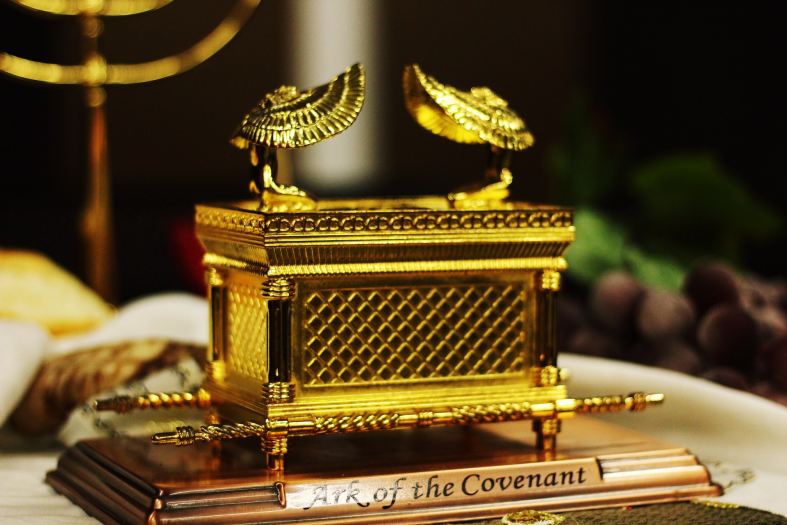
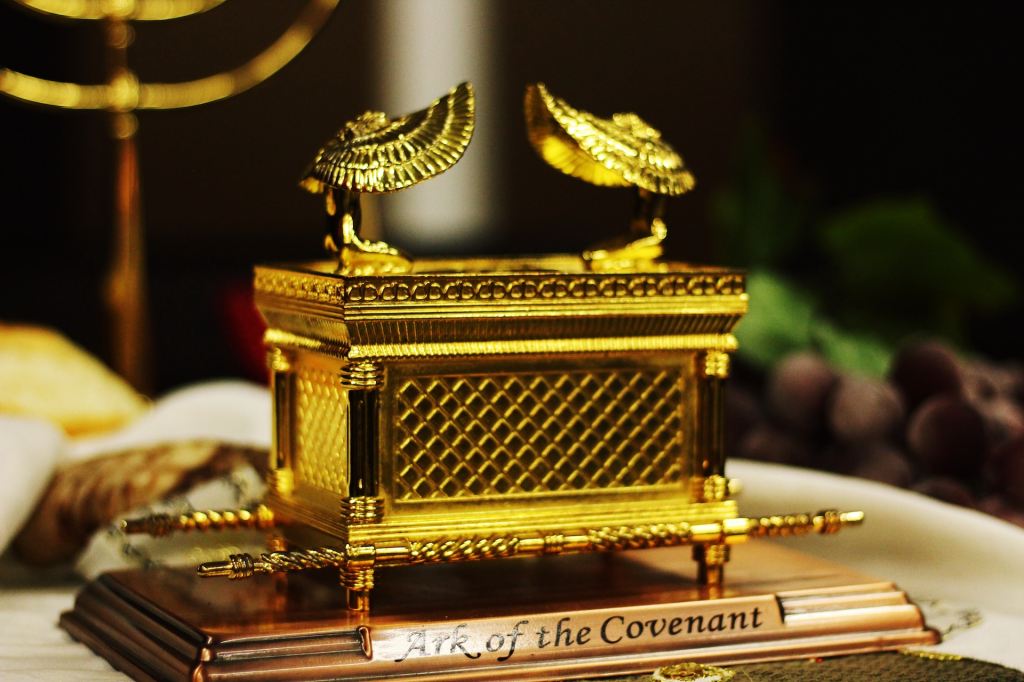
But the “Holy of Holies” was the ultimate statement of how serious approaching God is. This innermost room of the temple was only entered once per year (on the Day of Atonement, or Yom Kippur), and only by the high priest, who only can enter after hours of preparation. Once there, the high priest would sprinkle the blood of a sacrificed bull on and in front of God’s “mercy seat”, the cover of the ark of the covenant and a sign of His presence[5]. Later Jewish tradition (not found in the Bible) indicates that others would stand outside the room holding a rope that was tied to the high priest, who also had bells tied around his waist. If those outside heard the bells jingling, followed by silence, they would assume the high priest did not atone properly for the sins of the people, died in God’s presence, and needed to be dragged out by the rope.
While being dragged out, the high priest would pass under the veil, or curtain, that covered the entrance to the Holy of Holies. This curtain was a physical reminder of the barrier to God represented by His holiness.
Anchor and Forerunner
Hebrews 6:19 is the only place in the ESV Bible that refers to a metaphorical anchor. Literal anchors are mentioned in the book of Acts and nowhere else. As you know, an anchor is a heavy object, usually metal, attached to a boat or ship by rope or cable for the purpose of securing the vessel to the bed of the body of water. Typically, an anchor is used to keep you in place. However, Hebrews mentions a forerunner because this anchor is used to secure you to a destination, not to keep you in place. Where you are now is not your eternal home and God does not want you to anchor there.

In the early centuries A.D., a “forerunner” was a boat sent to meet larger boats at sea, take their anchor, carry it into the harbor, and deposit it at the destination. Thus, the incoming boat was still at sea, but assured of reaching its destination. It just had to follow the path of the rope to the anchor, which would also keep it from going too far adrift.
So, we now have the parts of the metaphor about what provides our “full assurance of hope”: anchor, curtain, and forerunner. (Melchizedek I’ll leave for another time)
What Hebrews is telling us is that our hope is in God’s promise, and that the promise is secure because Christ Himself took our anchor and secured it inside the Holy presence of God where atonement has been made for His people. When Jesus died on the cross on Good Friday, He cried “it is finished”[6], and “the curtain of the temple was torn in two, from top to bottom.”[7] In one moment, all of the elaborate Old Testament ceremony symbolizing the requirements for being in God’s presence became irrelevant, and Jesus became “the new and living way that he opened for us through the curtain, that is, through his flesh”[8] Once for all, His flesh was the only sacrifice necessary for us to know God. For His people, there is no longer a veil or curtain as a barrier, but through the tearing of His own flesh, we have sure and eternal access to Him.
While we remain metaphorically at sea tossed by waves of chaos, Jesus is in the Temple, and the Holy Spirit is at sea with us “hovering over the face of the waters”[9]. The Spirit is both a connection to the “sure and steadfast anchor of the soul”, Christ our forerunner, and also a voice telling us what to do in the meantime. We’re surrounded by, and are, a creation in progress, and He gives us our task, but also the certainty of ultimate success. While our purpose can be frustrated, God’s purpose is sure, and His promise is for His people.
Consider this: If God wanted to change His mind about you, He’s had plenty of opportunity before now. Hours passed while Christ was on the cross. He was mocked as helpless and unable to save Himself, while Jesus knew at any moment, He could ask His Father to send twelve legions of angels to save Him[10]! (Or He could just save Himself). In those hours, Omniscient God considered all the sins of all His people over all of time and decided: “Worth it”. The all-powerful actively chose to embrace powerlessness in the face of hours of torture to save His people. He will not turn His back on you now, or ever, if you are His.
“And I am sure of this, that he who began a good work in you will bring it to completion at the day of Jesus Christ.” – Philippians 1:6
[1] Lewis, C.S. The Weight of Glory (1941).
[2] Hebrews 6:11
[3] Summary of Hebrews 6:13-18
[4] Numbers 1:51. The Levites were a type of priest, after whom the book of Leviticus is named.
[5] Leviticus 16:1-16
[6] John 19:30
[7] Mark 15:38
[8] Hebrews 10:20
[9] Genesis 1:2[10] Matthew 26:53





 Driving Toward the Morning Sun