Peacemaking Stones

In the Old Testament, King David wanted to build a temple for God, reasoning that people lived in houses, but God has only ever lived in a tabernacle (tent).  Why should people live in a nicer place than God?  However, David was not allowed to build the temple, but God said his son Solomon would build it.  David gives the reason in a speech to Israel from 1 Chronicles 28:2-3:

I had it in my heart to build a house of rest for the ark of the covenant of the LORD and for the footstool of our God, and I made preparations for building.  But God said to me, ‘You may not build a house for my name, for you are a man of war and have shed blood.’” (emphasis mine)

Since becoming king, David had to fight many of Israel’s neighbors in order to establish peace, which was accomplished by Solomon’s time as king.  But David was not idle regarding the temple; he made many preparations to make Solomon’s job easier when the time came.  After David’s death, Solomon, preparing for construction, worked with Hiram king of Tyre to secure lumber.  In his letter to Hiram, Solomon wrote:

You know that David my father could not build a house for the name of the LORD his God because of the warfare with which his enemies surrounded him, until the LORD put them under the soles of his feet.  But now the LORD my God has given me rest on every side. There is neither adversary nor misfortune.” – 1 Kings 5:3-4

God wanted His temple – His dwelling place – built under peaceful conditions, by a peaceful leader, not by a warrior.  Under Solomon’s leadership, God’s temple was completed.

Solomon’s temple is no more, but God is now building another temple – another dwelling place – His church.  How do we know this?  Peter wrote that Christians as “living stones are being built up as a spiritual house[1] and Paul that Christians “also are being built together into a dwelling place for God by the Spirit.[2]  God now spiritually lives in and among His people, not in a physical building.

What does David and Solomon’s experience teach us about the temple God is now building?  We know that Solomon’s temple had to be built by peaceful people, and Jesus said in the Sermon on the Mount, in Matthew 5:9, that:

Blessed are the peacemakers, for they shall be called sons of God.”
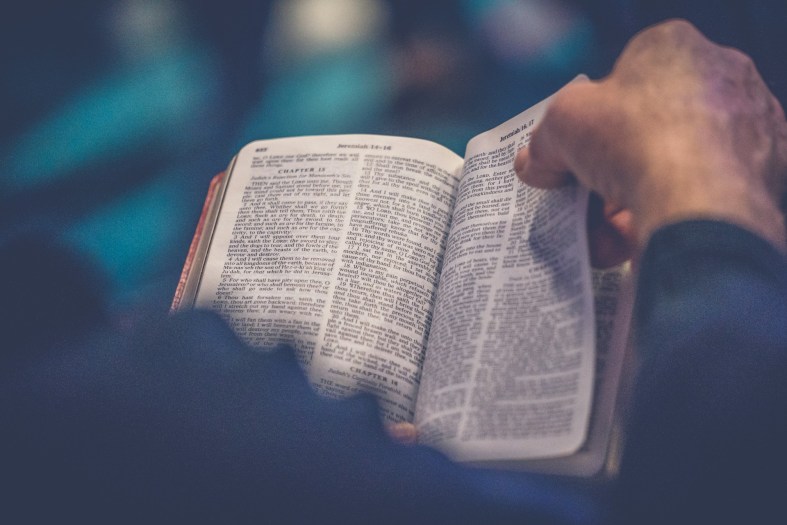
In the Greek language used in the New Testament, the word for peace comes from the verb “to join,” so peacemaking has to do with joining people together.  Between believers, this means that the more we live like Christ, the more we are able to join together in unity.  From believers to unbelievers, this “joining” means we offer them the love Christ gave us and hope and pray they will join with Him.  When discussing all issues non-essential to salvation, this means we seek to join and not separate, to promote peace instead of discord.

So, with God now building a temple of peacemakers, Paul urges us to be “eager to maintain the unity of the Spirit in the bond of peace.[3]  Pray that this Spirit can grow in each of us and in His people worldwide!

Blessed are the peacemakers, for they shall be called sons of God.”

[1] 1 Peter 2:5
[2] Ephesians 2:22
[3] Ephesians 4:3

Profit in Reading Genealogies

Some parts of the Bible are harder to read than others.  Some things seem repetitive or pointless, but we know that “All Scripture is breathed out by God and profitable for teaching, for reproof, for correction, and for training in righteousness”. (2 Timothy 3:16). For me, it can be very hard to concentrate while reading the many long genealogies, mostly of people I know nothing about.  But maybe the point is that God does know all those people.

Photo by Rod Long on Unsplash

I’ve heard a story that may or may not be true, but I’m sure it’s at least possible, and an example of how God can use long genealogies in a profitable way.  The story goes like this: a Christian who attended church regularly invited a non-Christian friend to church, and they accepted.  They had been having some discussions and the friend was curious, so the Christian was hopeful.  However, the pastor on that day decided to preach on one of the long genealogies in the Old Testament.  The Christian sat there disappointed because they were hoping their friend would hear the gospel.  In a complete surprise to the Christian, the friend said soon after the service that they had decided to follow Christ.  When asked why, the friend said something like: “I never was close with my family, but the idea that God cared about each and every one of the people listed in those genealogies convinced me that God cares about me.  He didn’t leave them out of His book.  He cares about me and wants me to be part of His family.”

Like I said, I’m not sure that this is a true story, but the point that mattered to the friend in the story remains: God cared enough about every person in those genealogies to have them recorded in the Bible.  He thought of every one of them.

God has another book full of names in addition to the Bible and its genealogies: His book of life[1] which has the name of every one of His people listed in it.  If you are a Christian, your name is in that book and God loves you as His adopted family.  Like the genealogies, this book tells us that every person is precious to God and He knows each one personally and intimately.

If you find books like 1 Chronicles (which begins with many genealogies) hard to read, maybe as you read each name, remember that God loves that person, and loves you as well.  Nobody is irrelevant to God, and that’s a key part of the good news of the gospel!

[1] Philippians 4:3, Revelation 3:5, 13:8

Peacemaking Stones

In the Old Testament, King David wanted to build a temple for God, reasoning that people lived in houses, but God has only ever lived in a tabernacle (tent).  Why should people live in a nicer place than God?  However, David was not allowed to build the temple, but God said his son Solomon would build it.  David gives the reason in a speech to Israel from 1 Chronicles 28:2-3:

I had it in my heart to build a house of rest for the ark of the covenant of the LORD and for the footstool of our God, and I made preparations for building.  But God said to me, ‘You may not build a house for my name, for you are a man of war and have shed blood.’” (emphasis mine)

Since becoming king, David had to fight many of Israel’s neighbors in order to establish peace, which was accomplished by Solomon’s time as king.  But David was not idle regarding the temple; he made many preparations to make Solomon’s job easier when the time came.  After David’s death, Solomon, preparing for construction, worked with Hiram king of Tyre to secure lumber.  In his letter to Hiram, Solomon wrote:

You know that David my father could not build a house for the name of the LORD his God because of the warfare with which his enemies surrounded him, until the LORD put them under the soles of his feet.  But now the LORD my God has given me rest on every side. There is neither adversary nor misfortune.” – 1 Kings 5:3-4

God wanted His temple – His dwelling place – built under peaceful conditions, by a peaceful leader, not by a warrior.  Under Solomon’s leadership, God’s temple was completed.

Solomon’s temple is no more, but God is now building another temple – another dwelling place – His church.  How do we know this?  Peter wrote that Christians as “living stones are being built up as a spiritual house[1] and Paul that Christians “also are being built together into a dwelling place for God by the Spirit.[2]  God now spiritually lives in and among His people, not in a physical building.

What does David and Solomon’s experience teach us about the temple God is now building?  We know that Solomon’s temple had to be built by peaceful people, and Jesus said in the Sermon on the Mount, in Matthew 5:9, that:

Blessed are the peacemakers, for they shall be called sons of God.”
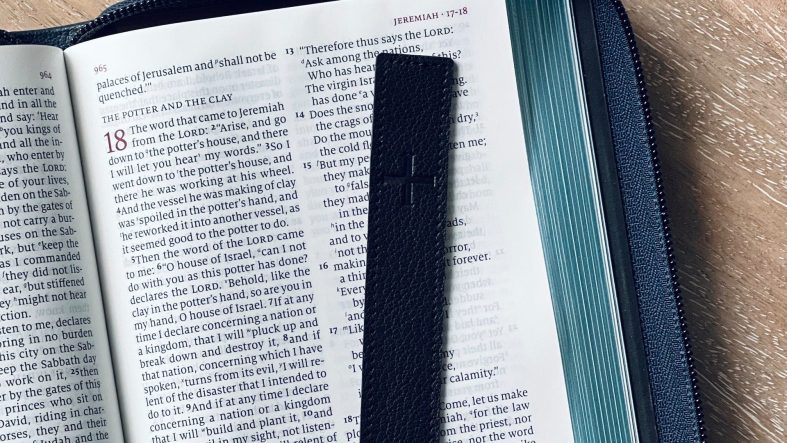
In the Greek language used in the New Testament, the word for peace comes from the verb “to join,” so peacemaking has to do with joining people together.  Between believers, this means that the more we live like Christ, the more we are able to join together in unity.  From believers to unbelievers, this “joining” means we offer them the love Christ gave us and hope and pray they will join with Him.  When discussing all issues non-essential to salvation, this means we seek to join and not separate, to promote peace instead of discord.

So, with God now building a temple of peacemakers, Paul urges us to be “eager to maintain the unity of the Spirit in the bond of peace.[3]  Pray that this Spirit can grow in each of us and in His people worldwide!

Blessed are the peacemakers, for they shall be called sons of God.”


[1] 1 Peter 2:5
[2] Ephesians 2:22
[3] Ephesians 4:3

Bible in a Year: Week of April 8 – 14

Fellow travelers:

Below are the chapters to read this week if you’re following along in my Bible in a year schedule, divided into morning and evening readings.  Follow along any way you want: just do the evening reading, flip the morning and evening, read it all.  Whatever works for you and your schedule!  It doesn’t have to be Bible in a Year for everyone.

This week, we will be 2/3 of the way through Psalms, and will finish 1 Chronicles.

Monday, April 8
Morning: Psalm 99, 1 Chronicles 25
Evening: Leviticus 9

Tuesday, April 9
Morning: Psalm 100, 1 Chronicles 26
Evening: Leviticus 10

Wednesday, April 10
Morning: Psalm 101, 1 Chronicles 27
Evening: Leviticus 11

Thursday, April 11
Morning: Psalm 102, 1 Chronicles 28
Evening: Leviticus 12

Friday, April 12
Morning: Psalm 103, 1 Chronicles 29
Evening: Leviticus 13

Saturday, April 13
Morning: Psalm 104, 2 Chronicles 1-2
Evening: Leviticus 14

Sunday, April 14
Morning: Psalm 105, 2 Chronicles 3-4
Evening: Leviticus 15

Bible in a Year: Week of April 1 – 7

Fellow travelers:

Happy Easter!  He is risen!

Below are the chapters to read this week if you’re following along in my Bible in a year schedule, divided into morning and evening readings.  Follow along any way you want: just do the evening reading, flip the morning and evening, read it all.  Whatever works for you and your schedule!  It doesn’t have to be Bible in a Year for everyone.

Monday, April 1
Morning: Psalm 92, 1 Chronicles 16
Evening: Leviticus 2

Tuesday, April 2
Morning: Psalm 93, 1 Chronicles 17
Evening: Leviticus 3

Wednesday, April 3
Morning: Psalm 94, 1 Chronicles 18
Evening: Leviticus 4

Thursday, April 4
Morning: Psalm 95, 1 Chronicles 19
Evening: Leviticus 5

Friday, April 5
Morning: Psalm 96, 1 Chronicles 20
Evening: Leviticus 6

Saturday, April 6
Morning: Psalm 97, 1 Chronicles 21-22
Evening: Leviticus 7

Sunday, April 7
Morning: Psalm 98, 1 Chronicles 23-24
Evening: Leviticus 8