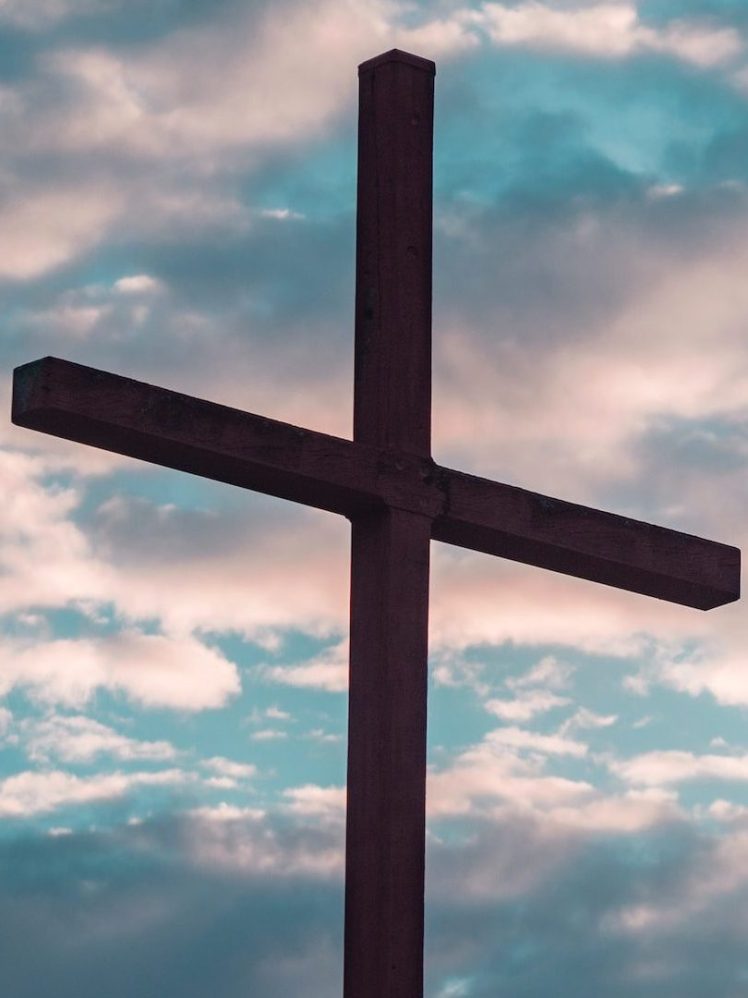
Disappointed by God?

Do you ever feel disappointed by God?  Does your experience of Him sometimes not match your expectations?  We might wonder where God is in our everyday lives.  We may wonder whether we can really trust Him, and we’re probably more likely to feel this way when bad things happen.  The Bible tells us in Romans 8:28 –

And we know that for those who love God all things work together for good, for those who are called according to his purpose.”

Paul (author of Romans) says he knows this, but do we always?  Do we trust that good comes from “all things”?  And when we don’t see good come, how do we react?

We might think good things are not happening to us because we don’t “love God” enough, so we might blame ourselves.  Maybe we think that some things “just happen” and have no purpose.  Maybe over time we learn to think most things are like that?  We might think Paul didn’t really mean what he wrote about God.

It’s natural to want “good” things.  We may want more money, a better job, better relationships, more possessions, and think that when bad things happen, it’s just a matter of time before some corresponding blessing comes along, because God is supposed to work through “all things” for our good. But when it seems like He doesn’t we might feel disappointed.  What are we missing?

Could it be that the problem is with our expectations of God, not with God Himself?  For example, do we misunderstand what “good” “things work together for”?  Is our definition of “good” the same as His?

Think about what Paul wrote in 1 Corinthians 1:26 “For consider your calling, brothers: not many of you were wise according to worldly standards, not many were powerful, not many were of noble birth.”

It is not necessarily God’s intention to make us “good” by “worldly standards.”  His standards are different, and He doesn’t want us to value the worldly wisdom, which tells us it is “good” to be “powerful” or to be “noble” or even “wise” in the world’s eyes.  God has more important things in mind.

So, what is the “good” that everything works towards?  Paul wrote in Romans 8:29, which comes right after the earlier verse about how “all things work together for good”:

For those whom he foreknew he also predestined to be conformed to the image of his Son, in order that he might be the firstborn among many brothers.” – Romans 8:29

The “good” that God works for is our conformity to the image of Christ.  Not our pre-conceived definition of “good” based on our values, or the world’s.    He won’t use “all things” to give us more of what the world thinks is important.

What does it mean to be conformed to the image of Jesus?  In Jesus we see the perfect image of the love of God, described in 1 Corinthians 13:4-5 like this:

Love is patient and kind; love does not envy or boast; it is not arrogant or rude. It does not insist on its own way; it is not irritable or resentful

So, God, through “all things,” works to make us more patient and kinder.  Less envious, boastful, arrogant and rude.  He makes us less insistent on our own way, and therefore less irritable and resentful.

Therefore, we might have to change what we value.  We must modify our priorities.  Anything that happens to us, whether we consider it “good” or not, God can use to make us more like Christ.  More like the person we will be in heaven.  More like the person we should want to be.  Then God will not disappoint us.

And we know that for those who love God all things work together for good, for those who are called according to his purpose.”

What’s in Your Temple?

When describing His holiness, God provided pictures like the one in Isaiah 6:1 – “In the year that King Uzziah died I saw the Lord sitting upon a throne, high and lifted up; and the train of his robe filled the temple.”  Because “the train of his robe filled the temple,” there is no room in the temple for anything that isn’t holy.  Or in Revelation 15:8, which says: “and the sanctuary was filled with smoke from the glory of God and from his power, and no one could enter the sanctuary until the seven plagues of the seven angels were finished.”  Until God’s judgment was complete – both on the unrepentant and on the cross for His people – there would continue to be no room in the sanctuary for anyone but the Lord.

How do these pictures apply to us?  Paul asks in 1 Corinthians 3:16-17 – “Do you not know that you are God’s temple and that God’s Spirit dwells in you?  If anyone destroys God’s temple, God will destroy him. For God’s temple is holy, and you are that temple.”  Therefore, we ask ourselves: does the train of the Lord’s robe fill our temples?

Photo by Annie Spratt on Unsplash

A transformative moment came in my Christian life when I understood sin in contrast to holiness, rather than as a list of “don’ts.”  It’s possible (perhaps even easy) to convince ourselves we are not sinners in need of grace by defining sin as things we don’t do.  However, much of the time, the word “sin” in the New Testament is a translation of the Greek word hamartia, which means “to miss the mark.”[1]  The word has athletic connotations, such as if an archer couldn’t hit the bullseye, they wouldn’t win the competition and the prize.  As we all know, archers are supposed to be accurate, and if they aren’t, they’ve “missed the mark.”

Therefore, when Paul writes in Romans 3:23 “for all have sinned and fall short of the glory of God,” he is not saying everybody failed to follow a list of dos and don’ts, but that we have not fully lived the life God intended us to live.  Romans 3:23 declares that while we wouldn’t set up idols in our church building, all of us tolerate some idols in our soul, which is where the Holy Spirit of God chooses to dwell.  The train of His robe does not fill our inner temple, and we too often trod on it with dirty feet.  We’ve “missed the mark” any time there’s other stuff in our temple, directing our thoughts and actions.  However, by the sacrifice of Jesus Christ we have both a hope of living with God and a future where His metaphorical robe does fill us.

In Paradise, God’s people will – individually and collectively – “hit the mark” perfectly for eternity.  His perfect temple will be completed in Paradise, with the living stones of all His people.

Paul returns to holiness again in 2 Corinthians 6:16 to 7:1, quoting several Old Testament passages, since holiness of His people has been the plan from the beginning –

What agreement has the temple of God with idols? For we are the temple of the living God; as God said,
             ‘I will make my dwelling among them and walk among them,
                        and I will be their God,
                        and they shall be my people.
            Therefore go out from their midst,
                        and be separate from them, says the Lord,
            and touch no unclean thing;
                        then I will welcome you,
            and I will be a father to you,
                        and you shall be sons and daughters to me,
            says the Lord Almighty.’

Since we have these promises, beloved, let us cleanse ourselves from every defilement of body and spirit, bringing holiness to completion in the fear of God.

Amen


[1] Greek Strong’s Dictionary

Bible in a Year: Week of August 19 – 25

Fellow travelers:

Below are the chapters to read this week if you’re following along in my Bible in a year schedule, divided into morning and evening readings.  Follow along any way you want: you can just do the evening reading, flip the morning and evening, or read it all.  Whatever works for you and your schedule!  It doesn’t have to be Bible in a Year for everyone.

This week we move from 1 to 2 Corinthians, and from Judges to Ruth to Esther.

Monday, August 19
Morning: 1 Corinthians 4-5
Evening: Judges 21

Tuesday, August 20
Morning: 1 Corinthians 6-7
Evening: Ruth 1

Wednesday, August 21
Morning: 1 Corinthians 8-9
Evening: Ruth 2

Thursday, August 22
Morning: 1 Corinthians 10-11
Evening: Ruth 3

Friday, August 23
Morning: 1 Corinthians 12-13
Evening: Ruth 4

Saturday, August 24
Morning: 1 Corinthians 14-16
Evening: Esther 1

Sunday, August 25
Morning: 2 Corinthians 1-3
Evening: Esther 2

Bible in a Year: Week of August 12 – 18

Fellow travelers:

Below are the chapters to read this week if you’re following along in my Bible in a year schedule, divided into morning and evening readings.  Follow along any way you want: you can just do the evening reading, flip the morning and evening, or read it all.  Whatever works for you and your schedule!  It doesn’t have to be Bible in a Year for everyone.

Monday, August 12
Morning: Romans 4-5
Evening: Judges 14

Tuesday, August 13
Morning: Romans 6-7
Evening: Judges 15

Wednesday, August 14
Morning: Romans 8-9
Evening: Judges 16

Thursday, August 15
Morning: Romans 10-11
Evening: Judges 17

Friday, August 16
Morning: Romans 12-13
Evening: Judges 18

Saturday, August 17
Morning: Romans 14-16
Evening: Judges 19

Sunday, August 18
Morning: 1 Corinthians 1-3
Evening: Judges 20

Walking Safely with God

Many people, both Christian and non-Christian, think of obedience to God as a dreadful chore, something that robs us of our autonomy and joy.  Sometimes people refuse to believe in God because they reject His requirements, and sometimes people resent God because they see Him as making them labor in futility for the perfection He requires.  However, we know that salvation does not come from our obedience, but Christ’s, and through God’s grace He reveals Himself to us.  Then we learn that the rules we should follow come from a God who loves us and perfectly knows what is good and bad for us – far beyond our own knowledge.  Therefore, those rules become our freedom and joy when we follow them willingly.  He always knows the best and right choice to make.

Psalm 119 (the longest chapter in the Bible) is a meditation on the benefits of God’s laws for us, and verses 44-45 give us a picture of those benefits:

I will keep your law continually,
            forever and ever,
and I shall walk in a wide place,
            for I have sought your precepts.”

The central idea here is that when we are obedient to God, we “shall walk in a wide place,” but what does that mean?  How does that benefit us?

Think about walking along a mountain path, or on stones crossing a river.  Does it make a difference how wide that path is, or how big and flat the stones are?  If we trip and fall on a narrow place, we may fall into a river or off a cliff.  However, if we fall in a wide place on a mountain path or on a very large rock, we may scrape a knee or our hands, but the consequences won’t be as severe as falling off a cliff!

Photo by Ante Hamersmit on Unsplash

The idea of walking in a wide place brings to mind the contrast between the consequences of following our own way versus following God’s.  Going our own way can not only have worse consequences now, in this world, but it can also have consequences in eternity.  Never repenting of going our own way at all leads to an eternity banished from God’s presence and blessings.  But even if we are saved, failure to follow God can rob others of God’s blessings for them that He intends through us and can influence our experience in heaven.  Paul teaches in 1 Corinthians 3:12-15 that there are rewards in heaven for those who follow Him, as well as “loss” for not doing so.  So, doing whatever we please has consequences, some of which may be eternal.

In contrast, obedience to God is like walking in a safe place, where any negative consequence is temporary, or comes with a corresponding blessing.  We may get a scraped knee, but we don’t fall off a cliff, suffering permanent damage, death or other loss.  Following God’s word can’t keep all bad things from happening to you, but it can limit the worldly consequences, and eliminate the eternal consequences.

Therefore, seek God’s guidance and follow it, and we “shall walk in a wide place, for I have sought your precepts.”

It’s a better path to follow than any other.