Ebenezer in the Wilderness

In the ESV Bible, the phrase “but God” appears 43 times, changing the direction of the story.  An Ebenezer is a “stone of help,” or reminder of God’s benefit to His people in the past, providing strength for the present and future.  Ebenezer the squirrel, this blog’s mascot, represents these “but God” memorials the Bible records of God’s intervention in the world and in our lives.  As a squirrel can unexpectedly draw our attention, I write about these moments to draw our attention to God as a reminder that adding God to our circumstances can change everything.  One of these instances comes at a key point in David’s life.

Prior to becoming Israel’s second king, David may have spent a decade in exile, running from Saul, Israel’s first king.  Saul was extremely insecure and jealous of David and sought to kill him for years.  In 1 Samuel 23 there is a story about Keilah, a border town in Judah that was near the Philistine city of Gath.  Bands of Philistines were stealing grain from Keilah and David heard of it.  This small border town may not have interested Saul, but David prayed to God about whether to rescue it.  After getting affirmation from God, David and his men rescued the town.

Saul, with spies everywhere, heard that David was staying in Keilah and planned to besiege the town, probably to starve the people until they gave David up.  In other words, Saul hated David so much and wanted him dead that he would attack a town in his own territory.  Saul was persistent and not interested in seeking (or following) God’s guidance.

David, informed by God that the people of Keilah would give him up to Saul, fled into the wilderness again, then we get to verse 14 of the chapter:

And David remained in the strongholds in the wilderness, in the hill country of the wilderness of Ziph. And Saul sought him every day, but God did not give him into his hand.” (emphasis added)

Saul sought David “every day, but God” was on David’s side, and “did not give him into his hand.”  It wouldn’t matter how hard Saul tried – hunting David while he should have been minding his kingdom – David would not be caught unless God allowed it.

As the story continues, Saul is informed that David is hiding in the wilderness of Maon (verse 25).  Then, “As Saul and his men were closing in on David and his men to capture them, a messenger came to Saul, saying, ‘Hurry and come, for the Philistines have made a raid against the land.’  So Saul returned from pursuing after David and went against the Philistines. Therefore that place was called the Rock of Escape.” (verses 26b-28)

While the news of this Philistine raid may seem like mere coincidence, I don’t believe it was.  First, the timing worked out just right, as David seemed cornered by Saul and his men.  Second, Saul was not concerned about raids on Keilah – why is he concerned this time?  “The king’s heart is a stream of water in the hand of the LORD; he turns it wherever he will,” says Proverbs 21:1.  Perhaps this was one of God’s ways to “not give him into his hand.” While Ebenezer means “stone of help,” David found a “Rock of Escape,” and God can be our escape as well.  When we feel threatened by enemies – physical or spiritual – remember that God watches over His people.  Those enemies may seem overwhelming, “but God” will not give us into their hand unless He knows it will benefit us and our faith, for “we know that for those who love God all things work together for good, for those who are called according to his purpose” (Romans 8:28).  God changes every story for the betterment of His people.

Amen.

David’s Spiritual Battle with Goliath

David’s defeat of Goliath is such a popular story that it has become a cliché.  For example, unbalanced games in sports where one team is much better than the other are referred to as “David vs. Goliath.”  In these cases, the storyline is about whether a seemingly physically inferior opponent can beat a physically superior one.  However, this misses the point of the story – that it was a spiritual battle.

On one side of the battle, we have false gods.  After David decided to fight and was approaching Goliath, 1 Samuel 17:43 says: “And the Philistine [Goliath] said to David, ‘Am I a dog, that you come to me with sticks?’ And the Philistine cursed David by his gods.”  But even though Goliath invoked his gods in curses, he was counting on his size and strength advantage to win the battle.  He was not actually relying on “gods,” and did not expect to win “by his gods”, but by the god of worldly strength and dominance.

On the other hand, David was clear that this was a battle between true and false gods.  In 1 Samuel 17:26, David says “What shall be done for the man who kills this Philistine and takes away the reproach from Israel? For who is this uncircumcised Philistine, that he should defy the armies of the living God?” and also in verse 37 David says “The LORD who delivered me from the paw of the lion and from the paw of the bear will deliver me from the hand of this Philistine.”  David was actually trusting in and relying on his God for victory, unlike Goliath who just used his gods’ names in vain.  David knew his relative physical weakness against Goliath was not relevant.

So, to Goliath the battle was David vs. Goliath, but to David it was the true God vs. false gods.  And that’s why David won. David wanted to beat Goliath so “that all this assembly may know that the LORD saves not with sword and spear. For the battle is the LORD’S, and he will give you into our hand.” (verse 47)

People also curse us by their gods when we refuse to live by those gods’ standards.  These may be gods of wealth or convenience or rebellion, and many of our spiritual battles are against this world’s gods.

Does it sometimes seem foolish not to make choices based only on what’s best financially?  Is it sometimes inconvenient to worship?  Is it sometimes inconvenient to love our families, congregations, and neighbors?  Is it tempting sometimes to sin “only once” or if we think nobody will find out?

These are battles we all face, but we’re not going to win by doing better by the world’s gods’ standards, but by relying on the true God.  So, a question for us is: do we see these challenges as spiritual battles between true and false gods?  Or do we invoke God in name only like Goliath did, and then rely on our own strength?

The key to the battle between David and Goliath is that David won because 1) he knew his God is real, and 2) because he actually relied on Him.  We can win the same way and overcome the giants that seek to overthrow us.

For we do not wrestle against flesh and blood, but against the rulers, against the authorities, against the cosmic powers over this present darkness, against the spiritual forces of evil in the heavenly places.” – Ephesians 6:12

Bible in a Year: Week of January 22-28

Fellow travelers:

Below are the chapters to read this week if you’re following along my Bible in a year schedule, divided into morning and evening readings.  This week, we’ll finish our first book – 1 Samuel – and start 2 Samuel.

Monday, January 22
Morning: Psalm 22, 1 Samuel 28
Evening: Genesis 22

Tuesday, January 23
Morning: Psalm 23, 1 Samuel 29
Evening: Genesis 23

Wednesday, January 24
Morning: Psalm 24, 1 Samuel 30
Evening: Genesis 24

Thursday, January 25
Morning: Psalm 25, 1 Samuel 31
Evening: Genesis 25

Friday, January 26
Morning: Psalm 26, 2 Samuel 1
Evening: Genesis 26

Saturday, January 27
Morning: Psalm 27, 2 Samuel 2-3
Evening: Genesis 27

Sunday, January 28
Morning: Psalm 28, 2 Samuel 4-5
Evening: Genesis 28

Ebenezer in the Wilderness

In the ESV Bible, the phrase “but God” appears 43 times, changing the direction of the story.  An Ebenezer is a “stone of help,” or reminder of God’s benefit to His people in the past, providing strength for the present and future.  Ebenezer the squirrel, this blog’s mascot, represents these “but God” memorials the Bible records of God’s intervention in the world and in our lives.  As a squirrel can unexpectedly draw our attention, I write about these moments to draw our attention to God as a reminder that adding God to our circumstances can change everything.  One of these instances comes at a key point in David’s life.

Prior to becoming Israel’s second king, David may have spent a decade in exile, running from Saul, Israel’s first king.  Saul was extremely insecure and jealous of David and sought to kill him for years.  In 1 Samuel 23 there is a story about Keilah, a border town in Judah that was near the Philistine city of Gath.  Bands of Philistines were stealing grain from Keilah and David heard of it.  This small border town may not have interested Saul, but David prayed to God about whether to rescue it.  After getting affirmation from God, David and his men rescued the town.

Saul, with spies everywhere, heard that David was staying in Keilah and planned to besiege the town, probably to starve the people until they gave David up.  In other words, Saul hated David so much and wanted him dead that he would attack a town in his own territory.  Saul was persistent and not interested in seeking (or following) God’s guidance.

David, informed by God that the people of Keilah would give him up to Saul, fled into the wilderness again, then we get to verse 14 of the chapter:

And David remained in the strongholds in the wilderness, in the hill country of the wilderness of Ziph. And Saul sought him every day, but God did not give him into his hand.” (emphasis added)

Saul sought David “every day, but God” was on David’s side, and “did not give him into his hand.”  It wouldn’t matter how hard Saul tried – hunting David while he should have been minding his kingdom – David would not be caught unless God allowed it.

As the story continues, Saul is informed that David is hiding in the wilderness of Maon (verse 25).  Then, “As Saul and his men were closing in on David and his men to capture them, a messenger came to Saul, saying, ‘Hurry and come, for the Philistines have made a raid against the land.’  So Saul returned from pursuing after David and went against the Philistines. Therefore that place was called the Rock of Escape.” (verses 26b-28)

While the news of this Philistine raid may seem like mere coincidence, I don’t believe it was.  First, the timing worked out just right, as David seemed cornered by Saul and his men.  Second, Saul was not concerned about raids on Keilah – why is he concerned this time?  “The king’s heart is a stream of water in the hand of the LORD; he turns it wherever he will,” says Proverbs 21:1.  Perhaps this was one of God’s ways to “not give him into his hand.” While Ebenezer means “stone of help,” David found a “Rock of Escape,” and God can be our escape as well.  When we feel threatened by enemies – physical or spiritual – remember that God watches over His people.  Those enemies may seem overwhelming, “but God” will not give us into their hand unless He knows it will benefit us and our faith, for “we know that for those who love God all things work together for good, for those who are called according to his purpose” (Romans 8:28).  God changes every story for the betterment of His people.

Amen.
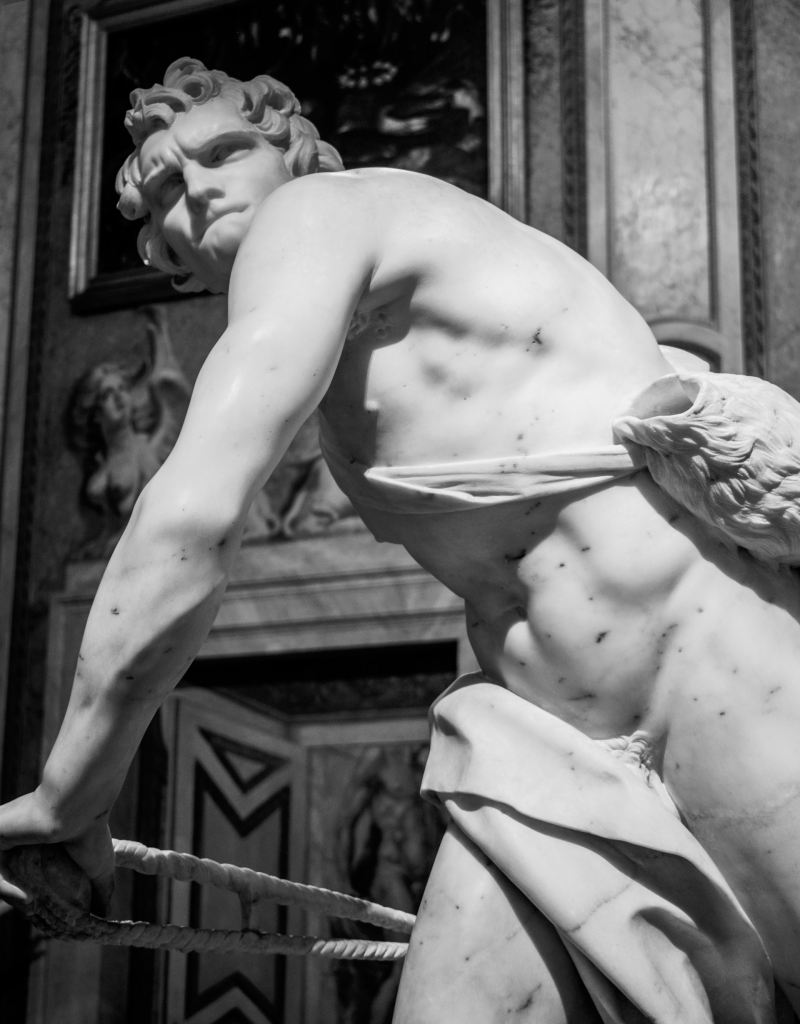
David’s Spiritual Battle with Goliath

David’s defeat of Goliath is such a popular story that it has become a cliché.  For example, unbalanced games in sports where one team is much better than the other are referred to as “David vs. Goliath.”  In these cases, the storyline is about whether a seemingly physically inferior opponent can beat a physically superior one.  However, this misses the point of the story – that it was a spiritual battle.

On one side of the battle, we have false gods.  After David decided to fight and was approaching Goliath, 1 Samuel 17:43 says: “And the Philistine [Goliath] said to David, ‘Am I a dog, that you come to me with sticks?’ And the Philistine cursed David by his gods.”  But even though Goliath invoked his gods in curses, he was counting on his size and strength advantage to win the battle.  He was not actually relying on “gods,” and did not expect to win “by his gods”, but by the god of worldly strength and dominance.

On the other hand, David was clear that this was a battle between true and false gods.  In 1 Samuel 17:26, David says “What shall be done for the man who kills this Philistine and takes away the reproach from Israel? For who is this uncircumcised Philistine, that he should defy the armies of the living God?” and also in verse 37 David says “The LORD who delivered me from the paw of the lion and from the paw of the bear will deliver me from the hand of this Philistine.”  David was actually trusting in and relying on his God for victory, unlike Goliath who just used his gods’ names in vain.  David knew his relative physical weakness against Goliath was not relevant.

So, to Goliath the battle was David vs. Goliath, but to David it was the true God vs. false gods.  And that’s why David won. David wanted to beat Goliath so “that all this assembly may know that the LORD saves not with sword and spear. For the battle is the LORD’S, and he will give you into our hand.” (verse 47)

People also curse us by their gods when we refuse to live by those gods’ standards.  These may be gods of wealth or convenience or rebellion, and many of our spiritual battles are against this world’s gods.

Does it sometimes seem foolish not to make choices based only on what’s best financially?  Is it sometimes inconvenient to worship?  Is it sometimes inconvenient to love our families, congregations, and neighbors?  Is it tempting sometimes to sin “only once” or if we think nobody will find out?

These are battles we all face, but we’re not going to win by doing better by the world’s gods’ standards, but by relying on the true God.  So, a question for us is: do we see these challenges as spiritual battles between true and false gods?  Or do we invoke God in name only like Goliath did, and then rely on our own strength?

The key to the battle between David and Goliath is that David won because 1) he knew his God is real, and 2) because he actually relied on Him.  We can win the same way and overcome the giants that seek to overthrow us.

For we do not wrestle against flesh and blood, but against the rulers, against the authorities, against the cosmic powers over this present darkness, against the spiritual forces of evil in the heavenly places.” – Ephesians 6:12