Godly Habits for Leaders and Others

All the people benefit from leaders and rulers who fear God.  In Deuteronomy, when God reluctantly says Israel may set a king over them in the future[1], He also required the king to have specific habits to cultivate a fear of God in them:

And when he sits on the throne of his kingdom, he shall write for himself in a book a copy of this law, approved by the Levitical priests.  And it shall be with him, and he shall read in it all the days of his life, that he may learn to fear the LORD his God by keeping all the words of this law and these statutes, and doing them, that his heart may not be lifted up above his brothers, and that he may not turn aside from the commandment, either to the right hand or to the left, so that he may continue long in his kingdom, he and his children, in Israel.”  (Deuteronomy 17:18-20, emphasis mine)

These requirements have several parts.  First, the king was to “write for himself in a book a copy of this law.”  “This law” refers to what we now think of as the first five books of the Bible – all 187 chapters of it.  Imagine the time that would take, but this tedious exercise was designed to help the king internalize the message.  Quickly skimming over the Bible would not do.

Second, the king had to get this copy “approved by the Levitical priests,” to make sure nothing was added or left out, but also to remind the king that His authority is subject to God’s authority, as intermediated by the priests at that time.  Regardless of what laws the king might pass, God’s laws would always reign supreme and eternal.

Third, the king was to “read in it all the days of his life,” because it takes time and effort to dig the treasures of wisdom out of the Bible.  However, it is worth the effort because Psalm 19:10 tells us these truths are:

More to be desired are they than gold,
                        even much fine gold;
sweeter also than honey
                        and drippings of the honeycomb.

Also, the king would be surrounded by reminders of his worldly greatness every day, so constant meditation on the law would show him his reliance on God.  The king needs a constant reminder that he is under God, whose law applies to everyone.

These habits exist “that he may learn to fear the LORD,” which leads to “doing” the law.  Even the king is expected to do what God commands, not just tell others to.  With “doing” as the objective, the king will remain humble and learn the fear of God, because we may be able to know God’s word, but doing it is the real challenge and we can only succeed by His grace.
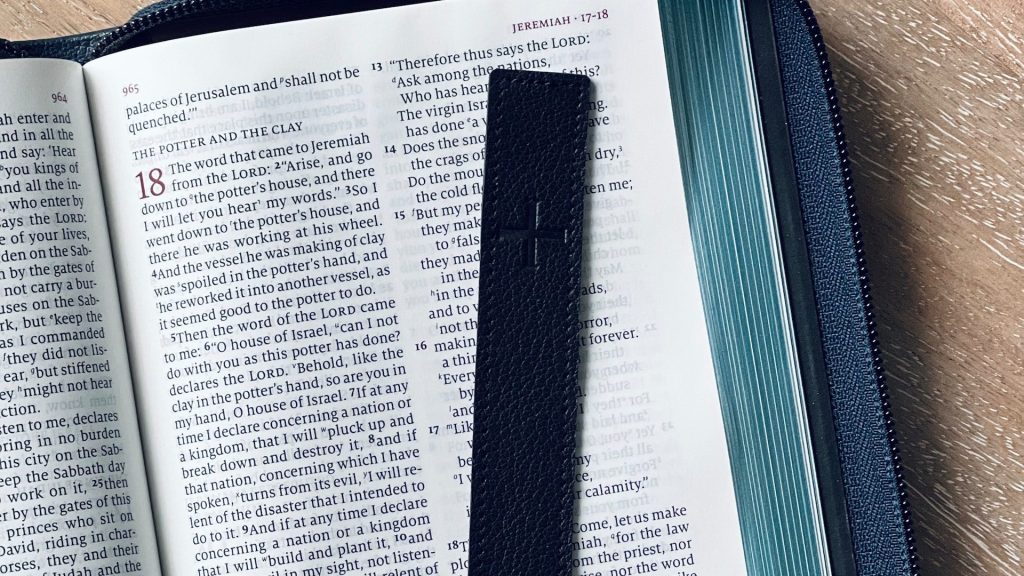
These habits also exist to make sure the king does not err “either to the right hand or to the left.”  This encouragement is later echoed in Moses’ words in Joshua 1:7-8, but what does it mean?  I think it means that without constant saturation in God’s word, we can fall into a trap of not following God’s positive will, but instead defining ourselves by what we’re against.  In trying to avoid one sin, we drift too far in the opposite direction and into another, equally destructive, sin.  Instead, positive obedience coming from the fear of God should be better than fine gold and “sweeter also than honey.”  Truth is often subtle and not as black-and-white as we’d like it to be.

Most of us aren’t kings, but we can apply the passage from Deuteronomy in our prayers.  1 Timothy 2:1-2 “First of all, then, I urge that supplications, prayers, intercessions, and thanksgivings be made for all people, for kings and all who are in high positions, that we may lead a peaceful and quiet life, godly and dignified in every way.”  But what shall we pray for them?  As Deuteronomy suggests, we should pray that they know God, fear God, and obey God, that they may be humble, and we may prosper.

Also, are you a leader?  Do you serve in a position of authority at your church, workplace, or other organization?  These habits will benefit you and those you serve anywhere.  (In societies where we can easily get a Bible, we don’t need to create our own copies of it, but we should seek to internalize as much of the Bible as possible, through memorization and other means.)  As Solomon wrote in Psalm 127:1 –

Unless the LORD builds the house,
            those who build it labor in vain.
Unless the LORD watches over the city,
            the watchman stays awake in vain.

If you’re not a leader, these habits are beneficial for you as well, as Psalm 128:1 says:

Blessed is everyone who fears the LORD,
                        who walks in his ways!

Amen.


[1] Deuteronomy 17:14-15

The God Over All Government

We’d all like to live under a better government, but the only perfect, Godly government we’ll ever see is a monarchy under Jesus in heaven.  Until then, like it or not, we all have to live under imperfect governments.  We hope and pray for our government to be more Godly, more like the perfect government, and we should, as Paul wrote:

First of all, then, I urge that supplications, prayers, intercessions, and thanksgivings be made for all people, for kings and all who are in high positions, that we may lead a peaceful and quiet life, godly and dignified in every way.” – 1 Tim 2:1-2

In addition to praying, there are many ways we try to influence our government.  In a democracy, we can seek to do this: by voting, by contributing money to political candidates, by working on a candidate’s campaign, by donating to lobbying organizations, by convincing others to vote differently, etc.  God may lead different people to participate politically in any of these ways, not at all, or in other ways.

However, none of these actions will be effective unless God is behind them, and the outcome we seek is what He also wants.  Only He can decide what are the right actions for us to take, and only He can decide which outcomes are best for His people, who He seeks to make perfectly Godly by His own definition of the word.  His purposes are to purify His people for eternity, not to bring about a perfect government in this broken world.  His purposes may not be our purposes, and where our influence is limited, His is unlimited.  Proverbs 21:1 tells us:

The king’s heart is a stream of water in the hand of the LORD;
            he turns it wherever he will.”

Therefore, regardless of whether we think our government is Godly, our government is actually Godly in one way: that He is in charge behind the scenes regardless of how it looks to us.

There are a couple of verses in the book of Ezra that acknowledge this, but first just a little background.  Ezra was a priest and scribe who likely wrote the Old Testament book bearing his name, in addition to Nehemiah, 1 and 2 Chronicles, and possibly Psalm 119.  It is also thought that he helped compile the Old Testament canon (the list of which books do and don’t belong).

Ezra lived at the end of the Babylonian captivity of the nation of Judah, an exile that ended not because of the vigorous efforts of Judah to break free, but because God used foreign kings to free them, and later to pay for the rebuilding of the Temple in Jerusalem.

After returning to their own land, the people of Judah were thankful for King Cyrus and King Darius, but ultimately, they knew God was behind it, and they determined to worship only Him, not Cyrus, Darius, or any other gods or men.  Ezra 6:22 says:

And they kept the Feast of Unleavened Bread seven days with joy, for the LORD had made them joyful and had turned the heart of the king of Assyria to them, so that he aided them in the work of the house of God, the God of Israel.”

Ezra repeats the point in Ezra 7:27, referencing the principle from Proverbs 21:1 –

Blessed be the LORD, the God of our fathers, who put such a thing as this into the heart of the king, to beautify the house of the LORD that is in Jerusalem

Our government is always in God’s hands, and He can do whatever He wills with it.  Pray that He will use it to bless God’s people, but also praise Him for all the benefits we may have, even under a hostile government.  Remember that God was behind Israel’s defeat by the Assyrians and Judah’s by Babylon, not just the return from exile.  It is by worshipping only God, not particular people or forms of government, that God’s people find their joy and peace.

The king’s heart is a stream of water in the hand of the LORD;           
he turns it wherever he will.”

Godly Habits for Leaders and Others

All the people benefit from leaders and rulers who fear God.  In Deuteronomy, when God reluctantly says Israel may set a king over them in the future[1], He also required the king to have specific habits to cultivate a fear of God in them:

And when he sits on the throne of his kingdom, he shall write for himself in a book a copy of this law, approved by the Levitical priests.  And it shall be with him, and he shall read in it all the days of his life, that he may learn to fear the LORD his God by keeping all the words of this law and these statutes, and doing them, that his heart may not be lifted up above his brothers, and that he may not turn aside from the commandment, either to the right hand or to the left, so that he may continue long in his kingdom, he and his children, in Israel.”  (Deuteronomy 17:18-20, emphasis mine)

These requirements have several parts.  First, the king was to “write for himself in a book a copy of this law.”  “This law” refers to what we now think of as the first five books of the Bible – all 187 chapters of it.  Imagine the time that would take, but this tedious exercise was designed to help the king internalize the message.  Quickly skimming over the Bible would not do.

Second, the king had to get this copy “approved by the Levitical priests,” to make sure nothing was added or left out, but also to remind the king that His authority is subject to God’s authority, as intermediated by the priests at that time.  Regardless of what laws the king might pass, God’s laws would always reign supreme and eternal.

Third, the king was to “read in it all the days of his life,” because it takes time and effort to dig the treasures of wisdom out of the Bible.  However, it is worth the effort because Psalm 19:10 tells us these truths are:

More to be desired are they than gold,
                        even much fine gold;
sweeter also than honey
                        and drippings of the honeycomb.

Also, the king would be surrounded by reminders of his worldly greatness every day, so constant meditation on the law would show him his reliance on God.  The king needs a constant reminder that he is under God, whose law applies to everyone.

These habits exist “that he may learn to fear the LORD,” which leads to “doing” the law.  Even the king is expected to do what God commands, not just tell others to.  With “doing” as the objective, the king will remain humble and learn the fear of God, because we may be able to know God’s word, but doing it is the real challenge and we can only succeed by His grace.

These habits also exist to make sure the king does not err “either to the right hand or to the left.”  This encouragement is later echoed in Moses’ words in Joshua 1:7-8, but what does it mean?  I think it means that without constant saturation in God’s word, we can fall into a trap of not following God’s positive will, but instead defining ourselves by what we’re against.  In trying to avoid one sin, we drift too far in the opposite direction and into another, equally destructive, sin.  Instead, positive obedience coming from the fear of God should be better than fine gold and “sweeter also than honey.”  Truth is often subtle and not as black-and-white as we’d like it to be.

Most of us aren’t kings, but we can apply the passage from Deuteronomy in our prayers.  1 Timothy 2:1-2 “First of all, then, I urge that supplications, prayers, intercessions, and thanksgivings be made for all people, for kings and all who are in high positions, that we may lead a peaceful and quiet life, godly and dignified in every way.”  But what shall we pray for them?  As Deuteronomy suggests, we should pray that they know God, fear God, and obey God, that they may be humble, and we may prosper.

Also, are you a leader?  Do you serve in a position of authority at your church, workplace, or other organization?  These habits will benefit you and those you serve anywhere.  (In societies where we can easily get a Bible, we don’t need to create our own copies of it, but we should seek to internalize as much of the Bible as possible, through memorization and other means.)  As Solomon wrote in Psalm 127:1 –

Unless the LORD builds the house,
            those who build it labor in vain.
Unless the LORD watches over the city,
            the watchman stays awake in vain.

If you’re not a leader, these habits are beneficial for you as well, as Psalm 128:1 says:

Blessed is everyone who fears the LORD,
                        who walks in his ways!

Amen.


[1] Deuteronomy 17:14-15