“The LORD will Provide”

Many times, in the Old Testament, places were named or re-named to remind people of something significant that happened there.  One of these times happened in Genesis 22:14, which says: “So Abraham called the name of that place, “The LORD will provide”; as it is said to this day, “On the mount of the LORD it shall be provided.””  Those who know their Bible well and who have walked along with the Lord know that God provides in many places and at many times, but only one place was given this name.  What did God provide to Abraham and why was it so meaningful that a place needed to be named for it?

Back in Genesis 22:1, we are told that “God tested Abraham” by telling him to go and sacrifice his only son Isaac on Mount Moriah.  This is startling is so many ways, not least because human sacrifice is involved.  Although some cultures in Old Testament times practiced human sacrifice, in modern times it’s probably universally condemned.[1]  To Abraham however, it would also be startling because Isaac was his only son, and God had promised Abraham that “I will multiply your offspring as the stars of heaven.[2]  If Abraham killed his only son, who was born in Abraham’s old age from the previously barren womb of his wife Sarah by the promise of God, how would Abraham have so many descendants that he couldn’t count them?

While this didn’t make much sense, Abraham trusted God anyway and decided to follow His command.  Hebrews 11:19 tells us that Abraham believed God could raise Isaac from the dead if He so chose.  However we got there, God was going to keep His promise.  Abraham was able to keep this faith even though the trip to Moriah took more than 3 days.[3]  His faith in following through on this seemingly barbaric command was tested by time, but Abraham kept walking in faith.
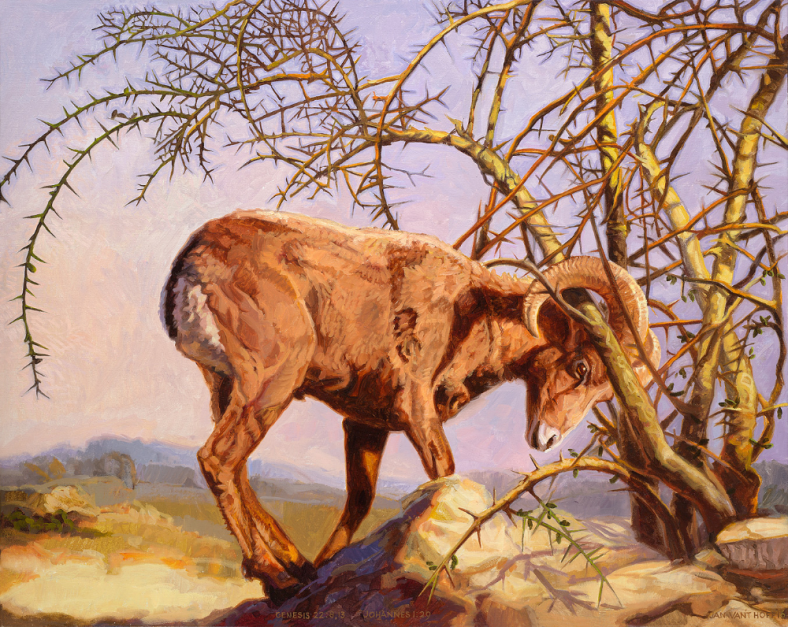
Which brings us back to the place name “The LORD will provide.”  After Abraham had bound his son Isaac, laid him on the wood and prepared to offer him as a burnt offering, God called out to him, saying “Do not lay your hand on the boy or do anything to him, for now I know that you fear God, seeing you have not withheld your son, your only son, from me.”[4]  Abraham then saw a ram caught in the bushes nearby, a perfect substitute for Isaac as a burnt offering!  Isaac was set free and the ram was sacrificed.  Dilemma resolved.  Then the place was named, but also, we read “as it is said to this day, “On the mount of the LORD it shall be provided.”

When the Bible says “as it is said to this day” it usually means until the day the passage was written down.  So, the saying “On the mount of the LORD it shall be provided” lasted until Moses wrote the book of Genesis.  But when and why did the phrase fall out of practice?  When reading this story, I thought this saying needs to be revived!  God still provides for us in amazing ways, but maybe not on Mount Moriah.

Does He provide for us whenever we want Him to?  Warren Wiersbe answers this question as; He provides for us “in the place of His assignment. Abraham was at the right place, so God could meet his needs. We have no right to expect the provision of God if we are not in the will of God.”

Abraham, in faith, knew that God would provide a solution to a seemingly offensive and impossible situation, and so He did.  But in our case, there are at least two ways we can fall short of obtaining God’s provision: one, we fail to follow His command because it doesn’t make sense to us, and two, we can expect Him to provide what we need for us even though we aren’t doing what He wants us to do.

What if God is asking us to do something that seems unwise financially, socially, or otherwise?  Maybe it doesn’t even make sense theologically, as it may not have to Abraham?  God wants to provide for us a way through that, a way to reward our faith and glorify Himself for our good.  But, if we aren’t willing to follow Him in that instance, we miss out on the blessing.

What if we feel like we’re missing out on some blessing and we don’t know why?  Maybe we don’t feel close to God, we don’t feel like He answers our prayers, we don’t feel like He loves us?[5]  It may be that He is asking us to do something and we aren’t following through.  We expect the blessings to flow at no cost to us.

If Abraham had not followed God’s command, he would have not been able to experience the amazing provision from God that led him to name the place “The LORD will provide.””  And sometimes if we aren’t walking with God in faith (or maybe not even spending enough time with God to know what He wants), we will never learn how He can provide.

What might God be asking you to do today?  Have you asked Him?  Follow Him and He will prove Himself faithful.  He will be glorified and it will be for your good.

Amen.


[1] I’m not aware of any place that still practices it, but I’m not an expert.
[2] Genesis 26:4
[3] Genesis 22:4
[4] Genesis 22:12
[5] I don’t mean to minimize the fact that some people just won’t feel good for medical reasons, such as clinical anxiety or depression.  Sometimes there are other factors at play that need to overcome in other ways.

Ebenezer in a Dream

In the ESV Bible, the phrase “but God” appears in the narrative 43 times, changing the direction of the story.  Ebenezer the squirrel, the blog’s mascot, represents these memorials of God’s intervention in the world and in our lives.  As a squirrel can unexpectedly draw our attention, I write about these moments to draw our attention to God as a reminder that adding God to our circumstances can change everything.  One of the times the words “but God” appears is in Genesis 20:3, which says:

But God came to Abimelech in a dream by night and said to him, ‘Behold, you are a dead man because of the woman whom you have taken, for she is a man’s wife.’”

This “but God” Ebenezer comes during Abraham’s sojourn in Gerar, where Abimelech was king.  Similar to an earlier story from Genesis 12, Abraham lies and says his wife Sarah is his sister in order to stay out of trouble.  In this case, Abraham explains his reason for lying as: “I did it because I thought, ‘There is no fear of God at all in this place, and they will kill me because of my wife.’”[1]  Ironically, Abraham inadvertently here proved there was no fear of God in his own life at this moment, by prioritizing an assumption he had made about Abimelech’s character above the absolute knowledge of God’s character, who does not lie.  Be careful about what you’re certain of.  It might be wrong.

Just like each of us, even the heroes of our faith are not perfect and seek their own means of finding prosperity apart from God.  How God deals with them therefore reveals His grace with real people, and also has lessons we can learn from.  In response to this “but God” dream, Abimelech returns Sarah to Abraham to avoid sinning with her.  The dream revealed the power of God to Abimelech, who “took sheep and oxen, and male servants and female servants, and gave them to Abraham, and returned Sarah his wife to him.”[2]  Abimelech even gave Abraham 1,000 pieces of silver and told Sarah it was “a sign of your innocence in the eyes of all who are with you, and before everyone you are vindicated.[3]

Ebenezer, the ‘but God’ squirrel, is behind more than you know.

Although Abraham ended up shamed by this situation, God ended up glorified.  God was always in control, even when Abraham was faithless.  Of this story, the Life Application Study Bible notes: “How many times has God done the same for us, holding us back from sin in ways we can’t even detect? We have no way of knowing—we just know from this story that he can. God works just as often in ways we can’t see as in ways we can.”  In other words, there are often many Ebenezers we are not even aware of.  We may benefit from “but God” moments in the lives of others, as Abraham did with Abimelech.  Therefore, next time you see a squirrel (or the next 100 times), thank God for His many mercies toward you that you haven’t even noticed.

“God is always doing 10,000 things in your life, and you may be aware of three of them.” – John Piper


[1] Genesis 20:12
[2] Genesis 20:14
[3] Genesis 20:16

Ebenezer in a Dream

In the ESV Bible, the phrase “but God” appears in the narrative 43 times, changing the direction of the story.  Ebenezer the squirrel, the blog’s mascot, represents these memorials of God’s intervention in the world and in our lives.  As a squirrel can unexpectedly draw our attention, I write about these moments to draw our attention to God as a reminder that adding God to our circumstances can change everything.  One of the times the words “but God” appears is in Genesis 20:3, which says:

But God came to Abimelech in a dream by night and said to him, ‘Behold, you are a dead man because of the woman whom you have taken, for she is a man’s wife.’”

This “but God” Ebenezer comes during Abraham’s sojourn in Gerar, where Abimelech was king.  Similar to an earlier story from Genesis 12, Abraham lies and says his wife Sarah is his sister in order to stay out of trouble.  In this case, Abraham explains his reason for lying as: “I did it because I thought, ‘There is no fear of God at all in this place, and they will kill me because of my wife.’”[1]  Ironically, Abraham inadvertently here proved there was no fear of God in his own life at this moment, by prioritizing an assumption he had made about Abimelech’s character above the absolute knowledge of God’s character, who does not lie.  Be careful about what you’re certain of.  It might be wrong.

Just like each of us, even the heroes of our faith are not perfect and seek their own means of finding prosperity apart from God.  How God deals with them therefore reveals His grace with real people, and also has lessons we can learn from.  In response to this “but God” dream, Abimelech returns Sarah to Abraham to avoid sinning with her.  The dream revealed the power of God to Abimelech, who “took sheep and oxen, and male servants and female servants, and gave them to Abraham, and returned Sarah his wife to him.”[2]  Abimelech even gave Abraham 1,000 pieces of silver and told Sarah it was “a sign of your innocence in the eyes of all who are with you, and before everyone you are vindicated.[3]

Ebenezer, the ‘but God’ squirrel, is behind more than you know.

Although Abraham ended up shamed by this situation, God ended up glorified.  God was always in control, even when Abraham was faithless.  Of this story, the Life Application Study Bible notes: “How many times has God done the same for us, holding us back from sin in ways we can’t even detect? We have no way of knowing—we just know from this story that he can. God works just as often in ways we can’t see as in ways we can.”  In other words, there are often many Ebenezers we are not even aware of.  We may benefit from “but God” moments in the lives of others, as Abraham did with Abimelech.  Therefore, next time you see a squirrel (or the next 100 times), thank God for His many mercies toward you that you haven’t even noticed.

“God is always doing 10,000 things in your life, and you may be aware of three of them.” – John Piper


[1] Genesis 20:12
[2] Genesis 20:14
[3] Genesis 20:16