Bible in a Year: Week of June 24 – 30

Fellow travelers:

Below are the chapters to read this week if you’re following along in my Bible in a year schedule, divided into morning and evening readings.  Follow along any way you want: you can just do the evening reading, flip the morning and evening, or read it all.  Whatever works for you and your schedule!  It doesn’t have to be Bible in a Year for everyone.

After this week, Bible in a year is halfway done!  This week we finish Proverbs and start Ecclesiastes, continuing with the wisdom books.  We’re also nearly finished the Pentateuch.

Monday, June 24
Morning: Proverbs 27, Mark 7
Evening: Deuteronomy 23

Tuesday, June 25
Morning: Proverbs 28, Mark 8
Evening: Deuteronomy 24

Wednesday, June 26
Morning: Proverbs 29, Mark 9
Evening: Deuteronomy 25

Thursday, June 27
Morning: Proverbs 30, Mark 10
Evening: Deuteronomy 26

Friday, June 28
Morning: Proverbs 31, Mark 11
Evening: Deuteronomy 27

Saturday, June 29
Morning: Ecclesiastes 1, Mark 12-13
Evening: Deuteronomy 28

Sunday, June 30
Morning: Ecclesiastes 2, Mark 14-15
Evening: Deuteronomy 29

Bible in a Year: Week of June 17 – 23

Fellow travelers:

Below are the chapters to read this week if you’re following along in my Bible in a year schedule, divided into morning and evening readings.  Follow along any way you want: you can just do the evening reading, flip the morning and evening, or read it all.  Whatever works for you and your schedule!  It doesn’t have to be Bible in a Year for everyone.

This week we move from the first gospel, Matthew, to the second, Mark.  The plan is to read all four in a row.

Monday, June 17
Morning: Proverbs 20, Matthew 26
Evening: Deuteronomy 16

Tuesday, June 18
Morning: Proverbs 21, Matthew 27
Evening: Deuteronomy 17

Wednesday, June 19
Morning: Proverbs 22, Matthew 28
Evening: Deuteronomy 18

Thursday, June 20
Morning: Proverbs 23, Mark 1
Evening: Deuteronomy 19

Friday, June 21
Morning: Proverbs 24, Mark 2
Evening: Deuteronomy 20

Saturday, June 22
Morning: Proverbs 25, Mark 3-4
Evening: Deuteronomy 21

Sunday, June 23
Morning: Proverbs 26, Mark 5-6
Evening: Deuteronomy 22

Walking Safely with God

Many people, both Christian and non-Christian, think of obedience to God as a dreadful chore, something that robs us of our autonomy and joy.  Sometimes people refuse to believe in God because they reject His requirements, and sometimes people resent God because they see Him as making them labor in futility for the perfection He requires.  However, we know that salvation does not come from our obedience, but Christ’s, and through God’s grace He reveals Himself to us.  Then we learn that the rules we should follow come from a God who loves us and perfectly knows what is good and bad for us – far beyond our own knowledge.  Therefore, those rules become our freedom and joy when we follow them willingly.  He always knows the best and right choice to make.

Psalm 119 (the longest chapter in the Bible) is a meditation on the benefits of God’s laws for us, and verses 44-45 give us a picture of those benefits:

I will keep your law continually,
            forever and ever,
and I shall walk in a wide place,
            for I have sought your precepts.”

The central idea here is that when we are obedient to God, we “shall walk in a wide place,” but what does that mean?  How does that benefit us?

Think about walking along a mountain path, or on stones crossing a river.  Does it make a difference how wide that path is, or how big and flat the stones are?  If we trip and fall on a narrow place, we may fall into a river or off a cliff.  However, if we fall in a wide place on a mountain path or on a very large rock, we may scrape a knee or our hands, but the consequences won’t be as severe as falling off a cliff!

Photo by Ante Hamersmit on Unsplash

The idea of walking in a wide place brings to mind the contrast between the consequences of following our own way versus following God’s.  Going our own way can not only have worse consequences now, in this world, but it can also have consequences in eternity.  Never repenting of going our own way at all leads to an eternity banished from God’s presence and blessings.  But even if we are saved, failure to follow God can rob others of God’s blessings for them that He intends through us and can influence our experience in heaven.  Paul teaches in 1 Corinthians 3:12-15 that there are rewards in heaven for those who follow Him, as well as “loss” for not doing so.  So, doing whatever we please has consequences, some of which may be eternal.

In contrast, obedience to God is like walking in a safe place, where any negative consequence is temporary, or comes with a corresponding blessing.  We may get a scraped knee, but we don’t fall off a cliff, suffering permanent damage, death or other loss.  Following God’s word can’t keep all bad things from happening to you, but it can limit the worldly consequences, and eliminate the eternal consequences.

Therefore, seek God’s guidance and follow it, and we “shall walk in a wide place, for I have sought your precepts.”

It’s a better path to follow than any other.

Bible in a Year: Week of June 10 – 15

Fellow travelers:

Below are the chapters to read this week if you’re following along in my Bible in a year schedule, divided into morning and evening readings.  Follow along any way you want: you can just do the evening reading, flip the morning and evening, or read it all.  Whatever works for you and your schedule!  It doesn’t have to be Bible in a Year for everyone.

Monday, June 10
Morning: Proverbs 13, Matthew 17
Evening: Deuteronomy 9

Tuesday, June 11
Morning: Proverbs 14, Matthew 18
Evening: Deuteronomy 10

Wednesday, June 12
Morning: Proverbs 15, Matthew 19
Evening: Deuteronomy 11

Thursday, June 13
Morning: Proverbs 16, Matthew 20
Evening: Deuteronomy 12

Friday, June 14
Morning: Proverbs 17, Matthew 21
Evening: Deuteronomy 13

Saturday, June 15
Morning: Proverbs 18, Matthew 22-23
Evening: Deuteronomy 14

Sunday, June 16
Morning: Proverbs 19, Matthew 24-25
Evening: Deuteronomy 15

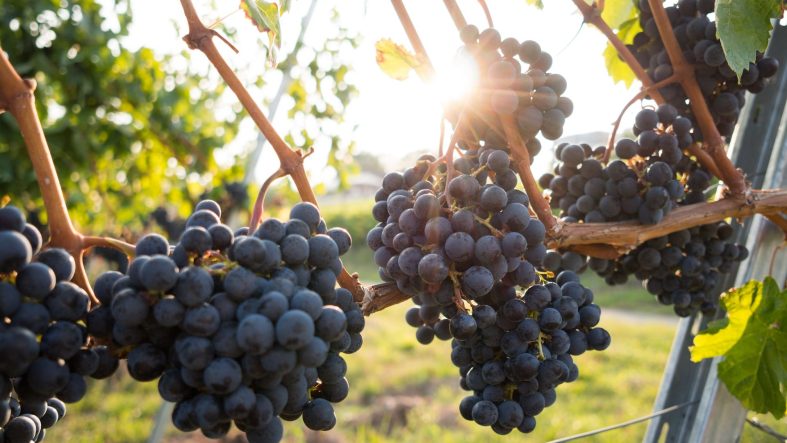
Fruitful Religion

Before Jesus began His public ministry, John the Baptist announced Jesus’ coming and prepared people for His message.  This, of course, generated opposition, and when the Pharisees and Sadducees came out to confront John, he told them to “bear fruit in keeping with repentance…Even now the axe is laid to the root of the trees.  Every tree therefore that does not bear good fruit is cut down and thrown into the fire.[1]

Since Pharisees and Sadducees were often hypocrites, this is usually interpreted as John telling them to practice good works that flow from an inner righteousness, instead of keeping up a merely external appearance of following God.  I agree this is a correct interpretation, but I also think there is more than that to the fruit that John spoke of.

Paul wrote in Galatians 5:22-23: “But the fruit of the Spirit is love, joy, peace, patience, kindness, goodness, faithfulness, gentleness, self-control; against such things there is no law.”

Could this also be part of the fruit John wanted his opposition to produce?

Perhaps John was telling the Pharisees and Sadducees that their religion didn’t produce “love, joy, peace”, and the other characteristics listed by Paul.  Jesus pointed out the lack of love in the parable of the Good Samaritan, that the religious leaders of His time would rather leave a man dying on the side of the road than break what they saw as legal obligations.  But did the Pharisees and others also lack joy and peace?  Since they strived to obey God’s law perfectly (but only on the outside) they likely felt constant pressure to live up to God’s perfect standards, instead of peace with their Maker.  Their relationships with others, who they saw as inferior to them, were distant and cold at best.  “Against these things there is no law,” yet the Pharisees and Sadducees failed to practice them.  They not only felt no joy or peace, but they also robbed others of their joy and peace by making them feel unworthy of God’s love.  They showed no kindness or patience to others.  They were not faithful to God by being gentle with people who were not like them.  They did not “bear fruit in keeping with repentance,” as John the Baptist said.

It’s easy to judge the religious leaders of Jesus’ day, since Jesus clearly exposed their inadequacies.  However, it’s a difficult challenge to ask ourselves: does our religion bear this fruit for us?  Does our practice of Christianity result in not only loving actions toward our neighbors, but also “joy, peace, patience, kindness, goodness, faithfulness, gentleness, self-control” for ourselves?

Do we experience joy and peace in our relationship with God, or do we feel grief that we can’t live up to His expectations and do we still feel like God is disappointed in us?  Do we practice kindness and patience with others?  Are we gentle with those enslaved by the brokenness that rules this world?  Do we submit ourselves to the control of our God, who tells us to love Him and love our neighbor no matter what?

Fortunately for us, our salvation does not depend on our faithfulness, but on His faithfulness.  As 1 John 1:9 says: “If we confess our sins, he is faithful and just to forgive us our sins and to cleanse us from all unrighteousness.”  We can never come to God too late or too often to ask for forgiveness and restoration.  His love for His people is steadfast and His faithfulness is without end or limit.  He is always willing to bring us back to the path that yields fruit for the Kingdom.  Jesus on the cross purchased for us a way to bear fruit!

Therefore, pray that we can all “bear fruit in keeping with repentance.”  Fruit that brings us joy and peace, and that brings Him glory.

But the fruit of the Spirit is love, joy, peace, patience, kindness, goodness, faithfulness, gentleness, self-control; against such things there is no law.”


[1] Matthew 5:8, 10