God Offers More Than Bread and Circuses

Fans of the dystopian Hunger Games novels and movies know that the story takes place in a country called Panem.  There, the extravagantly wealthy Capitol district holds an annual, televised battle royale, The Hunger Games, where children from each of the 12 desperately poor districts fight to the death until there is only one remaining.  The purpose of these demented Games is to remind the people of the power of the Capitol, but also to provide entertainment.  But why is the country called Panem?

Panem is likely a reference to the Latin phrase “panem et circenses,” or “bread and circuses,” which “means to generate public approval, not by excellence in public service or public policy, but by diversion, distraction, or by satisfying the most immediate or base requirements of a populace, by offering a palliative: for example food (bread) or entertainment (circuses).”[1]  Under this way of thinking, for a government to remain in power it needs to provide the basic needs of its people.  For an especially cynical government, it would mean they need only provide just enough bread and just enough circuses to keep the population from overthrowing them.

The Colosseum in Rome – a site of ancient “circuses.” Photo by Federico Di Dio photography on Unsplash

In the case of The Hunger Games, the Capitol reminded the other districts that they could have no bread (panem) without the Capitol’s “benevolence,” and that the only entertainment (circuses) they get is to watch their children kill each other.  Talk about a government providing the very bare minimum!

The Hunger Games is obviously an extreme example, but fortunately, Christianity offers a better answer than just the bare minimum of “panem et circenses.”   What benefits does it offer?  Psalm 103 in the Bible begins in the first 2 verses with a call to:

Bless the LORD, O my soul,
            and all that is within me,
            bless his holy name!
Bless the LORD, O my soul,
            and forget not all his benefits

And what are these benefits?  Is it more than “bread and circuses”?  It is, as verses 3-5 tell us that the Lord is the one:

who forgives all your iniquity,
            who heals all your diseases,
who redeems your life from the pit,
            who crowns you with steadfast love and mercy,
who satisfies you with good
            so that your youth is renewed like the eagle’s.”

This Psalm says He can take care of both our spiritual and physical maladies.  Jesus performed many miracles, so we “may know that the Son of Man has authority on earth to forgive sins,”[2] solving our spiritual alienation from God and each other.  Likewise, the body’s diseases do not heal magically or by chance; they heal because God created us with that ability.  He is the Great Physician.[3]

Also, He is the One who can save us “from the pit” – from ourselves and the punishment that our sin deserves, replacing our banishment from God’s presence with “love and mercy.”  He is the One who has the perspective needed to define what is good, and as our Maker, knows what we need to thrive and be renewed.  He offers many benefits we cannot find anywhere else.

Not just the fictional Panem, but all the nations of the real world, have nothing to offer but varying degrees of bread and circuses, various diversions and distractions and palliatives.  No government in the world can provide the benefits God provides – those listed in Psalm 103 – and therefore only God offers what can truly satisfy.  Therefore,

“Bless the LORD, O my soul,
            and forget not all his benefits


[1] https://en.wikipedia.org/wiki/Bread_and_circuses
[2] Matthew 9:6, Mark 2:20, Luke 5:24
[3] Matthew 9:12, Mark 2:17, Luke 5:31
Hypocritical Bread

One of the reasons Jesus encountered so much opposition was that He could see many of the religious leaders of His time as they really were – sinners condemned by the law and in need of a Savior – and was not afraid to call them out on it. Once when some scribes and Pharisees were crowding Him, trying to catch Him in an error, Jesus said to His disciples:

Beware of the leaven of the Pharisees, which is hypocrisy.  Nothing is covered up that will not be revealed, or hidden that will not be known.”[1]

Jesus calls the Pharisees hypocrites, which means someone deceitfully playing a part, using leaven as a metaphor.  Leaven is yeast, but how is yeast like hypocrisy?

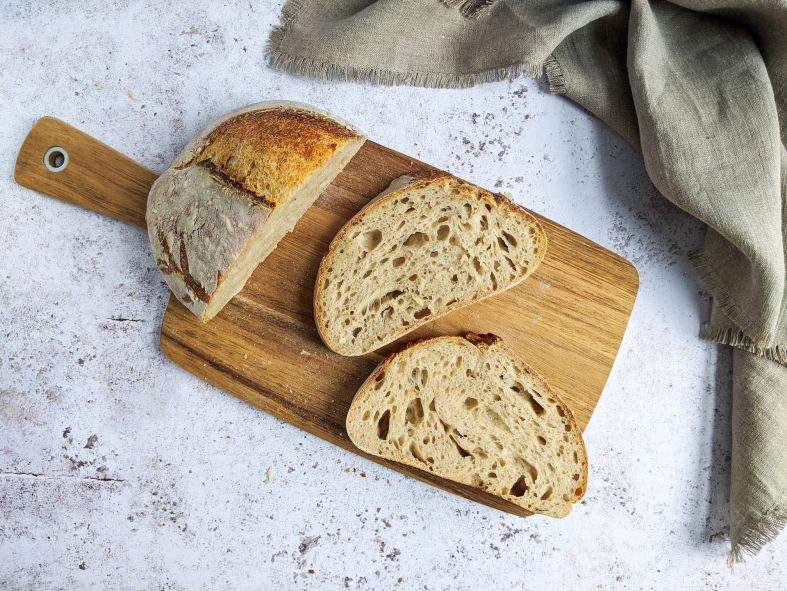
Beware the nooks and crannies of the Pharisees! Photo by Debbie Widjaja on Unsplash

Looking at leavened bread and unleavened bread from the outside, they might look the same: they both look like solid loaves of bread.  However, in the process of making bread rise, yeast creates gas bubbles that form holes inside the bread (or “nooks and crannies” as in an old English muffin ad).  So, when you break or cut open a piece of leavened bread, it does not look solid on the inside like it does from the outside.  It is full of holes.  On the other hand, unleavened bread tends to be more solid, such as many flatbreads or tortillas.

Yeast is like hypocrisy because the hypocrite is not the same on the inside as they are on the outside.  The image they carefully craft for themselves fails inspection to One who can see inside.  In the case of the Pharisees, who wanted to appear superior in their knowledge of, and observance of, Jewish law, Jesus revealed that they were “like whitewashed tombs, which outwardly appear beautiful, but within are full of dead people’s bones and all uncleanness.”[2]

Later in the New Testament, in 1 Corinthians 8:1, the apostle Paul wrote: “we know that ‘all of us possess knowledge.’ This ‘knowledge’ puffs up, but love builds up.”  Paul’s warning was that knowledge, if not used in love, puffs us up as yeast puffs up bread, making it full of air bubbles, and hollow inside.  Knowledge can make us proud and inflate our own sense of importance if we aren’t careful.  Love, on the other hand, seeks to build up others in humility.

Therefore, whose who seek to walk in integrity before God, to live an unleavened life, must reach out to the only One who can see all of our inner nooks and crannies, yet still loves us.  Though we are still sinners, by His blood we are justified in His sight and being made whole by our Maker.  We should pray as David prayed in Psalm 139:23 –

Search me, O God, and know my heart!
            Try me and know my thoughts!
And see if there be any grievous way in me,
            and lead me in the way everlasting!”

He can supply everything we lack.


[1] Luke 12:1b-2
[2] Matthew 23:27

What You Have Forgotten Today He Can Supply

The Gospel of Mark records two miraculous feedings of multitudes.  The first was mainly a Jewish crowd of about 5,000 in Mark 6:30-44; the second was a mainly Gentile group of about 4,000 in Mark 8:1-9.  These two stories are very well known, but if you read on Mark adds this about Jesus’ disciples in 8:14 – “Now they had forgotten to bring bread, and they had only one loaf with them in the boat.

On this verse Warren Wiersbe remarks: “It must have grieved Jesus that His hand-picked helpers were so spiritually obtuse. The fact that He had multiplied bread on two occasions and fed over ten thousand people had apparently made little impression on them! Why worry and argue over one loaf of bread when you have Jesus in the boat with you?”[1]

When well-known Bible stories have little impact on us, remember that these disciples knew the story even better than we do – they were there!  Jesus did not give up on them and will not give up on us.

Have you forgotten to trust Jesus with something today?  He desires to be “in the boat with you” in constant fellowship.  Ask Him to take your anxiety and to supply your daily bread.  He never forgets.


[1] Wiersbe, Warren.  Be Diligent (Mark) (1987).  P. 97.

God Offers More Than Bread and Circuses

Fans of the dystopian Hunger Games novels and movies know that the story takes place in a country called Panem.  There, the extravagantly wealthy Capitol district holds an annual, televised battle royale, The Hunger Games, where children from each of the 12 desperately poor districts fight to the death until there is only one remaining.  The purpose of these demented Games is to remind the people of the power of the Capitol, but also to provide entertainment.  But why is the country called Panem?

Panem is likely a reference to the Latin phrase “panem et circenses,” or “bread and circuses,” which “means to generate public approval, not by excellence in public service or public policy, but by diversion, distraction, or by satisfying the most immediate or base requirements of a populace, by offering a palliative: for example food (bread) or entertainment (circuses).”[1]  Under this way of thinking, for a government to remain in power it needs to provide the basic needs of its people.  For an especially cynical government, it would mean they need only provide just enough bread and just enough circuses to keep the population from overthrowing them.

The Colosseum in Rome – a site of ancient “circuses.” Photo by Federico Di Dio photography on Unsplash

In the case of The Hunger Games, the Capitol reminded the other districts that they could have no bread (panem) without the Capitol’s “benevolence,” and that the only entertainment (circuses) they get is to watch their children kill each other.  Talk about a government providing the very bare minimum!

The Hunger Games is obviously an extreme example, but fortunately, Christianity offers a better answer than just the bare minimum of “panem et circenses.”   What benefits does it offer?  Psalm 103 in the Bible begins in the first 2 verses with a call to:

Bless the LORD, O my soul,
            and all that is within me,
            bless his holy name!
Bless the LORD, O my soul,
            and forget not all his benefits

And what are these benefits?  Is it more than “bread and circuses”?  It is, as verses 3-5 tell us that the Lord is the one:

who forgives all your iniquity,
            who heals all your diseases,
who redeems your life from the pit,
            who crowns you with steadfast love and mercy,
who satisfies you with good
            so that your youth is renewed like the eagle’s.”

This Psalm says He can take care of both our spiritual and physical maladies.  Jesus performed many miracles, so we “may know that the Son of Man has authority on earth to forgive sins,”[2] solving our spiritual alienation from God and each other.  Likewise, the body’s diseases do not heal magically or by chance; they heal because God created us with that ability.  He is the Great Physician.[3]

Also, He is the One who can save us “from the pit” – from ourselves and the punishment that our sin deserves, replacing our banishment from God’s presence with “love and mercy.”  He is the One who has the perspective needed to define what is good, and as our Maker, knows what we need to thrive and be renewed.  He offers many benefits we cannot find anywhere else.

Not just the fictional Panem, but all the nations of the real world, have nothing to offer but varying degrees of bread and circuses, various diversions and distractions and palliatives.  No government in the world can provide the benefits God provides – those listed in Psalm 103 – and therefore only God offers what can truly satisfy.  Therefore,

“Bless the LORD, O my soul,
            and forget not all his benefits


[1] https://en.wikipedia.org/wiki/Bread_and_circuses
[2] Matthew 9:6, Mark 2:20, Luke 5:24
[3] Matthew 9:12, Mark 2:17, Luke 5:31

Hypocritical Bread

One of the reasons Jesus encountered so much opposition was that He could see many of the religious leaders of His time as they really were – sinners condemned by the law and in need of a Savior – and was not afraid to call them out on it. Once when some scribes and Pharisees were crowding Him, trying to catch Him in an error, Jesus said to His disciples:

Beware of the leaven of the Pharisees, which is hypocrisy.  Nothing is covered up that will not be revealed, or hidden that will not be known.”[1]

Jesus calls the Pharisees hypocrites, which means someone deceitfully playing a part, using leaven as a metaphor.  Leaven is yeast, but how is yeast like hypocrisy?

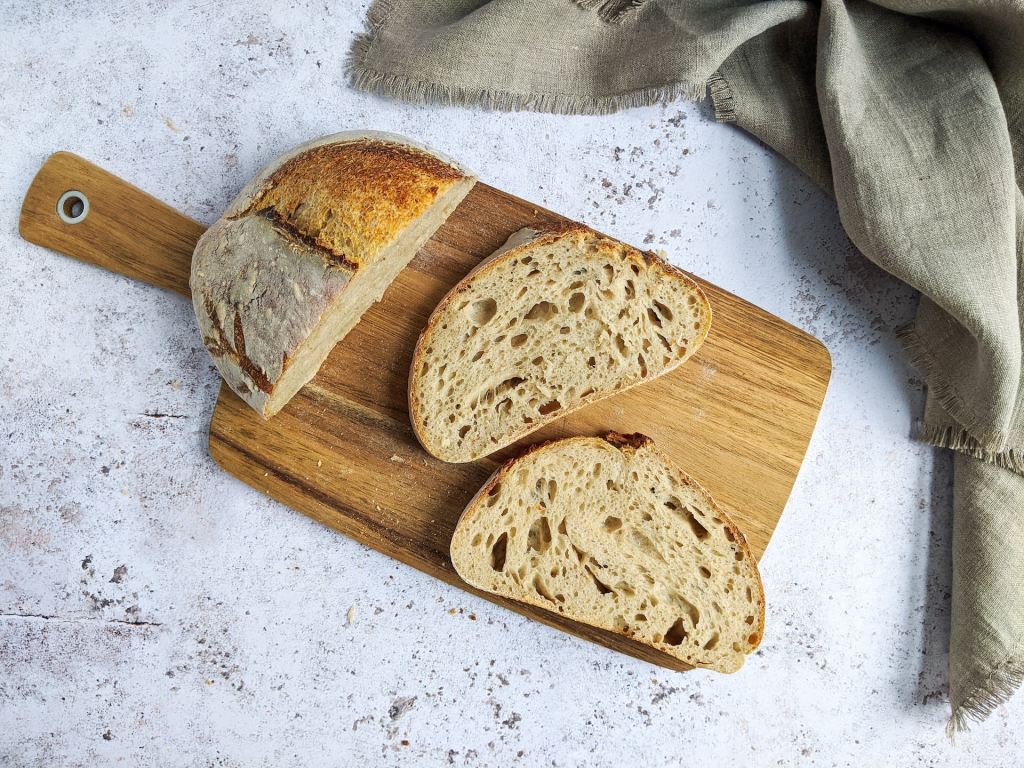
Beware the nooks and crannies of the Pharisees! Photo by Debbie Widjaja on Unsplash

Looking at leavened bread and unleavened bread from the outside, they might look the same: they both look like solid loaves of bread.  However, in the process of making bread rise, yeast creates gas bubbles that form holes inside the bread (or “nooks and crannies” as in an old English muffin ad).  So, when you break or cut open a piece of leavened bread, it does not look solid on the inside like it does from the outside.  It is full of holes.  On the other hand, unleavened bread tends to be more solid, such as many flatbreads or tortillas.

Yeast is like hypocrisy because the hypocrite is not the same on the inside as they are on the outside.  The image they carefully craft for themselves fails inspection to One who can see inside.  In the case of the Pharisees, who wanted to appear superior in their knowledge of, and observance of, Jewish law, Jesus revealed that they were “like whitewashed tombs, which outwardly appear beautiful, but within are full of dead people’s bones and all uncleanness.”[2]

Later in the New Testament, in 1 Corinthians 8:1, the apostle Paul wrote: “we know that ‘all of us possess knowledge.’ This ‘knowledge’ puffs up, but love builds up.”  Paul’s warning was that knowledge, if not used in love, puffs us up as yeast puffs up bread, making it full of air bubbles, and hollow inside.  Knowledge can make us proud and inflate our own sense of importance if we aren’t careful.  Love, on the other hand, seeks to build up others in humility.

Therefore, whose who seek to walk in integrity before God, to live an unleavened life, must reach out to the only One who can see all of our inner nooks and crannies, yet still loves us.  Though we are still sinners, by His blood we are justified in His sight and being made whole by our Maker.  We should pray as David prayed in Psalm 139:23 –

Search me, O God, and know my heart!
            Try me and know my thoughts!
And see if there be any grievous way in me,
            and lead me in the way everlasting!”

He can supply everything we lack.


[1] Luke 12:1b-2
[2] Matthew 23:27