An old friend used to encourage me to read the Bible every day, and his reasoning was: “The Bible is 66 love letters from God. If you got a love letter from any other person, would you put off reading it?” It took many years before I really took this to heart, but I always remembered it.
Dear fellow travelers,
I pass along that story, but I’ll also add more to it. The best times are not when we just read these letters. Devotions aren’t just lessons, memorization exercises, a disciplinary action, or a time to pay your dues so you can get on with your day. They are time spent with Someone who loves you more than anything, and who wants you to love and trust Him more than anything. Treat Him as you would treat an honored guest, because He is really there with you.
Think of it this way – How often do you get to spend time with someone who fulfills 1 Cor 13:4-7 perfectly?
Someone who is patient and kind; who does not envy or boast; is not arrogant or rude. Who does not insist on His own way; is not irritable or resentful; does not rejoice at wrongdoing, but rejoices with the truth. He bears all things, believes all things, hopes all things, endures all things. [1]
Nobody else we see today will be nearly as good to us.
We all miss days, even weeks or longer, but He is patient and kind. We can try again tomorrow or later today, and He will be there.
[1] This paraphrase of 1 Corinthians 13:4-8 was suggested in a devotional I read last year: “August 30.” James Montgomery Boice and Marion Clark. Come to the Waters: Daily Bible Devotions for Spiritual Refreshment. (2017). It was also the basis of a prior post, Jesus is Patient and Kind Even When I am Not
On this date in 1976, Mao Zedong, or Chairman Mao, founder of the communist People’s Republic of China, died at the age of 82. Some look at Mao’s death as a positive turning point for Christianity in China, since under Mao China had expelled all Western Christian missionaries between 1949 and 1953. However, while it is impossible to come up with precise numbers across a 3.7 million square mile country, Christians probably were about 1 percent of China’s population when Western missionaries were kicked out, but by the 1980s about 5 percent of the population went by Christ’s name. The Christian population grew by ten times, while the overall population doubled. How did this happen?
Mark Noll and Carolyn Nystrom, authors of the book “Clouds of Witnesses” say the key to this growth was “the resilience of the Chinese believers themselves…securely rooted in Chinese life before Mao.” [1] In expelling missionaries, Mao was in part responding to “treaty ports” created at the end of the 1839-42 Opium War. Through these ports foreign powers had extra territorial rights, allowing influences including missionaries to come in, but these ports also allowed opium to flow freely into China from Western countries. Therefore, in the mind of many Chinese, Christianity became linked with both Western imperialism and opium addiction. When Karl Marx said “religion is the opiate of the masses” he may have been thinking of this connection. But native Chinese believers, sometimes planted by Europe-based evangelizing organizations like China Inland Mission, remained behind and spread resilient forms of Christianity that were attractive to the Chinese population.
John Sung Several of these Chinese Christians are profiled by Noll and Nystrom, including John Sung who lived from 1901 to 1944, before Mao’s communist revolution. Around Christmas 1926, Sung heard child evangelist Uldine Utley preach a sermon at Calvary Baptist Church in New York, near where he was attending Union Theological Seminary. This sermon, along with other influences, countered the liberal Christianity he was being taught where the Bible was just “a collection of myths.” He returned to China, determined to spread the gospel in the land of his birth with frenetic energy. In a one-year period in 1931-2, Sung and a small group of missionaries “traveled over 50,000 miles, held 1,200 meetings, preached to more than 400,000 people in thirteen provinces, registered more than 18,000 ‘decisions’” for Christ. Many of these new Christians formed traveling bands themselves. Sung is considered the last great evangelist in China and Southeast Asia before Mao’s reign.
Dora Yu Even earlier, another driver of this resilient, Chinese Christianity was Dora Yu (1873-1931). Dora’s ministry benefitted tremendously from a 1905 decision by Dowager Empress Cixi to replace China’s traditional Confucian civil service examinations with general public schools. Under this system, mission-run schools became a valued option, and one of Dora’s early ministries was to train “Bible women” to not only educate women generally, but also to teach them the Bible, pray with them, and teach them to live by faith. Mostly traveling by foot, in “1903, Dora Yu visited with 925 women and 211 children.” Later, her ministry grew and she became famous for itinerant preaching, reaching many others who would carry on the Lord’s work.
Because of our proneness to look at the bucket and forget the fountain, God has frequently to change His means of supply to keep our eyes fixed on the source
Watchman Nee
Watchman Nee In 1920, Nee Shu-Tsu would hear Dora Yu preach. Later known as Watchman Nee, he “planted at least four hundred Christian churches over a thirty-year period of active ministry.” He died in 1972 in a Communist prison after spending 20 years there. Watchman Nee wrote that “Because of our proneness to look at the bucket and forget the fountain, God has frequently to change His means of supply to keep our eyes fixed on the source.”
Whether it is a European missionary, a child preacher in New York City, a Chinese man temporarily studying in New York City, or a Chinese woman walking miles through the countryside:
“How beautiful upon the mountains are the feet of him who brings good news, who publishes peace, who brings good news of happiness, who publishes salvation, who says to Zion, ‘Your God reigns.’” – Isaiah 52:7
As Jesus said in Matthew 16:18 – “And I tell you, you are Peter, and on this rock I will build my church, and the gates of hell shall not prevail against it.” This rock is the gospel of the kingdom of God, and not even a brutal regime like that of Chairman Mao could prevail against it.
Soli Deo Gloria
[1] Noll, Mark A.; Nystrom, Carolyn. Clouds of Witnesses: Christian Voices from Africa and Asia (2011). This post is drawn from chapters 12 and 14.
Social media is a great place to share short bursts of pontification, whether in memes, quips, quotes, or what have you. Sometimes a little more research may do some good, though. Several times recently I’ve seen the quote below shared by people protesting what they see as people in power playing loose with information to pompously push pernicious policies that are precariously close to imperious:
“Truly, whoever can make you believe absurdities can make you commit atrocities.” – Voltaire
Since this quote was often posted by Christians, they might be appalled by the context of the quote:
“Formerly there were those who said: You believe things that are incomprehensible, inconsistent, impossible because we have commanded you to believe them; go then and do what is unjust because we command it. Such people show admirable reasoning. Truly, whoever can make you believe absurdities can make you commit atrocities. If the God‐given understanding of your mind does not resist a demand to believe what is impossible, then you will not resist a demand to do wrong to that God‐given sense of justice in your heart. As soon as one faculty of your soul has been dominated, other faculties will follow as well. And from this derives all those crimes of religion which have overrun the world.”
On the positive side, “the foolishness of God is wiser than men, and the weakness of God is stronger than men.”[1] Being a Christian requires holding on tight to things that seem absurdities to the world, but it also means we have the “God-given sense of justice” that requires we show mercy to those whose absurdities are different from our own.
If I post anything that seems absurd, please let me know, mercifully… ( I think Abraham Lincoln said something similar on his website)
In a parable about humility, Jesus said in Luke 14:11: “For everyone who exalts himself will be humbled, and he who humbles himself will be exalted.” While the parable is about individual people, elsewhere God also makes clear that he can humble or exalt entire nations. While Luke 14:11 may contradict much of what we see in our world today, at the final judgment the truth of the verse will be made manifest, and God promises it will be so.
As an example, the Old Testament prophet Isaiah spoke of God’s power over the nations. Around 605 B.C., Babylon invaded Judah and carried them into captivity, and about 70 years later, Judah was allowed to return home by Cyrus the Mede, who had defeated Babylon. Over a century before Babylon’s invasion, Isaiah prophesied their entire rise and fall around 700 B.C., when Babylon was not yet even a world power. Isaiah described the final destinies of both Babylon and of God’s people in startling images.
As recorded in Isaiah 47:1-3, God’s vengeance on Babylon was described, probably before they even considered capturing Jerusalem:
“Come down and sit in the dust, O virgin daughter of Babylon; sit on the ground without a throne, O daughter of the Chaldeans! For you shall no more be called tender and delicate. Take the millstones and grind flour, put off your veil, strip off your robe, uncover your legs, pass through the rivers. Your nakedness shall be uncovered, and your disgrace shall be seen. I will take vengeance, and I will spare no one. Our Redeemer—the LORD of hosts is his name— is the Holy One of Israel.”
This is contrasted to the future of God’s people in Isaiah 52:1-2:
“Awake, awake, put on your strength, O Zion; put on your beautiful garments, O Jerusalem, the holy city; for there shall no more come into you the uncircumcised and the unclean. Shake yourself from the dust and arise; be seated, O Jerusalem; loose the bonds from your neck, O captive daughter of Zion.”
Did you notice the parallels? In Isaiah 47, Babylon is disgraced, cast down from the throne and made to do menial labor. Babylon is stripped of their beautiful clothes and publicly shamed, sitting in the dust.
Contrast to Isaiah 52, which describes the daughter of Zion as rising up from the dust of disgrace under Babylon, from whom she has been freed. She dwells in peace, awakening and dressing herself in beautiful clothes. What a beautiful future!
However, note that God removes Babylon’s temporary throne but does not put His people on a throne. That honor belongs only to Him, and Babylon’s presumption in taking that place is the reason they need to be humbled. By humbling themselves before God’s throne, His people follow the example Jesus gave at the wedding feast in verse 10 of the Luke 14 parable: “But when you are invited, go and sit in the lowest place, so that when your host comes he may say to you, ‘Friend, move up higher.’ Then you will be honored in the presence of all who sit at table with you.” God will honor the humble.
By demonstrating power over entire nations in history, He has proven He has power over nations now and in the future. And if He has power over nations, He has power over whatever frustrations we have with the state of the world. He alone is on His throne.
So, if you are frustrated with the powerful and influential who puff themselves up in defiance of God, or if you wonder whether being humble is really a better alternative, remember:
“For everyone who exalts himself will be humbled, and he who humbles himself will be exalted.”
Life is often a battle with inconsistency. We go from feeling good about our situations and God’s favor, to feeling like we are in a spiritual desert, and back again like a pendulum. Knowing this, God provides verses like Psalm 126:4-6, which says:
“Restore our fortunes, O LORD, like streams in the Negeb! Those who sow in tears shall reap with shouts of joy! He who goes out weeping, bearing the seed for sowing, shall come home with shouts of joy, bringing his sheaves with him.”
The metaphor is a comparison to the south of Israel, which has a very dry climate, yet experiences flooding in a rainstorm. The Negeb also is mentioned in the story of Caleb and his daughter Achsah. Her inherited land was in the infertile Negeb, and she asks him also for springs of water, which he gives her.[1]
Like Achsah’s father Caleb, our Father God also provides for us in our seasons of trouble. Here, the Psalmist compares tears to seeds, reminding us that in the dry times as well as the times of overflowing blessing, God is with us, using those circumstances. Our current loss is future gain, and our current time of suffering is bound and measured by God’s will, like the Babylonian exile was measured at 70 years[2] and the year of Jubilee came after every 49 years[3]. After our time, we will enter His rest and rejoice eternally.
In this life we may experience spiritual and emotional extremes, like drought and flood in the desert. Don’t overreact to the pendulum swing but count your tears as seeds. Pray that He will restore your fortunes and thank Him that our seasons are in His hands.
“Blessed are those who mourn, for they shall be comforted.” – Matthew 5:4
[1] Joshua 15:18-19 [2] Daniel 9:2, 9:24 [3] Leviticus 25:8



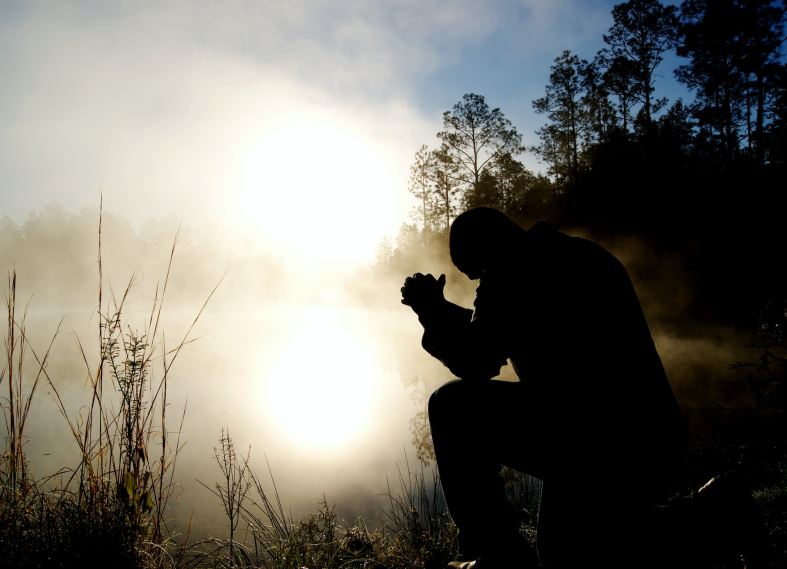
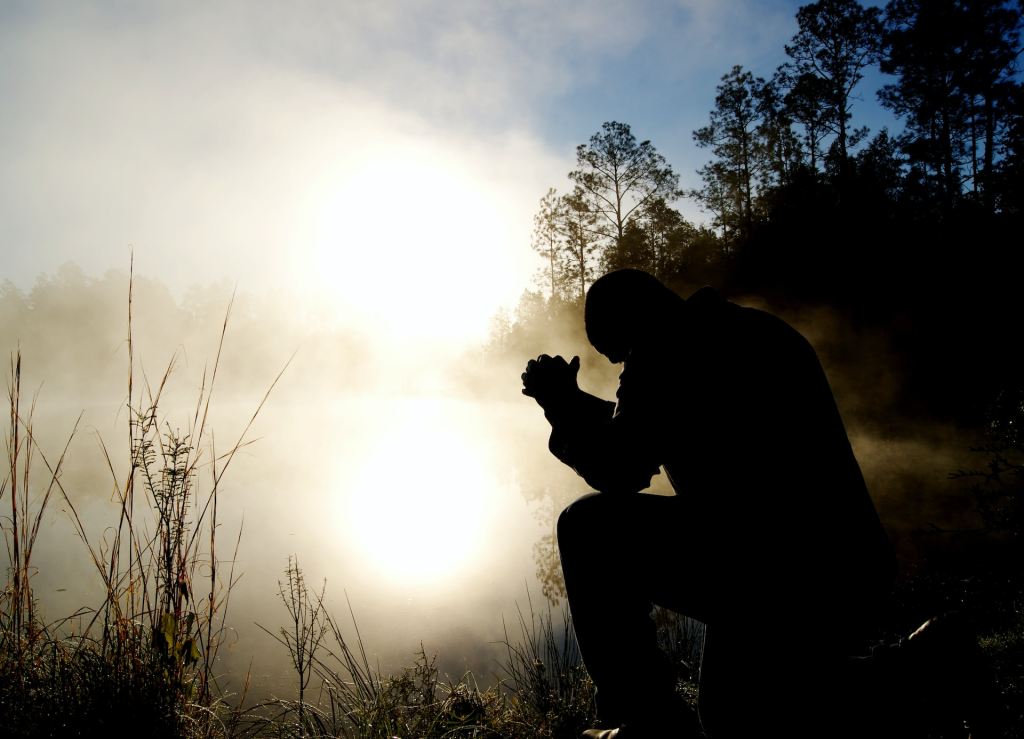


 Driving Toward the Morning Sun