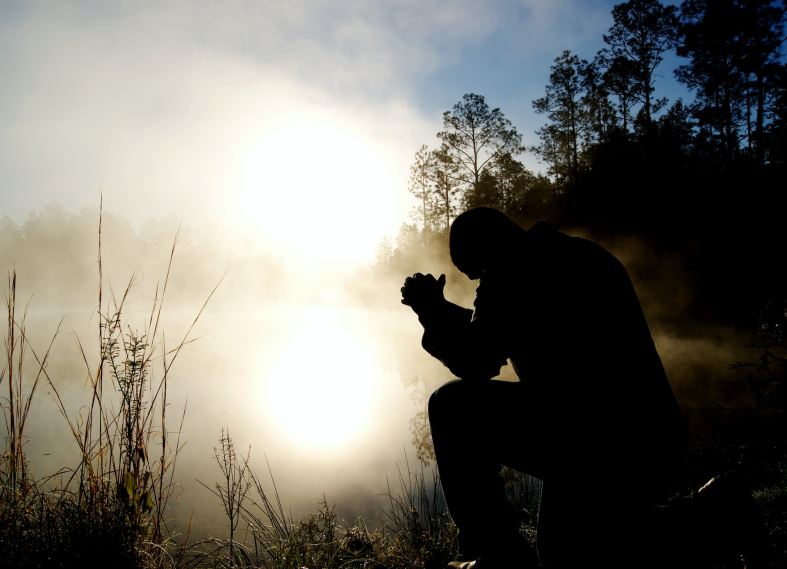
Daily Readings for September 8 – 14

Fellow travelers:

Here is the list of readings for this week: 2 chapters to read per day as the main reading plan, and extra chapters for anyone who wants to read the whole Bible in 2025.  Reading 3 chapters a day on weekdays and 4 on weekends almost exactly covers the 1,189 chapters of the Bible, so the “extra” readings are about 9 chapters per week.

Follow along (or not) any way you choose!

Monday, September 8: Joshua 9-10
Tuesday, September 9: Joshua 11-12
Wednesday, September 10: Joshua 13-14
Thursday, September 11: Joshua 15-16
Friday, September 12: Joshua 17-18
Saturday, September 13: Joshua 19-20
Sunday, September 14: Joshua 21-22

Extra chapters for those reading the whole Bible this year:
Jeremiah 48-52, Lamentations 1-4

God Breaks Out of All Boxes

Written around 600 B.C., the Old Testament book of Habakkuk outlines a conversation between the prophet Habakkuk and God, in the few years prior to Judah’s exile in Babylon.  The book begins with Habakkuk’s complaint that evil was running rampant in Judah.  Habakkuk cries out to God about the prevalence of “violence” and “iniquity.”  He cries out about how people are ignoring God’s law, yet nothing is being done about it.  There was no justice.[1]  He’s tired of seeing nothing but evil in the world every day and is frustrated that God doesn’t seem to be doing anything about it.

Then comes Habakkuk 1:5, which to me is one of the most shocking verses in the Bible:

Look among the nations, and see;
            wonder and be astounded.

For I am doing a work in your days
            that you would not believe if told.”

Why is this verse shocking?  Because next, God tells Habakkuk that He has arranged for Babylon, a “dreaded and fearsome[2] nation that does not respect God and that lives by the creed that might makes right, to conquer Judah.  Basically, Habakkuk asks God why He was allowing evil to prosper in Judah, and God answers that He will allow an even more evil nation to prosper and conquer Judah.  Habakkuk must have been perplexed, and God knew it.  He knew Habakkuk would “wonder and be astounded” and we probably feel that way sometimes too.

Habakkuk had expectations about what God could and couldn’t do, but here God says He can, and will, do things that shock us.  Things that we cannot understand, but things that will teach us to trust instead of understand.  Sometimes God doesn’t behave in line with our theological doctrine, but He always does so for a reason.

Another example of shock at God’s out-of-the-box behavior comes from John 13, one of my favorite New Testament stories.  Mere days before going to the cross, “Jesus, knowing that the Father had given all things into his hands, and that he had come from God and was going back to God, rose from supper. He laid aside his outer garments, and taking a towel, tied it around his waist. Then he poured water into a basin and began to wash the disciples’ feet and to wipe them with the towel that was wrapped around him.”[3]

Photo by Photoholgic on Unsplash

Peter was shocked.  This was not what he expected from the Messiah, the incarnate Son of God.  So, when we get to verse 8, we read: “Peter said to [Jesus], “You shall never wash my feet.” Jesus answered him, “If I do not wash you, you have no share with me.”

Peter was reluctant to accept a God that would serve him by washing his feet, but what Jesus was trying to tell the disciples was that if they wanted to follow Him as their master, they would have to serve as He served, even if it wasn’t what they expected from God.  They needed to be washed, and then to wash others.

Peter was learning that if Jesus is doing something, don’t question it!  His actions are right by the mere fact that He is doing it, whatever our reason or expectations tell us.  In the Old Testament, God decided to send His people to a Promised Land, then to cause a heathen nation to kick them out of the Promised Land.  In the New Testament, He showed us that His Messiah would be a suffering servant, to teach us to be suffering servants.

God will never do anything that contradicts His character as revealed in the Bible, but the Bible also says, “Who has measured the Spirit of the LORD, or what man shows him his counsel?” in Isaiah 40:13.  God does not fit within our boxes, our expectations and rules.  We don’t fully understand Him.  Therefore, pay close attention to Jesus the Master, and be ready to follow where He goes, even though it might be shocking!

Look among the nations, and see;
            wonder and be astounded.

For I am doing a work in your days
            that you would not believe if told.”


[1] Habakkuk 1:2-4
[2] Habakkuk 1:7
[3] John 13:3-5

Surprising Answers to Prayer

Jesus told many parables, often in response to situations or people He came across.  These parables are full of great lessons, but sometimes there’s also a lesson in the prelude to the parable.  One such example happens in Luke 12:13-15, which says:

Someone in the crowd said to him, “Teacher, tell my brother to divide the inheritance with me.”   But he said to him, “Man, who made me a judge or arbitrator over you?”  And he said to them, “Take care, and be on your guard against all covetousness, for one’s life does not consist in the abundance of his possessions.”

Jesus goes on to tell the “parable of the rich fool,” who loses his soul because he only cares about worldly goods.  The parable is a lesson about coveting, greed and priorities, but I believe there’s also a broader lesson about prayer in the 3 verses above before the parable even starts.

We can put ourselves in the place of the “someone in the crowd,” who wants something, and brings it to Jesus.  Unlike him, we don’t meet Jesus physically on the street, but we come to Him in prayer all the time.  We want something and we pray about it.  When we pray, we often we want to get a particular answer, hopefully giving us what we want.

In the case of “someone” in the Luke 12 story, he wanted part of the family inheritance.  In our case, we could want any number of things like financial gain, an end to a societal problem, better governance from our leaders, success for our children or others, a safe business trip or vacation, etc.  God wants us to pray to Him about all things, and we do.  “Humble yourselves, therefore, under the mighty hand of God so that at the proper time he may exalt you, casting all your anxieties on him, because he cares for you.”  (1 Peter 5:6-7)

However, we often aren’t ready to listen to a different answer than the one we want.  In the story, Jesus didn’t respond to “someone” with a direct answer, but with an answer that challenged the attitude behind the question.  “You shall not covet[1] is one of the Ten Commandments after all, and Jesus was letting “someone” know the condition of his heart was more important than the condition of his bank account.

God can respond to our prayers in the same way.  Instead of solving what we think is the problem, He may try to reveal to us a deeper problem we need to deal with.  But if we’re focused on the answer we want, we might miss the point He wants to make.  To God, our sanctification is more important than our gratification but often get that backwards.

When we pray for financial gain, God may respond by challenging our priorities, our diligence, our spending habits, etc.  In the Luke story, Jesus confronted the man’s covetousness.

When we pray for an end to societal problems, God may respond by telling us to care for a single mother[2], or support a homeless ministry, or volunteer at a food bank.

When we pray for better governance from our leaders, God may respond by telling us to control what we can control, by reminding us of His sovereignty, or by giving us practical means to work on the problems we want the politicians to solve, but on a smaller scale.

And so on.  Sometimes we do get what we ask for in prayer, but sometimes God will use prayer to do what He promises to do: make us more like Jesus.  Again, our sanctification is more important than our gratification, but sometimes we miss the point because we’re focused on our needs.

It’s ok to bring all of our needs and concerns to God in prayer, and sometimes we get what we want. However, don’t be surprised if He responds in surprising ways, but how?  He can speak to us any way He chooses, but in my experience, He usually points things out in His word, through our circumstances, and through other believers.

Listen and be open to His answers.  No matter what they might be.

“The majority of us begin with the bigger problems outside and forget the one inside.  A man has to learn ‘the plague of his own heart’ before his own problems can be solved” – Oswald Chambers

“The heart of every problem is the problem in the heart.” – Warren Wiersbe


[1] Exodus 20:17; Deuteronomy 5:21
[2] James 1:27

The Economic Solution?

What if only one verse from the Bible could solve all of the world’s economic problems?  If one could, it would probably be Ephesians 4:28, where Paul wrote:

Let the thief no longer steal, but rather let him labor, doing honest work with his own hands, so that he may have something to share with anyone in need.”

What if everyone followed the three rules suggested by this one verse?

A fig tree. Photo by Jametlene Reskp on Unsplash

First, imagine if there was no crime.  “Let the thief no longer steal.”  The Bible tells us that in a perfect world, God’s people “shall sit every man under his vine and under his fig tree, and no one shall make them afraid[1]  Every person will reap the rewards of their effort – their own wine and figs – with no concern for it being taken away from them.

Next, imagine if everyone’s job was productive and meaningful; that each person did “honest work with his own hands.”  What if everyone approached their job as an act of worship, offered to God who sees and knows all?  No dishonesty, no scandal, no nasty office politics, no slacking.

Last, imagine if everyone’s needs were taken care of from the surplus of others.  Imagine if we had the mindset that working in order to have more to share is better than working in order to accumulate for ourselves.

What a world that would be!  So, let’s make these rules into law, enforce them strictly, and we will have a perfect society, right?  Wrong, because rules and laws are not the solution to the world’s problems.  People don’t consistently follow rules, especially when they require that we abandon our selfish ways.  At the root of Adam and Eve’s sin – the sin that taints us all – is that they wanted to do things their own way, making their own choices between good and evil, rather than trusting God to know it for them.  When rebellion is the problem, more or better rules can’t solve it.  Rebellion against God can’t be solved from the outside of us, only from the inside.

However, while sin will always taint us in this world, Christians are called to, and able to, live differently.  Paul declares in 2 Corinthians 5:17 that “if anyone is in Christ, he is a new creation. The old has passed away; behold, the new has come.”  The principles of Ephesians 4:28 apply to God’s people now.

Christians are called not to follow this world’s economic models and incentives, but to “but lay up for yourselves treasures in heaven, where neither moth nor rust destroys and where thieves do not break in and steal.[2]  Because in heaven the thief will “no longer steal” and we should desire that God’s “will be done, on earth as it is in heaven,” we should no longer steal now.  We should know that in any job we should “work heartily, as for the Lord and not for men[3] and we should share with those in need because Jesus told us “Truly, I say to you, as you did it to one of the least of these my brothers, you did it to me.”[4]

Is this possible?  Yes, and Paul modeled some of this for us in his own life.  In Acts 20:34 he said, “You yourselves know that these hands ministered to my necessities and to those who were with me.”  While as an apostle he could have asked each church he founded to fully support his ministry and cover his costs, instead he worked as a tentmaker to show us the principles of Ephesians 4:28 at work.

Maybe one verse can solve all of our economic problems, but only when everyone lives like God knows best.  Our Savior Jesus offers us a world just like that.  All good things are possible.

Let the thief no longer steal, but rather let him labor, doing honest work with his own hands, so that he may have something to share with anyone in need.”


[1] Micah 4:4
[2] Matthew 6:20
[3] Colossians 3:23
[4] Matthew 25:40

The Eternal Work of Eden, Heaven, and Earth

Do you love your job?  Is your work meaningful?  After the Covid-19 pandemic, many found that the work they did before the pandemic doesn’t seem as important or meaningful to them now.  People were quitting their jobs or retiring early so often, a new catchphrase was created: “Great Resignation.”  Frustration over work coincided with demand by many workers to find meaning in their job beyond the actual job, for example looking for a workplace that shares their political or social goals.  The work itself had become less meaningful.

As a partial response to this frustration, today’s post will make three points about work before the Fall, in the Garden of Eden, and what that means for our future in heaven and the place of work in our lives now.  We start with an idea from Genesis that is sometimes missed:

#1 – “Not all the world was Eden”
As noted by Michael Heiser in his book The Unseen Realm[2], Eden’s geography is limited and defined in Genesis 2:8-14.  Also, when God expels Adam and Eve from the garden in Genesis 3:23-24 we know that they are still on earth, but no longer in the garden.  God didn’t create a new place for them to go but removed them from the part of the earth that was Eden.  While Eden was a paradise, it was not the entire world.  Which leads to the second point:

#2 – The original task of humanity was to make the entire Earth like Eden
In Genesis 1:28 we read: “And God blessed them. And God said to them, ‘Be fruitful and multiply and fill the earth and subdue it, and have dominion over the fish of the sea and over the birds of the heavens and over every living thing that moves on the earth.’”  Heiser notes on this verse that “the earth needed filling” and that “it makes no sense to subdue the garden of God.”

Eden was a perfect pattern which mankind was to learn from and apply to the rest of the world.  God’s creativity in Eden was a model for human creativity everywhere else.  The pre-Fall world was not a world where there was no work left to be done, which suggests that:

#3 – Work is Eternal
A popular view of heaven is that it is a leisurely place where we don’t have to work.  Images of angels playing harps and finally being able to kick back and relax come to mind.  Some hope in heaven partly for this reason – that they’re tired of working and can’t wait for it to be over.  However, in Genesis 2:15 “The LORD God took the man and put him in the garden of Eden to work it and keep it.”  Adam had a job to do in Eden, and God’s people will have jobs to do in heaven.  Work is not only part of our current fallen world, but a part of our eternal destiny as well.  This may seem like bad news to some of my readers, but is the idea of doing nothing for eternity really appealing when you think about it?

We can be encouraged because the actual hope of heaven is always greater than we can imagine.  As Paul wrote in Romans 8:18, “For I consider that the sufferings of this present time are not worth comparing with the glory that is to be revealed to us.”  While in heaven we will work, it will be thoroughly meaningful and fulfilling.  Every person will be perfectly suited for their tasks and doing exactly what they were designed to do.  No longer will work be cursed by “thorns and thistles,”[3] where labor means pain and you only benefit “by the sweat of your face.”[4]  Work will not be gone, but redeemed and perfected.  Heaven will not be what we expect, but God promises it will always be better than our expectations.

Work is Now
For now, this means that whether you’re working at a job, at home, retired, a student, a parent, or in any role in this world, as God’s creativity was to be reproduced by Adam and Eve, the character of Jesus is being developed in His people in this world, and will be fully reproduced in heaven.  In the Lord’s Prayer, part of the meaning of “Your kingdom come, your will be done, on earth as it is in heaven” (Matthew 6:10) is that we should live as much as possible in this world in the same way we would in heaven.

Christians are God’s agents in this world to glorify Him and make Him known, in our jobs or in any other roles we find ourselves in.  Heiser cites many examples from the Bible which show that “God works through figures like Moses, Joshua, David, Solomon, the prophets, and the apostles. But the pattern extends to us, to all believers. There is nothing we do that God could not accomplish himself. But he has not chosen that method. Rather, he tells us what his will is and commands his loyal children to get the job done.”

In heaven your job will not be what it is now, but for each of us, whatever role we have, whatever our circumstances, our job is to take the gifts of creativity and character God endowed us with and make this world a bit more like Eden.

Jesus was a perfect pattern which we are to learn from and apply to everything we do in this world.


[2] Heiser, Michael S. The Unseen Realm: Recovering the Supernatural Worldview of the Bible.  (2015).  This post draws from pages 49-52.
[3] Genesis 3:18
[4] Genesis 3:19