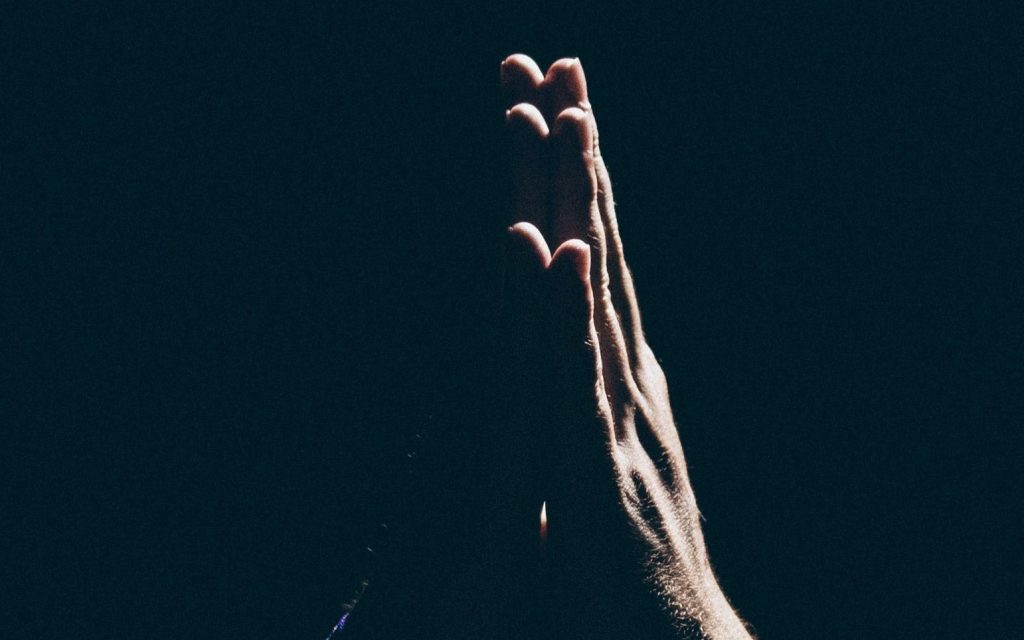
Swearing Should Be Hurtful (Sometimes)

What does a Godly person act like?  In Psalm 15, David asks this same question:

O LORD, who shall sojourn in your tent?
            Who shall dwell on your holy hill?

Then David lists a set of qualities that God requires for one to be righteous, and it includes how we swear.  At the end of verse 4, David writes that a Godly person is someone “who swears to his own hurt and does not change.

Some of the qualities in the list are easy to understand, but what does it mean when someone “swears to his own hurt”?  David is not writing about swear or curse words.  He’s writing about vows or promises made, but not just any vows.

There are vows that are hurtful, but are not qualities of a Godly person, such as when Saul vowed in 1 Samuel 14:24 – “Cursed be the man who eats food until it is evening and I am avenged on my enemies.”  This vow resulted in a death sentence for Saul’s son Jonathan, which was overruled by the people.  Another example is Jephthah, who vowed in Judges 11:30-31 – “If you will give the Ammonites into my hand, then whatever comes out from the doors of my house to meet me when I return in peace from the Ammonites shall be the LORD’S, and I will offer it up for a burnt offering.”  This resulted in a death sentence for his own daughter, who was the first to come out of the house when he returned in peace.  Saul and Jephthah swore to their own hurt, but this type of swearing is not a quality of a Godly person.

There are also vows that help us get ahead in this world.  An honest reputation is good for a career or in getting along with people and feeling successful.  But it’s easier to keep your word when there is a tangible benefit in this world.  Honesty in these situations is not necessarily bad, but it just doesn’t rise to the level of righteousness.  These vows are not what David is writing about either.

What David means by someone “who swears to his own hurt and does not change” is a person who is honest because it’s what God is and what God wants from us, no matter what it costs them.  Even if honesty brings no benefit to the honest person, they remain honest anyway.

Maybe you’ve promised a spouse or friend that you will help with a project this weekend, but then you get a call from another friend who has tickets to a big game.  Maybe you’ve promised to play with your children or help with their homework, but then remember you have a work project that requires after-hours time to get done.  Maybe vowing to be honest at work means you have to reveal something that could hurt your businesses’ reputation?  A person who “who swears to his own hurt and does not change” is not affected by changes in circumstances, whether they might miss out on something, or whether there is a personal cost.

Is this difficult?  Yes.  It’s so difficult that James wrote: “my brothers, do not swear, either by heaven or by earth or by any other oath, but let your ‘yes’ be yes and your ‘no’ be no, so that you may not fall under condemnation.[1]  To James, keeping vows was so hard that it was something to be avoided.  So…

O LORD, who shall sojourn in your tent?
            Who shall dwell on your holy hill?

Who?  Jesus, the only one who ever kept all of their vows and promises, and offers His righteousness to us, both as a means for our salvation, but also as a model for us to follow.  He alone has fully done what is necessary for anyone to dwell in God’s presence.

Amen.


[1] James 5:12

Daily Readings for July 28 – August 3

Fellow travelers:

Here is the list of readings for this week: 2 chapters to read per day as the main reading plan, and extra chapters for anyone who wants to read the whole Bible in 2025.  Reading 3 chapters a day on weekdays and 4 on weekends almost exactly covers the 1,189 chapters of the Bible, so the “extra” readings are about 9 chapters per week.

This week we’ll finish John (and Isaiah), and also 1 and 2 Thessalonians!

Follow along (or not) any way you choose!

Monday, July 28: John 15-16
Tuesday, July 29: John 17-18
Wednesday, July 30: John 19-20
Thursday, July 31: John 21, 1 Thessalonians 1
Friday, August 1: 1 Thessalonians 2-3
Saturday, August 2: 1 Thessalonians 4-5
Sunday, August 3: 2 Thessalonians 1-3

Additional readings if you want to read the whole Bible this year:
Isaiah 60 – 66; Jeremiah 1-2

Insurrection Ironies

Jesus knew what He was getting into when, near the end of His earthly ministry, He determined to go to Jerusalem.  After being betrayed by one of His own disciples, arrested and turned over to the authorities, Jesus was tried up to six times as Jewish and Roman authorities passed Him back and forth.  There are a number of ironies that happen during these trials, but this post will focus on the comparison of Jesus and Barabbas.

One of the American Heritage Dictionary’s definitions for insurrection is “The act or an instance of open revolt against civil authority or a constituted government.”  This idea of insurrection is important in Jesus’ final trial before Pilate, the Roman governor of Judea and Samaria, who condemned Jesus to be crucified even though he saw no fault in Him.

An irony in this story is that there was a tradition whereby Pilate would release one prisoner as a way of doing the Jews a favor.  Pilate asked the crowd whether he should release Jesus or a man named Barabbas, and the crowd insisted on Barabbas.  Who is Barabbas?  He was an insurrectionist and murderer.  He had been involved in a plot started in Jerusalem to overthrow Roman rule.[1]  The irony is that the charge against Jesus according to the Jewish leaders was that He was “misleading our nation and forbidding us to give tribute to Caesar, and saying that he himself is Christ, a king.”[2]  Anyone in Caesar’s realm claiming to be king was revolting against Roman authority.  In other words, they were accusing Jesus of insurrection, while asking for the release of a man who had actually participated in an insurrection.  This is also strange because one of the reasons the Jewish leaders rejected Jesus as Messiah was that He wasn’t actually going to revolt against Rome.  They didn’t like that Jesus was not an insurrectionist.

Why did Pilate agree with the crowd about releasing Barabbas?  Pilate was a man under higher authorities in the Roman empire, and one way he could lose his position is if he didn’t effectively silence any opposition to Rome.  When the crowd grew more and more belligerent in their crying out for Barabbas to be released and for Jesus to be crucified, there was a risk of riots or even a larger uprising.  Therefore, to keep from attracting unwanted attention and criticism from his superiors, Pilate decided to let the crowd have its way.  Barabbas was released instead of Jesus because of what?  The threat of an insurrection by this crowd.

There’s even another layer to this when we consider who Jesus is and what the name “Barabbas” means.  Jesus is the only human ever who never participated in a revolt against the highest authority, His Father.  He, the Son of God the Father, was condemned to die in place of an actual insurrectionist, Barabbas, whose name means “son of father.”  Since everyone has a father, the meaning of the name Barabbas could apply to anyone.  So symbolically, Jesus died in place of someone whose name represents everyone, or all of us, so we could be sons of the Father. In summary, Jesus was killed in place of an actual insurrectionist because the Jewish leaders didn’t like that He wasn’t really an insurrectionist but accused Him of being one anyway.  This all happened in spite of the fact that Jesus is the only person ever to not commit insurrection against the highest authority, God the Father.


[1] Luke 23:19
[2] Luke 23:2

Praying Without Ceasing

Sometimes the Bible asks us to do things that are hard to take literally.  For example, in 1 Thessalonians 5:17 Paul writes that we should “pray without ceasing.”  Other translations say “pray continually,” the same basic message.  But what does it mean?  We can’t kneel, fold our hands, and repeat the Lord’s Prayer all day every day.  Paul wasn’t asking us to do the impossible, but how does one actually do this?

The life of Nehemiah, partially recorded in the Old Testament book bearing his name, may provide a good example for us.  Around 445 B.C., Nehemiah was part of the third group of exiles in Babylon to return to Jerusalem.  About 90 years after the first group returned, he heard Jerusalem’s walls and gates were still in ruins.  He returned to lead the rebuilding of the walls, meeting opposition along the way from those who moved into the area during the exile as well as some of the Jews themselves.

Scattered throughout the book are several brief prayers, what Warren Wiersbe called “telegraph prayers,” [1] in 1992, but we might call them Twitter prayers now.  These very short appeals to God are often made quickly and quietly, and you might say “continually.”  I’ll put them in 3 categories:

The first group of these prayers are prayers for strength.  Early in the story, Nehemiah was serving as cupbearer to King Artaxerxes and had to work up the nerve to ask the king to let him return to Jerusalem and take on the work of rebuilding the walls.  Nehemiah 2:4 says: “Then the king said to me, “What are you requesting?” So I prayed to the God of heaven.”  We don’t know what exactly he prayed, but he must have done it silently and quickly during his conversation with the king, otherwise the king might have been offended.  Prayers can be dropped right into any conversation![2]

Second are prayers for justice, which are similar to the “imprecatory,” or cursing, Psalms, such as Psalm 58.  In these prayers and Psalms the writers curse the enemies of the writer and of God.  Instead of taking time away from the work on the wall, or vowing to take vengeance themselves, Nehemiah trusted God to righteously judge all evil.  In Nehemiah 6:14, he prays this about his opposition: “Remember Tobiah and Sanballat, O my God, according to these things that they did, and also the prophetess Noadiah and the rest of the prophets who wanted to make me afraid.”  Nehemiah is honest with God about his frustrations but turns them over to God to take care of them.[3]  We too can pray for God to handle any scores we feel we need to settle during the day!

The third category are prayers of dedication, reminders that the work is being done for God and asking that He bless the outcome, as well as the workers, including Nehemiah personally.  In Nehemiah 13:14, after the walls were rebuilt and he oversaw the collection of the tithe, he prayed: “Remember me, O my God, concerning this, and do not wipe out my good deeds that I have done for the house of my God and for his service.”[4]  God does not forget any service given to Him, but we can pray to remind ourselves who we serve and trust that He will remember!

Nehemiah’s constant life of worship was made up of more than just short prayers made in the moment.  Longer prayers (all of chapter 9) and fasting are recorded, and along with these short prayers are a clue as to what it means to “pray without ceasing.”  It means to always keep the lines of communication open, to consider that God is there, willing to listen, and lovingly able to bless His people any time.  Even a split second in the middle of something is a good time to pray because His love for us is steadfast.  We always need Him, and He is always able to meet our need!

Therefore, we can repeat the prayer of Psalm 66:20, which says:

Blessed be God,
            because he has not rejected my prayer
            or removed his steadfast love from me!

Coda

Steven Curtis Chapman’s 1996 song “Let Us Pray” captures this idea of “pray without ceasing” beautifully.  In it he sings that we should pray “every moment of the day,” because “the Father above, He is listening with love and He wants to answer us”

You can read the song’s lyrics at this link.  Or listen to the full song at this link.


[1] Wiersbe, Warren.  Be Determined (Nehemiah) (1992).  P. 34.
[2] Nehemiah 6:9 is another example.
[3] Nehemiah 4:4-5 and 13:29 are similar prayers.
[4] Nehemiah 5:19, 13:22, and 13:30-31 are similar.

Barbs in Our Eyes

As Israel was preparing to enter the Promised Land of Canaan after wandering in the wilderness, God gave them many instructions through Moses about how they were to live when they got there.  One of the instructions was to eliminate all of Canaan’s inhabitants.  Part of the warning not to ignore this comes in Numbers 33:55, which says:

But if you do not drive out the inhabitants of the land from before you, then those of them whom you let remain shall be as barbs in your eyes and thorns in your sides, and they shall trouble you in the land where you dwell.”

What this is communicating is the urgency of getting rid of anything that could influence us to sin, and this applies as much to us as to ancient Israel.  In Israel’s case, the nations they were to remove from Canaan were under God’s judgement for centuries of worship of false gods, which included practices like ritual prostitution and child sacrifice.  God knew that His people would be tempted by these foreign gods and practices unless all trace of them was eliminated.

For us, God also wants to protect us from false gods and harmful practices and habits, and the phrase “barbs in your eyes” is a picture of the urgency for us to get rid of anything that would tempt us.  Think about it: If I had a thorn in my eye, I would drop everything and not be able to do anything else until I got it out.  Until the thorn was gone, it would be my one and only priority.  In modern times, God doesn’t tell His people to attack other nations in judgement, but He does want His people to attack sin with the same zeal.

So when I read “But if you do not drive out the inhabitants of the land from before you, then those of them whom you let remain shall be as barbs in your eyes and thorns in your sides, and they shall trouble you in the land where you dwell” it leads me to ask the question:

Do we remove sources of sin from our lives as urgently as we would a barb in our eye?