The Bible: A Quint of Quotes

Dear fellow travelers,

Here is another “Quint of Quotes” from my collection, on the theme of the Bible.  I hope you find these five sayings interesting and thought-provoking.  What quotes about the Bible do you like?

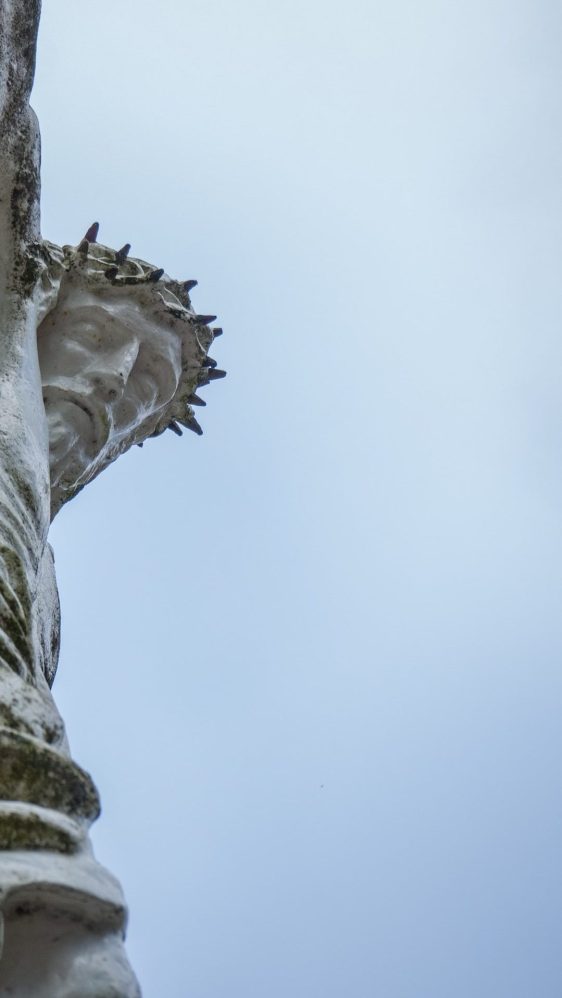
Image by u_zscsfn7pja from Pixabay

“This book will keep you from sin or sin will keep you from this book.” – D.L. Moody wrote this in the front of his Bible

“If people treated other books the way they treat the Bible, they would never learn anything.” – Warren Wiersbe

“Do I feed on the Word? That Word would be no food for me unless the Lord made it food for my soul, and helped me to feed upon it. Do I live on the manna which comes down from heaven?” – C.H. Spurgeon

“The New is in the Old concealed; the Old is by the New revealed.” – Saint Augustine

All Scripture is breathed out by God and profitable for teaching, for reproof, for correction, and for training in righteousness, that the man of God may be complete, equipped for every good work.” – 2 Timothy 3:16-17

Perfecting Faith Through Struggle

King David wrote many Psalms during the difficult times in his life.  Psalm 18, written “on the day when the LORD delivered him from the hand of all his enemies, and from the hand of Saul,[1] is a song David wrote to praise God for His deliverance from difficulties in the past.  David describes the depths of the troubles he faced in verses 4 and 5:

The cords of death encompassed me;
            the torrents of destruction assailed me;
the cords of Sheol entangled me;
            the snares of death confronted me.”

There were many moments where David faced enemies seeking to kill him, a situation we may never face.  But, like David we all face struggles and, while not literally life-threatening, some of them may feel like what David describes.  Our enemies may be external or internal, physical or spiritual, and Psalm 18 can be applied to them all.  David magnifies the powers that assailed him, which John Calvin wrote, “enhances and magnifies so much the more the glory of his deliverance. As David had been reduced to a condition so desperate that no hope of relief or deliverance from it was apparent, it is certain that he was delivered by the hand of God, and that it was not a thing effected by the power of man.”  David was truly in a desperate situation and sometimes we are too.

So, how can this Psalm help us in our struggles?  I’m going to focus on a only a few of the Psalm’s 50 verses, including verses 1 to 3:

I love you, O LORD, my strength.
The LORD is my rock and my fortress and my deliverer,
            my God, my rock, in whom I take refuge,
            my shield, and the horn of my salvation, my stronghold.
I call upon the LORD, who is worthy to be praised,
            and I am saved from my enemies.

Note that these verses come before the ones quoted earlier because before coming to God with his problems, David contemplated who God is and what he has learned about Him from experience.  When we’re struggling, we should also take the time to contemplate the nature of our God so we can get the right perspective.

David uses some military metaphors to tell us about God.  David says God is a rock, a fortress, a shield, a horn, and a stronghold.  These tell us that God:

  • is a rock, immovable by our enemies and our problems.
  • is a fortress and stronghold, a secure place to flee from our enemies, where they cannot get in.
  • is a shield that protects us from harm.  Our enemies weapons can’t pierce God’s protection.
  • is a horn, with all the power we need to defeat our enemies.  A horn was a symbol of might in the Bible.

God is all these things for us too!

In verse 7, David added that when God answered his call for help, “the earth reeled and rocked; the foundations also of the mountains trembled and quaked, because he was angry.”  God’s power, His “horn”, is so powerful that even the earth fears it, but we need to learn to trust in it, and it alone.

There is no sure way to learn to trust a fortress or shield, other than to test them in battle.  C.S. Lewis wrote that “God allows us to experience the low points of life in order to teach us lessons that we could learn in no other way.”  When we’re fighting an external battle against an enemy or against painful circumstances.  When we’re fighting an internal battle against temptation, a bad habit, an addiction, or maybe an unattractive character trait, God can teach us about who He is through the pain of those battles, and we can learn to trust Him more.

Although we will not defeat all of our enemies while we live in this world, and we may be frustrated knowing God is powerful enough to win, but we still fail anyway, we know that:

The steadfast love of the LORD never ceases;
            his mercies never come to an end;
they are new every morning;
            great is your faithfulness.”[2]

He is faithfully by our side in every struggle, and eager to restore us when we fall, even if it’s every day.  But most importantly, we know that He is working in all things -even our fiercest battles – to perfect us and that He will not fail.  Even if we are unfaithful at times, He remains faithful always, and it’s His faithfulness that makes the difference.

If you’re fighting something today, remember that God is your rock, fortress, shield, horn, and stronghold, and you can trust Him.

And I am sure of this, that he who began a good work in you will bring it to completion at the day of Jesus Christ.”  – Philippians 1:6


[1] Psalm 18:0 (title)
[2] Lamentations 3:22-23

Let Justice Roll: History for Today

On January 15, 1929, Dr. Martin Luther King Jr. was born in Atlanta, Georgia.  A leader in the U.S. civil rights movement in the 1950’s and 60’s, he is the only non-president to have a national holiday in his name, celebrated on the 3rd Monday of every January. During this holiday, many will cite positives and negatives from King’s life and legacy, and here I will focus on one, specific positive.

His father and maternal grandfather had both been pastors of Ebenezer Baptist Church in Atlanta, and he carried this religious heritage into his own studies and activism.  In pastor Tim Keller’s book “Making Sense of God” he writes that the strength of King’s arguments comes from his knowledge “that human rights have no power if they are simply created by a majority or imposed by judicial fiat. They have power only if they are really ‘there,’ existing on their own, dependent only on the fact that the wronged person before you making the claim against you is a human being.”[1]

King applied the teaching that “God created man in His own image” from Genesis 1:26-27 to argue that this image gives every person: “a uniqueness, it gives him worth, it gives him a dignity. And we must never forget this as a nation: there are no gradations in the image of God. Every man from a treble white to a bass black is significant on God’s keyboard, precisely because every man is made in the image of God.”[2]

A mighty stream. Photo by Daniel J. Schwarz on Unsplash

In one of my favorite quotes from King, he cites the American institutions of democracy and its founding documents, but knows that even these must be rooted in religious truth to be effective: “One day the South will know that when these dis­in­her­ited chil­dren of God sat down at lunch coun­ters, they were in re­al­ity stand­ing up for what is best in the Amer­i­can dream and for the most sa­cred val­ues in our Ju­deo-Chris­t­ian her­itage, thereby bring­ing our na­tion back to those great wells of democ­racy which were dug deep by the found­ing fa­thers in their for­mu­la­tion of the Con­sti­tu­tion and the De­c­la­ra­tion of In­de­pen­dence.”[3]

Keller continues in his chapter titled “A Justice That Does Not Create Oppressors” that “Martin Luther King Jr. did not ask white America to make African Americans free to pursue rational self-interest, their own individual definitions of a fulfilling life. Rather, quoting Amos 5:24, he called them to not be satisfied until ‘justice rolls down like waters, and righteousness like a mighty stream.’[4]  God provides, and demands, more than “life, liberty, and the pursuit of happiness.”

While His justice and righteousness will only be made fully manifest in eternity, when we bring a bit of it into this world, we provide something available no other way to our neighbors, communities and beyond.  We should not be satisfied with anything less.


[1] Keller, Timothy.  Making Sense of God (2016).  P. 199.
[2] From a sermon King preached at Ebenezer Baptist Church in Atlanta, Georgia on July 4, 1965.  Cited in Making Sense of God, P. 199.
[3] From “Letter from Birmingham Jail”, dated April 16, 1963.
[4] From King’s “I Have a Dream” speech in Washington, DC on August 28, 1963.  Cited in Making Sense of God, P. 199.

Weekly Readings for January 20-26

Fellow travelers:

Here is the list of readings for this week.  Each week I will post 2 chapters to read per day as the main reading plan, and for anyone who wants to read the whole Bible in 2025, I’ll post the extra chapters needed for that goal.  The main readings will include all of the New Testament, plus Psalms, Proverbs, the Pentateuch, Ecclesiastes, and a few other Old Testament books.

Reading 3 chapters a day on weekdays and 4 on weekends almost exactly covers the 1,189 chapters of the Bible, so the “extra” readings will be about 9 chapters per week.

Follow along (or not) any way you choose!  I will often be re-posting old blogs that comment on the chapters in this schedule.

Monday, January 20: Psalm 20, Genesis 20
Tuesday, January 21: Psalm 21, Genesis 21
Wednesday, January 22: Psalm 22, Genesis 22
Thursday, January 23: Psalm 23, Genesis 23
Friday, January 24: Psalm 24, Genesis 24
Saturday, January 25: Psalm 25, Genesis 25
Sunday, January 26: Psalm 26, Genesis 26

Additional readings if you want to read the whole Bible this year:
1 Samuel 26 – 2 Samuel 3

God, Our Eternal River

When comparing Genesis and Revelation, we find similarities between the Paradise man lost and the Paradise to come.  Consider these verses about each:

Genesis 2:8-9: “And the LORD God planted a garden in Eden, in the east, and there he put the man whom he had formed.  And out of the ground the LORD God made to spring up every tree that is pleasant to the sight and good for food. The tree of life was in the midst of the garden, and the tree of the knowledge of good and evil.  A river flowed out of Eden to water the garden, and there it divided and became four rivers.
Revelation 22:1-2: “Then the angel showed me the river of the water of life, bright as crystal, flowing from the throne of God and of the Lamb through the middle of the street of the city; also, on either side of the river, the tree of life with its twelve kinds of fruit, yielding its fruit each month. The leaves of the tree were for the healing of the nations.

A stream in Llanberis, Wales.

In each description is the tree of life, and also a river. Rivers are greatly beneficial to the growth of cities and civilizations, providing benefits for agriculture, trade, travel, etc.  Even today, most large cities that don’t border a large body of water have a navigable river nearby or flowing through it.  A big city without one is rare: in the United States, Dallas, Texas, and Charlotte, North Carolina, may be the only major cities not located near a significant river.

Rivers are mentioned a lot in the Bible, including in this Psalm about God being our refuge and fortress.  An unnamed river in the “city of God” is mentioned:

There is a river whose streams make glad the city of God,
            the holy habitation of the Most High.” (Psalm 46:4)

However, Jerusalem, the place Jews in the Old Testament period would have considered the “city of God” does not have a river.  The Psalmist certainly knew this, so their point is about something else, that the “city of God” has, well, it has God, as described in the next verses:

“God is in the midst of her; she shall not be moved;
            God will help her when morning dawns.
The nations rage, the kingdoms totter;
            he utters his voice, the earth melts.
The LORD of hosts is with us;
            the God of Jacob is our fortress.  Selah” (Psalm 46:5-7)

Jerusalem may not have a river, but it has God who provides all it needs and more.  No river required.  Even though the literal, ancient Jerusalem was eventually destroyed by the Babylonians, and later by the Romans, the eternal City of God will never be moved.  All other nations “rage” and “totter,” but God’s kingdom is forever secured by the One whose voice melts the earth.  Hebrews 1:10-12 (quoting from Psalm 102:25-27):

You, Lord, laid the foundation of the earth in the beginning,
            and the heavens are the work of your hands;
they will perish, but you remain;
            they will all wear out like a garment,
like a robe you will roll them up,
            like a garment they will be changed.
But you are the same,
            and your years will have no end.”

Do you worry that you lack things others have?  Things that would provide benefits for your business, spare time, or other pursuits?  With God as our fortress and refuge, we don’t need a river, but in Paradise He will provide one anyway.

Fret not, for you have God, our eternal river.