

When We Are Faithful, All Failure is Temporary

Doctor Strange with the Time Stone

In the Marvel movie Avengers: Infinity War, Doctor Strange uses a powerful Time Stone to watch millions of possible future outcomes and find one where the Avengers win.  The solution involves huge, almost unconscionable losses, including giving the villain, Thanos, exactly what he needs to commit genocide.  The movie was part one of two, and the second wasn’t released until a full year later.  Infinity War ends with Thanos victorious, and audiences had to wait to see if Strange’s decisions and sacrifices would work.  Would the trust the Avengers put in him be rewarded and lead to their deliverance?  It didn’t look good at the time, and it was actually a pretty grim movie.

Marvel’s story had cast Strange in the role of a prophet, except that Strange himself saw the future, and decided himself what to report back to the others, who had to trust what he said he saw, his judgement in what to share, and be willing to stick with it no matter what.  In the Old Testament, Jeremiah’s call from God to be a prophet in Jeremiah 1:8-10 has some interesting comparisons with Marvel’s story line.  The verses are:

“Do not be afraid of them,
            for I am with you to deliver you, declares the LORD.
Then the LORD put out his hand and touched my mouth. And the LORD said to me,
            “Behold, I have put my words in your mouth.
See, I have set you this day over nations and over kingdoms,
            to pluck up and to break down,
            to destroy and to overthrow,
            to build and to plant.”

Unlike Doctor Strange, Jeremiah did not have the big picture; he could not pick and choose what to say.  God would “put…words in your mouth,” words specifically chosen from perfect and infinite knowledge to be exactly what was needed.  Strange was able to act on his plan, although the others didn’t understand and resisted.  In Jeremiah’s case, Israel did not listen to him, and God actually told Jeremiah they wouldn’t, but he prophesied anyway.  He was created for that purpose, and in the verses above he was assured to “not be afraid of them.”

While Strange promised that his plan would work, we had to wait for the sequel to see it.  God promised Jeremiah, who also told the people, that his plan would work, and that the words God gave Jeremiah would determine the fates of “nations” and “kingdoms”, who God would “pluck up” and “break down.”  But Jeremiah died waiting for the sequel.  During his lifetime, Israel was plucked up by the Babylonians and sent into exile as punishment for their rejection of God, which was also a rejection of Jeremiah.  His life was like a pretty grim movie, but his story was not finished, as we now know.

In his lifetime Jeremiah may have looked like a failure, but in the years after and in eternity, his work as a prophet and also his personal experience of God has provided invaluable lessons for millions.  God knew this from the beginning because He didn’t have to wait a year to see the sequel.  He has already seen them all.  Therefore, we can trust what He sees, His judgement in what to share, and be willing to stick with it no matter what, because His story and ours does not end in this lifetime.

“It is not your business to succeed, but to do right. When you have done so the rest lies with God.” – C. S. Lewis
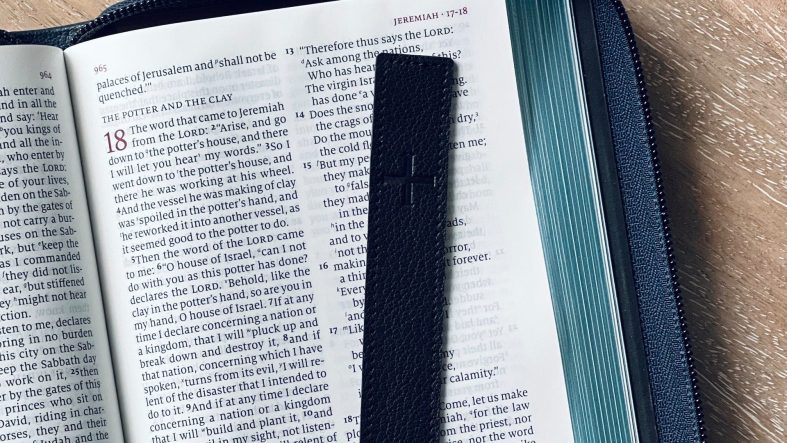
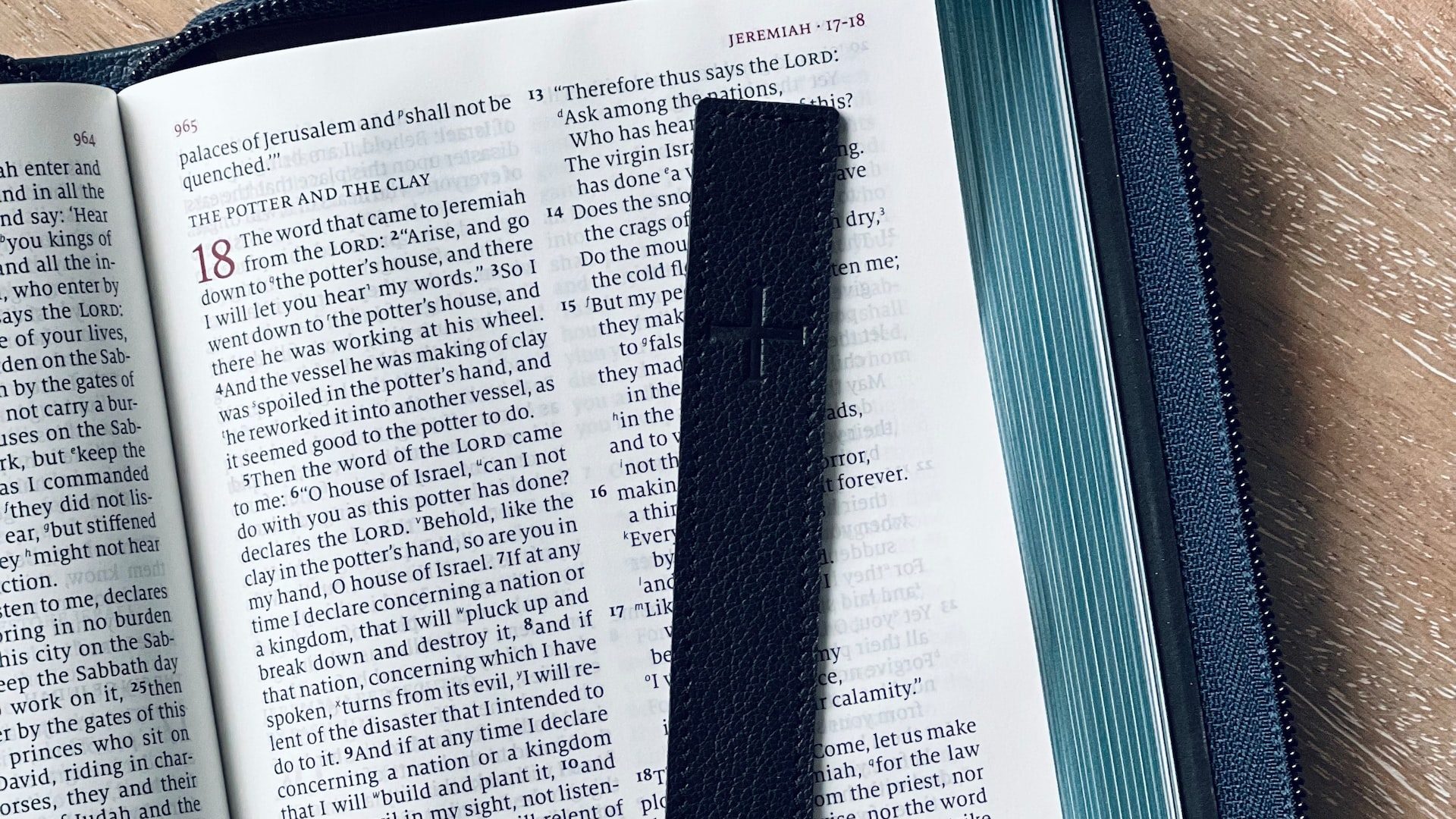
(Prior posts on Jeremiah’s call are here and here)

God Equips Those He Calls

When Jeremiah was called to serve as a prophet in the Old Testament, God told him he was literally made for it in Jeremiah 1:5 –

‘Before I formed you in the womb I knew you,
            and before you were born I consecrated you;
            I appointed you a prophet to the nations.’”

However, Jeremiah’s response was not an enthusiastic one.  Jeremiah 1:6-8 records this exchange:

“Then I said, ‘Ah, Lord GOD! Behold, I do not know how to speak, for I am only a youth.’  But the LORD said to me,
            ‘Do not say, ‘I am only a youth’;
            for to all to whom I send you, you shall go,
            and whatever I command you, you shall speak.’”

Photo by Tim Wildsmith on Unsplash

Even though God had just said “Before I formed you in the womb I knew you,” Jeremiah objects that he was too young and did not have the natural ability required for the job.  Maybe he doubted anyone would listen to him, so God must have the wrong guy.  God doesn’t disagree that Jeremiah was young (he already knew that), but knows that God’s ability is what matters, not Jeremiah’s.  God knew that someday you and I would be reading Jeremiah’s words regardless of his own youth or ability.  God never picks the wrong person for the job.

But if “All Scripture is breathed out by God and profitable for teaching, for reproof, for correction, and for training in righteousness,”[1] why does the Scripture tell us that one of its own authors doubted and questioned God Himself?

The answer of course, is “for teaching, for reproof, for correction, and for training in righteousness.”  We should learn not only from Jeremiah’s prophecies to the people of his time, but also from His experience with God.  In hindsight, we think that because Jeremiah is a book of the Bible, of course he was able to do the work God gave him, but in the moment of his call, Jeremiah had no idea.  So, when we think our ability is not enough the job at hand, we should remember Jeremiah’s youth and remember that “God does not call the equipped; He equips the called,” as the saying goes.  Jeremiah learned this from his own experience, and we may learn from it as well because the Bible records it.

Also, God shows us Jeremiah’s flaws to comfort us when we feel inadequate, not only in ability but also in faith.  Even if we know that “God does not call the equipped; He equips the called,” we don’t always act on that knowledge.  Jeremiah doubts not only his call, but there are other examples, including when he questions why he should buy a field the Babylonians were about to seize.[2]  Doubt is not something that only some Christians feel – we are not alone in our weakness.  Even the Bible’s own authors had doubt because they could not see as God sees.

God is patient when we are honest with Him about our doubts, but He is also honest with us when He says we were literally made to serve Him.  No Christian is inadequate for the work God gives them, for in His power He accomplishes what He wants. He has no doubts and is faithful in providing everything we need.

Sometimes God sends us before we think we are ready, so we can learn to put our confidence in the right place like Paul, who wrote: “I can do all things through Him who strengthens me.” – Philippians 4:13


[1] 2 Timothy 3:16
[2] The story is in Jeremiah 32, which I covered in an earlier post, here.

Called to Be Our Consecrated Selves

Photo by Greg Rakozy on Unsplash

People have moments where they wish they had a greater role in the world around them.  We see other people around us, or in stories from the Bible or in the news, and think we’d like to be more like them.  More influential, more effective, more powerful.  For example, what if I could be a prophet or an apostle?  Or in our modern world, maybe a “social media influencer”?  “Be yourself” is often the advice for finding contentment when we feel like this, but the Bible says we are “to be conformed to the image of his Son.”[1]  So, should we be ourselves, or should we be like Jesus?  What will give us contentment?  While not a full answer, the call of Jeremiah the prophet offers some help.

Jeremiah was not a prophet by accident, because Jeremiah 1:4-5 says:

“Now the word of the LORD came to me, saying,
‘Before I formed you in the womb I knew you,
            and before you were born I consecrated you;
            I appointed you a prophet to the nations.’”

Here, God calls Jeremiah both to conform his ways to God’s, and also to his own specific task.  Like Jeremiah, every Christian is known by God and called to do His will.  Only God knows why we were each made the way we were made, and in a way God calling us to serve Him is like Him saying “stop living like you’re an accident of a random, purposeless world.”  It is because we were made, not just evolved, that we have purpose, and God has “consecrated” us to that purpose.

Stop living like you’re an
accident of a random,
purposeless world.

But each of us was made differently, also on purpose.  Unlike Jeremiah, my fellow travelers on this blog probably aren’t prophets, and that is part of why Jeremiah needed to be a prophet.  His job wasn’t to call everyone else to be a prophet, but to serve everyone else by calling them to find their own purpose in God.  Jeremiah wanted all of God’s people to take whatever He has endowed them with and dedicate it to Him.  Likewise, being “conformed to the image of” Jesus does not mean we should all be carpenters, but that we should apply His righteousness to every task He puts before us.

Therefore, God’s people should never live like they are an accident.  We are all a valuable work of creation, made to find our good and His glory in His amazing design.  We will find our true selves in the One who made us, and God’s people will have unity in Christ’s character, combined with diversity in the infinite creativity of the people He created.

Be yourself, and also be like Jesus.

For we are his workmanship, created in Christ Jesus for good works, which God prepared beforehand, that we should walk in them.” – Ephesians 2:10


[1] Romans 8:29

Bible in a Year: Week of September 2 -8

Fellow travelers:

Below are the chapters to read this week if you’re following along in my Bible in a year schedule, divided into morning and evening readings.  Follow along any way you want: you can just do the evening reading, flip the morning and evening, or read it all.  Whatever works for you and your schedule!  It doesn’t have to be Bible in a Year for everyone.

Monday, September 2
Morning: Jeremiah 1-2
Evening: Esther 10

Tuesday, September 3
Morning: Jeremiah 3-4
Evening: Job 1

Wednesday, September 4
Morning: Jeremiah 5-6
Evening: Job 2

Thursday, September 5
Morning: Jeremiah 7-8
Evening: Job 3

Friday, September 6
Morning: Jeremiah 9-10
Evening: Job 4

Saturday, September 7
Morning: Jeremiah 11-12
Evening: Job 5

Sunday, September 8
Morning: Jeremiah 13-14
Evening: Job 6

The Part of Us That Matters

The Apostle Paul wrote an amazing contrast in 2 Corinthians 4:16-18, which says:

So we do not lose heart. Though our outer self is wasting away, our inner self is being renewed day by day. For this light momentary affliction is preparing for us an eternal weight of glory beyond all comparison, as we look not to the things that are seen but to the things that are unseen. For the things that are seen are transient, but the things that are unseen are eternal.

Photo by Aaron Burden on Unsplash

On the one hand, there are things that are transient, described as: outer, wasting away, light, momentary, affliction, and seen.

On the other hand, what is eternal is: inner, being renewed, weighty, glorious, beyond all comparison, and unseen.

These things are part of each of us, but what is eternal matters infinitely more than the other. Don’t confuse the two, or you may lose heart because Paul earlier assured us in verse 14 that “he who raised the Lord Jesus will raise us also with Jesus and bring us with you into his presence.”  At that time, only what is eternal will remain.

Amen.