Will Green Be Greener in Paradise?

Psalm 98:7 declares: “Let the sea roar, and all that fills it; the world and those who dwell in it!” In Romans 8:19 Paul adds that “the creation waits with eager longing for the revealing of the sons of God.”

Pastor James Montgomery Boice connects these ideas and says, “The world will one day be renewed.”  Nature already shows God’s glory, but it also, like mankind, is not yet as it shall be.  Boice adds: “I think of the way C.S. Lewis developed this idea in The Lion, the Witch, and the Wardrobe. In the first section of that book, when Narnia was under the power of the wicked Witch of the North, the land was in a state of perpetual winter. Spring never came. But when Aslan rose from the dead, the ice began to melt, flowers bloomed, and the trees turned green.”[1] Creation shares the hope of mankind – regeneration in a future paradise at the coming of its Lord!

Even now, we get an occasional glimpse of nature that’s somehow better than what we’re used to, and perhaps it is a glimpse of the paradise beyond the renewal of all things.  We were recently in Wales, on Mount Snowdon and a nearby trail in Llanberis, and below are some pictures from that day.  Some of these show the many brilliant shades of green, which seemed more glorious than the greens near our home in the U.S. We don’t often see rocks interact with the greenery like this here.

So, will paradise be even greener than this?  Will it seem like a perpetual winter has finally lifted?  I’m eagerly waiting to find out someday. In the meantime, enjoy these:


[1] From “April 19.” James Montgomery Boice and Marion Clark. Come to the Waters: Daily Bible Devotions for Spiritual Refreshment.  (2017).

Christianity is Not in Decline. Ever.

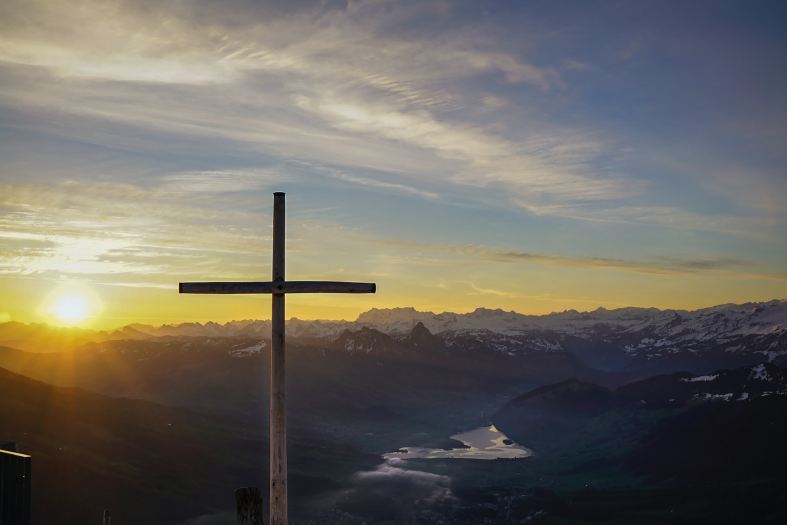
The tomb is still empty!

Too much of what we hear and read in this world is filled with phrases like “post-Christian world,” or “Christianity’s decline.”  Or we could read that we’re “living in the ruins of Christendom.”  However, because Hebrews 11:1 says, “Now faith is the assurance of things hoped for, the conviction of things not seen,” our hope is not based on any ruin or decline we see in the communities and world around us.  While other things may end up in ruins or in decline, Christianity does not.  It was not in decline on Good Friday when Jesus died on the cross and it is not in decline now.

The best of the kingdom of God is always in the future, never in the past.  His kingdom is advancing daily.

Today, many will hear the good news of the kingdom of Jesus, and some may hear and be saved!  Also today, none will be snatched out of His hand! (See John 10:28)

Jesus Overcomes Tribalism

The Bible is a book for all people, in all times and places, and its lessons hold eternal value.  Yet the Bible was also written in particular times and places and knowledge of those contexts is sometimes assumed rather than explained.  For instance, in the story of Jesus and the Samaritan woman at the well in John 4, we read the phrase, in parenthesis: “(For Jews have no dealings with Samaritans.)”. We also read that Jesus and His disciples “had to pass through Samaria.”  Hate is a difficult thing to measure or quantify, but the story assumes we know something about how intense the Jews’ hate for Samaritans was.

According to Warren Wiersbe, “So intense was [the Jews’] dislike of the Samaritans that some of the Pharisees prayed that no Samaritan would be raised in the resurrection!”[1]  This hate was so strong that many Orthodox Jews would travel much longer routes around Samaria to avoid setting foot in it.  They thought the dirt itself would contaminate them.  Why all this hate?

One reason for this hate was genetic.  Anyone who reads the Old Testament knows there are many extensive genealogies.  To the Jew, it was very important to know which of the original 12 tribes you descended from and that your ancestors had not intermarried with people of other religions.  But Samaritans genealogies were not pure enough for them.  Much of Samaria was populated with the descendants of poorer Jews left behind by the Assyrians, many of whom had intermarried with foreigners the Assyrians planted there.  So, Jews in Judah looked down on Samaritans because of their mixed genealogy.  The Samaritans were considered “half-breeds.”

Another reason was religious.  When the Samaritan woman said “Our fathers worshiped on this mountain, but you say that in Jerusalem is the place where people ought to worship” in John 4:20, she was referring to an alternative Judaism.  Among other differences, the Samaritans had a center of worship on Mount Gerizim, with its own temple.  They even re-wrote parts of the Pentateuch to justify this.[2]  To Israel, Jerusalem was the only center of worship.  Sacrifices to Yahweh were only to be offered there, and every male was supposed to make a pilgrimage there three times every year.  There was to be no rival temple, and therefore the Samaritans (in the Jewish mind) had cut themselves off from the true worship of Yahweh and should be shunned.

John has to write that Jesus “had to pass through Samaria” because doing that was unusual, especially for a Jewish rabbi like Jesus.  But then Jesus went there, simply being in Samaria was a strong statement that Jesus didn’t care for the hateful tribalism.  But not only did He go there, but He interacted with its people, at a time when “Jews have no dealings with Samaritans.”  Jesus was and would continue to break down these barriers.  In the four gospels, Jesus preached to the Jews first, then to the “half-breed” Samaritans, then to full Gentiles, and the apostles followed the same pattern in Acts.  This sequence progressively illustrated that the gospel is for all tribes of people.

What does this mean for us today?  Hate like what the Jews felt for Samaritans is rampant and if Jesus could overcome that hate, He can overcome any hate.  Any reasons we have for hating, or even disliking people just because of what group or tribe they belong to aren’t good enough reasons. 

But tribal rivalries are everywhere we look: national and regional, political and economic, cultural and ethnic, musical and athletic, and every other dimension we can imagine.  But no tribal loyalty is more important than the obligation to love God and love our neighbor, no matter who they are.

The apostle Paul wrote in Romans 3:38-39 –

For I am sure that neither death nor life, nor angels nor rulers, nor things present nor things to come, nor powers, nor height nor depth, nor anything else in all creation, will be able to separate us from the love of God in Christ Jesus our Lord.

Not only does this describe the love God has for us in Jesus, but it also describes the love we should have for others.  Nothing should get in the way, including any religious, racial or other differences.

Jesus overcomes tribalism, and so should His people.


[1] Wiersbe, Warren.  Be Alive (John 1-12) (1986).  P.65.
[2] Edersheim, Alfred.  The Life and Times of Jesus the Messiah (1886).  P. 274-5.

Jesus’ Work Has Just Begun

The book of Acts, sometimes called the Acts of the Apostles, follows the four gospels in the New Testament and tells the story of the Christian church in its very early days.  Luke, who wrote one of the gospels to “Theophilus[1], is also the author of Acts, which he begins like this:

In the first book, O Theophilus, I have dealt with all that Jesus began to do and teach.

Note that word “began.”  Considering that the book of Luke ended with Jesus’ ascending into heaven[2], why does Luke write in Acts that Jesus “began to do and teach”?  Because what Jesus did before leaving earth was only the beginning.  Jesus’ activity in the gospels was only the start of His mission and story, and now He rules from the right hand of God the Father and continues to “do and teach” through His people by His Holy Spirit.  He will continue to do this for all eternity.

Therefore, Jesus is still personally active in the world.  Are you listening and learning through consistent prayer, Bible study and fellowship?  See what He will continue to “do and teach” through you and His church!


[1] Luke 1:3
[2] Luke 24:51

Let Not Your Hearts Be Troubled

Chapter 14 of John’s gospel begins with Jesus saying to His closest disciples “Let not your hearts be troubled. Believe in God; believe also in me.”  Near the end of the chapter, Jesus says “Peace I leave with you; my peace I give to you. Not as the world gives do I give to you. Let not your hearts be troubled, neither let them be afraid.”  In between, He gives His followers many words of encouragement because they needed it.  Why?

Leading up to this, Jesus had just told them “Truly, truly, I say to you, one of you will betray me,[1] predicting Judas would soon turn Him over to be killed.  Since He knew He would be raised again and ascend to heaven, He had to tell them: “Little children, yet a little while I am with you. You will seek me, and just as I said to the Jews, so now I also say to you, ‘Where I am going you cannot come.’”[2]  Then, in front of all the others, He told Peter, who had just offered to die for Jesus, “Truly, truly, I say to you, the rooster will not crow till you have denied me three times.[3]

In quick succession, this small group of 12 disciples were told that 2 of them would soon be unfaithful, and that their leader would soon be leaving them.  They must have felt devastated and troubled in their hearts.  Had they given up so much for Jesus, only for it to fall apart?  Likewise, when we’re bombarded with bad news in quick succession, our heart may tell us to be troubled, but “The heart is deceitful above all things, and desperately sick; who can understand it?” (Jeremiah 17:9)

Instead of listening to our gut feeling or our instincts, the only one in whom there is no deceit – Jesus – says to trust Him.  He says: “Peace I leave with you; my peace I give to you. Not as the world gives do I give to you. Let not your hearts be troubled, neither let them be afraid.

If you’re troubled with something today, bring it to Him and ask Him for His peace.  It can overcome anything.

Sunrise over the Atlantic Ocean. I took this from a beach in Florida.

[1] John 13:21
[2] John 13:33
[3] John 13:38b