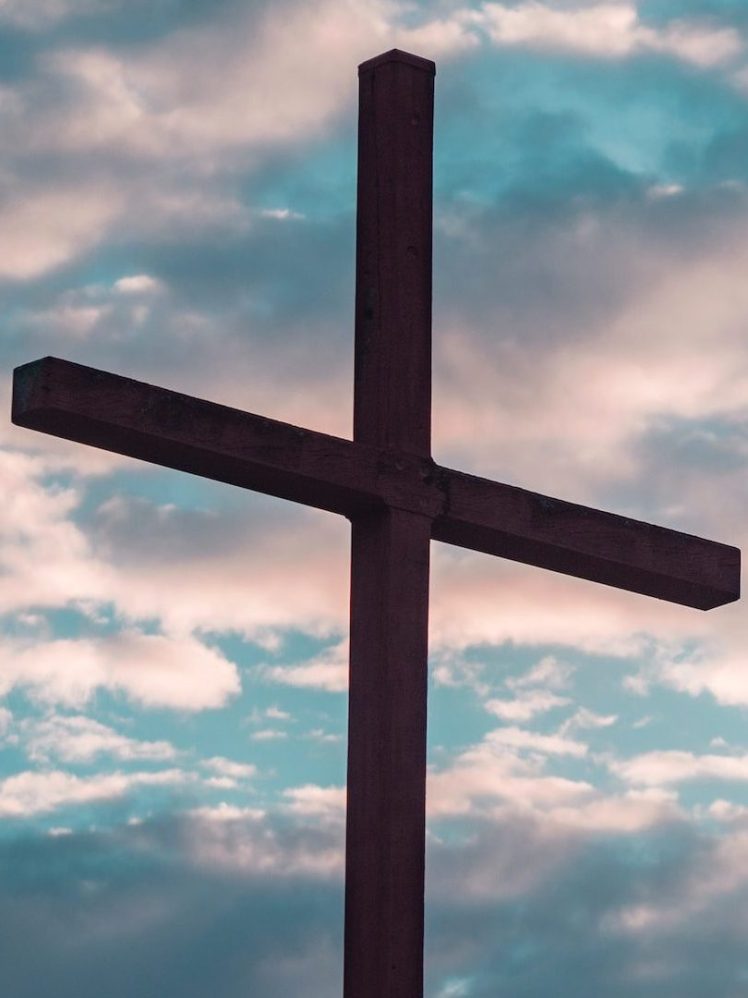
Manning the Watchtower

 “I will take my stand at my watchpost
            and station myself on the tower,
and look out to see what he will say to me,
            and what I will answer concerning my complaint.” – Habakkuk 2:1

Photo by Casey Olsen on Unsplash

People like to look for patterns and predictability in the world, and even in God’s behavior.  But in Habakkuk’s case, he saw a situation that didn’t make sense to him, that God would use Babylon to brutally punish His people in Judah.  God knew it wouldn’t make sense to Habakkuk, saying “I am doing a work in your days that you would not believe if told.[1]

Habakkuk would have gone into a private corner to sulk, but instead he brought it to God and was willing to be patient and wait to see how He would answer.

Is there something that doesn’t make sense right now in your life?  In my experience, there almost always is.  Therefore, be as vigilant and patient as Habakkuk.  Take your place in watchful hope on the watchtower and see what God will do.


[1] Habakkuk 1:5b

Verses to Live and Blog By

Daily writing prompt
What gives you direction in life?

Today’s post is another response to a writing prompt: “What gives you direction in life?”  The short answer to the question is a who, not a what: God.  Without a meaningful origin and destiny that comes from having a loving Creator and Lord, I’m not sure where I would find direction.

The longer answer is that God’s communication to us through the Bible provides direction for both life and for this blog.  Here, I write what I need to hear.  I write about things I learn about the direction my life should go, and I share it with my readers.  So, my longer answer to this writing prompt are some key verses and themes that guide both my life and my writing.  Although I routinely fail to live up to them, they provide a good and meaningful direction.

The first verse is Hebrews 10:24, which says: “And let us consider how to stir up one another to love and good works”. Christianity should be lived, not just known or believed.  So, how do I stir up myself and others to loving action? We can’t do it without knowing that’s the goal and by consistent meditation on it.  We should ask ourselves what tools, gifts and resources we have to help others grow in “love and good works.”  For me, this blog is one of those tools.  For others, they could approach this very differently.  We all have our own directions, but similar goals.

The second verse is Ephesians 2:10. “For we are his workmanship, created in Christ Jesus for good works, which God prepared beforehand, that we should walk in them.” We are not created and saved just to do whatever we want, but God has plans for each of us.  He puts work to do in front of us, for the good of us and those around us, and for His glory.  Nothing is an accident.  He made us each for a reason.

Next comes Philippians 1:6. “And I am sure of this, that he who began a good work in you will bring it to completion at the day of Jesus Christ.”  We all fail so often; therefore, we need reminders that God isn’t done with us, and will never give up on us.  He didn’t die for us just to leave us hanging and alone.  His purpose is to make us perfectly loving people, like Jesus was, and His work will certainly be completed in eternity.  Thank Him for this!

Jeremiah 29:7 is another important guiding verse. “But seek the welfare of the city where I have sent you into exile, and pray to the LORD on its behalf, for in its welfare you will find your welfare.”  Which world was Jesus referring to in John 3:16 when He said, “God so loved the world”?  There’s only one world, the one we all live in, and He wants us to work for the good of that world.  Imagine if Jesus had taken the attitude that this world is hopelessly lost in its sin.  He would have never came to die for it, and we would all be lost forever.  Likewise, we can’t give up on the world around us, especially our nearest neighbors.

And finally, Matthew 22:37-40. “And he said to him, ‘You shall love the Lord your God with all your heart and with all your soul and with all your mind.  This is the great and first commandment.  And a second is like it: You shall love your neighbor as yourself.  On these two commandments depend all the Law and the Prophets.’”  In my opinion, Christians don’t talk enough about love, and we don’t put enough thought and effort into how to do it.  Many Christians even have trouble defining what love is.  For more on that, read this article I wrote a while back.  Without Christ, we are all God’s enemies, so if He didn’t love His enemies we could never be His neighbors.  Only by living a life entirely guided by love for God and our neighbor, even if they are our enemy, can we live the life God intended us to live.

So, what gives me direction in life?  Trying to understand and live by what God wants of me.  These verses are only the beginning, but they’re verses that mean a lot to me.

What gives you direction in life?

Separating Good and Evil

Daily writing prompt
Do you have a quote you live your life by or think of often?

Today’s post is responding to a writing prompt: “Do you have a quote you live by or think of often?”  The most influential quote to me is this one from Aleksandr Solzhenitsyn:

“The line separating good and evil passes, not through states, not between political parties either, but right through all human hearts.”

Much of the conflict in history, and in modern times, comes from a human tendency to group people into separate groups, where one is “evil”, and the other is “good.”  There are probably thousands of examples throughout history, but some that come to mind are religious categories like Catholic versus Protestant, political categories like Republican versus Democrat, or Marxist categories like “oppressed” versus “oppressor.”  Humanity follows a pattern over and over again, where we lump people into categories, then attack our enemies accordingly.  If someone belongs to the “other” group, they are evil, and if someone belongs to our own group, they are good.

In opposition to this, the Solzhenitsyn quote calls to attention Romans 3:23, which declares: “for all have sinned and fall short of the glory of God.”  This verse, and the quote, tear down the idea that people can be easily separated into “good” and “evil.”  That nations can be divided into good and evil.  That political parties can be categorized as good and evil.  Because every single person included in every single one of these categories is themselves a mix of good and evil, each of the groups themselves is a mix of good and evil.

Therefore, the quote calls us to treat people as individuals, dealing with them according to their specific situation and needs.  Without accepting that each person is imperfect (at best), societies may pretend to treat people as individuals, but they’re really stereotyping people according to their groups and pitting them in battle against each other.

For the Christian church, the quote doesn’t demand that we withdraw from politics altogether, but it does demand that we act with more compassion toward those we disagree with.  All too often, and especially on social media, we see category-based name calling and condemnation coming from Christians who categorize people and work hard to defeat those enemies that belong to other groups.

However, Jesus said in Matthew 5:43:
You have heard that it was said, ‘You shall love your neighbor and hate your enemy.’  But I say to you, love your enemies and pray for those who persecute you.

Imagine if we followed Jesus’ words.  Imagine if everyone could be humble based on the evil that lives within them, and therefore treat the people who we view as evil as equals before God, and just as in need of grace as we are.  The church, and the world, would be much better off if Christians were as good at loving their enemies as they are at identifying them.

Therefore, a quote that drives a lot of what I think, write, and do is this one:

“The line separating good and evil passes, not through states, not between political parties either, but right through all human hearts.”

Waiting on God’s Timely Deliverance

Fellow Travelers,

There are times in our lives where God seems to be distant and uninvolved.  In these times we may feel like crying out with the Psalmist:

Awake! Why are you sleeping, O Lord?
            Rouse yourself! Do not reject us forever!
Why do you hide your face?
            Why do you forget our affliction and oppression?[1]

The nation of Israel faced times like these, and one example comes from Exodus chapter 5.  The story is during Israel’s slavery in Egypt, while Moses was pleading with Pharaoh to let Israel go to worship God.  Pharaoh was stubborn because Israel was a vast (and free) workforce for him.  Instead of letting Israel go, he decided to punish them.  Pharaoh commanded his taskmasters: “You shall no longer give the people straw to make bricks, as in the past; let them go and gather straw for themselves.  But the number of bricks that they made in the past you shall impose on them, you shall by no means reduce it, for they are idle. Therefore they cry, ‘Let us go and offer sacrifice to our God.[2]

With their jobs suddenly much harder, the people of Israel complained to Moses: “The LORD look on you and judge, because you have made us stink in the sight of Pharaoh and his servants, and have put a sword in their hand to kill us.[3]  Even Moses became discouraged and frustrated, as we see in the next verses: “Then Moses turned to the LORD and said, “O Lord, why have you done evil to this people? Why did you ever send me?  For since I came to Pharaoh to speak in your name, he has done evil to this people, and you have not delivered your people at all.[4]

It seemed like God was “sleeping.”  Like He had forgotten His people’s “affliction and oppression.”

However, we know that earlier God told Moses: “I have surely seen the affliction of my people who are in Egypt and have heard their cry because of their taskmasters. I know their sufferings, and I have come down to deliver them out of the hand of the Egyptians and to bring them up out of that land to a good and broad land, a land flowing with milk and honey, to the place of the Canaanites, the Hittites, the Amorites, the Perizzites, the Hivites, and the Jebusites.”[5]

God was not sleeping; He has “surely seen” what was happening.  He also had not forgotten; He had a plan “to deliver them out of the hand of the Egyptians,” even if it wasn’t apparent to Moses and the people.  Their frustration grew because time had passed since God made His promises, and they still hadn’t been delivered.

Do we often feel the same frustration?  Do we often feel His deliverance should come sooner?  We know in our minds that God sees the effect of sin on the world, and on each one of us.  We also know that He has promised to return and deliver us from our sin.  But time keeps passing.

From our point of view, we have information Moses and the people didn’t have.  We know that Israel did eventually enter the “broad land, a land flowing with milk and honey.”  It took time, but it happened when God determined it was the right time.  When His people were truly ready.  Therefore, we know that God will also deliver us when He determines it is the right time.  When His people are ready.  Not because we see certain signs or our interpretations of prophecy have been fulfilled.  We have the gospel “as a plan for the fullness of time, to unite all things in him, things in heaven and things on earth.”[6]  When the time is right, according to God (not according to us), all will be aligned under His plan.  Things we currently know and see, and things not yet revealed.  Only God knows.

In the meantime, do we give God the right to determine the method and timing of our deliverance?  Or do we impatiently insist on our own way and timing?  Would we have chosen this world as the path to heaven, or would we have designed a different way, if given the choice?  Because this is the world we have, we know God chose this way, and we must trust Him, for only Jesus is “the way, and the truth, and the life.[7]

Sometimes things look to us like we should cry out to God, “you have not delivered your people at all,” but He delivered Israel from Egypt in His time, and He will deliver us in His time.  He guarantees it.


[1] Psalm 44:23-24
[2] Exodus 5:7-8
[3] Exodus 5:21b
[4] Exodus 5:22-23
[5] Exodus 3: 7b-8
[6] Ephesians 1:10
[7] John 14:6

Remembering God in Our Affliction

Dear fellow travelers,

Psalm 119 is memorable in many ways, including that it is the longest chapter in the Bible, with 176 verses.  But the Psalm was also designed to be memorized in Hebrew, with 22 stanzas, one for each letter of the Hebrew alphabet.  In Hebrew, each stanza has 8 lines that each begin with the same letter.

It is also memorable for its topic: a lengthy meditation on God’s law and its positive, multi-faceted qualities.  The Psalm uses 8 words to describe God’s law, and all 8 appear in 5 of the stanzas while every stanza has at least 6 of them. [1]

However, in addition to meditating on God’s law, at least 7 verses also refer to affliction and/or its benefits in one way or another:

This is my comfort in my affliction,
            that your promise gives me life.” (verse 50)

Before I was afflicted I went astray,
            but now I keep your word.”  (verse 67)

It is good for me that I was afflicted,
            that I might learn your statutes.”  (verse 71)

I know, O LORD, that your rules are righteous,
            and that in faithfulness you have afflicted me.”  (verse 75)

If your law had not been my delight,
            I would have perished in my affliction.”  (verse 92)

I am severely afflicted;
            give me life, O LORD, according to your word!”  (verse 107)

Look on my affliction and deliver me,
            for I do not forget your law.”  (verse 153)

Why the repetition?  By repeating the idea of affliction in this Psalm, the writer wants to make one more thing memorable: in our affliction, God is faithfully present, giving us life, teaching us, and reminding us of His goodness.  His steadfast love remains, even when this broken world and our own sinful condition present endless difficulty.

The law cannot save us, and affliction in this world is difficult, but “we know that for those who love God all things work together for good, for those who are called according to his purpose.  For those whom he foreknew he also predestined to be conformed to the image of his Son, in order that he might be the firstborn among many brothers.”  (Romans 8:28-29)

What God uses all things for, and what He has predestined, is that His people will be conformed to His holiness: “And I am sure of this, that he who began a good work in you will bring it to completion at the day of Jesus Christ.” (Philippians 1:6). Even affliction, in God’s hands, contributes to our development in holiness.

As J.I. Packer sums up these verses from Psalm 119 in his book, Rediscovering Holiness, “God’s faithfulness consists in his unwillingness that his children should lose any of the depths of fellowship with himself that he has in store for them. So he afflicts us to make us lean harder on him, in order that his purpose of drawing us into closest fellowship with himself may be fulfilled.”[2]

Whatever our affliction, God will deliver us and bring us to glory. Amen.


[1] According to the Reformation Study Bible
[2] Packer, J.I.  Rediscovering Holiness (1992), P. 268.  I “miraculously” discovered this quote within ½ hour of posting this blog, then had to add it, and repost.