

Called to Be Our Consecrated Selves

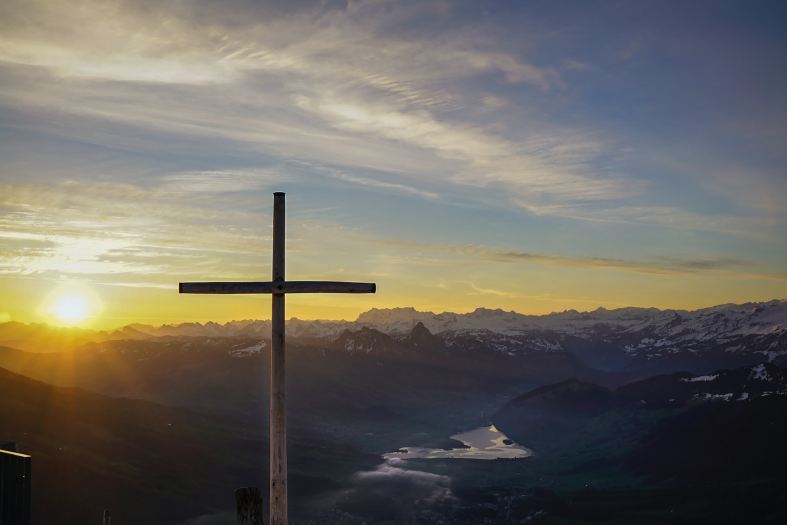
Photo by Greg Rakozy on Unsplash

People have moments where they wish they had a greater role in the world around them.  We see other people around us, or in stories from the Bible or in the news, and think we’d like to be more like them.  More influential, more effective, more powerful.  For example, what if I could be a prophet or an apostle?  Or in our modern world, maybe a “social media influencer”?  “Be yourself” is often the advice for finding contentment when we feel like this, but the Bible says we are “to be conformed to the image of his Son.”[1]  So, should we be ourselves, or should we be like Jesus?  What will give us contentment?  While not a full answer, the call of Jeremiah the prophet offers some help.

Jeremiah was not a prophet by accident, because Jeremiah 1:4-5 says:

“Now the word of the LORD came to me, saying,
‘Before I formed you in the womb I knew you,
            and before you were born I consecrated you;
            I appointed you a prophet to the nations.’”

Here, God calls Jeremiah both to conform his ways to God’s, and also to his own specific task.  Like Jeremiah, every Christian is known by God and called to do His will.  Only God knows why we were each made the way we were made, and in a way God calling us to serve Him is like Him saying “stop living like you’re an accident of a random, purposeless world.”  It is because we were made, not just evolved, that we have purpose, and God has “consecrated” us to that purpose.

Stop living like you’re an
accident of a random,
purposeless world.

But each of us was made differently, also on purpose.  Unlike Jeremiah, my fellow travelers on this blog probably aren’t prophets, and that is part of why Jeremiah needed to be a prophet.  His job wasn’t to call everyone else to be a prophet, but to serve everyone else by calling them to find their own purpose in God.  Jeremiah wanted all of God’s people to take whatever He has endowed them with and dedicate it to Him.  Likewise, being “conformed to the image of” Jesus does not mean we should all be carpenters, but that we should apply His righteousness to every task He puts before us.

Therefore, God’s people should never live like they are an accident.  We are all a valuable work of creation, made to find our good and His glory in His amazing design.  We will find our true selves in the One who made us, and God’s people will have unity in Christ’s character, combined with diversity in the infinite creativity of the people He created.

Be yourself, and also be like Jesus.

For we are his workmanship, created in Christ Jesus for good works, which God prepared beforehand, that we should walk in them.” – Ephesians 2:10


[1] Romans 8:29
Daily Readings for January 19 – 25

Fellow travelers:

For those looking for a Bible reading plan, each week in 2026 I will post 2 chapters to read per day as a main reading plan, and for anyone who wants to read the whole Bible in 2026, I’ll post the extra chapters to read that week.  The main readings will include nearly all of the New Testament, plus Psalms, Proverbs, Ecclesiastes, the Prophets, and a few other Old Testament books.

Reading 3 chapters a day on weekdays and 4 on weekends almost exactly covers the 1,189 chapters of the Bible, so the “extra” readings will be about 9 chapters per week.  These readings will cover the Pentateuch, the OT histories, a few other OT books, plus Jude and Revelation from the NT.

I hope this encourages others to read and study their Bible more, whatever parts they decide to read.  Follow along (or not) any way you choose!

2 chapter a day plan:

Monday, January 19: Psalm 19, Matthew 19
Tuesday, January 20: Psalm 20, Matthew 20
Wednesday, January 21: Psalm 21, Matthew 21
Thursday, January 22: Psalm 22, Matthew 22
Friday, January 23: Psalm 23, Matthew 23
Saturday, January 24: Psalm 24, Matthew 24
Sunday, January 25: Psalm 25, Matthew 25

Extra chapters for those reading the whole Bible in 2026:
Genesis 25 – 33

For God So Loved the World

If you asked a random non-Christian to cite a Bible verse, not quote, but just cite a chapter and verse, there’s a good chance they’d say John 3:16.  It’s as good a summary of the gospel as one verse can provide, and it’s one of the verses I’ve quoted the most on this blog.  In response to a reader suggestion, I’ve figured out what Bible verses I’ve used the most and am writing a series about those verses.  Today’s post is #3 of the series, covering the verse quoted the 3rd least out of the 10 most quoted:

For God so loved the world, that he gave his only Son, that whoever believes in him should not perish but have eternal life.

Reading back over the posts where this verse has appeared, I see three ideas I tried to share: what God’s love means for us, what love has to do with “eternal life”, and what “world” God loves.

The first idea is that we would all be eternally lost if not for God’s love.  Since we all fall short of God’s standards, what we deserve is to be banished from God’s presence forever.  In His holiness, He can’t be near us, and in His justice, He must judge our sins.  However, Romans 5:8 tells us: “but God shows his love for us in that while we were still sinners, Christ died for us.”  Without God’s love we would always be sinners, but because of His love, we have a way back to a right relationship with our God.  In one post here, I wrote “Christianity is not judgement, but the only way of escape from it.”

Second, what is this “eternal life” that we can have because God loves us?  I’ve written that “If man had not rejected love, Christianity wouldn’t be necessary; but also, if Christianity does not restore mankind to agape love, it’s pointless.”  When we are brought back into a right relationship with God, it puts us on an inevitable course toward a new world where we will all love perfectly, as Jesus loved perfectly.  Unless heaven is going to be full of loving people, it’s not going to be the perfect place that God is preparing for us.  So, “eternal life”, given to us because of God’s love, is our future, perfect selves living with God for eternity.  The possibility of this is so amazing that God decided it was worth dying for!

Last, I’ve also written that “when I’m struggling to face the world as I see it, I ask about [John] 3:16, ‘Exactly which world did Jesus love enough to die for?’  The answer is this one.  The world He died for is the one where sex, anger, bitter tribalism, and political partisanship sells.  The one with a lot of sarcastic, angry, and bitter people.  The one with a lot of people who are more like us than we’d usually like to admit.”  God didn’t love a world full of His people because without His love, He would have no people.  He loved a world full of sinners, as Romans 5:8 told us.  If God had decided that this world was hopelessly lost, He wouldn’t have bothered to send Jesus to give it hope.

This is the same world that God calls us to love, and to bring hope in the name of Jesus.  While we are in this world, God is already making us like Him, more loving, and in sharing that love with others we share a hope in a world where love is all there is.

So, remember, “For God so loved the world, that he gave his only Son, that whoever believes in him should not perish but have eternal life.

Will Green Be Greener in Paradise?

Psalm 98:7 declares: “Let the sea roar, and all that fills it; the world and those who dwell in it!” In Romans 8:19 Paul adds that “the creation waits with eager longing for the revealing of the sons of God.”

Pastor James Montgomery Boice connects these ideas and says, “The world will one day be renewed.”  Nature already shows God’s glory, but it also, like mankind, is not yet as it shall be.  Boice adds: “I think of the way C.S. Lewis developed this idea in The Lion, the Witch, and the Wardrobe. In the first section of that book, when Narnia was under the power of the wicked Witch of the North, the land was in a state of perpetual winter. Spring never came. But when Aslan rose from the dead, the ice began to melt, flowers bloomed, and the trees turned green.”[1] Creation shares the hope of mankind – regeneration in a future paradise at the coming of its Lord!

Even now, we get an occasional glimpse of nature that’s somehow better than what we’re used to, and perhaps it is a glimpse of the paradise beyond the renewal of all things.  In 2022, we were in Wales, on Mount Snowdon and a nearby trail in Llanberis, and below are some pictures from that day.  Some of these show the many brilliant shades of green, which seemed more glorious than the greens near our home in the U.S. We don’t often see rocks interact with the greenery like this here.

So, will paradise be even greener than this?  Will it seem like a perpetual winter has finally lifted?  I’m eagerly waiting to find out someday. In the meantime, enjoy these:


[1] From “April 19.” James Montgomery Boice and Marion Clark. Come to the Waters: Daily Bible Devotions for Spiritual Refreshment.  (2017).

Compassion for the Harassed and Helpless

And Jesus went throughout all the cities and villages, teaching in their synagogues and proclaiming the gospel of the kingdom and healing every disease and every affliction. When he saw the crowds, he had compassion for them, because they were harassed and helpless, like sheep without a shepherd.” – Matthew 9:35-36

Jesus lived under the greatest empire the world had yet seen, and in a deeply religious Jewish culture developed over centuries.  The people had powerful leaders, both political and religious.  Why then were the people seemingly without a shepherd to lead them?

The Roman Empire touted widespread peace and prosperity due to the Caesars and their government.  But the people still had many unsolved problems and no hope.  “Throughout all the cities and villages” were diseased, afflicted and helpless people, and Jesus could help them all in ways the Romans could not or would not.

The Jewish Pharisees, jealous of Jesus’ ability to solve problems they could not, claimed “He casts out demons by the prince of demons.”  They rightly described His power as supernatural, but they called it evil.  Even as He was performing life-saving miracles, they could not tolerate Him as a rival, and so rejected the people’s only hope.

So, the people remained “harassed and helpless,” not knowing who to trust.

Is your culture also faithless?  Your workplace?  Your community or household?  Jesus encouraged His disciples to see rampant lack of faith as an opportunity to show the crowds the compassion of Jesus: “Then He said to his disciples, ‘The harvest is plentiful, but the laborers are few; therefore pray earnestly to the Lord of the harvest to send out laborers into his harvest.’” – Matthew 9:37-38

Today, pray for workers to bring in the harvest.  Also, know that God might make you and I those workers.  As in Jesus’ day, it is up to individual disciples to proclaim the gospel of the kingdom – through compassionate action and often in spite of what those in charge of other kingdoms might prefer.  Harassed and helpless sheep can be frustrating and difficult, but only humble disciples know the problems on the streets of their cities and villages best.

Pray for the compassion of our Great Shepherd who can work miracles. Is there a need He can meet through you today?

Photo by Erik-Jan Leusink on Unsplash