Standing Firm

“Only let your manner of life be worthy of the gospel of Christ, so that whether I come and see you or am absent, I may hear of you that you are standing firm in one spirit, with one mind striving side by side for the faith of the gospel, and not frightened in anything by your opponents. This is a clear sign to them of their destruction, but of your salvation, and that from God.” – Philippians 1:27-28

Romans 12:20 says when we love our enemy, we “heap burning coals on his head.”  Alternatively, panic in the face of opposition is what happens when we rely on our own strength and methods.

May He be strong in us.

What’s in Your Temple?

When describing His holiness, God provided pictures like the one in Isaiah 6:1 – “In the year that King Uzziah died I saw the Lord sitting upon a throne, high and lifted up; and the train of his robe filled the temple.”  Because “the train of his robe filled the temple,” there is no room in the temple for anything that isn’t holy.  Or in Revelation 15:8, which says: “and the sanctuary was filled with smoke from the glory of God and from his power, and no one could enter the sanctuary until the seven plagues of the seven angels were finished.”  Until God’s judgment was complete – both on the unrepentant and on the cross for His people – there would continue to be no room in the sanctuary for anyone but the Lord.

How do these pictures apply to us?  Paul asks in 1 Corinthians 3:16-17 – “Do you not know that you are God’s temple and that God’s Spirit dwells in you?  If anyone destroys God’s temple, God will destroy him. For God’s temple is holy, and you are that temple.”  Therefore, we ask ourselves: does the train of the Lord’s robe fill our temples?

Photo by Annie Spratt on Unsplash

A transformative moment came in my Christian life when I understood sin in contrast to holiness, rather than as a list of “don’ts.”  It’s possible (perhaps even easy) to convince ourselves we are not sinners in need of grace by defining sin as things we don’t do.  However, much of the time, the word “sin” in the New Testament is a translation of the Greek word hamartia, which means “to miss the mark.”[1]  The word has athletic connotations, such as if an archer couldn’t hit the bullseye, they wouldn’t win the competition and the prize.  As we all know, archers are supposed to be accurate, and if they aren’t, they’ve “missed the mark.”

Therefore, when Paul writes in Romans 3:23 “for all have sinned and fall short of the glory of God,” he is not saying everybody failed to follow a list of dos and don’ts, but that we have not fully lived the life God intended us to live.  Romans 3:23 declares that while we wouldn’t set up idols in our church building, all of us tolerate some idols in our soul, which is where the Holy Spirit of God chooses to dwell.  The train of His robe does not fill our inner temple, and we too often trod on it with dirty feet.  We’ve “missed the mark” any time there’s other stuff in our temple, directing our thoughts and actions.  However, by the sacrifice of Jesus Christ we have both a hope of living with God and a future where His metaphorical robe does fill us.

In Paradise, God’s people will – individually and collectively – “hit the mark” perfectly for eternity.  His perfect temple will be completed in Paradise, with the living stones of all His people.

Paul returns to holiness again in 2 Corinthians 6:16 to 7:1, quoting several Old Testament passages, since holiness of His people has been the plan from the beginning –

What agreement has the temple of God with idols? For we are the temple of the living God; as God said,
             ‘I will make my dwelling among them and walk among them,
                        and I will be their God,
                        and they shall be my people.
            Therefore go out from their midst,
                        and be separate from them, says the Lord,
            and touch no unclean thing;
                        then I will welcome you,
            and I will be a father to you,
                        and you shall be sons and daughters to me,
            says the Lord Almighty.’

Since we have these promises, beloved, let us cleanse ourselves from every defilement of body and spirit, bringing holiness to completion in the fear of God.

Amen


[1] Greek Strong’s Dictionary

Hypocritical Bread

One of the reasons Jesus encountered so much opposition was that He could see many of the religious leaders of His time as they really were – sinners condemned by the law and in need of a Savior – and was not afraid to call them out on it. Once when some scribes and Pharisees were crowding Him, trying to catch Him in an error, Jesus said to His disciples:

Beware of the leaven of the Pharisees, which is hypocrisy.  Nothing is covered up that will not be revealed, or hidden that will not be known.”[1]

Jesus calls the Pharisees hypocrites, which means someone deceitfully playing a part, using leaven as a metaphor.  Leaven is yeast, but how is yeast like hypocrisy?

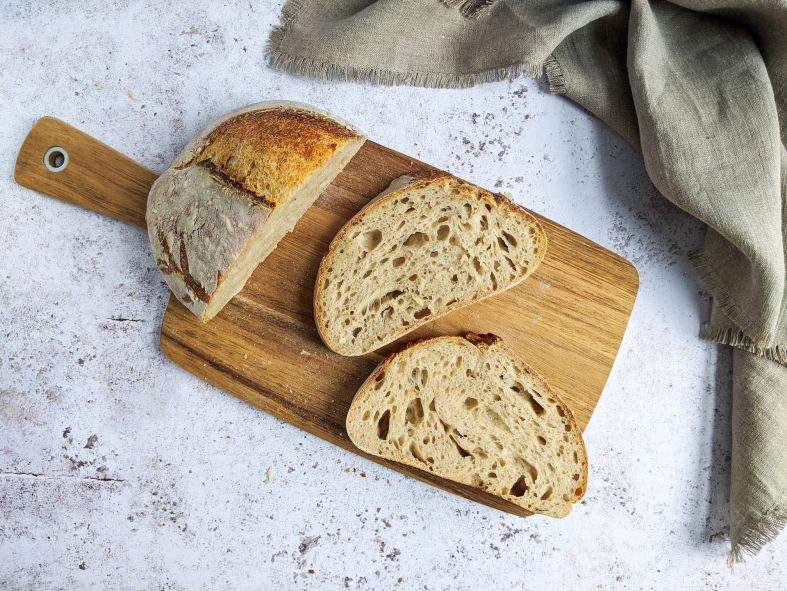
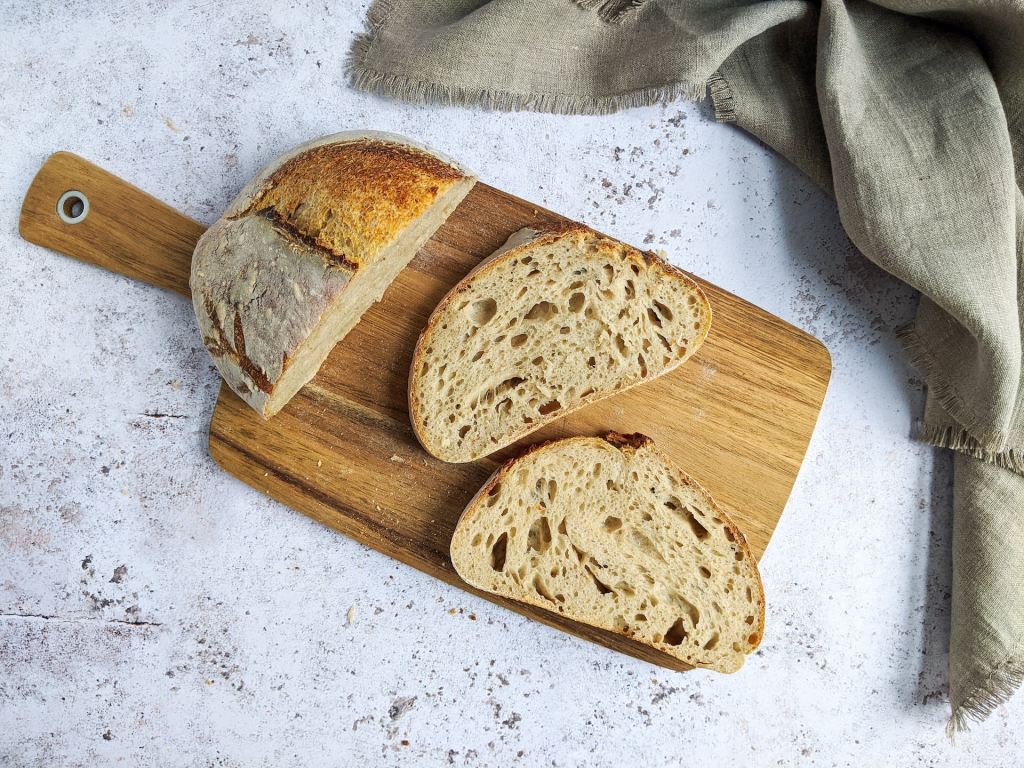
Beware the nooks and crannies of the Pharisees! Photo by Debbie Widjaja on Unsplash

Looking at leavened bread and unleavened bread from the outside, they might look the same: they both look like solid loaves of bread.  However, in the process of making bread rise, yeast creates gas bubbles that form holes inside the bread (or “nooks and crannies” as in an old English muffin ad).  So, when you break or cut open a piece of leavened bread, it does not look solid on the inside like it does from the outside.  It is full of holes.  On the other hand, unleavened bread tends to be more solid, such as many flatbreads or tortillas.

Yeast is like hypocrisy because the hypocrite is not the same on the inside as they are on the outside.  The image they carefully craft for themselves fails inspection to One who can see inside.  In the case of the Pharisees, who wanted to appear superior in their knowledge of, and observance of, Jewish law, Jesus revealed that they were “like whitewashed tombs, which outwardly appear beautiful, but within are full of dead people’s bones and all uncleanness.”[2]

Later in the New Testament, in 1 Corinthians 8:1, the apostle Paul wrote: “we know that ‘all of us possess knowledge.’ This ‘knowledge’ puffs up, but love builds up.”  Paul’s warning was that knowledge, if not used in love, puffs us up as yeast puffs up bread, making it full of air bubbles, and hollow inside.  Knowledge can make us proud and inflate our own sense of importance if we aren’t careful.  Love, on the other hand, seeks to build up others in humility.

Therefore, whose who seek to walk in integrity before God, to live an unleavened life, must reach out to the only One who can see all of our inner nooks and crannies, yet still loves us.  Though we are still sinners, by His blood we are justified in His sight and being made whole by our Maker.  We should pray as David prayed in Psalm 139:23 –

Search me, O God, and know my heart!
            Try me and know my thoughts!
And see if there be any grievous way in me,
            and lead me in the way everlasting!”

He can supply everything we lack.


[1] Luke 12:1b-2
[2] Matthew 23:27

Daily Readings for November 3 – 9

Fellow travelers:

Here is the list of readings for this week: 2 chapters to read per day as the main reading plan, and extra chapters for anyone who wants to read the whole Bible in 2025.  I goofed last week and listed Acts 1-2 twice as the reading plan.  Sorry!  I got it back on track this week.

Follow along (or not) any way you choose!  Also, let me know if you’re interested in me doing this again next year with a different order of books.

2 chapter a day plan:

Monday, November 3: Acts 11-12
Tuesday, November 4: Acts 13-14
Wednesday, November 5: Acts 15-16
Thursday, November 6: Acts 17-18
Friday, November 7: Acts 19-20
Saturday, November 8: Acts 21-22
Sunday, November 9: Acts 23-24

Extra chapters for those reading the whole Bible this year:
Hosea 3-11

Learning Godly Fear

Does being forgiven by God cause us to fear Him less, or to fear Him more?  Perhaps it’s both.

Psalm 130:4 tells us this about God: “But with you there is forgiveness, that you may be feared.”  To one way of thinking, this seems backwards: why does knowing that God has forgiven us make us fear Him more?  Shouldn’t we fear Him less when forgiven?  It depends on what we mean by fear.

For me, getting Psalm 130:4 to make sense with the order of forgiveness and fear required a re-thinking of repentance.  My conclusion was: the one who has not been forgiven has not repented, and the reason they did not repent was that they did not fear God.  They did not understand Him properly.  They might be afraid of God, but that’s not the kind of fear referred to in Psalm 130.

In contrast, the one who has been forgiven has repented, and they repented because they understood it was the best thing for them to do, out of a fearful respect for God.  A proper understanding of God’s character makes us turn to Him with our guilt, rather than run away from Him.  We should not be afraid of God, where we are motivated to be passive – avoiding mistakes that would anger the one we fear.  We should fear God in that we revere Him and respect His authority, and therefore actively seek to please Him.

A lot goes into repentance.  When we pray and ask for forgiveness, it’s often a simple prayer made with the proverbial faith of a child, but there are a lot of assumptions we make when we say that prayer.  Every prayer of repentance directly or indirectly acknowledges some or all of these things:

1) God as the source of the law, the ultimate arbiter of right and wrong
2) Him as the righteous judge who is personally offended by our sin
3) His omniscience, knowing we cannot hide our sin
4) His uniqueness, as there is no other God to turn to
5) His steadfast love for us, knowing He bore the cost of our sin, therefore enabling us to approach Him
6) His compassion for us, since He lived as a man
7) His power and willingness to heal us of sin
8) His consistency of character: that He is not arbitrary

If we don’t implicitly or explicitly believe these things, why would we repent and ask forgiveness from God?  Why would we expect to get it?  Exploring that set of statements could fill multiple volumes of theology books, but we don’t need that knowledge.  In His grace, He honors our simple, heartfelt confessions.  He paid the price for all our inadequacies – even when we don’t fully understand our own prayers or who we’re praying to.  The Spirit pleads with the Father on our behalf[1].  Mercifully, our forgiveness is based on His faithfulness to us, not on our detailed theological knowledge.  1 John 1:9 tells us: “If we confess our sins, he is faithful and just to forgive us our sins and to cleanse us from all unrighteousness.”

Even our faith is imperfect, but His faithfulness bridges the gap between our childlike faith and His omniscience.  He knows all our doubts and all their answers.  We come as we are, but with fearful respect, and are forgiven.

Only through acceptance of the cross, where Christ’s atoning blood was shed for us, can God in His Holiness commune with us.  Only through forgiveness will the Holy Spirit come and live in us.  Only by tasting of His goodness do we really know what He is like, not before.  And if we never repent, we don’t learn what it tastes like, we only know what you’ve been told about God, and we might not have been told the truth.

Psalm 130:4 shows us that genuine repentance leads to forgiveness and gives us a better appreciation of who God is.  As we experience Him more, we live Psalm 34:8 for ourselves:

“Oh, taste and see that the LORD is good!
                        Blessed is the man who takes refuge in him!”


[1] Romans 8:26-27