Suffering of the Beloved

Many Psalms contemplate the reality of evil and suffering in the world, but in most cases, those Psalms end on a note of hope.  For example, Psalm 73 details the Asaph’s envy of the success and prosperity of the wicked in this world.  He considered following their path, and verse 2 says “But as for me, my feet had almost stumbled, my steps had nearly slipped.”  But by verse 28, the last verse of the Psalm, the writer is hopeful and returning to praise for God in faith:

But for me it is good to be near God;
            I have made the Lord GOD my refuge,
            that I may tell of all your works.

In contrast, Psalm 88 begins like this:
O LORD, God of my salvation,
            I cry out day and night before you.”

And ends like this (verse 18):
You have caused my beloved and my friend to shun me;
            my companions have become darkness.”

This is perhaps the low point of the Psalms, or even the whole Bible, ending with neither hope or praise, but only faith expressed in desperate prayer.  The Psalmist, Heman[1] the Ezrahite according to the introduction, describes himself like this: “For my soul is full of troubles, and my life draws near to Sheol” (verse 3).  And like this: “Afflicted and close to death from my youth up” (verse 15).  After writing that his companions have shunned him, he says that “my eye grows dim through sorrow,” which I take to mean that his sorrow is so great it is clouding his perception of everything.  Sorrow is all he can see.  Heman feels he is near death, perhaps because of sickness or depression, or maybe because society has rejected him, and he feels left for dead (verse 8).

Such despair isn’t as uncommon as we might think in the face of trouble.  The apostle Peter needed to encourage his first-century audience with these words in 1 Peter 4:12: “Beloved, do not be surprised at the fiery trial when it comes upon you to test you, as though something strange were happening to you.”  Note that to Peter, suffering is not “strange” for a Christian, nor should we “be surprised” by it.  Peter’s comment was immediately referring to persecution, but the same idea applies more broadly.  Suffering is part of life in this world – for anyone.

But also notice the first word in the verse: “Beloved.

Peter begins his statement about suffering with this so that those experiencing suffering do not think that God does not love them.  Our circumstances don’t, and can never, mean that we are not loved by God.  For us in modern times, we might be “surprised” by trials if we live in places friendly and welcoming to Christian culture.  Those who live in places hostile to Christianity may not be as surprised at trials that come, but need reassurance that they are loved.  In these places, that trials are not “strange,” but common, could bring people to a place without hope.
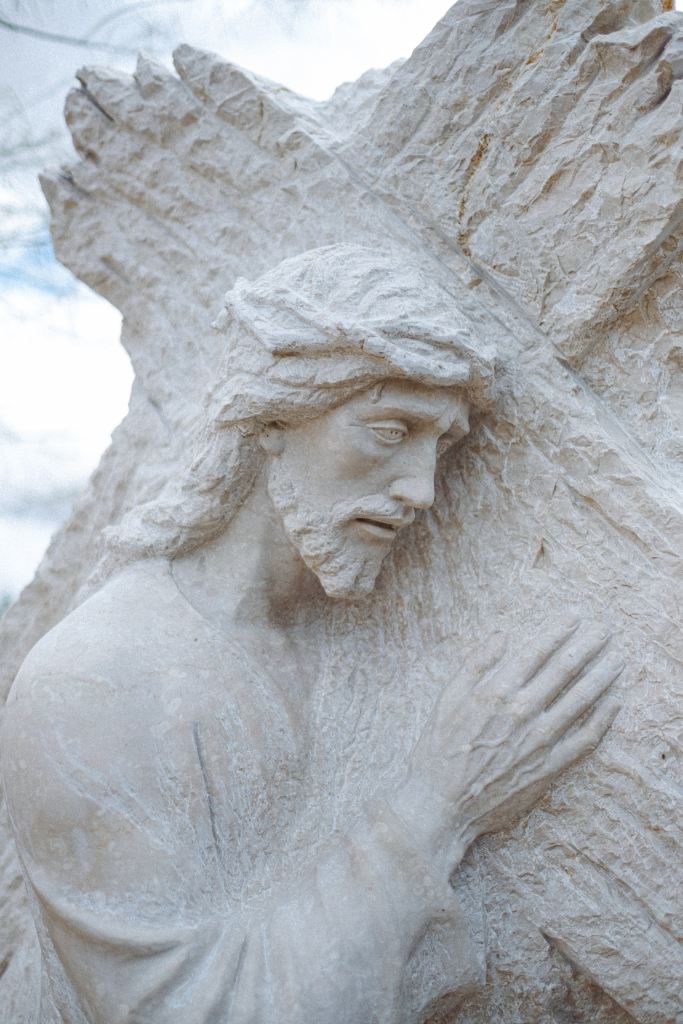
Photo by Wesley Tingey on Unsplash

However, when we are feeling like Heman, God still loves us, and like Heman we can pour out all our frustration to God.  He can take it.  Even when we are in “the valley of the shadow of death,[2] He remains with us and will sustain us.  When it seems we have nothing else, He will be there and listen.

Consider whether the Father did not love the Son when He suffered, or whether His suffering was proof that He loves us?   Therefore, Peter goes even farther in 1 Peter 4:13-14 – “But rejoice insofar as you share Christ’s sufferings, that you may also rejoice and be glad when his glory is revealed. If you are insulted for the name of Christ, you are blessed, because the Spirit of glory and of God rests upon you.

Good Friday was not the end of Jesus’ story, and although the day had three hours of darkness, the Son rose again and there was light!  Likewise, Psalm 88 was not the end of the Psalms; the last Psalm (150), begins like this:

Praise the LORD!
Praise God in his sanctuary;
            praise him in his mighty heavens!

And ends like this:
Let everything that has breath praise the LORD!
            Praise the LORD!

He is risen and you are Beloved.  Amen.


[1] Not He-Man, one of the fictional Masters of the Universe.
[2] Psalm 23:4

Daily Readings for March 30 – April 5

Fellow travelers:

For those looking for a Bible reading plan, each week I post 2 chapters to read per day as a main reading plan, and for anyone who wants to read the whole Bible in 2026, I’ll post the extra chapters to read that week.  The main readings will include nearly all of the New Testament, plus Psalms, Proverbs, Ecclesiastes, the Prophets, and a few other Old Testament books.

Reading 3 chapters a day on weekdays and 4 on weekends almost exactly covers the 1,189 chapters of the Bible, so the “extra” readings will be about 9 chapters per week.  These readings will cover the Pentateuch, the OT histories, a few other OT books, plus Jude and Revelation from the NT.

I hope this encourages others to read and study their Bible more, whatever parts they decide to read.  Follow along (or not) any way you choose!

2 chapter a day plan:

Monday, March 30: Psalm 89, Job 1
Tuesday, March 31: Psalm 90, Job 2
Wednesday, April 1: Psalm 91, Job 3
Thursday, April 2: Psalm 92, Job 4
Friday, April 3: Psalm 93, Job 5
Saturday, April 4: Psalm 94, Job 6
Sunday, April 5: Psalm 95, Job 7

Extra chapters for those reading the whole Bible in 2026:
Leviticus 25 – 27, Numbers 1 – 6

God Wants to Hear Everything

Not everyone has a good friend they can talk to anything about at any time.  But we always have God.  As David tells us in Psalm 62:8 –

“Trust in him at all times, O people;
pour out your heart before him;
God is a refuge for us. Selah”

When do we need a refuge?  When we have troubles.  He wants to hear from us at all times and strengthen and guide us.  Martin Luther, commenting on the verse, wrote:

“Strength fades, courage fails; God remains firm.  If you are lacking something, well, here is good advice: ‘Pour out your heart before him’ Voice your complaint freely, and do not conceal anything from him.  Regardless of what it is, just throw it in a pile before him, as you open your heart completely to a good friend. He wants to hear it, and he wants to give you his aid and counsel. Do not be bashful before him. Out with everything.”[1]

The word Selah at the end of the verse is mysterious, but many believe it is a signal to pause and reflect.  What do you want to “throw in a pile before him” now?


[1] Quoted in McKim, Donald K.  Everyday Prayer with the Reformers (2020).  P. 37.

Daily Readings for March 23 – 29

Fellow travelers:

For those looking for a Bible reading plan, each week I post 2 chapters to read per day as a main reading plan, and for anyone who wants to read the whole Bible in 2026, I’ll post the extra chapters to read that week.  The main readings will include nearly all of the New Testament, plus Psalms, Proverbs, Ecclesiastes, the Prophets, and a few other Old Testament books.

Reading 3 chapters a day on weekdays and 4 on weekends almost exactly covers the 1,189 chapters of the Bible, so the “extra” readings will be about 9 chapters per week.  These readings will cover the Pentateuch, the OT histories, a few other OT books, plus Jude and Revelation from the NT.

This week the Bible in a Year plan almost finishes Leviticus.  I’m not even halfway through Exodus, but there’s a lot of time to catch up!

I hope this encourages others to read and study their Bible more, whatever parts they decide to read.  Follow along (or not) any way you choose!

2 chapter a day plan:

Monday, March 23: Psalm 82, Luke 18
Tuesday, March 24: Psalm 83, Luke 19
Wednesday, March 25: Psalm 84, Luke 20
Thursday, March 26: Psalm 85, Luke 21
Friday, March 27: Psalm 86, Luke 22
Saturday, March 28: Psalm 87, Luke 23
Sunday, March 29: Psalm 88, Luke 24

Extra chapters for those reading the whole Bible in 2026:
Leviticus 16-24

Time for a Change 2026 (3 of 9)

Fellow travelers,

Are there small things you are doing that are harmful to you? Are there small changes you can make to improve your life? Can each of us build a better “liturgy” for our lives over time, step by step? Can we accumulate victories in small battles that help us fight bigger ones?  Over time can we better love God, ourselves, and others?

Instead of making resolutions or celebrating Lent, every 40 days I try to make a small, permanent change in my life habits.  I keep a list of the changes I’ve made or want to make.  This is all voluntary, so I don’t criticize myself for missing a deadline or going back on something.  If I fail at some of the changes, the successful ones still add up to a massive shift over time.  I don’t always do “spiritual” or major changes, just something I think will make my life better, permanently.  For example, in 2021, I decided to drink at least 32 oz of water a day, and I still do it (with an occasional miss).  My last change was an average daily step goal I started in February.  I’ve met that goal so far.

My change for 3/22/26 is one I’ve tried before (1/1/25), and it worked for a few months, but then it didn’t.  So, I’m going to try it again.  I’m not giving specifics here, but I’ll say it has to do with making better use of my time.

If you want to participate, tomorrow, March 22nd, is 80 days after the start of the New Year and time for the next change.  If you do, keep a record of what you’re changing.  As the months and years pass, hopefully the cumulative change is enormous. The next date on the schedule (40 days later) is 5/1/26, and I have a couple of things under consideration for then.  I’ll be posting a reminder at about that time; if you want to participate, start making a list of things you might want to do more or less of, and let’s see what we can accomplish!  This habit has been helpful to me and might be to you, even if you have your own way of doing it.