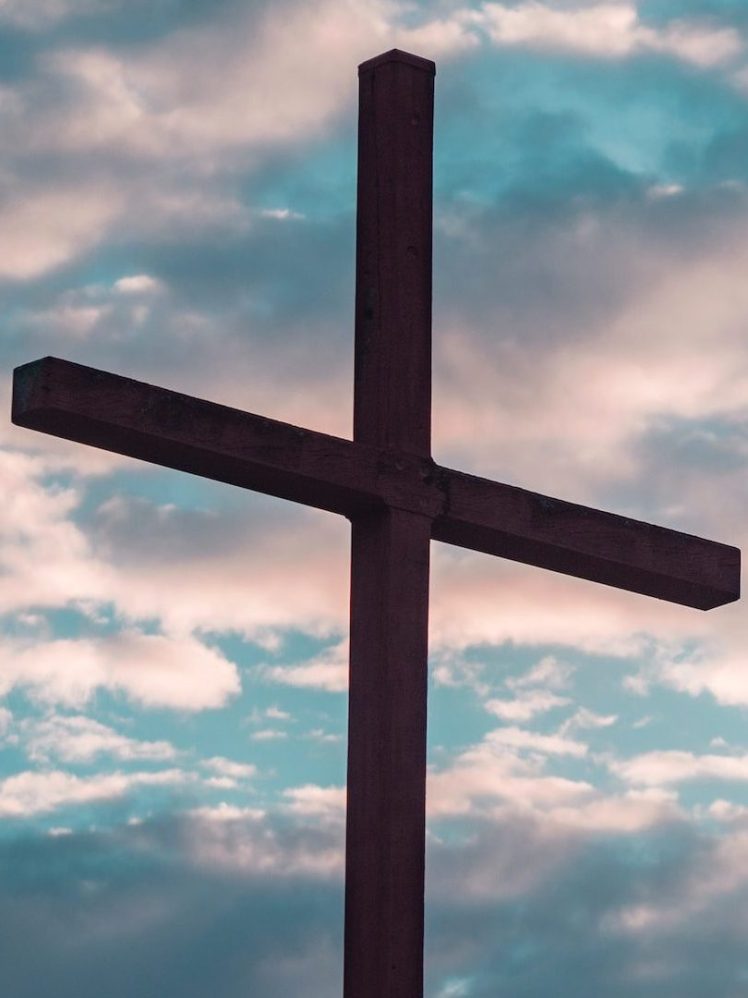
The Many Names of Jesus

Often in the Bible, a person’s name tells us more than just what they are called – it tells us something about their character or history.  Also, a name describes the authority and honor due to someone, like when we do something in someone’s name, we claim their authority to do it.  There are many names for our Lord Jesus, describing His character and authority, and a great summary of these is the worship song, “Jesus, Name Above All Names.”  It has two main verses, listing many of Christ’s names, as follows:

Verse 1
Jesus, name above all names
Beautiful Savior glorious Lord
Emmanuel God is with us
Blessed Redeemer living Word

Verse 2
Jesus, loving Shepherd
Vine of the branches Son of God
Prince of Peace Wonderful Counselor
Lord of the universe Light of the world

There are many truths about Jesus we can know, and much meaning is contained in the names from this song, but as infinite God, we cannot understand every truth about Him.  A verse that reminds us of this is Revelation 19:12 – “His eyes are like a flame of fire, and on his head are many diadems, and he has a name written that no one knows but himself.

We know Jesus by many names, but He has at least one that only He knows.  We know many of His names, but none of them can fully describe Him.  Likewise, He has many crowns (“diadems”), but none of them can fully describe His power, authority, and honor.

But it was because of our Lord’s humility, taking on the form of man and voluntarily suffering death on the cross for His people, that Philippians 2:9-11 declares: “God has highly exalted him and bestowed on him the name that is above every name, so that at the name of Jesus every knee should bow, in heaven and on earth and under the earth, and every tongue confess that Jesus Christ is Lord, to the glory of God the Father.”

He alone has the name that deserves all of our devotion and respect.  While we cannot fully understand Him, we can seek to fully trust Him.

Soli Deo Gloria

Bible in a Year: Week of December 9 – 15

Fellow travelers:

Below are the chapters to read this week if you’re following along in my Bible in a year schedule, divided into morning and evening readings.  Follow along any way you want: you can just do the evening reading, flip the morning and evening, or read it all.  Whatever works for you and your schedule!  It doesn’t have to be Bible in a Year for everyone.

We’re getting close to the end of the year, where we’ll end with Daniel and Revelation.  I’m considering whether and how to continue this into 2025.  It might just be daily readings, but not a full Bible in a year.

Monday, December 9
Morning: Zechariah 3-4
Evening: Isaiah 56

Tuesday, December 10
Morning: Zechariah 5-6
Evening: Isaiah 57

Wednesday, December 11
Morning: Zechariah 7-8
Evening: Isaiah 58

Thursday, December 12
Morning: Zechariah 9-10
Evening: Isaiah 59

Friday, December 13
Morning: Zechariah 11-12
Evening: Isaiah 60

Saturday, December 14
Morning: Zechariah 13-14
Evening: Isaiah 61

Sunday, December 15
Morning: 1 John 1-3
Evening: Isaiah 62

He Humbles and Exalts Nations

In a parable about humility, Jesus said in Luke 14:11: “For everyone who exalts himself will be humbled, and he who humbles himself will be exalted.”  While the parable is about individual people, elsewhere God also makes clear that he can humble or exalt entire nations.  While Luke 14:11 may contradict much of what we see in our world today, at the final judgment the truth of the verse will be made manifest, and God promises it will be so.

As an example, the Old Testament prophet Isaiah spoke of God’s power over the nations.  Around 605 B.C., Babylon invaded Judah and carried them into captivity, and about 70 years later, Judah was allowed to return home by Cyrus the Mede, who had defeated Babylon.  Over a century before Babylon’s invasion, Isaiah prophesied their entire rise and fall around 700 B.C., when Babylon was not yet even a world power.  Isaiah described the final destinies of both Babylon and of God’s people in startling images.

As recorded in Isaiah 47:1-3, God’s vengeance on Babylon was described, probably before they even considered capturing Jerusalem:

Come down and sit in the dust,
            O virgin daughter of Babylon;
sit on the ground without a throne,
            O daughter of the Chaldeans!
For you shall no more be called
            tender and delicate.
Take the millstones and grind flour,
            put off your veil,
strip off your robe, uncover your legs,
            pass through the rivers.
Your nakedness shall be uncovered,
            and your disgrace shall be seen.
I will take vengeance,
            and I will spare no one.
Our Redeemer—the LORD of hosts is his name—
            is the Holy One of Israel.

This is contrasted to the future of God’s people in Isaiah 52:1-2:

Awake, awake,
            put on your strength, O Zion;
put on your beautiful garments,
            O Jerusalem, the holy city;
for there shall no more come into you
            the uncircumcised and the unclean.
Shake yourself from the dust and arise;
            be seated, O Jerusalem;
loose the bonds from your neck,
            O captive daughter of Zion.”

Did you notice the parallels?  In Isaiah 47, Babylon is disgraced, cast down from the throne and made to do menial labor.  Babylon is stripped of their beautiful clothes and publicly shamed, sitting in the dust.

Contrast to Isaiah 52, which describes the daughter of Zion as rising up from the dust of disgrace under Babylon, from whom she has been freed.  She dwells in peace, awakening and dressing herself in beautiful clothes.  What a beautiful future!

Photo by Aaron Burden on Unsplash

However, note that God removes Babylon’s temporary throne but does not put His people on a throne.  That honor belongs only to Him, and Babylon’s presumption in taking that place is the reason they need to be humbled.  By humbling themselves before God’s throne, His people follow the example Jesus gave at the wedding feast in verse 10 of the Luke 14 parable: “But when you are invited, go and sit in the lowest place, so that when your host comes he may say to you, ‘Friend, move up higher.’ Then you will be honored in the presence of all who sit at table with you.”  God will honor the humble.

By demonstrating power over entire nations in history, He has proven He has power over nations now and in the future.  And if He has power over nations, He has power over whatever frustrations we have with the state of the world.  He alone is on His throne.

So, if you are frustrated with the powerful and influential who puff themselves up in defiance of God, or if you wonder whether being humble is really a better alternative, remember:

For everyone who exalts himself will be humbled, and he who humbles himself will be exalted.”

For people as well as nations.

Bible in a Year: Week of March 18 – 24

Fellow travelers:

Below are the chapters to read this week if you’re following along in my Bible in a year schedule, divided into morning and evening readings.  Follow along any way you want: just do the evening reading, flip the morning and evening, read it all.  Whatever works for you and your schedule!  It doesn’t have to be Bible in a Year for everyone.

This week we finish 2 Kings and begin 1 Chronicles.  After the 2 Chronicles books, we move to Ezra and Nehemiah, then on to the New Testament, starting with the gospel of Matthew.

Monday, March 18
Morning: Psalm 78, 2 Kings 23
Evening: Exodus 28

Tuesday, March 19
Morning: Psalm 79, 2 Kings 24
Evening: Exodus 29

Wednesday, March 20
Morning: Psalm 80, 2 Kings 25
Evening: Exodus 30

Thursday, March 21
Morning: Psalm 81, 1 Chronicles 1
Evening: Exodus 31

Friday, March 22
Morning: Psalm 82, 1 Chronicles 2
Evening: Exodus 32

Saturday, March 23
Morning: Psalm 83, 1 Chronicles 3-4
Evening: Exodus 33

Sunday, March 24
Morning: Psalm 84, 1 Chronicles 5-6
Evening: Exodus 34