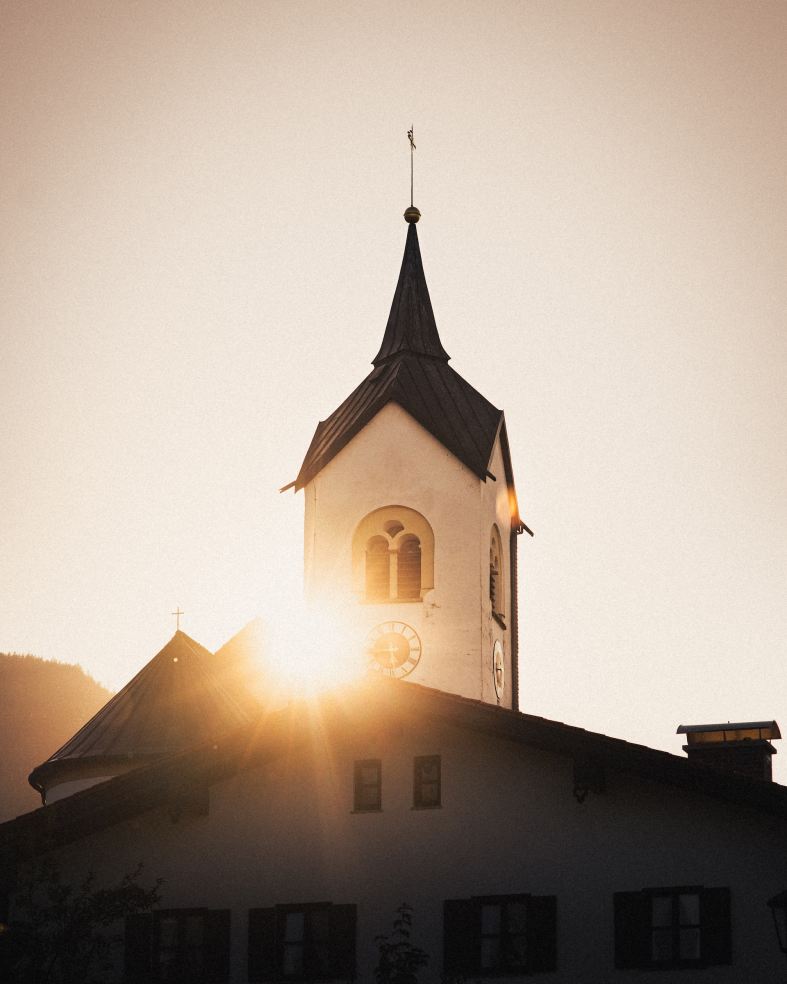
Strengthen What Remains

Does your church seem alive and vigorous in its faith?  Be thankful if it does because there are many churches that are struggling.  There are many churches that appear to be faithful, but their faith might only be skin-deep.

In Revelation chapters 2 and 3, John is given messages from Jesus to bring to seven churches in different cities: Ephesus, Smyrna, Pergamum, Thyatira, Sardis, Philadelphia, and Laodicea.  One of these – Sardis – fit the description above of a church where faith was only an appearance.  Jesus’ words to Sardis begins in Revelation 3:1-2:

And to the angel of the church in Sardis write: ‘The words of him who has the seven spirits of God and the seven stars.  ‘I know your works. You have the reputation of being alive, but you are dead. 2 Wake up, and strengthen what remains and is about to die, for I have not found your works complete in the sight of my God.

The church in Sardis looked good – it had “the reputation of being alive,” but in the sight of God who sees the internal and true reality, the church was “dead.”  Many churches today are like Sardis: they appear Christian but haven’t really embraced Christ.

However, there is still hope, because in verse 2 it says the work is not complete, and verse 4 says there remain some truly faithful in Sardis: “Yet you have still a few names in Sardis, people who have not soiled their garments, and they will walk with me in white, for they are worthy.”  Many people are in situations like this today: spiritually alive but in “dead” churches.

What message is given to those faithful few?  “Wake up, and strengthen what remains.” 

There are two parts to this instruction, the first being don’t give up.  Stay alert!  Some might be tempted to give up; to either to stop trying, or to leave and find another church.  Finding another church might be a good option in some cases, but for those who choose to stay, giving up on the church is not an option according to this message.  “Wake up.

The second part is to “strengthen what remains.”  There is work to be done in any church, even where little genuine faith remains.  Hebrews 10:24-25 advises us: “And let us consider how to stir up one another to love and good works, not neglecting to meet together, as is the habit of some, but encouraging one another, and all the more as you see the Day drawing near.”

Therefore, if you feel your church is dead, remain faithful and “strengthen what remains.”  Don’t give up but encourage others to “love and good works.”  By word and by example.  But if your church is spiritually alive, also remain faithful and strengthen what you have.

He who has an ear, let him hear what the Spirit says to the churches.” – Revelation 3:6

Weeds are Good for You

Are there people in the church, either in your own church, another local church, or somewhere in the global church, that seem a bit un-Christian?  Perhaps their doctrine is different than yours, or perhaps they behave differently.  Maybe they dress differently or have different standards in music.  They could have different political beliefs.  It could be anything.

Within a parable Jesus told in Matthew 13:24-30 is some wisdom about “those people.”  The parable is:

He put another parable before them, saying, “The kingdom of heaven may be compared to a man who sowed good seed in his field, but while his men were sleeping, his enemy came and sowed weeds among the wheat and went away. So when the plants came up and bore grain, then the weeds appeared also.  And the servants of the master of the house came and said to him, ‘Master, did you not sow good seed in your field? How then does it have weeds?’  He said to them, ‘An enemy has done this.’ So the servants said to him, ‘Then do you want us to go and gather them?’  But he said, ‘No, lest in gathering the weeds you root up the wheat along with them.  Let both grow together until the harvest, and at harvest time I will tell the reapers, “Gather the weeds first and bind them in bundles to be burned, but gather the wheat into my barn.”’”

For this post, the key phrase in the parable is “No, lest in gathering the weeds you root up the wheat along with them.”  The wheat in the parable represents God’s people, and the weeds represent unbelievers in the midst of them.  The servants ask the master whether they should pull up all the weeds immediately, which seems like a sensible thing to do.  Weeds are bad for crops, right?

The surprising response is that the servants should “Let both grow together until the harvest.”  Why?  Because in the master’s judgment it is better for the wheat if the weeds are allowed to grow.  In other words, removing the weeds before the harvest – when God will separate the wheat from the weeds – would be bad for the wheat harvest.  Until the harvest, the master warns that we could “root up the wheat along with them.”

In Matthew 25 where Jesus tells of the final judgment in verses 31-46, it’s strongly implied that some of the “wheat” will be surprised about being wheat and some “weeds” will be surprised about being weeds.  In verses 37-39 Christians say: “Lord, when did we see you hungry and feed you, or thirsty and give you drink?  And when did we see you a stranger and welcome you, or naked and clothe you?  And when did we see you sick or in prison and visit you?”  In verse 44, unbelievers say: “Lord, when did we see you hungry or thirsty or a stranger or naked or sick or in prison, and did not minister to you?

Therefore, if the wheat and the weeds themselves can be unsure which they are, how can anyone else definitively decide who doesn’t belong, especially to risk damaging those who do belong.  There will always be true and false believers in churches until Christ returns, so remember: According to the Master, the wheat is better off with the weeds than without.  Especially if sometimes what we think are weeds actually aren’t.

The Apostle Peter, Son of Gomer?

Peter is one of the most fascinating characters in the New Testament.  His struggles and flaws are written for all to see, but so is the patience and love Jesus had for him.  In Peter’s two letters, we get to see examples of his growth and maturity.  One of Peter’s struggles was how Jews who had become Christian should treat Gentiles.  In Galatians 2:11-21 is a story of Paul rebuking Peter for his hypocrisy toward Gentiles, and in Acts 10 and 11 is a story of Peter receiving a vision from heaven telling him not to treat Gentiles as unclean, because God can make anyone clean.

Peter ponders whether the key is for letting people in or keeping them out.

In 1 Peter 2:9-10, he shares this lesson with his readers:

“But you are a chosen race, a royal priesthood, a holy nation, a people for his own possession, that you may proclaim the excellencies of him who called you out of darkness into his marvelous light. Once you were not a people, but now you are God’s people; once you had not received mercy, but now you have received mercy.” (emphasis mine)

The bolded words clearly call back to the story of the Old Testament prophet Hosea, who God told to marry a prostitute named Gomer to teach a lesson about idolatry.  Hosea’s children by Gomer are named in Hosea 1:6-9 –

She conceived again and bore a daughter. And the LORD said to him, ‘Call her name No Mercy, for I will no more have mercy on the house of Israel, to forgive them at all.  But I will have mercy on the house of Judah, and I will save them by the LORD their God. I will not save them by bow or by sword or by war or by horses or by horsemen.’ When she had weaned No Mercy, she conceived and bore a son.  And the LORD said, ‘Call his name Not My People, for you are not my people, and I am not your God.’” (emphasis mine)

As Peter grew in Christ, he learned the same lesson Hosea learned: that all of God’s people are like Gomer and her children. Both Jews and Gentiles were once estranged from God in spiritual prostitution and adultery, but are now a beloved people, betrothed to one faithful God.  Jesus, our Holy High Priest, made the necessary sacrifice for the salvation of anyone and everyone who will come to Him.  Those He saves join His “royal priesthood”, proclaiming His excellent work to all people who have not received mercy, but who His blood covers.

Judge not, that you be not judged.  For with the judgment you pronounce you will be judged, and with the measure you use it will be measured to you.” – Matthew 7:1-2

Zap! The Best Action Figures for Christmas

Dear fellow travelers,

A hot Christmas gift when I was a kid were G.I. Joe toys.  These “Real American Heroes” were a line of action figures, vehicles and other accessories that fought against the evil Cobra organization which was trying to take over the world (of course).  In 1982, they were even hotter, after Hasbro added “Swivel Arm Battle Grip” to the design to differentiate G.I. Joe from the also-popular Star Wars figures.

Zap looks much better in action than in the box.

The swivel in the middle of the figure’s bicep allowed 360-degree rotation.  The swivel isn’t a shoulder, elbow, or hand, but without it, bazooka soldier (Code Name: Zap) can’t pose as modeled on the package pictured here.  I had “Zap” and tried it for myself.  It took some experimentation, but eventually the way the shoulder, swivel, and elbow were made worked together and Zap looked like Zap should look.

Why so much detail about action figures in a Christian blog?  Because the Christian church is described in the Bible as the body of Christ, and in 1 Corinthians 12:14-16, the apostle Paul assures us that, without every single member of the church participating, the body of Christ is incomplete:

For the body does not consist of one member but of many.  If the foot should say, ‘Because I am not a hand, I do not belong to the body,’ that would not make it any less a part of the body.  And if the ear should say, ‘Because I am not an eye, I do not belong to the body,’ that would not make it any less a part of the body.

Like Zap without “Swivel Arm Battle Grip,” the church will not perform as God intended unless all parts of the body participate, but sometimes it’s not clear to each of us what part of the body of Christ we are.  To some of us, others may clearly look like a shoulder, elbow, or hand, but we don’t know our part.  To some of us, others may look like the “hands and feet of Jesus” (to use a common phrase), but people don’t say the same about us.  Remember that Paul says “that would not make it any less a part of the body.”

Today, let’s return to one of this blog’s key verses, Hebrews 10:24, “And let us consider how to stir up one another to love and good works.”  When we don’t clearly know the specifics of our part, maybe we are the “Swivel Arm Battle Grip” – the innovative, new part with a weird name that helps the other parts fit together and work as God intended.  But also, when we do know our part, is the objective any different?

Let God Speak to Your Inner Wilderness

John the Baptist announced the coming of Jesus, baptized Him, and led the way for His ministry to begin.  This John was identified with “The voice of one crying in the wilderness: ‘Prepare the way of the Lord; make his paths straight’”[1] prophesied in Isaiah 40:3-5, which says:

A voice cries: ‘In the wilderness prepare the way of the LORD;
            make straight in the desert a highway for our God.
Every valley shall be lifted up,
            and every mountain and hill be made low;
the uneven ground shall become level,
            and the rough places a plain.
And the glory of the LORD shall be revealed,
            and all flesh shall see it together,
            for the mouth of the LORD has spoken.’”

Is Isaiah talking about a massive, miraculous geological event, creating an easier route for Jesus to take to His kingdom?  Perhaps in the future something like this will happen, but I think Isaiah is saying that God’s power over nature is a symbol of His power to reform and perfect us into the character of His Son Jesus.

Before Jesus comes into our lives, we are a spiritual wilderness full of uneven ground and rough places.  The path of our salvation begins in this wilderness, an unorganized chaos of thoughts and desires.  We are like “children, tossed to and fro by the waves and carried about by every wind of doctrine, by human cunning, by craftiness in deceitful schemes.”  However, the power of the LORD enters our low valleys – our guilty secrets, shame and depression – which will be raised up.  It progresses through our mountains and hills – areas of pride, self-sufficiency, and our desire for power – which will be made low.  God, with the same power that created the universe, removes all obstacles to the coming of His kingdom to us, and to the world.  He has given us His word, His Spirit, and fellow believers to strengthen us, “until we all attain to the unity of the faith and of the knowledge of the Son of God, to mature manhood, to the measure of the stature of the fullness of Christ, so that we may no longer be children, tossed to and fro by the waves and carried about by every wind of doctrine, by human cunning, by craftiness in deceitful schemes.”  (Ephesians 4:13-14)

John the Baptist called his followers to confession and repentance.  In announcing the coming of the kingdom of God, John anticipated a time when our internal and external wildernesses will become a paradise.  Until then, we each have different hills and valleys, different uneven and rough areas.  Until then, the world remains full of false doctrine, cunning, craftiness and deceit.

Today, pray that the powerful voice of our LORD will reach into your wilderness and remove obstacles on the path to His kingdom.  Pray that His word and His Spirit will reveal His glory.  Pray that all believers will answer the call of “the voice of one crying in the wilderness” to build up His church.

Amen.


[1] Isaiah 40:3, quoted in Matthew 4:3.