God Knows Where the Grass is Greenest

The Old Testament book of Numbers has a story about Balak, the king of Moab.  Scared of Israel after seeing their military success, he was desperate to find a way to avoid defeat himself.  Balak sought out Balaam, known as a prophet who spoke oracles, to curse Israel for him. After repeatedly paying Balaam and making many sacrifices, Balaam refused to curse Israel because God told him to bless Israel, not curse them.  Balak would not give up, and before a third try, “Balak said to Balaam, ‘Come now, I will take you to another place. Perhaps it will please God that you may curse them for me from there.’” (Numbers 23:27)

Where did Balak get the idea that changing location would get God on his side?  That changing location would change God’s mind or bring God’s blessing to Balak (in the form of a curse on Israel)?  Doesn’t it seem naïve?  God’s character doesn’t change with location, or any other circumstances.

However, how often do we think a change in circumstances will bring God’s blessing?  How often do we pray that God change our situation because we think the grass is greener somewhere else?  Maybe if I lived in a different place, God would bless me.  Maybe if I got a better job, would it be a blessing?  Maybe if I went to a different church?  Maybe if I was in a different relationship?   Maybe if God would put us where we want to be, that He will bless us then?  Are we saying “come with us God to another place, and perhaps it will please You to bless us there” in another way?

Warren Wiersbe wrote that “We are prone to think that a change in circumstances is always the answer to a problem. But the problem is usually within us and not around us. The heart of every problem is the problem in the heart.”[1]

God calls each of us for specific reasons, and the circumstances may be part of the reason.  Referencing whether it is better to be married or single, circumcised or uncircumcised, slave or free, the apostle Paul wrote in 1 Corinthians 7:24, “So, brothers, in whatever condition each was called, there let him remain with God.”  In other words, God wants to bless you in, or even through, your present circumstances.  He may change them, but He may not.

In God’s plan, the grass is usually greenest right where we already are. If we can faithfully be the blessing needed in our circumstances, God will be faithful in His time and place.  He will bless His people, only sometimes with better circumstances, but always with spiritual fruit.

God always says: “Come now, I will be with you where you are. It pleases me to bless you in all situations and circumstances.”

The grass is greenest where He is.


[1] Wiersbe, Warren.  Be Wise (1 Corinthians) (1982).

Peter Walks on Water

After a frantic period where Jesus learned of John the Baptist’s death, then was crowded by over 5,000 hungry people in the wilderness who wanted to make Him king after He miraculously fed them, He sought some time alone.  Jesus told his disciples to get on a boat without Him and begin heading across the sea so He could spend time on the mountain that evening. Jesus always found time to be with His Father.  This is the background for a small group study of the apostle Peter I recently led focused on Matthew 14:22-36, the story of Jesus, and then Peter, walking on water.

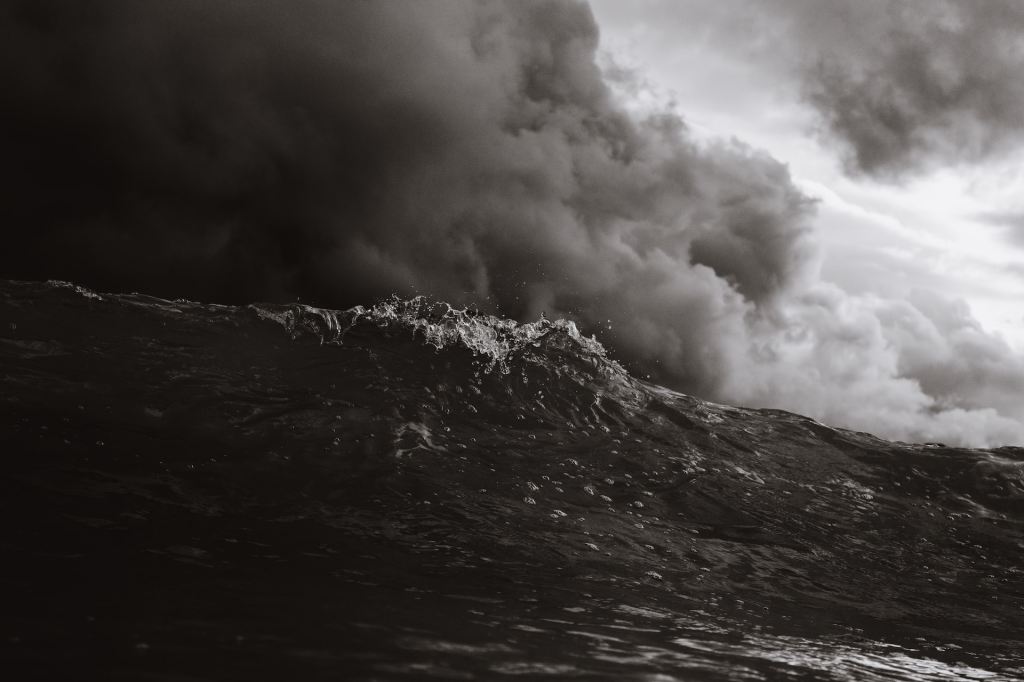
At night, probably shortly before dawn, the disciples were still rowing against the wind, being “beaten by the waves.”  They should have been across by this time.  In an earlier storm, recorded in Matthew 8:23-27, Jesus had been with the disciples on a boat in a storm, and He woke from a nap to quiet the storm that was terrifying them.  This time, they were exactly where He had sent them: in the boat to cross ahead of Him.  Even though Jesus was not with them, He knew they would be fighting a storm again, and He had taught them He is the Lord of the storms.

Amid the rain and wind and waves, the disciples saw something on the water and cried out in fear: “It is a ghost!”  This was the only explanation they could come up with for something traveling over the water without sinking.  But Jesus said “Take heart; it is I. Do not be afraid,” and they knew it was Him, walking on the water.  He was still Lord of the storms.

In response, Peter (acting boldly as usual) exercised faith 3 times in this story.  First, he believed Jesus was who He said He was.  The initial shock and fear of what looked like a ghost passed when Peter heard His voice.  Second, he knew Jesus was capable of walking on water, so why couldn’t He enable Peter to do it too?  Third, when Peter “saw the wind, he was afraid, and beginning to sink,” he kept faith that Jesus could and would save him from drowning.

But why did Peter begin to sink?  The text says he was distracted when he “saw the wind.”  In that wind, he saw circumstances that he feared were more powerful than Jesus.  Peter could believe Jesus could make him walk on water when he was in a boat, but when wind and waves started hitting him it was harder to trust.  There’s a conflict here between faith and circumstances, doubt and trust.  Faith can raise us above our circumstances, but only when we focus on Jesus to overcome our doubt.  When we look away from Him, our circumstances can overwhelm us.

Peter learned that he could walk on water, but also that it was only possible by focusing his gaze on Jesus, not by relying on his own strength and ability.  Only by relying on Him can we thrive.  When walking by faith, hearing and obeying His Spirit, it can feel like walking on water, because “the fruit of the Spirit is love, joy, peace, patience, kindness, goodness, faithfulness, gentleness, self-control.” – Galatians 5:22-23a

Do you sometimes feel like you’re in a stormy sea, and getting across is taking longer than it should?  Is there a stormy situation in your life that requires stepping out in faith?  Are there circumstances you’re focusing on that make you feel you are sinking?

God sometimes knowingly sends us into storms to test our faith, just like Jesus sent the disciples into this storm to help them learn to trust Him.  If you’re in a storm, seek Him and go to Him.  Turn your eyes upon Jesus; He can make you walk above your circumstances.

God Knows Where the Grass is Greenest

The Old Testament book of Numbers has a story about Balak, the king of Moab.  Scared of Israel after seeing their military success, he was desperate to find a way to avoid defeat himself.  Balak sought out Balaam, known as a prophet who spoke oracles, to curse Israel for him. After repeatedly paying Balaam and making many sacrifices, Balaam refused to curse Israel because God told him to bless Israel, not curse them.  Balak would not give up, and before a third try, “Balak said to Balaam, ‘Come now, I will take you to another place. Perhaps it will please God that you may curse them for me from there.’” (Numbers 23:27)

Where did Balak get the idea that changing location would get God on his side?  That changing location would change God’s mind or bring God’s blessing to Balak (in the form of a curse on Israel)?  Doesn’t it seem naïve?  God’s character doesn’t change with location, or any other circumstances.

However, how often do we think a change in circumstances will bring God’s blessing?  How often do we pray that God change our situation because we think the grass is greener somewhere else?  Maybe if I lived in a different place, God would bless me.  Maybe if I got a better job, would it be a blessing?  Maybe if I went to a different church?  Maybe if I was in a different relationship?   Maybe if God would put us where we want to be, that He will bless us then?  Are we saying “come with us God to another place, and perhaps it will please You to bless us there” in another way?

Warren Wiersbe wrote that “We are prone to think that a change in circumstances is always the answer to a problem. But the problem is usually within us and not around us. The heart of every problem is the problem in the heart.”[1]

God calls each of us for specific reasons, and the circumstances may be part of the reason.  Referencing whether it is better to be married or single, circumcised or uncircumcised, slave or free, the apostle Paul wrote in 1 Corinthians 7:24, “So, brothers, in whatever condition each was called, there let him remain with God.”  In other words, God wants to bless you in, or even through, your present circumstances.  He may change them, but He may not.

In God’s plan, the grass is usually greenest right where we already are. If we can faithfully be the blessing needed in our circumstances, God will be faithful in His time and place.  He will bless His people, only sometimes with better circumstances, but always with spiritual fruit.

God always says: “Come now, I will be with you where you are. It pleases me to bless you in all situations and circumstances.”

The grass is greenest where He is.


[1] Wiersbe, Warren.  Be Wise (1 Corinthians) (1982).