A Psalm of God’s Strength and Power

The Bible software I use (Accordance) has the ability to highlight text, but so far I’ve only used it once, for Psalm 21.  In just 13 verses, David wrote “you” or “your” 25 times, referring to God as the source of his success and blessings, past, present, and future.  The short 13 verses of Psalm 21 provide a plethora of praises we can offer to confess that God is powerful, faithful and just.  Here is the entire Psalm, and I’ve bolded all the “you”s and “your”s, which I highlighted in Accordance:

“To the choirmaster. A Psalm of David.

O LORD, in your strength the king rejoices,
            and in your salvation how greatly he exults!
You have given him his heart’s desire
            and have not withheld the request of his lips. Selah
For you meet him with rich blessings;
            you set a crown of fine gold upon his head.
He asked life of you; you gave it to him,
            length of days forever and ever.
His glory is great through your salvation;
            splendor and majesty you bestow on him.
For you make him most blessed forever;
            you make him glad with the joy of your presence.
For the king trusts in the LORD,
            and through the steadfast love of the Most High he shall not be moved.

Your hand will find out all your enemies;
            your right hand will find out those who hate you.
You will make them as a blazing oven
            when you appear.
The LORD will swallow them up in his wrath,
            and fire will consume them.
You will destroy their descendants from the earth,
            and their offspring from among the children of man.
Though they plan evil against you,
            though they devise mischief, they will not succeed.
For you will put them to flight;
            you will aim at their faces with your bows.

Be exalted, O LORD, in your strength!
            We will sing and praise your power.”

What statements did you focus on while reading this?  Did you take the time to think about all 25 “you” statements (and the rest of the Psalm)?  Read it again.

The first section in this Psalm describes how our God is “faithful” in some ways, and the second describes “just.”  The first may come easier, with David giving God credit for all of his strength and success, but the middle section on justice may come across as harsh and harder to swallow.  However, it reminds us that only He knows for sure who His (and our) enemies are.  “Your hand will find out all your enemies.”  Only He determines the fates of others, including some who look like enemies now, but will come to faith in Him later.  With any enemy we can “wait upon the Lord”, as David often urges us, knowing God will either save them, or their plans will come to ruin by His design.

Yet, for those in Christ, “he is faithful and just to forgive us our sins and to cleanse us from all unrighteousness.”  Therefore, we echo David:

“Be exalted, O LORD, in your strength!
            We will sing and praise your power.”

Confession: The Blessing Nobody Expects

What comes to mind when you think of confession?  Think about it for a moment.

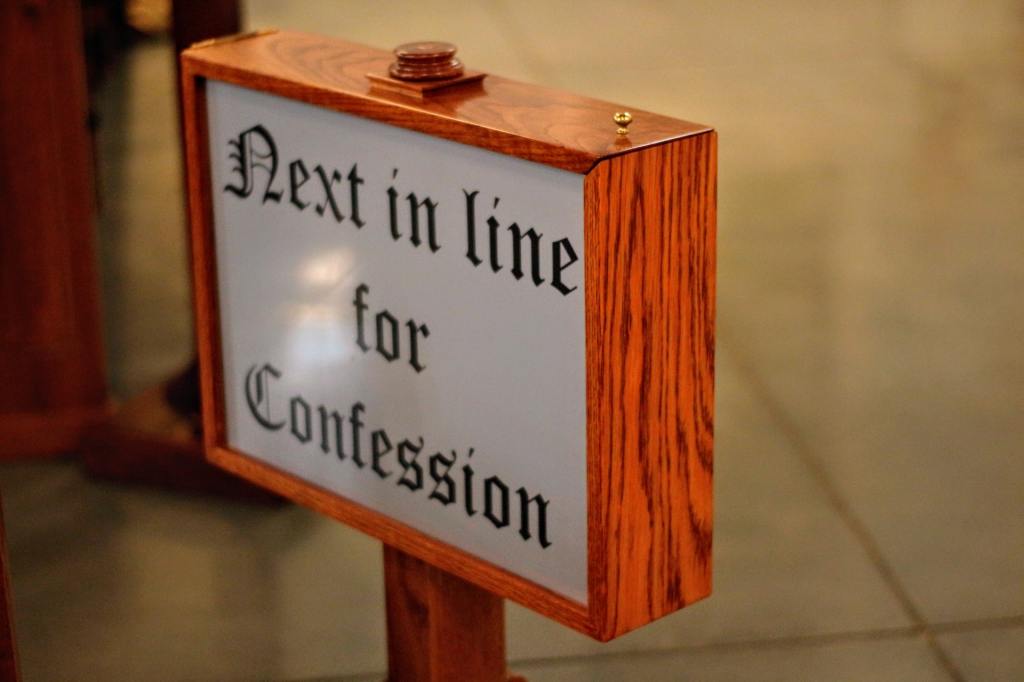
For some, the thought might be a simple private prayer, or for some a confessional booth.  For others, no specific images might come to mind, but just a feeling of someone “out to get you.”  I expect some of you thought of the Spanish Inquisition, or at least the Monty Python skit making fun of it[1].  Where do these ideas come from?

The blame belongs in many places: secular culture, bad experiences with church, an emphasis on external over internal religion, and even Monty Python comedy skits.  My fantasy baseball league even has a team named “Spanish Inquisition” because the manager of that team thinks no one expects him to win – not even himself.

The mocking of secular culture aside, confession is an uncomfortable topic even for sincere Christians.  In Humphrey Carpenter’s biography of J.R.R. Tolkien, he shares the tension over confession between Tolkien and his then-fiancée Edith.  Tolkien was a practicing Catholic, while Edith was a member of the Church of England.  They had agreed as a couple to be Catholic, but Edith “began to dislike making her confession.  It was therefore all too easy when she was worried about her health (which was often) to postpone going to mass. She reported to Ronald [Tolkien] that getting up to go to church early in the morning and fasting until she had made her communion did not agree with her.”  She insisted “my health won’t stand it.”[2]  In my own Protestant church, we have a weekly prayer of confession, which the pastor regularly defends the importance of.  Few of us probably look forward to confession, whatever form we practice it in.

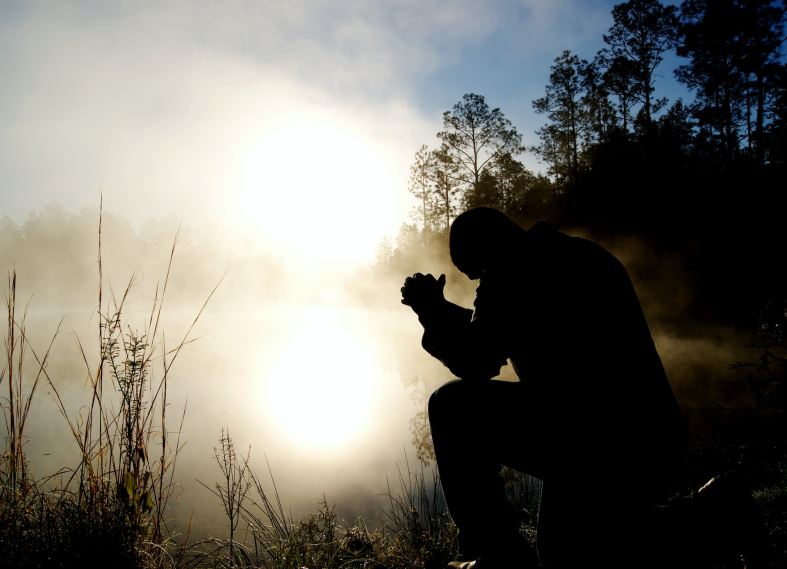
Photo by Shalone Cason on Unsplash

This discomfort with confession seems to be a shared part of mankind’s fallen nature, but if we look at well-known Bible verses on confession, we find that it is really about restoration, a rebirth of man’s relationship with God and a renewal of man to his ideal nature.  It is as different from God being “out to get you” as it could be.  1 John 1:9 encourages confession, because: “If we confess our sins, he is faithful and just to forgive us our sins and to cleanse us from all unrighteousness.”  God wants to give us forgiveness and cleansing, not condemnation and guilt.  Isaiah 1:18 explains this cleansing more poetically:

Come now, let us reason together, says the LORD:
though your sins are like scarlet,
            they shall be as white as snow;
though they are red like crimson,
            they shall become like wool.

Confession doesn’t need to be a dirty word.  The word “confess” means loosely to say the same thing about something, so confession means we agree with God (say the same thing he does) about sin – that it is bad.  But confession also applies to the rest of 1 John 1:9, that God “is faithful and just to forgive us our sins and to cleanse us from all unrighteousness.”  Full confession includes agreeing about the steadfast and dependable character of God, His faithfulness and justice, as well as His desire to forgive and cleanse.  If we doubt this desire, consider what He voluntarily suffered on the cross to provide for this forgiveness, and to demonstrate His enduring love.

By adding confession about the good things of God to our confession of our sin, our confession does not make us miserable about our own condition but shows us how different we are from what God wants for us, how deeply our sin needs to be corrected, and how wonderfully God has provided for the removal of sin.

But this does not come easily.  Referencing Hebrews 4:16, which says, “Let us then with confidence draw near to the throne of grace, that we may receive mercy and find grace to help in time of need,” Puritan preacher Thomas Watson wrote that “Christ went more willingly to the cross than we do to the throne of grace.”

Why is this?  Could it be that we have trouble whole-heartedly confessing that “he is faithful and just to forgive us our sins and to cleanse us from all unrighteousness”?  Monty Python joke that “nobody expects the Spanish Inquisition,” but do we fully expect God’s throne to be one of grace when we come to confess?


[1] If you’re not familiar with the skit, here’s a 4-minute example: https://youtu.be/Cj8n4MfhjUc
[2] Carpenter, Humphrey. Tolkien: A Biography.  (1977).  P. 68-69.
A Psalm of God’s Strength and Power

The Bible software I use (Accordance) has the ability to highlight text, but so far I’ve only used it once, for Psalm 21.  In just 13 verses, David wrote “you” or “your” 25 times, referring to God as the source of his success and blessings, past, present, and future.  The short 13 verses of Psalm 21 provide a plethora of praises we can offer to confess that God is powerful, faithful and just.  Here is the entire Psalm, and I’ve bolded all the “you”s and “your”s, which I highlighted in Accordance:

“To the choirmaster. A Psalm of David.

O LORD, in your strength the king rejoices,
            and in your salvation how greatly he exults!
You have given him his heart’s desire
            and have not withheld the request of his lips. Selah
For you meet him with rich blessings;
            you set a crown of fine gold upon his head.
He asked life of you; you gave it to him,
            length of days forever and ever.
His glory is great through your salvation;
            splendor and majesty you bestow on him.
For you make him most blessed forever;
            you make him glad with the joy of your presence.
For the king trusts in the LORD,
            and through the steadfast love of the Most High he shall not be moved.

Your hand will find out all your enemies;
            your right hand will find out those who hate you.
You will make them as a blazing oven
            when you appear.
The LORD will swallow them up in his wrath,
            and fire will consume them.
You will destroy their descendants from the earth,
            and their offspring from among the children of man.
Though they plan evil against you,
            though they devise mischief, they will not succeed.
For you will put them to flight;
            you will aim at their faces with your bows.

Be exalted, O LORD, in your strength!
            We will sing and praise your power.”

What statements did you focus on while reading this?  Did you take the time to think about all 25 “you” statements (and the rest of the Psalm)?  Read it again.

The first section in this Psalm describes how our God is “faithful” in some ways, and the second describes “just.”  The first may come easier, with David giving God credit for all of his strength and success, but the middle section on justice may come across as harsh and harder to swallow.  However, it reminds us that only He knows for sure who His (and our) enemies are.  “Your hand will find out all your enemies.”  Only He determines the fates of others, including some who look like enemies now, but will come to faith in Him later.  With any enemy we can “wait upon the Lord”, as David often urges us, knowing God will either save them, or their plans will come to ruin by His design.

Yet, for those in Christ, “he is faithful and just to forgive us our sins and to cleanse us from all unrighteousness.”  Therefore, we echo David:

“Be exalted, O LORD, in your strength!
            We will sing and praise your power.”

Confession: The Blessing Nobody Expects

What comes to mind when you think of confession?  Think about it for a moment.

For some, the thought might be a simple private prayer, or for some a confessional booth.  For others, no specific images might come to mind, but just a feeling of someone “out to get you.”  I expect some of you thought of the Spanish Inquisition, or at least the Monty Python skit making fun of it[1].  Where do these ideas come from?

The blame belongs in many places: secular culture, bad experiences with church, an emphasis on external over internal religion, and even Monty Python comedy skits.  My fantasy baseball league even has a team named “Spanish Inquisition” because the manager of that team thinks no one expects him to win – not even himself.

The mocking of secular culture aside, confession is an uncomfortable topic even for sincere Christians.  In Humphrey Carpenter’s biography of J.R.R. Tolkien, he shares the tension over confession between Tolkien and his then-fiancée Edith.  Tolkien was a practicing Catholic, while Edith was a member of the Church of England.  They had agreed as a couple to be Catholic, but Edith “began to dislike making her confession.  It was therefore all too easy when she was worried about her health (which was often) to postpone going to mass. She reported to Ronald [Tolkien] that getting up to go to church early in the morning and fasting until she had made her communion did not agree with her.”  She insisted “my health won’t stand it.”[2]  In my own Protestant church, we have a weekly prayer of confession, which the pastor regularly defends the importance of.  Few of us probably look forward to confession, whatever form we practice it in.

Photo by Shalone Cason on Unsplash

This discomfort with confession seems to be a shared part of mankind’s fallen nature, but if we look at well-known Bible verses on confession, we find that it is really about restoration, a rebirth of man’s relationship with God and a renewal of man to his ideal nature.  It is as different from God being “out to get you” as it could be.  1 John 1:9 encourages confession, because: “If we confess our sins, he is faithful and just to forgive us our sins and to cleanse us from all unrighteousness.”  God wants to give us forgiveness and cleansing, not condemnation and guilt.  Isaiah 1:18 explains this cleansing more poetically:

Come now, let us reason together, says the LORD:
though your sins are like scarlet,
            they shall be as white as snow;
though they are red like crimson,
            they shall become like wool.

Confession doesn’t need to be a dirty word.  The word “confess” means loosely to say the same thing about something, so confession means we agree with God (say the same thing he does) about sin – that it is bad.  But confession also applies to the rest of 1 John 1:9, that God “is faithful and just to forgive us our sins and to cleanse us from all unrighteousness.”  Full confession includes agreeing about the steadfast and dependable character of God, His faithfulness and justice, as well as His desire to forgive and cleanse.  If we doubt this desire, consider what He voluntarily suffered on the cross to provide for this forgiveness, and to demonstrate His enduring love.

By adding confession about the good things of God to our confession of our sin, our confession does not make us miserable about our own condition but shows us how different we are from what God wants for us, how deeply our sin needs to be corrected, and how wonderfully God has provided for the removal of sin.

But this does not come easily.  Referencing Hebrews 4:16, which says, “Let us then with confidence draw near to the throne of grace, that we may receive mercy and find grace to help in time of need,” Puritan preacher Thomas Watson wrote that “Christ went more willingly to the cross than we do to the throne of grace.”

Why is this?  Could it be that we have trouble whole-heartedly confessing that “he is faithful and just to forgive us our sins and to cleanse us from all unrighteousness”?  Monty Python joke that “nobody expects the Spanish Inquisition,” but do we fully expect God’s throne to be one of grace when we come to confess?


[1] If you’re not familiar with the skit, here’s a 4-minute example: https://youtu.be/Cj8n4MfhjUc
[2] Carpenter, Humphrey. Tolkien: A Biography.  (1977).  P. 68-69.