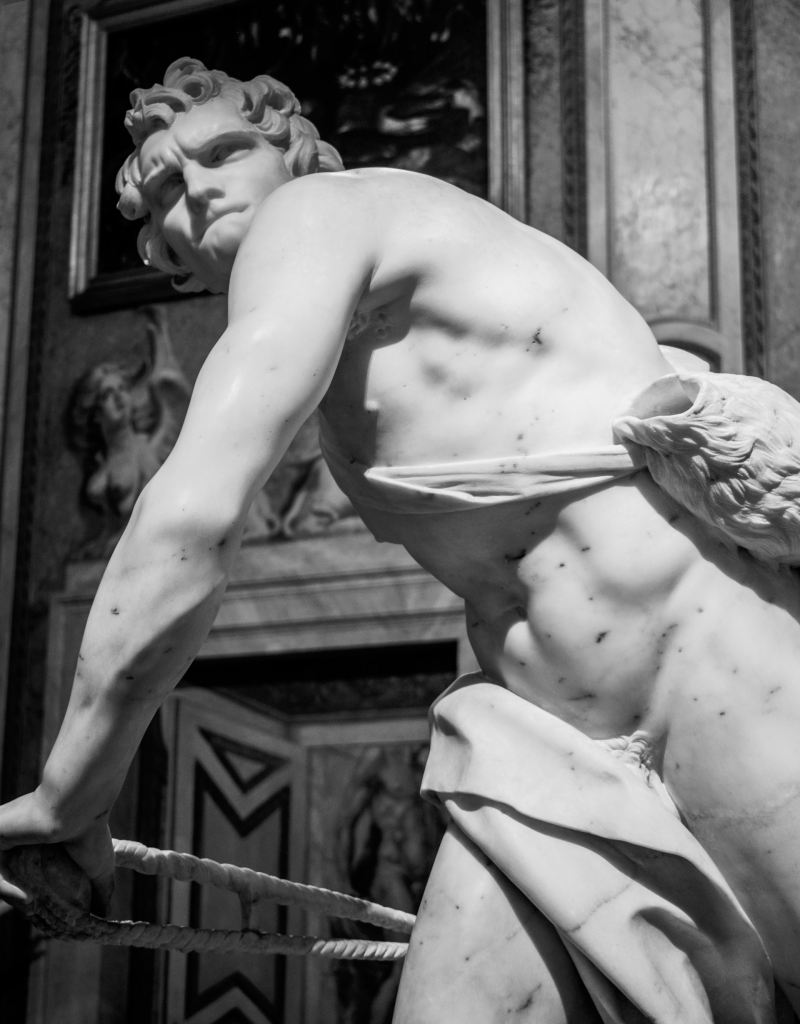
The Lord is Not Looking For “The Good Face”

One of my favorite books is Moneyball, which is about Billy Beane’s career as General Manager of the Oakland Athletics baseball team in the late 1990s and early 2000s.  Beane ran a winning team on a shoestring budget by pioneering the use of precise measurement, data, and analytics, in contrast to sometimes-arbitrary eyewitness reports from talent scouts.  Author Michael Lewis notes that in the late 1990s, “Some of the scouts still believed they could tell by the structure of a young man’s face not only his character but his future in pro ball. They had a phrase they used: ‘the Good Face.’”[1]  Billy Beane himself had “the Good Face” when he was a prospect and yet had a mediocre career as a player; therefore, his own career arc suggested that there might be a better way to find good players.

Reliance on “The Good Face” isn’t just a baseball phenomenon.  Many politicians, celebrities, businesspeople, news personalities, and others succeed by having “The Good Face,” but the Bible warns us not to rely on “The Good Face.”  One such warning is the story of King Saul, who was “a handsome young man. There was not a man among the people of Israel more handsome than he.  From his shoulders upward he was taller than any of the people.”[2]

Samuel, the LORD’s prophet, was impressed by Saul and was led to anoint him Israel’s king.  However, when Samuel called the people together to announce Saul’s rule, something strange happened: “So they inquired again of the LORD, ‘Is there a man still to come?’ and the LORD said, ‘Behold, he has hidden himself among the baggage.’”[3]  Saul should have responded “Here am I”, but instead shamefully hid.  Being so large, it must have taken some effort to find a place to hide, but he managed it in an attempt to avoid God’s call.  This became a pattern with Saul, because when Israel’s army was challenged by the giant Goliath, “Saul and all Israel heard these words of the Philistine, they were dismayed and greatly afraid.”[4]  Saul, while having “The Good Face,” was unwilling to trust God when He called.  He was faithless and a coward.  Perhaps “tall, dark, and handsome” but not useful to God, and not a good leader for God’s people.

When looking for Saul’s successor, Samuel, as God’s talent scout, almost repeated the mistake of picking “The Good Face.”  Samuel was to pick as king one of the sons of Jesse, and he wanted to pick Eliab after he “looked on” him.  “But the LORD said to Samuel, “Do not look on his appearance or on the height of his stature, because I have rejected him. For the LORD sees not as man sees: man looks on the outward appearance, but the LORD looks on the heart.[5]  After this warning, David, the youngest son of Jesse, is chosen as the next king.  David also had many admirable qualities, being not only handsome, but also “skillful in playing [the lyre], a man of valor, a man of war, prudent in speech, and a man of good presence,” but most importantly, others reported that “the LORD is with him[6] and it was true.  David knew that everything that really mattered about him came from God (see Psalm 139:13-16 for example) and he could only succeed by relying on Him.  If God called, he would come, and if the world challenged God, David would defend Him.  David slew Goliath without hesitation.

Today, the power of Christ living through us is what matters, not having “The Good Face.”  Therefore, be concerned about having “The Good Heart.”  Be not concerned about whether you are photogenic, or handsome, or tall, or well-dressed, or anything else the world may value.  According to the prophet Isaiah, even Jesus didn’t have “The Good Face”: “He had no form or majesty that we should look at Him, and no beauty that we should desire Him.” – Isaiah 53:2b

When God calls, come, and you will have “The Good Heart.”  When you fail, God, whose heart is perfect, will create in you a new clean heart[7], as David learned time and time again.

Therefore do not be anxious, saying, ‘What shall we eat?’ or ‘What shall we drink?’ or ‘What shall we wear?’  For the Gentiles seek after all these things, and your heavenly Father knows that you need them all.  But seek first the kingdom of God and his righteousness, and all these things will be added to you.” – Matthew 6:31-33


[1] Lewis, Michael.  Moneyball (2003).  P. 7.
[2] 1 Samuel 9:2
[3] 1 Samuel 10:22
[4] 1 Samuel 17:11
[5] 1 Samuel 16:7
[6] 1 Samuel 16:18
[7] Psalm 51:10

Give Up Your Lists

Today is part 3 of a series on the first Beatitude from Matthew 5:3 – “Blessed are the poor in spirit, for theirs is the kingdom of heaven.”  Monday covered how the statement could make both the “proud” and the “ashamed” humble and be blessed by God.  Tuesday was about the rich young man who was fully set on earning his own salvation to see that it was impossible, all while Christ was right before him, loving him and offering him salvation by grace.

Today begins with Luke 18:10-14 –

Two men went up into the temple to pray, one a Pharisee and the other a tax collector.  The Pharisee, standing by himself, prayed thus: ‘God, I thank you that I am not like other men, extortioners, unjust, adulterers, or even like this tax collector.  I fast twice a week; I give tithes of all that I get.’  But the tax collector, standing far off, would not even lift up his eyes to heaven, but beat his breast, saying, ‘God, be merciful to me, a sinner!’  I tell you, this man went down to his house justified, rather than the other. For everyone who exalts himself will be humbled, but the one who humbles himself will be exalted.

Similar to Monday’s post, this passage is a rebuke to the proud, while comforting the ashamed, which is made clear at the end of these verses.  This passage also plays on stereotypes of the Pharisee as one who would have been perceived as religiously superior, versus the tax collector, who was under the ban, or that time period’s rabbinic version of excommunication[1].  At the end of the first sentence, the audience would have been expecting the Pharisee to pray well – after all, they were the “experts.”  But as an “expert” in the law, the Pharisee prays (and thinks) in terms of lists of good things and lists of bad things.  As a result, he is able to credit himself with all good things and the tax collector with all bad things because his lists aren’t complete.

The Pharisee manages this level of pride in spiritual accomplishment by narrowing down his list of sins to “things that other people do.”  He also excluded more subtle or internal manifestations of sin from his lists.  For example, at other times, Jesus said Pharisees “devour widow’s houses,”[2] which may have been a form of extortion.  Also, in his heart he may have been unjust and an adulterer just by making this prayer – judging the tax collector and misrepresenting God.  God’s justice on the tax collector was poured out on Jesus – who was this Pharisee to say who that justice applied to?  Also, in over-emphasizing the law, the Pharisee was “cheating” on God by idolizing the law as a way to salvation.

By narrowing the list of sins to “what others do,” and reducing those sins to the external evidence of them, rather than the heart level, this Pharisee blinded himself to his own need, and therefore missed the blessing of the Beatitude.  The only way to feel rich in spirit before God is to lower the standard, or to humbly accept Christ’s righteousness – the riches of His spirit – in place of your own.

In Psalm 51, King David wrote of his repentance after committing adultery with Bathsheba and having her husband Uriah killed in verses 16-17:

For you will not delight in sacrifice, or I would give it;
            you will not be pleased with a burnt offering.
The sacrifices of God are a broken spirit;
            a broken and contrite heart, O God, you will not despise.

This broken spirit and contrite heart recall the first Beatitude’s promise of blessing and the ability to follow God’s will, which David prayed for back in verse 12 of Psalm 51:

Restore to me the joy of your salvation,
            and uphold me with a willing spirit.

We can’t constantly compare our record of our sins with our record of the sins of others if we want to receive God’s blessing.  Our records are always incomplete and biased.  Doing so is only likely to destroy our ability to love those who God loves and to whom He offers His grace, including ourselves.  We are poor in spirit, but we only realize it when focusing on Him, and we only are blessed when we decide His standard and opinion are the ones that matter.  If we are Christians, the standard is Christ and through our adoption as children of God, He sees Christ’s righteousness when He gives His opinion of us.

Humbly knowing this, we can go to our house justified, and in eternity be exalted by Him, the only one we should compare ourselves to and the only one whose judgement matters.  For now, this humility enables us to love God and love others as we love ourselves.

To find joy, give up your lists of sins and replace them with Christ.

Blessed are the poor in spirit, for theirs is the kingdom of heaven.” – Matthew 5:3


[1] See an earlier post, Found! A Man in Need of an Ally, for an explanation of the ban as applied to tax collectors, and for Jesus’ striking decision to forgive Zacchaeus, a chief tax collector.
[2] Mark 12:40; Luke 20:47

Faithful Affliction

Sometimes the Bible surprises us by explaining things differently than how our natural instincts would like.  In the case of Psalm 119:75, there are two words that we might not think of together:

“I know, O LORD, that your rules are righteous,
            and that in faithfulness you have afflicted me.”

How often do we associate God’s faithfulness with affliction?  Don’t we usually associate it with our blessings?  Yet there it is: “in faithfulness you have afflicted me.”

Earlier, in verse 71, David wrote:

“It is good for me that I was afflicted,
                        that I might learn your statutes.”

Then he says the benefit he gets from learning this is more than “thousands of gold and silver pieces”. Since we benefit from discipline, would God be unfaithful if He did not discipline us?  Or do we only consider Him faithful when things seem to go well?

My son, do not despise the LORD’S discipline
            or be weary of his reproof,
for the LORD reproves him whom he loves,
            as a father the son in whom he delights.” – Proverbs 3:11-12

He is faithful, always.  Even in affliction.  Perhaps especially.

“Let Not the Flood Sweep Over Me”

Yesterday’s post was about Jeremiah’s comparison of false religion to a broken cistern, with God alternatively being “the fountain of living waters.”[1]  Jeremiah lived when most of God’s people – including most of the priests and prophets – had turned from Him to follow other gods.  As Jeremiah remained faithful, correctly predicting that Jerusalem would fall to Babylon, he was persecuted, including this instance in Jeremiah 38:6, where King Zedekiah’s officials “took Jeremiah and cast him into the cistern of Malchiah, the king’s son, which was in the court of the guard, letting Jeremiah down by ropes. And there was no water in the cistern, but only mud, and Jeremiah sank in the mud.”

Since God is “the fountain of living waters,” the only path to eternal blessing, it’s incredibly ironic that Jeremiah, one of the few remaining faithful prophets and therefore a rare source of God’s “living waters,” should be cast into a cistern with no water.  Perhaps it was broken.  King Zedekiah thought he could silence the “living waters” Jeremiah represented by casting them into a cistern, trading truth for falsehood.

Photo by Mishal Ibrahim on Unsplash

Later, Jeremiah seems to recall the cistern experience in Lamentations 3:52-57, where he said:

I have been hunted like a bird
            by those who were my enemies without cause;
they flung me alive into the pit
            and cast stones on me;
water closed over my head;
            I said, ‘I am lost.’
‘I called on your name, O LORD,
            from the depths of the pit;
you heard my plea, ‘Do not close
            your ear to my cry for help!’
You came near when I called on you;
            you said, ‘Do not fear!’”

Returning to the book of Jeremiah, we read that Ebed-melech, an Ethiopian eunuch, heard of Jeremiah’s situation and pleaded his case: “My lord the king, these men have done evil in all that they did to Jeremiah the prophet by casting him into the cistern, and he will die there of hunger, for there is no bread left in the city.”[2]  This unlikely source – a foreigner – was Jeremiah’s deliverance from God to rescue Jeremiah from the well.  Ebed-melech gathered 30 men, “Then they drew Jeremiah up with ropes and lifted him out of the cistern. And Jeremiah remained in the court of the guard.”

Jeremiah was not the only Old Testament figure to suffer for his faithfulness.  Many years earlier, King David also referred to “sinking in the mire” in the Messianic Psalm 69, verses 14-15:

“Deliver me
            from sinking in the mire;
let me be delivered from my enemies
            and from the deep waters.
Let not the flood sweep over me,
            or the deep swallow me up,
            or the pit close its mouth over me.”

David knew this feeling of sinking came not because of his sin, but when he was faithfully serving his Lord.  David’s “sinking in the mire” happened under these circumstances from verse 9 of the same Psalm:

For zeal for your house has consumed me,
            and the reproaches of those who reproach you have fallen on me.”

In Jeremiah’s case, as well as David’s and that of Jesus, whom Psalm 69 foreshadowed[3], we know that cannot judge our faithfulness based on whether it improves our circumstances.  When we do, we might stop being faithful because it seems we are “sinking in the mire.”  Being reproached by the world and feeling down aren’t the circumstances we prefer, but “Blessed are those who are persecuted for righteousness’ sake, for theirs is the kingdom of heaven.”[4]  Through these and all other circumstances, God develops in us deeper trust in Him.

Therefore, with David may we pray:

But as for me, my prayer is to you, O LORD.
            At an acceptable time, O God,
            in the abundance of your steadfast love answer me in your saving faithfulness.” – Psalm 69:13

And in His time, He will deliver us, perhaps in ways we don’t expect.

Coda

In 1995, Christian rock group Jars of Clay released their self-titled album, and the track “Flood” has similar themes to this post.  The song was also a mainstream hit, charting as high as No. 12 on the Billboard Modern Rock Tracks chart,[5] amazing for a song that is essentially a prayer like David’s in Psalm 69.

You can check out the song’s lyrics here: https://genius.com/Jars-of-clay-flood-lyrics

Or, if you have 3 ½ minutes, watch the music video here:


[1] Jeremiah 3:13
[2] Jeremiah 38:9
[3] John 2:17, 15:25, Acts 1:20, Romans 11:9-10, 15:3
[4] Matthew 5:10
[5] https://en.wikipedia.org/wiki/Flood_(Jars_of_Clay_song)

Politics Didn’t Keep King David Up at Night

In the United States, we just had midterm elections, those falling between the presidential elections that happen every 4 years.  The end result of government divided between Democrats and Republicans likely has many wishing their preferred side had more power.  This post is a slightly edited version of one from this April, when anxiety about these elections began to heat up.  While in Psalm 2, God declares “As for me, I have set my King on Zion, my holy hill,” where He laughs at the kings and rulers of the world who stand against Him, that declaration may be harder to take when events don’t appear to go our way.  Psalm 3, “A Psalm of David, when he fled from Absalom his son,” follows, and I don’t think it’s an accident because it records God’s king at the time, David, lamenting about being chased from power by his own son.  The story may provide comfort when things don’t look to be going God’s way here on earth.

Absalom’s Rebellion
The story of King David in the Bible is a very condensed version of his life but does not shy away from David’s serious failures and flaws.  The story of his adulterous relationship with Bathsheba is not swept under the rug, and eventually, Absalom’s rebellion against his father David was justified in his mind by those flaws.  Absalom harbored resentment for years after David’s lack of punishment for Absalom’s brother Amnon, who raped his sister Tamar.  One can imagine Absalom thinking about his father: “You’re the king of Israel, so why didn’t you protect Tamar, or at least punish Amnon?  If my sister and I don’t get justice, you don’t deserve to be king!”

David, on the other hand, was quite aware of the limits of being king.  In Psalm 131:1, David wrote:

O LORD, my heart is not lifted up;
            my eyes are not raised too high;
I do not occupy myself with things
            too great and too marvelous for me.

Even while writing as divinely selected king of Israel, David knew many things were “too great and too marvelous” even for him.  Instead, David focused his heart on the God-given task before him, which did not include achieving perfection in this world.  That task belonged elsewhere.  Later, Psalm 131 was included in the Psalms (or Songs) of Ascent[1], which served as a liturgy for pilgrims traveling to Jerusalem for the three annual festivals.  In those Psalms are reminders of God’s provision for things the world can’t provide, including salvation for our souls and a way to perfect righteousness.  The pilgrims did not go to Jerusalem to worship the earthly king, but to encounter God, and including Psalm 131 in that liturgy would always be a reminder that our worldly aims should always be rooted in humility.

When Absalom raised several hundred supporters and entered Jerusalem to violently overthrow his father David, “a messenger came to David, saying, ‘The hearts of the men of Israel have gone after Absalom.’ Then David said to all his servants who were with him at Jerusalem, ‘Arise, and let us flee, or else there will be no escape for us from Absalom. Go quickly, lest he overtake us quickly and bring down ruin on us and strike the city with the edge of the sword.’”  (2 Samuel 15:13-14)

David’s Response
After surrendering the throne and fleeing, David wrote Psalm 3, “A Psalm of David, when he fled from Absalom his son,” which says in full:

“O LORD, how many are my foes!
            Many are rising against me;
many are saying of my soul,
            “There is no salvation for him in God.” Selah
But you, O LORD, are a shield about me,
            my glory, and the lifter of my head.
I cried aloud to the LORD,
            and he answered me from his holy hill. Selah
I lay down and slept;
            I woke again, for the LORD sustained me.
I will not be afraid of many thousands of people
            who have set themselves against me all around.
Arise, O LORD!
            Save me, O my God!
For you strike all my enemies on the cheek;
            you break the teeth of the wicked.
Salvation belongs to the LORD;
            your blessing be on your people! Selah”

Knowing the background of this Psalm and its placement after Psalm 2 make it far more interesting.  David had suffered a massive political defeat, being humiliated and tossed out of Jerusalem by his own son.  Instead of despairing, he turned to God for his salvation because he knew even the king of Israel could not save the people.  He was only a temporary and provincial authority.  Even though God had promised David the throne, God was able to save David, and Israel, without David on the throne.  With the murderous and vengeful Absalom on the throne, was God defeated?  No, instead we have this Psalm as a reminder of God’s presence and provision of salvation in spite of whatever situation we find ourselves in.

David, having cultivated over years an awareness of his own limitations as king of Israel, and the limitless power of God, “lay down and slept,” then “woke again, for the LORD sustained me.”  Surrounded by foes and removed from his throne, David slept soundly!  In contrast, Absalom broods upon every imperfection, plotting ways to force justice as he sees it on others, even if he must dishonor God.  You could say he is driven by a belief in a government that can solve all of our problems and shouldn’t rest until it does.

Conclusion
Jesus was not our midterm ballots, but flawed candidates of many types were.  Some more like David, and some more like Absalom.  A lesson from Psalm 3 is that we should be able to sleep at night in good conscience because no matter what the world looks like, God says “I have set my King on Zion, my holy hill” (Psalm 2:6) even when king David was on the run for his life.

The success of God’s plan does not rely on our political success. “Salvation belongs to the LORD” and He deserves our vote every time.


[1] I’m currently writing about those Psalms in a series, which began here.