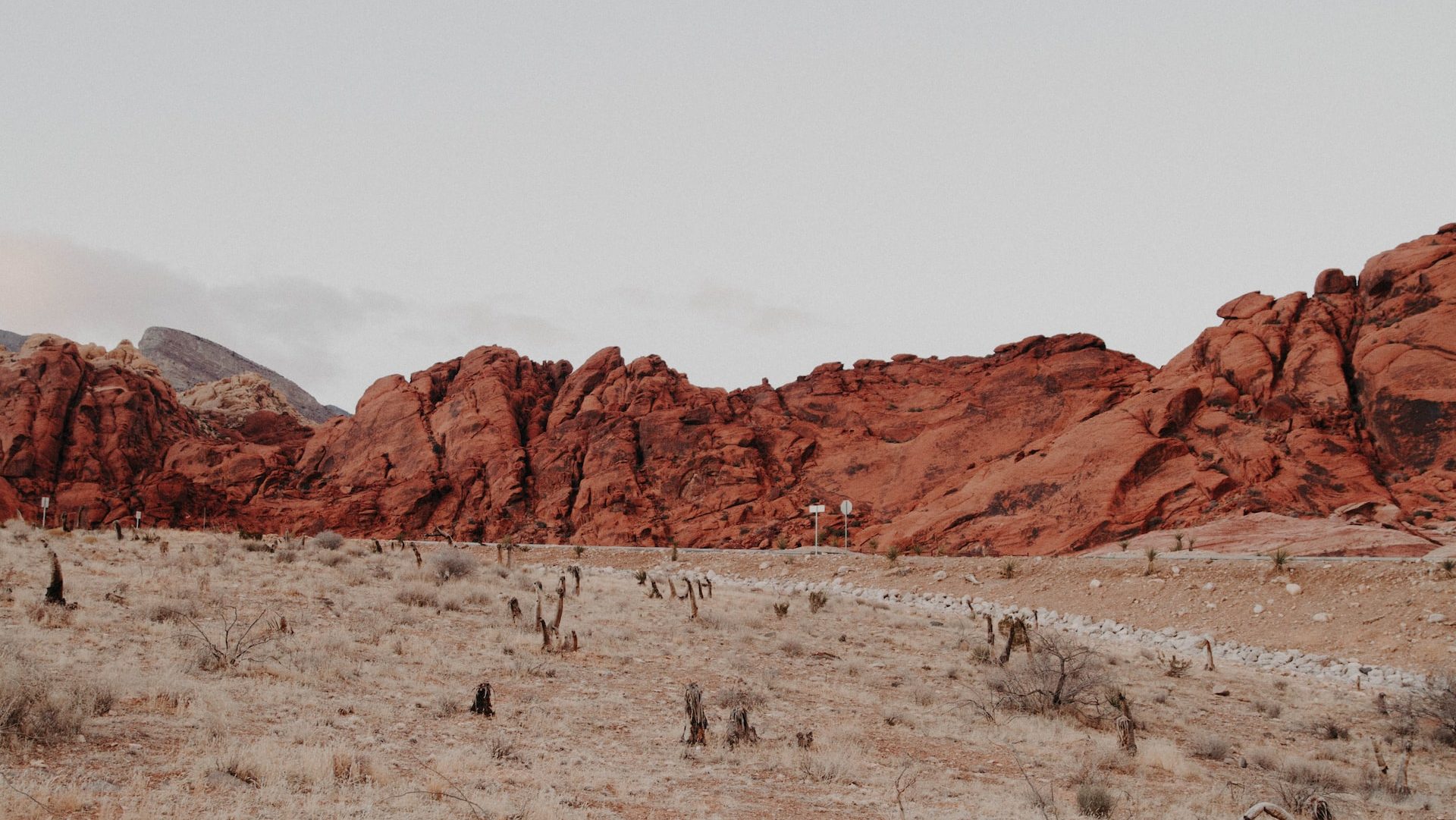
An Ebenezer in the Sky

Photo by Stainless Images on Unsplash

Ebenezer the squirrel, the blog’s mascot, represents memorials of God’s intervention in the world and in our lives.  The times when He changes the course of events, and when the narrative is changed by the words “but God.”  In the ESV Bible, this phrase appears 43 times, including:

But God remembered Noah and all the beasts and all the livestock that were with him in the ark. And God made a wind blow over the earth, and the waters subsided.” – Genesis 8:1

The phrase first was used in Genesis 3:3, when Eve says to the serpent, “but God said, ‘You shall not eat of the fruit of the tree that is in the midst of the garden, neither shall you touch it, lest you die.’”  As we know, Adam and Eve fell to temptation, eating the fruit and therefore providing us a warning that we should live by God’s words, not just quote them.

However, the second time we see “but God” it is a reminder that God intervenes to save sinners.  Sin started with one rejection of God’s word, but by Noah’s time, “the earth was corrupt in God’s sight, and the earth was filled with violence.  And God saw the earth, and behold, it was corrupt, for all flesh had corrupted their way on the earth.[1]  God had Noah build an ark for his family to escape the coming flood of judgement, and the last verse before Genesis 8:1 says, “the waters prevailed on the earth 150 days.[2]  Even for Noah and his family, the ones God chose to save, 5 months alone in an ark may not have felt like salvation.  “But God…made a wind blow over the earth, and the waters subsided.

Today, if salvation seems far away, if the flood around us feels like it’s not going away, even if it’s been months since we’ve had a “good day”, God gave us an Ebenezer especially for this occasion: the rainbow.  Genesis 9:14-16 says:

When I bring clouds over the earth and the bow is seen in the clouds, I will remember my covenant that is between me and you and every living creature of all flesh. And the waters shall never again become a flood to destroy all flesh.  When the bow is in the clouds, I will see it and remember the everlasting covenant between God and every living creature of all flesh that is on the earth.

When you see a rainbow, in the sky or anywhere, remember it as a sign of God’s love for His people, for sinners who rejected Him, but who He chose to save anyway.  He will deliver all of God’s children from the flood because His covenant is everlasting.

Also, keep an eye out for Ebenezer (still the blog’s mascot) as an ongoing series here, covering the 43 direct “but God” references, but also others.


[1] Genesis 6:11-12
[2] Genesis 7:24

The Reality of Depression

October 10 is World Mental Health Day, a time to raise awareness globally about its importance.  In his commentary on 2 Corinthians 1, Warren Wiersbe wrote on the subject of depression:[1]

“’You seem to imagine that I have no ups and downs, but just a level and lofty stretch of spiritual attainment with unbroken joy and equanimity. By no means! I am often perfectly wretched and everything appears most murky.’
So wrote the man who was called in his day ‘The Greatest Preacher in the English-speaking World’ – Dr. John Henry Jowett. He pastored leading churches, preached to huge congregations, and wrote books that were best sellers.

‘I am the subject of depressions of spirit so fearful that I hope none of you ever get to such extremes of wretchedness as I go to.’
Those words were spoken in a sermon by Charles Haddon Spurgeon whose marvelous ministry in London made him perhaps the greatest preacher England ever produced.”

Depression is real and is not a sign of spiritual failure, as shown by these quotes by people we might consider spiritual giants.  Therefore, how should we respond?  This next quote points us in a good direction:

“People don’t fake depression…they fake being ok.  Remember that.  Be kind.” – unknown


[1] Wiersbe, Warren.  Be Encouraged (2 Corinthians) (1994).

On Spiritual Mood Swings

Photo by Kenny Eliason on Unsplash

Life is often a battle with inconsistency.  We go from feeling good about our situations and God’s favor, to feeling like we are in a spiritual desert, and back again like a pendulum.  Knowing this, God provides verses like Psalm 126:4-6, which says:

Restore our fortunes, O LORD,
            like streams in the Negeb!
Those who sow in tears
            shall reap with shouts of joy!
He who goes out weeping,
            bearing the seed for sowing,
shall come home with shouts of joy,
            bringing his sheaves with him.

The metaphor is a comparison to the south of Israel, which has a very dry climate, yet experiences flooding in a rainstorm.  The Negeb also is mentioned in the story of Caleb and his daughter Achsah.  Her inherited land was in the infertile Negeb, and she asks him also for springs of water, which he gives her.[1]

Like Achsah’s father Caleb, our Father God also provides for us in our seasons of trouble.  Here, the Psalmist compares tears to seeds, reminding us that in the dry times as well as the times of overflowing blessing, God is with us, using those circumstances.  Our current loss is future gain, and our current time of suffering is bound and measured by God’s will, like the Babylonian exile was measured at 70 years[2] and the year of Jubilee came after every 49 years[3].  After our time, we will enter His rest and rejoice eternally.

In this life we may experience spiritual and emotional extremes, like drought and flood in the desert.  Don’t overreact to the pendulum swing but count your tears as seeds.  Pray that He will restore your fortunes and thank Him that our seasons are in His hands.

Blessed are those who mourn, for they shall be comforted.” – Matthew 5:4


[1] Joshua 15:18-19
[2] Daniel 9:2, 9:24
[3] Leviticus 25:8

Let God Speak to Your Inner Wilderness

John the Baptist announced the coming of Jesus, baptized Him, and led the way for His ministry to begin.  This John was identified with “The voice of one crying in the wilderness: ‘Prepare the way of the Lord; make his paths straight’”[1] prophesied in Isaiah 40:3-5, which says:

A voice cries: ‘In the wilderness prepare the way of the LORD;
            make straight in the desert a highway for our God.
Every valley shall be lifted up,
            and every mountain and hill be made low;
the uneven ground shall become level,
            and the rough places a plain.
And the glory of the LORD shall be revealed,
            and all flesh shall see it together,
            for the mouth of the LORD has spoken.’”

Is Isaiah talking about a massive, miraculous geological event, creating an easier route for Jesus to take to His kingdom?  Perhaps in the future something like this will happen, but I think Isaiah is saying that God’s power over nature is a symbol of His power to reform and perfect us into the character of His Son Jesus.

Before Jesus comes into our lives, we are a spiritual wilderness full of uneven ground and rough places.  The path of our salvation begins in this wilderness, an unorganized chaos of thoughts and desires.  We are like “children, tossed to and fro by the waves and carried about by every wind of doctrine, by human cunning, by craftiness in deceitful schemes.”  However, the power of the LORD enters our low valleys – our guilty secrets, shame and depression – which will be raised up.  It progresses through our mountains and hills – areas of pride, self-sufficiency, and our desire for power – which will be made low.  God, with the same power that created the universe, removes all obstacles to the coming of His kingdom to us, and to the world.  He has given us His word, His Spirit, and fellow believers to strengthen us, “until we all attain to the unity of the faith and of the knowledge of the Son of God, to mature manhood, to the measure of the stature of the fullness of Christ, so that we may no longer be children, tossed to and fro by the waves and carried about by every wind of doctrine, by human cunning, by craftiness in deceitful schemes.”  (Ephesians 4:13-14)

John the Baptist called his followers to confession and repentance.  In announcing the coming of the kingdom of God, John anticipated a time when our internal and external wildernesses will become a paradise.  Until then, we each have different hills and valleys, different uneven and rough areas.  Until then, the world remains full of false doctrine, cunning, craftiness and deceit.

Today, pray that the powerful voice of our LORD will reach into your wilderness and remove obstacles on the path to His kingdom.  Pray that His word and His Spirit will reveal His glory.  Pray that all believers will answer the call of “the voice of one crying in the wilderness” to build up His church.

Amen.


[1] Isaiah 40:3, quoted in Matthew 4:3.

“Let Not the Flood Sweep Over Me”

Yesterday’s post was about Jeremiah’s comparison of false religion to a broken cistern, with God alternatively being “the fountain of living waters.”[1]  Jeremiah lived when most of God’s people – including most of the priests and prophets – had turned from Him to follow other gods.  As Jeremiah remained faithful, correctly predicting that Jerusalem would fall to Babylon, he was persecuted, including this instance in Jeremiah 38:6, where King Zedekiah’s officials “took Jeremiah and cast him into the cistern of Malchiah, the king’s son, which was in the court of the guard, letting Jeremiah down by ropes. And there was no water in the cistern, but only mud, and Jeremiah sank in the mud.”

Since God is “the fountain of living waters,” the only path to eternal blessing, it’s incredibly ironic that Jeremiah, one of the few remaining faithful prophets and therefore a rare source of God’s “living waters,” should be cast into a cistern with no water.  Perhaps it was broken.  King Zedekiah thought he could silence the “living waters” Jeremiah represented by casting them into a cistern, trading truth for falsehood.

Photo by Mishal Ibrahim on Unsplash

Later, Jeremiah seems to recall the cistern experience in Lamentations 3:52-57, where he said:

I have been hunted like a bird
            by those who were my enemies without cause;
they flung me alive into the pit
            and cast stones on me;
water closed over my head;
            I said, ‘I am lost.’
‘I called on your name, O LORD,
            from the depths of the pit;
you heard my plea, ‘Do not close
            your ear to my cry for help!’
You came near when I called on you;
            you said, ‘Do not fear!’”

Returning to the book of Jeremiah, we read that Ebed-melech, an Ethiopian eunuch, heard of Jeremiah’s situation and pleaded his case: “My lord the king, these men have done evil in all that they did to Jeremiah the prophet by casting him into the cistern, and he will die there of hunger, for there is no bread left in the city.”[2]  This unlikely source – a foreigner – was Jeremiah’s deliverance from God to rescue Jeremiah from the well.  Ebed-melech gathered 30 men, “Then they drew Jeremiah up with ropes and lifted him out of the cistern. And Jeremiah remained in the court of the guard.”

Jeremiah was not the only Old Testament figure to suffer for his faithfulness.  Many years earlier, King David also referred to “sinking in the mire” in the Messianic Psalm 69, verses 14-15:

“Deliver me
            from sinking in the mire;
let me be delivered from my enemies
            and from the deep waters.
Let not the flood sweep over me,
            or the deep swallow me up,
            or the pit close its mouth over me.”

David knew this feeling of sinking came not because of his sin, but when he was faithfully serving his Lord.  David’s “sinking in the mire” happened under these circumstances from verse 9 of the same Psalm:

For zeal for your house has consumed me,
            and the reproaches of those who reproach you have fallen on me.”

In Jeremiah’s case, as well as David’s and that of Jesus, whom Psalm 69 foreshadowed[3], we know that cannot judge our faithfulness based on whether it improves our circumstances.  When we do, we might stop being faithful because it seems we are “sinking in the mire.”  Being reproached by the world and feeling down aren’t the circumstances we prefer, but “Blessed are those who are persecuted for righteousness’ sake, for theirs is the kingdom of heaven.”[4]  Through these and all other circumstances, God develops in us deeper trust in Him.

Therefore, with David may we pray:

But as for me, my prayer is to you, O LORD.
            At an acceptable time, O God,
            in the abundance of your steadfast love answer me in your saving faithfulness.” – Psalm 69:13

And in His time, He will deliver us, perhaps in ways we don’t expect.

Coda

In 1995, Christian rock group Jars of Clay released their self-titled album, and the track “Flood” has similar themes to this post.  The song was also a mainstream hit, charting as high as No. 12 on the Billboard Modern Rock Tracks chart,[5] amazing for a song that is essentially a prayer like David’s in Psalm 69.

You can check out the song’s lyrics here: https://genius.com/Jars-of-clay-flood-lyrics

Or, if you have 3 ½ minutes, watch the music video here:


[1] Jeremiah 3:13
[2] Jeremiah 38:9
[3] John 2:17, 15:25, Acts 1:20, Romans 11:9-10, 15:3
[4] Matthew 5:10
[5] https://en.wikipedia.org/wiki/Flood_(Jars_of_Clay_song)