The Lord Cares Even for Your Wilderness

If you are like me, some days feel very eventful and productive, but other days remind me of the saying: “If a tree falls in a forest and no one is around to hear it, does it make a sound?”  There are times when we all wonder: Who cares about what I did today?  Did today matter?  Did anyone notice?

When recently reading Psalm 29, verse 8 struck me, which says: “The voice of the Lord shakes the wilderness; the Lord shakes the wilderness of Kadesh.”  Why is this verse here?  Earlier in the Psalm, the voice of the Lord thunders, shatters the tall cedars of Lebanon, and flashes like fire.  Who cares about the wilderness?  It reminded me of the tree falling with nobody around.  Why does it matter?

It matters because the Psalmist (David) wants us to know that God’s power exists even where we can’t see it and in ways we may see as inconsequential.  However, to Him, nothing is inconsequential, and no detail is too small.  Jesus tells us in Matthew 10:30 that “even the hairs of your head are all numbered.”  If a tree falls in the wilderness, God cares about it even if nobody else does.

Psalm 29 closes with “May the LORD give strength to his people!  May the LORD bless his people with peace!”  His strength and peace are available on good days and bad.  On days we feel motivated and days we don’t.  On eventful days and on days we feel we are in the wilderness with nobody to hear.

Today, God will notice you, and will work in ways that you may only know when you look back on them from eternity.  No tree falls without His knowing about it.

May His strength and peace be with you always.

“God is always doing 10,000 things in your life, and you may be aware of three of them.” – John Piper

God Equips Those He Calls

When Jeremiah was called to serve as a prophet in the Old Testament, God told him he was literally made for it in Jeremiah 1:5 –

‘Before I formed you in the womb I knew you,
            and before you were born I consecrated you;
            I appointed you a prophet to the nations.’”

However, Jeremiah’s response was not an enthusiastic one.  Jeremiah 1:6-8 records this exchange:

“Then I said, ‘Ah, Lord GOD! Behold, I do not know how to speak, for I am only a youth.’  But the LORD said to me,
            ‘Do not say, ‘I am only a youth’;
            for to all to whom I send you, you shall go,
            and whatever I command you, you shall speak.’”

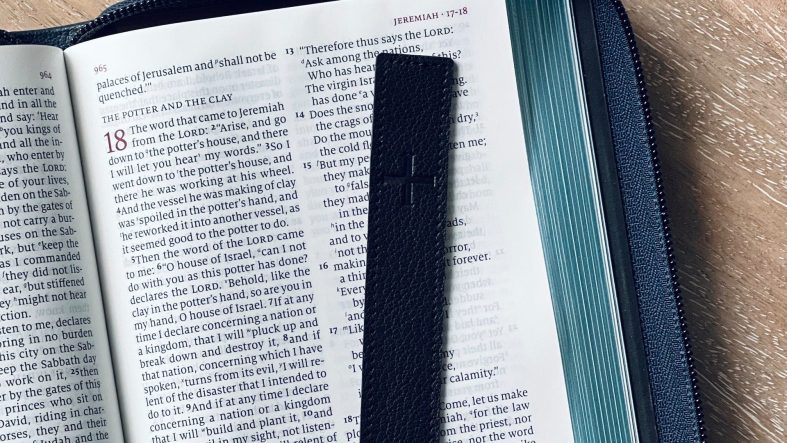
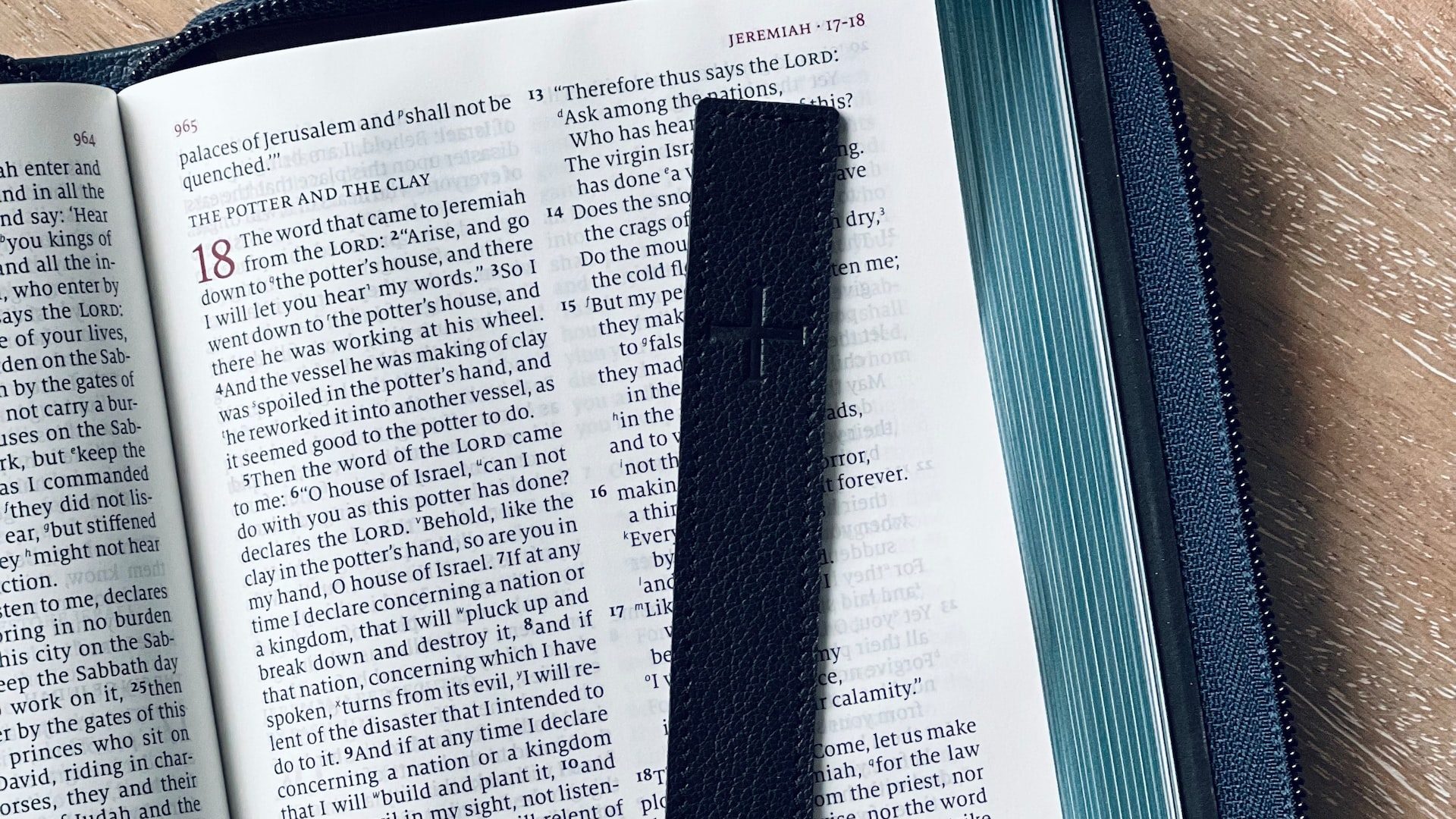
Photo by Tim Wildsmith on Unsplash

Even though God had just said “Before I formed you in the womb I knew you,” Jeremiah objects that he was too young and did not have the natural ability required for the job.  Maybe he doubted anyone would listen to him, so God must have the wrong guy.  God doesn’t disagree that Jeremiah was young (he already knew that), but knows that God’s ability is what matters, not Jeremiah’s.  God knew that someday you and I would be reading Jeremiah’s words regardless of his own youth or ability.  God never picks the wrong person for the job.

But if “All Scripture is breathed out by God and profitable for teaching, for reproof, for correction, and for training in righteousness,”[1] why does the Scripture tell us that one of its own authors doubted and questioned God Himself?

The answer of course, is “for teaching, for reproof, for correction, and for training in righteousness.”  We should learn not only from Jeremiah’s prophecies to the people of his time, but also from His experience with God.  In hindsight, we think that because Jeremiah is a book of the Bible, of course he was able to do the work God gave him, but in the moment of his call, Jeremiah had no idea.  So, when we think our ability is not enough for the job at hand, we should remember Jeremiah’s youth and remember that “God does not call the equipped; He equips the called,” as the saying goes.  Jeremiah learned this from his own experience, and we may learn from it as well because the Bible records it.

Also, God shows us Jeremiah’s flaws to comfort us when we feel inadequate, not only in ability but also in faith.  Even if we know that “God does not call the equipped; He equips the called,” we don’t always act on that knowledge.  Jeremiah doubts not only his call, but there are other examples, including when he questions why he should buy a field the Babylonians were about to seize.[2]  Doubt is not something that only some Christians feel – we are not alone in our weakness.  Even the Bible’s own authors had doubt because they could not see as God sees.

God is patient when we are honest with Him about our doubts, but He is also honest with us when He says we were literally made to serve Him.  No Christian is inadequate for the work God gives them, for in His power He accomplishes what He wants. He has no doubts and is faithful in providing everything we need.

Sometimes God sends us before we think we are ready, so we can learn to put our confidence in the right place like Paul, who wrote: “I can do all things through Him who strengthens me.” – Philippians 4:13


[1] 2 Timothy 3:16
[2] The story is in Jeremiah 32, which I covered in an earlier post, here.

The God Who is Never Inadequate

Once upon a time, “Moses was keeping the flock of his father-in-law, Jethro, the priest of Midian, and he led his flock to the west side of the wilderness and came to Horeb, the mountain of God.”[1]  It seemed like a normal day for a shepherd until he saw a burning bush, but not any burning bush.  This one, though on fire, was not consumed by the fire.  As anyone would, Moses was curious and stopped to look.  Then, “When the LORD saw that he turned aside to see, God called to him out of the bush, ‘Moses, Moses!’ And he said, ‘Here I am.’”[2] [emphasis mine]

But just a few verses later, “Moses said to God, ‘Who am I that I should go to Pharaoh and bring the children of Israel out of Egypt?’”[3]  Moses’ “Here I am” quickly became a “Who am I,” and why?  Because God had spoken to Moses from the bush saying that He had come to deliver the Jews from their affliction as slaves under the Egyptians.  God wanted Moses to be His representative before Pharaoh, but Moses objected not just this one time, but three more times:

Then Moses said to God, ‘If I come to the people of Israel and say to them, ‘The God of your fathers has sent me to you,’ and they ask me, ‘What is his name?’ what shall I say to them?’” – Exodus 3:13
Then Moses answered, ‘But behold, they will not believe me or listen to my voice, for they will say, ‘The LORD did not appear to you.’’” – Exodus 4:1
But Moses said to the LORD, ‘Oh, my Lord, I am not eloquent, either in the past or since you have spoken to your servant, but I am slow of speech and of tongue.’” – Exodus 4:10

“What should I say?”  “Who are you?”  “What if they don’t listen?”  “I’m not a good speaker” …These were the objections Moses weighed against the fact staring him in the face that God was there, burning a bush without the fire consuming it.  Moses went from amazement to avoidance incredibly fast, once given a seemingly difficult task.

It’s easy to criticize Moses, but do we also change our view of God, and of ourselves, based on what God asks us to do?  Do we praise God on Sunday morning and in our private times, yet say we’re busy when asked to do something specific for God that might be uncomfortable?

If so, all of us, and Moses, are in plentiful company.  Gideon likewise pushed back on God’s call in Judges 6:15 – “And he said to him, ‘Please, Lord, how can I save Israel? Behold, my clan is the weakest in Manasseh, and I am the least in my father’s house.’”[4]

Jeremiah tried to argue with God in Jeremiah 1:6 – “Then I said, ‘Ah, Lord GOD! Behold, I do not know how to speak, for I am only a youth.’”[5]

Isaiah, like the others, claimed he was no good for what God asked him to do, and in Isaiah 6:5 “said: ‘Woe is me! For I am lost; for I am a man of unclean lips, and I dwell in the midst of a people of unclean lips; for my eyes have seen the King, the LORD of hosts!’”

Back to Moses’ case, he was either certain that a God who could make a bush burn without it being consumed could not empower him to speak, or just too scared to do what God had asked.  However, if we rely on God, who is always the I AM, we can do whatever He asks.  But if we focus on who we are, we cannot.  Our “Here I am” will became a “Who am I” when we feel inadequate.

Photo by Kelly Sikkema on Unsplash

We can read on and learn that later, God had strengthened the faith of this same Moses, so that when Israel was terrified and cornered against the Red Sea, with Pharaoh’s army approaching, he declared: “Fear not, stand firm, and see the salvation of the LORD, which he will work for you today. For the Egyptians whom you see today, you shall never see again.  The LORD will fight for you, and you have only to be silent.[6]  The Moses who was once full of excuses was used by God to deliver a nation.

If God is asking you to do something difficult or uncomfortable today, you know what to do.  We can’t read on to the rest of our story, but He has, and He knows what He is doing.


[1] Exodus 3:1
[2] Exodus 3:4
[3] Exodus 3:11
[4] I wrote about Gideon’s call in Giving Gideon the Benefit of the Doubt
[5] Likewise, in God Equips Those He Calls
[6] Exodus 13:13b-14

Is God Asleep? – Songs of Ascent #5

Does it often seem like God is asleep at the wheel?  Like He is not relevant to the real problems we face in the world?  Today we continue on the Songs of Ascent, a liturgy used in ancient Israel to prepare for worship at the annual festivals in Jerusalem.  While not part of the Ascent, Psalm 119 precedes it, praising the law of God in the longest chapter of the Bible, and the Ascent begins in Psalm 120 with God’s people living in a world that remains broken even with a perfect law.  In the last post of this series, I wrote that Psalm 121 “asks us to take our eyes off of the world around us and look upward for our hope.”  Verses 1 and 2 say:

I lift up my eyes to the hills.
            From where does my help come?
My help comes from the LORD,
            who made heaven and earth.

As these pilgrims looked to the hills, what did they want to find?  Did they expect to find a better group of people?  No, they brought their community with them on the long journey, along with all their baggage.  Did they travel in search of a better law?  No, they had the law God had given them.  Did they travel to Jerusalem to give penance for not keeping the law?  No, they came to find real help for real problems that exist within themselves and in their communities. This help could only come from the LORD.

Then verses 3 and 4 say:

He will not let your foot be moved;
            he who keeps you will not slumber.
Behold, he who keeps Israel
            will neither slumber nor sleep.

Why does the Psalmist need to say this?  Because even God’s people can doubt that He is interested and cares about tangible problems.  When we focus on our circumstances, on the people around us, or even on God’s holy law, we can miss the power of God.  It can seem like God is asleep.  Like He is not relevant.  The Old Testament prophet Elijah mocked the powerlessness of the Canaanite storm god Baal in 1 Kings 18:27 – “Cry aloud, for he is a god. Either he is musing, or he is relieving himself, or he is on a journey, or perhaps he is asleep and must be awakened.”  We don’t say this out loud, but sometimes we wonder where our own God is.  If we don’t take the time to intentionally look for Him, it’s easy to think He is asleep.

In these Psalms, God calls us to worship in a central place as a reminder that no matter what the world looks like, He is awake and at work in the midst of very real problems.  In ancient Israel, sacrifices were offered at the temple as a sign of Jesus’ future sacrifice, which provided reconciliation with a God who requires justice, which is our deepest need.  After making the perfect sacrifice, Jesus rose again to give us power to love our neighbor, meeting their needs.

Pilgrims didn’t go to Jerusalem to pay God a visit, then leave him behind when they went home.  They went because God provided a way to remind them that He was always with them in the places they came from, but if they don’t take the time to be reminded, they remain discouraged in their circumstances.  Likewise, on our Sabbath day of rest, we remind ourselves that He is never sleeping, but has been working for the salvation of His people since the very beginning of creation.  His people are the very people we congregate with.  People who are not saved by Psalm 119 and find themselves participating in a Psalm 120 world.  People whose circumstances tell them God is asleep, and who need help with their Monday to Saturday problems.

Here we come to perhaps the most difficult point. Elijah’s mocking is also echoed in criticism of the church today, both from those inside the church and outside.  Where is God in the midst of real problems?  What does God offer above laws and rituals that cannot perfect us?  The pilgrims also could have criticized the other pilgrims.  Those arriving in Jerusalem certainly had among them people who thought the law was the answer.  There were also those who went to practice their religious rituals, check the box, then get on with their lives as they saw fit.  Sometimes the church looks little different than the circumstances we find ourselves in where we live, but that’s nothing new.

The LORD calls us to Him and gave these Psalms to let us know that He is not asleep, no matter what it may look like to us.  The world will more clearly see God as their help when His people lift their eyes up to the hills, go to Him in public worship, and bring back His help to their communities.  This is how they will know He is not asleep.

Therefore, the liturgy of the Psalms of Ascent points us beyond all laws, doctrines, traditions, and institutions, to the help that comes to us from the sacrifice of Jesus, foreshadowed at the temple in Jerusalem:

I lift up my eyes to the hills.
            From where does my help come?
My help comes from the LORD,
            who made heaven and earth.

God Equips Those He Calls

When Jeremiah was called to serve as a prophet in the Old Testament, God told him he was literally made for it in Jeremiah 1:5 –

‘Before I formed you in the womb I knew you,
            and before you were born I consecrated you;
            I appointed you a prophet to the nations.’”

However, Jeremiah’s response was not an enthusiastic one.  Jeremiah 1:6-8 records this exchange:

“Then I said, ‘Ah, Lord GOD! Behold, I do not know how to speak, for I am only a youth.’  But the LORD said to me,
            ‘Do not say, ‘I am only a youth’;
            for to all to whom I send you, you shall go,
            and whatever I command you, you shall speak.’”

Photo by Tim Wildsmith on Unsplash

Even though God had just said “Before I formed you in the womb I knew you,” Jeremiah objects that he was too young and did not have the natural ability required for the job.  Maybe he doubted anyone would listen to him, so God must have the wrong guy.  God doesn’t disagree that Jeremiah was young (he already knew that), but knows that God’s ability is what matters, not Jeremiah’s.  God knew that someday you and I would be reading Jeremiah’s words regardless of his own youth or ability.  God never picks the wrong person for the job.

But if “All Scripture is breathed out by God and profitable for teaching, for reproof, for correction, and for training in righteousness,”[1] why does the Scripture tell us that one of its own authors doubted and questioned God Himself?

The answer of course, is “for teaching, for reproof, for correction, and for training in righteousness.”  We should learn not only from Jeremiah’s prophecies to the people of his time, but also from His experience with God.  In hindsight, we think that because Jeremiah is a book of the Bible, of course he was able to do the work God gave him, but in the moment of his call, Jeremiah had no idea.  So, when we think our ability is not enough the job at hand, we should remember Jeremiah’s youth and remember that “God does not call the equipped; He equips the called,” as the saying goes.  Jeremiah learned this from his own experience, and we may learn from it as well because the Bible records it.

Also, God shows us Jeremiah’s flaws to comfort us when we feel inadequate, not only in ability but also in faith.  Even if we know that “God does not call the equipped; He equips the called,” we don’t always act on that knowledge.  Jeremiah doubts not only his call, but there are other examples, including when he questions why he should buy a field the Babylonians were about to seize.[2]  Doubt is not something that only some Christians feel – we are not alone in our weakness.  Even the Bible’s own authors had doubt because they could not see as God sees.

God is patient when we are honest with Him about our doubts, but He is also honest with us when He says we were literally made to serve Him.  No Christian is inadequate for the work God gives them, for in His power He accomplishes what He wants. He has no doubts and is faithful in providing everything we need.

Sometimes God sends us before we think we are ready, so we can learn to put our confidence in the right place like Paul, who wrote: “I can do all things through Him who strengthens me.” – Philippians 4:13


[1] 2 Timothy 3:16
[2] The story is in Jeremiah 32, which I covered in an earlier post, here.