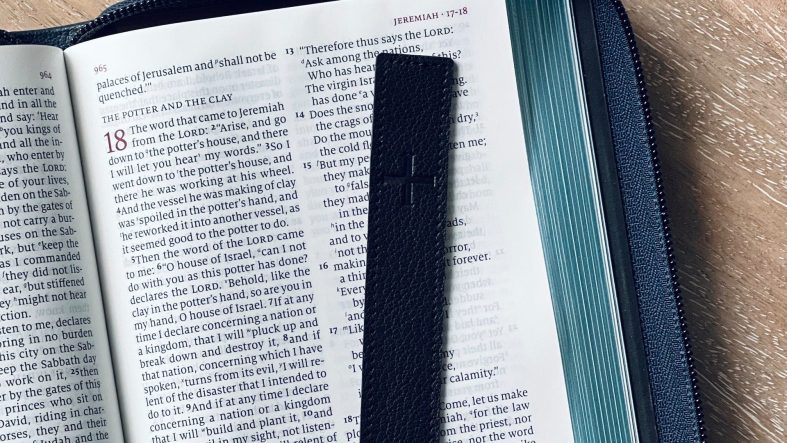
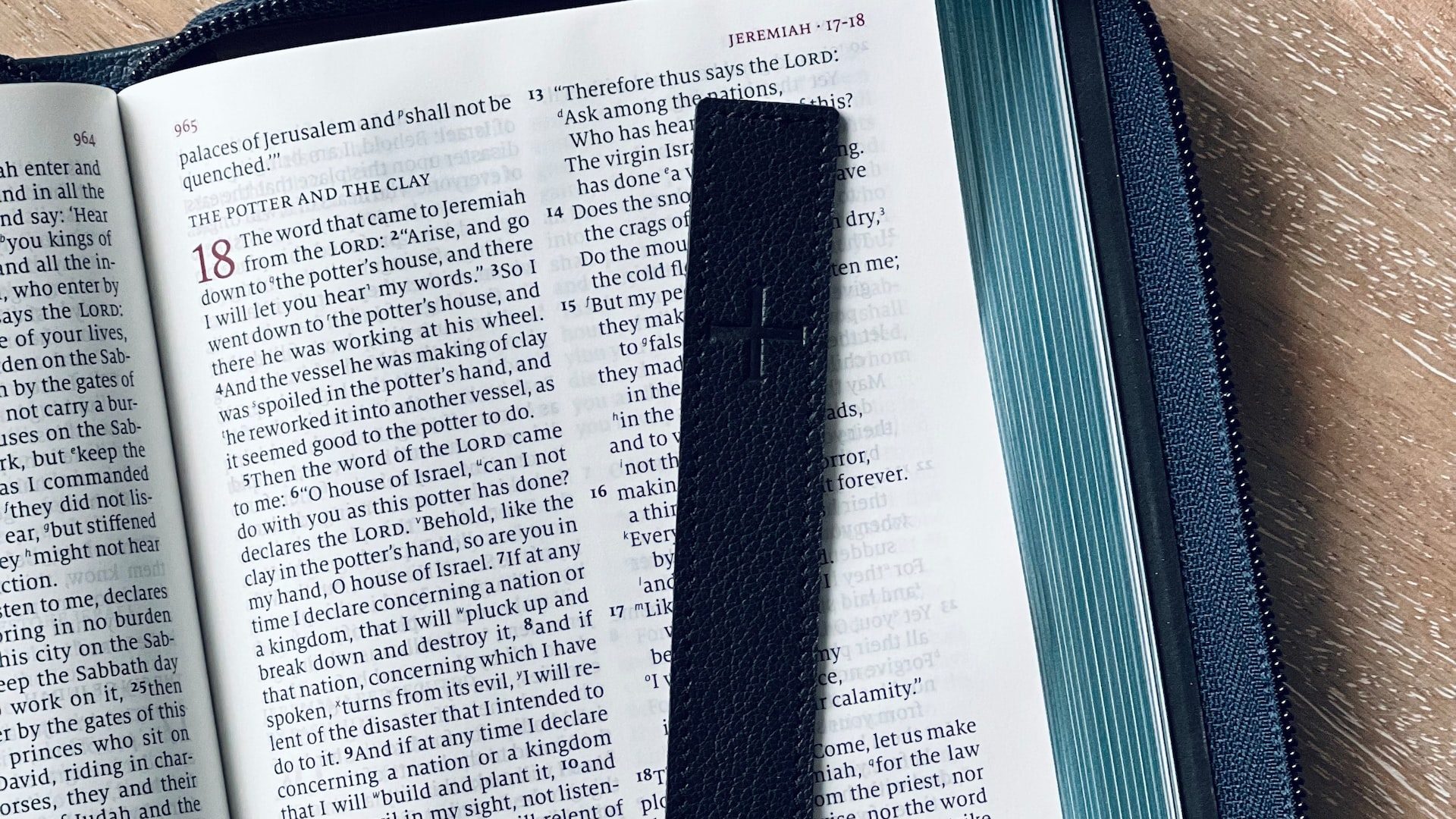
When Jeremiah was called to serve as a prophet in the Old Testament, God told him he was literally made for it in Jeremiah 1:5 –
“‘Before I formed you in the womb I knew you, and before you were born I consecrated you; I appointed you a prophet to the nations.’”
However, Jeremiah’s response was not an enthusiastic one. Jeremiah 1:6-8 records this exchange:
“Then I said, ‘Ah, Lord GOD! Behold, I do not know how to speak, for I am only a youth.’ But the LORD said to me, ‘Do not say, ‘I am only a youth’; for to all to whom I send you, you shall go, and whatever I command you, you shall speak.’”
Even though God had just said “Before I formed you in the womb I knew you,” Jeremiah objects that he was too young and did not have the natural ability required for the job. Maybe he doubted anyone would listen to him, so God must have the wrong guy. God doesn’t disagree that Jeremiah was young (he already knew that), but knows that God’s ability is what matters, not Jeremiah’s. God knew that someday you and I would be reading Jeremiah’s words regardless of his own youth or ability. God never picks the wrong person for the job.
But if “All Scripture is breathed out by God and profitable for teaching, for reproof, for correction, and for training in righteousness,”[1] why does the Scripture tell us that one of its own authors doubted and questioned God Himself?
The answer of course, is “for teaching, for reproof, for correction, and for training in righteousness.” We should learn not only from Jeremiah’s prophecies to the people of his time, but also from His experience with God. In hindsight, we think that because Jeremiah is a book of the Bible, of course he was able to do the work God gave him, but in the moment of his call, Jeremiah had no idea. So, when we think our ability is not enough the job at hand, we should remember Jeremiah’s youth and remember that “God does not call the equipped; He equips the called,” as the saying goes. Jeremiah learned this from his own experience, and we may learn from it as well because the Bible records it.
Also, God shows us Jeremiah’s flaws to comfort us when we feel inadequate, not only in ability but also in faith. Even if we know that “God does not call the equipped; He equips the called,” we don’t always act on that knowledge. Jeremiah doubts not only his call, but there are other examples, including when he questions why he should buy a field the Babylonians were about to seize.[2] Doubt is not something that only some Christians feel – we are not alone in our weakness. Even the Bible’s own authors had doubt because they could not see as God sees.
God is patient when we are honest with Him about our doubts, but He is also honest with us when He says we were literally made to serve Him. No Christian is inadequate for the work God gives them, for in His power He accomplishes what He wants. He has no doubts and is faithful in providing everything we need.
Sometimes God sends us before we think we are ready, so we can learn to put our confidence in the right place like Paul, who wrote: “I can do all things through Him who strengthens me.” – Philippians 4:13
[1] 2 Timothy 3:16 [2] The story is in Jeremiah 32, which I covered in an earlier post, here.
The TV show Whose Line is it Anyway? is probably the most-widely-known form of improvisational comedy, and one of my favorites. Four performers act out short scenes based on a set of rules for each scene or game, spontaneously adding their own creativity and (if successful) humor. For example, in the “Props” game, pictured, the performers were given two “P” shaped props to make jokes about. The show wouldn’t be any good if they just showed us the props and explained the rules over and over again. The show is pointless without spontaneous creativity. But why am I writing about improv on a Christian blog? Today is the next post in the series on listening for our Master’s voice, and in God’s (and Gideon’s) victory over the Midianites, the Bible leaves a key point unsaid, leaving us to ask: Whose Plan is it Anyway?
Whose Pun is it Anyway?
In Judges 6-7, God delivers Israel from the Midianites using Gideon, who thought God couldn’t use him because “my clan is the weakest in Manasseh, and I am the least in my father’s house.” At times, Gideon doubts God is speaking to him and that He really means what He says, but God patiently answers Gideon’s questions and performs miracles, encouraging Gideon to move forward.
Eventually, Gideon and his 300-man army attacked the enemy army, which was “like locusts in abundance, and their camels were without number, as the sand that is on the seashore in abundance.”[1] After Gideon split his army into three groups, this was the plan of attack:
“So Gideon and the hundred men who were with him came to the outskirts of the camp at the beginning of the middle watch, when they had just set the watch. And they blew the trumpets and smashed the jars that were in their hands. Then the three companies blew the trumpets and broke the jars. They held in their left hands the torches, and in their right hands the trumpets to blow. And they cried out, ‘A sword for the LORD and for Gideon!’”[2]
Whose Plan is it Anyway? This is where improv comes in: the text does not tell us who came up with this wacky attack plan. Was it God’s idea or was it Gideons? Why leave it ambiguous? I think it is because, either way, it is not a decisive factor in the victory. The attack plan works because of God’s involvement, no matter whose idea it was. If it was Gideon’s idea, he was only using the abilities his Maker had given Him for the purpose of glorifying Him. If it was God’s, Gideon was also only using the abilities God gave him and dedicating them to God’s glory.
What’s amazing is that Gideon went from testing God with fleece to carrying out this attack. God had Gideon convinced it would work, and that it would work because God would make it work. Victory didn’t come from any advantage Gideon had or created, and all along God was determined to get the glory. The plan would have failed if God had not put fear into the camp, and let Gideon know about that fear by way of a dream a Midianite soldier had.
Like improv comedy, God’s rules only go so far before the performers need to take over. God gives us patterns, which are like the rules of an improv skit, not step-by-step instructions in every aspect of our lives. Adam and Eve were shown a pattern in the Garden of Eden, Moses was given a pattern for the tabernacle on the mountain, and Jesus lived a pattern of how love the Father and our neighbor. Beyond the patterns and rules there is so much to do and explore. His will is for His people to make the world like Eden, to worship Him as He should be worshiped, and to love the world the way Jesus loved.
The Little Things To hear and obey His voice, we must spend time with Him in prayer and study, diligently learning the patterns He has laid out for us, but He does not expect us to stop there. At some point, we must take the guidance we have and move forward with the wisdom and creativity He has endowed us each with. When we do we will be like the servant who successfully invested his Master’s resources, and in return “His master said to him, ‘Well done, good and faithful servant. You have been faithful over a little; I will set you over much. Enter into the joy of your master.’”[3]
However, if we either do not diligently seek Him, or if we say He has not given us enough, we may find ourselves cast out from the Master’s presence, hearing: “you ought to have invested my money with the bankers, and at my coming I should have received what was my own with interest.”[4]
In Gideon’s story, we see God’s compassionate understanding toward His people who struggle to hear and obey His voice but keep trying. We, like Gideon, are not always faithful over the little things such as prayer, study, and regular worship. But Only He fully knows the depth of our doubts and struggles, and He provides what we need to trust Him and move forward in faith, knowing our doubt is never fully overcome until eternity.
In the story, we also see that we must often act on trust, even when we think we have incomplete information. Like Gideon, we should be imperfectly persistent, wrestling with God who knows our faith is imperfect. He can bridge the gap to us in His unlimited grace.
So, where does God’s guiding voice stop, and our God-given creativity begin? Like a good improv comedy scene, the parts can come together perfectly, glorify God, and encourage His people to come along in faith, as the men of Naphtali, Asher, Manasseh, and Ephraim joined the battle against the Midianites once it was clear God had delivered the victory[5]. When we seek Him and find Him, and in faith move forward to spread His character and creativity in the world, glorifying Him.
God is glorified when His people attempt things that sometimes don’t make sense, then succeed because He provided the way. It’s always His plan anyway.
Soli Deo Gloria
[1] Judges 7:12 [2] Judges 7:19-20 [3] Matthew 25:21 [4] Matthew 25:27 [5] Judges 7:23-25
Today we come back to the topic of our Master’s voice, which began with the painting “His Master’s Voice” and continues through the story of Gideon in the book of Judges, chapters 6 and 7. So far, Gideon has done his best to discern whether God was really talking to him, then set out with an army of 22,000 soldiers, which Gideon faithfully whittled down to only 300, at God’s instruction. Against an army “like locusts in abundance,” Gideon might have needed a little reassurance, because outside of a miracle[1] his army was going to fail miserably.
That very night, God spoke to Gideon, saying: “Arise, go down against the camp, for I have given it into your hand. But if you are afraid to go down, go down to the camp with Purah your servant. And you shall hear what they say, and afterward your hands shall be strengthened to go down against the camp.”[2] We know Gideon was still afraid because he took Purah and went down into the camp. We also know that God made provision for Gideon’s fear, instead of counting on Gideon to have perfect faith. Should Gideon have needed extra reassurance? No, but God provided what was needed to overcome Gideon’s fear, which was a bit more insight into God’s plan. Victory in battle is never a matter of how many soldiers are on God’s side, as if spiritual warfare was determined by democracy, but by whose side God is on.
When Gideon snuck into the camp: “behold, a man was telling a dream to his comrade. And he said, ‘Behold, I dreamed a dream, and behold, a cake of barley bread tumbled into the camp of Midian and came to the tent and struck it so that it fell and turned it upside down, so that the tent lay flat.’ And his comrade answered, ‘This is no other than the sword of Gideon the son of Joash, a man of Israel; God has given into his hand Midian and all the camp.’”[3]
Victory in battle is never
a matter of how many
soldiers are on God’s side
Some commentators suggest that the “barley” reference means that an inferior army would win, since barley was considered inferior to wheat and other grains, but what we know is that this dream put fear into the Midianite camp and emboldened Gideon to trust God, even though he didn’t understand Him. Overhearing these words in the camp let Gideon know that that God was at work in far more ways than he could imagine, that victory belongs to the LORD, and that he can trust that God has the knowledge he lacked. God is trustworthy, even if we don’t fully understand Him.
We only know part of our part in God’s plan. He knows all of our part, and also all of everyone else’s part. Each of us are but one of millions of Christians trying to figure out our relationship with God, and we have no idea what those other millions are up to. But God does, and if we insist God tells us everything before we act, we not only disobey God, but lose out on the opportunity to impact those other lives and see how awesome God’s plan really is!
Our ability to hear and obey our Master’s voice is not a question of complete knowledge, but of wisdom. Proverbs 17:24 says, “The discerning sets his face toward wisdom, but the eyes of a fool are on the ends of the earth.” Since “The fear of the LORD is the beginning of wisdom, and the knowledge of the Holy One is insight,”[4] from the story of Gideon, we learn that God was teaching Gideon to revere Him above any desire to see the “ends of the earth.” Wisdom keeps us on the path of life but doesn’t always mark it out for us far into the future. We can’t see the reasons God wants us to trust Him because there is far more at work than we could ever imagine.
“The secret things belong to the LORD our God, but the things that are revealed belong to us and to our children forever, that we may do all the words of this law.” – Deuteronomy 29:29
This post is third in a series that started with this post on His Master’s Voice. More to come…
[1] Or a certain action film directed by Zack Snyder… [2] Judges 7:9b-11a [3] Judges 7:13-14 [4] Proverbs 9:10
When we want to hear our Master’s voice, we all have to overcome competing influences, like the lyrics of “Breathing” by Lifehouse say, “I’m trying to identify the voices in my head; God, which one’s you?” We all need a filter to pick the right voices, or influences, that we base our lives on, and filter out anything that competes for our Master’s attention. The Bible recommends it, as 1 John 4:1 says “Beloved, do not believe every spirit, but test the spirits to see whether they are from God, for many false prophets have gone out into the world.” Proverbs tells us to make our ear attentive toward wisdom and to incline our heart to understanding, and to treat wisdom and understanding as more valuable than silver and treasures.[1] But how do we do it?
Gideon from the book of Judges might also have related to Lifehouse’s lyrics. Gideon needed to filter out the voices, and probably the best-known part of his story is his use of a fleece to do that. During Gideon’s life, as recorded in the book of Judges, Israel was being oppressed by the Midianites, Amalekites, and others, who would wait until harvest then rob all the produce and livestock. The angel of the LORD appeared to Gideon, saying he would use Gideon to “save Israel from the hand of Midian”[2], but Gideon doubted that it was God speaking, and said “show me a sign that it is you who speak with me.”[3] Gideon may or may not have doubted that God was able to save Israel, but he certainly doubted whether this was really God talking. Therefore, Gideon needed to “test the spirits,” but how?
Gideon asked God for a sign, which God provided, giving Gideon confidence to break down an altar to Baal and destroy an Asherah.[4] But Gideon asked God for more proof that it was truly Him speaking, and that He was calling Gideon to save Israel. This extra step was the sign of the fleece, which is worth quoting in full, from Judges 6:36-40.
“Then Gideon said to God, ‘If you will save Israel by my hand, as you have said, behold, I am laying a fleece of wool on the threshing floor. If there is dew on the fleece alone, and it is dry on all the ground, then I shall know that you will save Israel by my hand, as you have said.’ And it was so. When he rose early next morning and squeezed the fleece, he wrung enough dew from the fleece to fill a bowl with water. Then Gideon said to God, ‘Let not your anger burn against me; let me speak just once more. Please let me test just once more with the fleece. Please let it be dry on the fleece only, and on all the ground let there be dew.’ And God did so that night; and it was dry on the fleece only, and on all the ground there was dew.”
A quick survey of study Bibles on this passage brings these comments on Gideon’s “test” of God:
“Even though the Spirit has come upon him, Gideon still struggles to trust the Lord.”
“The gathering of the tribes should have been sufficient evidence of God’s presence with Gideon, but he wanted a sign that God would do what He had promised.”
“Gideon’s desire for a second fleece sign evidenced his less than complete trust in God…He wanted to make certain that the first fleece sign was not merely a coincidence or the result of the natural absorption properties of a fleece.”
“Unlike Gideon, we have God’s complete, revealed Word. If you want to have more of God’s guidance, don’t ask for signs; study the Bible”
It’s easy, even encouraged, to criticize Gideon for testing God but if we put ourselves in his place can we do any better, even with the whole Bible? Sometimes the Bible is clear, as in “you shall not murder,” but what about questions like, “what should I write next?” Or “how can I encourage a friend?”
Consider that if Gideon had not put out the fleece maybe his story would’ve stopped right there, with him wallowing in doubt. After all, Israel was being persecuted by a powerful enemy – why take any risks? However, not knowing with 100% certainty what God’s will is does not mean that doing nothing is the right answer. If we have a decision to make where the Bible doesn’t seem to provide explicit direction, do we just follow Yogi Berra’s sarcastic advice: “When you come to a fork in the road, take it”?
I can relate to Gideon because I needed a filter, a reason to take the time to “test the spirits,” because I rarely know for sure what God wants. Much of the time, I “go with the flow,” and think if I avoid the wrong “flow” I’ll be ok. I write often not because I’m disciplined, but because I’m not. Writing is a tangible way to build the spirit-testing filter into my routine, even if it sometimes looks no wiser than Gideon’s fleece. So, why publish publicly to anyone with an internet browser? Because I take it more seriously, working on filtering out voices that aren’t useful to me, and wouldn’t be useful to anyone else. A published blog takes more effort than not writing at all, which is the point, and it helps me move forward.
The Benefit of the Doubt As I’ve written about Jeremiah and others, the Bible records openly the doubts of God’s people, because we all have a lot in common. Finding and trusting God’s voice is hard. If we criticize Gideon for demanding tests from God, are we really just criticizing ourselves and making it even harder? Our filters are also imperfect – does that mean we do nothing and get nowhere? Do we give up the call to “test the spirits,” leaving ourselves to “go with the flow” until we find a perfect method? Like Gideon, we are also prone to take the safe route, when offered what looks like a riskier alternative. To do something involves risk of not only doing the wrong thing, but also of being criticized for our methods. Doing nothing is sometimes the right answer, but it is also a choice, and we can’t always be clear why we choose it.
David sometimes encourages us to “wait for the Lord,” and he also wrote “Oh, taste and see that the LORD is good!”[5] when he was feigning madness before Abimelech, a questionable decision. We learn about God by experiencing Him, by taking action or by waiting, taking a chance either way, but over time learning that obedience is always the best decision, and also that He catches us when we fall. We can’t be perfect in this world, but He wants us to try and He will help us grow.
Centuries ago, Solomon wrote in Ecclesiastes 11:4: “He who observes the wind will not sow, and he who regards the clouds will not reap.” He may well have written to me: “He who observes the trolls will not blog, and he who fears the comment section will not write.” Or to Gideon: “He who observes the Midianites will not save Israel.” We all begin our trip to eternity wherever God finds us, where we are not only sinners, but also have a lot to learn about focusing on God’s voice. What might we all be observing that’s keeping us from sowing the seed of the gospel God has given us? Sometimes it’s doubt in our filters, in our ability to know for sure.
When we’re afraid of being compared to Gideon and his fleece, know that he is listed in Hebrews 11:32 as a faithful hero, and was received in heaven as a good and faithful servant by the grace earned on the cross by Jesus. So, let’s take it easier on Gideon and give him the benefit of the doubt. We are all in this together, including the heroes of the Bible. It’s God’s faithfulness that matters and He will overcome all of our doubts.
In the meantime, “No temptation has overtaken you that is not common to man.” – 1 Corinthians 10:13a
This post is second in a series that started with this post on His Master’s Voice, and continues here.
Does it often seem like God is asleep at the wheel? Like He is not relevant to the real problems we face in the world? Today we continue on the Psalms of Ascent, a liturgy used in ancient Israel to prepare for worship at the annual festivals in Jerusalem. While not part of the Ascent, Psalm 119 precedes it, praising the law of God in the longest chapter of the Bible, and the Ascent begins in Psalm 120 with God’s people living in a world that remains broken even with a perfect law. In the last post of this series, I wrote that Psalm 121 “asks us to take our eyes off of the world around us and look upward for our hope.” Verses 1 and 2 say:
I lift up my eyes to the hills. From where does my help come? My help comes from the LORD, who made heaven and earth.
As these pilgrims looked to the hills, what did they want to find? Did they expect to find a better group of people? No, they brought their community with them on the long journey, along with all their baggage. Did they travel in search of a better law? No, they had the law God had given them. Did they travel to Jerusalem to give penance for not keeping the law? No, they came to find real help for real problems that exist within themselves and in their communities. This help could only come from the LORD.
Then verses 3 and 4 say:
He will not let your foot be moved; he who keeps you will not slumber. Behold, he who keeps Israel will neither slumber nor sleep.
Why does the Psalmist need to say this? Because even God’s people can doubt that He is interested and cares about tangible problems. When we focus on our circumstances, on the people around us, or even on God’s holy law, we can miss the power of God. It can seem like God is asleep. Like He is not relevant. The Old Testament prophet Elijah mocked the powerlessness of the Canaanite storm god Baal in 1 Kings 18:27 – “Cry aloud, for he is a god. Either he is musing, or he is relieving himself, or he is on a journey, or perhaps he is asleep and must be awakened.” We don’t say this out loud, but sometimes we wonder where our own God is. If we don’t take the time to intentionally look for Him, it’s easy to think He is asleep.
In these Psalms, God calls us to worship in a central place as a reminder that no matter what the world looks like, He is awake and at work in the midst of very real problems. In ancient Israel, sacrifices were offered at the temple as a sign of Jesus’ future sacrifice, which provided reconciliation with a God who requires justice, which is our deepest need. After making the perfect sacrifice, Jesus rose again to give us power to love our neighbor, meeting their needs.
Pilgrims didn’t go to Jerusalem to pay God a visit, then leave him behind when they went home. They went because God provided a way to remind them that He was always with them in the places they came from, but if they don’t take the time to be reminded, they remain discouraged in their circumstances. Likewise, on our Sabbath day of rest, we remind ourselves that He is never sleeping, but has been working for the salvation of His people since the very beginning of creation. His people are the very people we congregate with. People who are not saved by Psalm 119 and find themselves participating in a Psalm 120 world. People whose circumstances tell them God is asleep, and who need help with their Monday to Saturday problems.
Here we come to perhaps the most difficult point. Elijah’s mocking is also echoed in criticism of the church today, both from those inside the church and outside. Where is God in the midst of real problems? What does God offer above laws and rituals that cannot perfect us? The pilgrims also could have criticized the other pilgrims. Those arriving in Jerusalem certainly had among them people who thought the law was the answer. There were also those who went to practice their religious rituals, check the box, then get on with their lives as they saw fit. Sometimes the church looks little different than the circumstances we find ourselves in where we live, but that’s nothing new.
The LORD calls us to Him and gave these Psalms to let us know that He is not asleep, no matter what it may look like to us. The world will more clearly see God as their help when His people lift their eyes up to the hills, go to Him in public worship, and bring back His help to their communities. This is how they will know He is not asleep.
Therefore, the liturgy of the Psalms of Ascent points us beyond all laws, doctrines, traditions, and institutions, to the help that comes to us from the sacrifice of Jesus, foreshadowed at the temple in Jerusalem:
I lift up my eyes to the hills. From where does my help come? My help comes from the LORD, who made heaven and earth.
This post continues a series on the Psalms of Ascent. To start at the beginning, click here, and for the next post click here.




 Driving Toward the Morning Sun