Attention to God’s Details

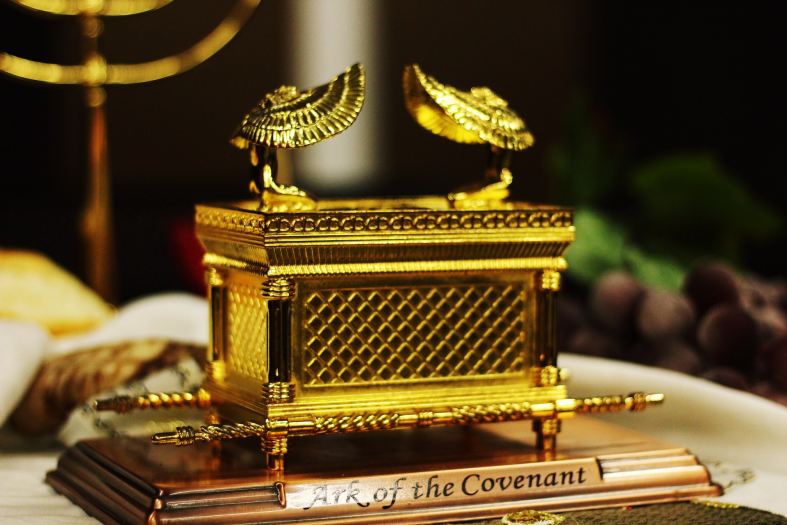
Bezalel made the ark of acacia wood. Two cubits and a half was its length, a cubit and a half its breadth, and a cubit and a half its height.” – Exodus 37:1

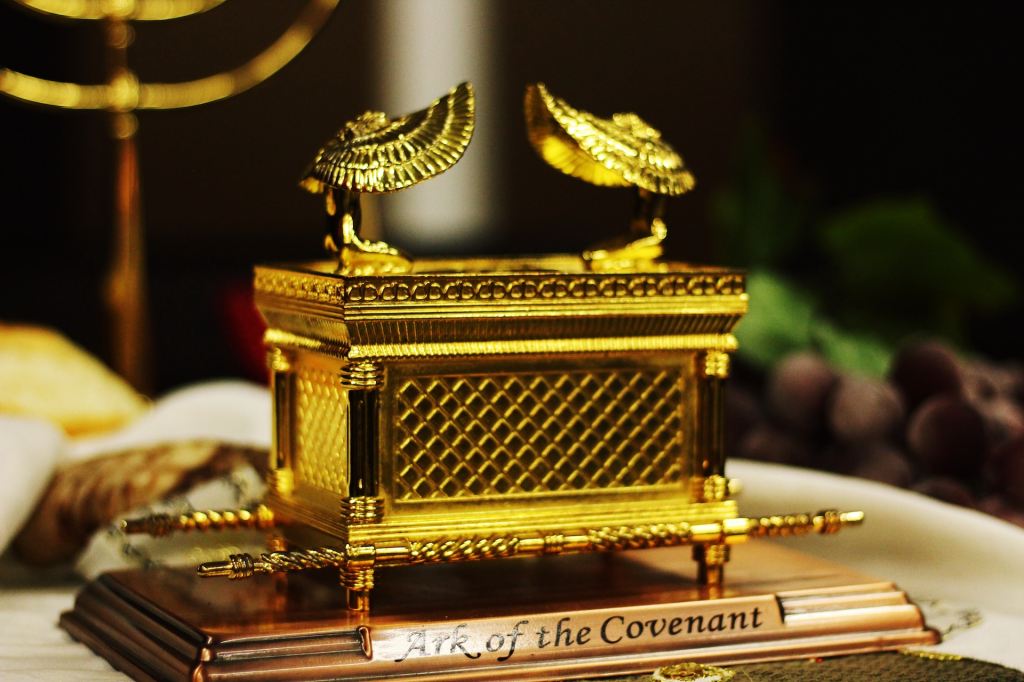
The ark in miniature. Photo by Igor Rodrigues on Unsplash

Most of Exodus chapters 36-40 cover the many, many details of the construction of the tabernacle and all of its utensils and other parts.  We may tire of reading chapters of details, but the point is that Bezalel and others put a massive amount of care (and obedience) into the implementation of God’s pattern for the tabernacle, as shown to Moses on the mountain.

What does it mean for us now?  That we should put as much care into learning what God wants of us and put it into action in our lives.

“For whatever was written in former days was written for our instruction, that through endurance and through the encouragement of the Scriptures we might have hope.  May the God of endurance and encouragement grant you to live in such harmony with one another, in accord with Christ Jesus, that together you may with one voice glorify the God and Father of our Lord Jesus Christ.”  – Romans 15:4-6

More Than a Tent

Long before there was a Temple in Jerusalem, the Israelites built a tabernacle according to instructions given by God to Moses.  This tabernacle from a material perspective was just a big tent, but to the Israelites it was the place where God had chosen to dwell among them, the place where they would learn how He was to be honored and worshipped.  The tabernacle was designed so that it could be torn down and moved with the people to each new location they travelled to during their wilderness wanderings between the exodus from Egypt and their entry into the Promised Land.  To make moving it easier, it was constructed of many pieces, but still the size of the tabernacle was impressive.  For example:

And all the craftsmen among the workmen made the tabernacle with ten curtains. They were made of fine twined linen and blue and purple and scarlet yarns, with cherubim skillfully worked.  The length of each curtain was twenty-eight cubits, and the breadth of each curtain four cubits. All the curtains were the same size.” – Exodus 36:8-9

I’ve read these verses many times without really thinking about them, but eventually I asked: how much cloth is that exactly?  Consider how hard and time-consuming it would be to make cloth while wandering in the wilderness, particularly cloth with detailed images of cherubim worked into them.  They didn’t have anything close to a modern loom or sewing machine, yet they made 10 curtains that were each 28 cubits by 4 cubits.  But how big is that?

A cubit would be approximately 18 inches today.  So, 28 cubits would be 28 times 18 to get the number of inches, then divided by 12 to get the number of feet.  Do the same math for the 4 cubits of breadth.  The result is that each of these 10 curtains were 42 feet long and 6 feet wide!

Think about how much clothing could be made with that much cloth, and about how people with more than 2 or 3 changes of clothes in those days would be considered rich.  Later when we read in Judges about Samson posing a riddle to his 30 companions, where if they couldn’t solve the riddle they’d have to give Samson “thirty linen garments and thirty changes of clothes.”[1]  These companions pleaded with Samson’s wife to help them solve the riddle, saying: “Have you invited us here to impoverish us?[2]  What would impoverish these 30 men?  Having to give Samson one garment and one change of clothes each!  And this was not in the wilderness, but long after Israel had settled in the Promised Land.

I write all of this to say that, looking at only one part of the tabernacle, among many that were made of gold and other precious materials, the sacrifice made by Israel to have a tabernacle was impressive.  They didn’t provide their God with a small tent that didn’t cost them much to build, but they gave their God a tabernacle that cost them much in terms of both materials and labor.  After all, this was the place where God was going to dwell among them.  He deserves it, and more.

What does this mean for us today?  Some say the modern equivalent of the tabernacle is the physical churches that we build to gather in, and so the tabernacle example justifies huge, expensive, elaborate churches.  But I don’t think that’s the right equivalent.  It is the body of Christ Himself – His people – including you and me.  Since the time of Christ, He has chosen to dwell within each of us directly.  The cost of the tabernacle can be compared to the cost of discipleship, or of following Christ.

If that’s so, what do we sacrifice and invest in ourselves as the dwelling place of God?  Do we value other Christians as God’s temples, investing in them?  Do we give enough to God that it takes away from other things we might want to do with our time and resources?  Do we provide God with a basic tent to stay in, or do we put into His dwelling so much that it might “impoverish” us in other areas?

After all, He deserves it, and more!


[1] Judges 14:13
[2] Judges 14:15

Serving Other Gods

Foundational to God’s relationship with His people – His covenant – is the idea that He will be our God and we will be His people.  If we forsake all other “gods,” we will be blessed immeasurably by the true God, Yahweh.

However, in the time of the Old Testament prophet Jeremiah, right before the exile of Judah into Babylon, God’s people were not being faithful to Yahweh and were worse than prior generations in their rebellion.  So, Jeremiah says in chapter 16, verse 13 – “Therefore I will hurl you out of this land into a land that neither you nor your fathers have known, and there you shall serve other gods day and night, for I will show you no favor.”

This punishment has 2 parts: banishment from the Promised Land, and also “you shall serve other gods day and night.”  Have you ever thought that serving gods other than Yahweh is a punishment, or just that its bad or sinful?   It certainly isn’t the way the world sees it: many consider serving any god as punishment.  Others might have their own gods and would only consider serving other gods, including Yahweh, as punishment.  But here the Bible says that it is only punishment to follow false gods.

Why is this?  A good explanation comes from another prophet, Zechariah, in chapter 10, verse 2:

For the household gods utter nonsense,
            and the diviners see lies;
they tell false dreams
            and give empty consolation.
Therefore the people wander like sheep;
            they are afflicted for lack of a shepherd.”

Compared to a loving, omniscient, wise God, these other gods have no knowledge or wisdom and are not benevolent.  They cannot give us what we need to live and are not worthy of worship.  They cannot guide us like our Good Shepherd can.  Therefore, when we choose to follow anything other than Yahweh, are we punishing ourselves?

When Yahweh said “You shall have no other gods before me” in Exodus 20:3, He said it for our own benefit, and for His glory.

Amen.

The God Who is Never Inadequate

Once upon a time, “Moses was keeping the flock of his father-in-law, Jethro, the priest of Midian, and he led his flock to the west side of the wilderness and came to Horeb, the mountain of God.”[1]  It seemed like a normal day for a shepherd until he saw a burning bush, but not any burning bush.  This one, though on fire, was not consumed by the fire.  As anyone would, Moses was curious and stopped to look.  Then, “When the LORD saw that he turned aside to see, God called to him out of the bush, ‘Moses, Moses!’ And he said, ‘Here I am.’”[2] [emphasis mine]

But just a few verses later, “Moses said to God, ‘Who am I that I should go to Pharaoh and bring the children of Israel out of Egypt?’”[3]  Moses’ “Here I am” quickly became a “Who am I,” and why?  Because God had spoken to Moses from the bush saying that He had come to deliver the Jews from their affliction as slaves under the Egyptians.  God wanted Moses to be His representative before Pharaoh, but Moses objected not just this one time, but three more times:

Then Moses said to God, ‘If I come to the people of Israel and say to them, ‘The God of your fathers has sent me to you,’ and they ask me, ‘What is his name?’ what shall I say to them?’” – Exodus 3:13
Then Moses answered, ‘But behold, they will not believe me or listen to my voice, for they will say, ‘The LORD did not appear to you.’’” – Exodus 4:1
But Moses said to the LORD, ‘Oh, my Lord, I am not eloquent, either in the past or since you have spoken to your servant, but I am slow of speech and of tongue.’” – Exodus 4:10

“What should I say?”  “Who are you?”  “What if they don’t listen?”  “I’m not a good speaker” …These were the objections Moses weighed against the fact staring him in the face that God was there, burning a bush without the fire consuming it.  Moses went from amazement to avoidance incredibly fast, once given a seemingly difficult task.

It’s easy to criticize Moses, but do we also change our view of God, and of ourselves, based on what God asks us to do?  Do we praise God on Sunday morning and in our private times, yet say we’re busy when asked to do something specific for God that might be uncomfortable?

If so, all of us, and Moses, are in plentiful company.  Gideon likewise pushed back on God’s call in Judges 6:15 – “And he said to him, ‘Please, Lord, how can I save Israel? Behold, my clan is the weakest in Manasseh, and I am the least in my father’s house.’”[4]

Jeremiah tried to argue with God in Jeremiah 1:6 – “Then I said, ‘Ah, Lord GOD! Behold, I do not know how to speak, for I am only a youth.’”[5]

Isaiah, like the others, claimed he was no good for what God asked him to do, and in Isaiah 6:5 “said: ‘Woe is me! For I am lost; for I am a man of unclean lips, and I dwell in the midst of a people of unclean lips; for my eyes have seen the King, the LORD of hosts!’”

Back to Moses’ case, he was either certain that a God who could make a bush burn without it being consumed could not empower him to speak, or just too scared to do what God had asked.  However, if we rely on God, who is always the I AM, we can do whatever He asks.  But if we focus on who we are, we cannot.  Our “Here I am” will became a “Who am I” when we feel inadequate.

Photo by Kelly Sikkema on Unsplash

We can read on and learn that later, God had strengthened the faith of this same Moses, so that when Israel was terrified and cornered against the Red Sea, with Pharaoh’s army approaching, he declared: “Fear not, stand firm, and see the salvation of the LORD, which he will work for you today. For the Egyptians whom you see today, you shall never see again.  The LORD will fight for you, and you have only to be silent.[6]  The Moses who was once full of excuses was used by God to deliver a nation.

If God is asking you to do something difficult or uncomfortable today, you know what to do.  We can’t read on to the rest of our story, but He has, and He knows what He is doing.


[1] Exodus 3:1
[2] Exodus 3:4
[3] Exodus 3:11
[4] I wrote about Gideon’s call in Giving Gideon the Benefit of the Doubt
[5] Likewise, in God Equips Those He Calls
[6] Exodus 13:13b-14

We’re All Little Pharaohs

Anyone who knows the story of the Exodus knows who the bad guy is: Pharaoh.  As the leader of Egypt, he is primarily to blame for the enslavement of Israel.  Eventually, through Moses and Aaron, God tells Pharaoh to free the Israelites from slavery, and time and again Pharaoh refuses.  Clearly, Pharaoh is God’s enemy.  However, in his resistance to God, I think Pharaoh fell into some habits any of us could fall into.

First, Pharaoh admitted his need for God only when things were going wrong but shut God out when things were going well.  In Exodus 8:8, Pharaoh asked Moses to “Plead with the LORD to take away the frogs from me and from my people” but once the frogs were gone, Exodus 8:15 tells us that “when Pharaoh saw that there was a respite, he hardened his heart” and refused to do God’s will.  The same thing happens in chapter 9, during the plague of the hail.  Seeing the destruction caused by the hail, Pharaoh says “Plead with the LORD, for there has been enough of God’s thunder and hail” in verse 28, but in verse 34, “when Pharaoh saw that the rain and the hail and the thunder had ceased, he sinned yet again and hardened his heart.

Photo by Alex Azabache on Unsplash

Next, Pharaoh repeatedly negotiated with God to define the scope of His influence.  Faced with the plague of flies, Pharoah said to Moses and Aaron “Go, sacrifice to your God within the land.”[1]  But staying “in the land” was not what God wanted His people to do.  In response to the plague of locusts, Pharoah said “the men among you” could leave and worship God, but he wouldn’t let the “little ones[2] go.  Also, after the plague of darkness, Pharoah said “Go, serve the LORD; your little ones also may go with you; only let your flocks and your herds remain behind.”[3]  In these 3 responses, Pharaoh insisted on limits to where the people should worship, which people should worship, and what they could (and couldn’t) use in worship.

Third, Pharaoh also tried to limit the scope of his own sin, and which sins he would be accountable to God for.  In Exodus 9:27, Pharaoh said, “this time I have sinned” and in 10:17 said “forgive my sin, please, only this once.”  In reality Pharaoh was sinning every time he refused to listen to God, but he wasn’t willing to admit that.  He only admitted a minority of the times he disobeyed.

If you’re like me, this all might sound familiar.  Often our prayers are more fervent and sincere when we need help than they are when we have something to praise God for, or when times are good.  Often, we allow God to govern some parts of our life, but we keep other parts for ourselves, to do what we want with.  Also, we often only admit some of our sins and choose which ones to care about.  We’re all a bit like Pharaoh, the bad guy in the Exodus story.

Fortunately for us, we have something else in common with Pharaoh: the true, Almighty God will defeat all of the “gods” we follow.  Every single one.  Behind the battle between Moses and Pharaoh was a contest between our God and Pharaoh’s gods.  As the Life Application Study Bible notes: “As each gloomy plague descended upon the land, the Egyptian people realized how powerless their own gods were to stop it. Hapi, the god of the Nile River, could not prevent the waters from turning to blood. Hathor, the crafty cow-goddess, was helpless as Egyptian livestock died in droves. Amon-Re, the sun-god and chief of the Egyptian gods, could not stop an eerie darkness from covering the land for three full days.”

When we choose not to obey God, we harden our hearts against Him and follow the “gods” we choose for ourselves, but God will ultimately defeat them all.  God’s purpose in saving us is to deliver us from all other gods, as He delivered Israel from Egypt.  He will deliver us from our slavery to every sin that binds us and make us not follow Him wholeheartedly.

We may be more like Pharaoh than we’d like to admit, but the Pharaoh in us has been killed, nailed to the cross with Jesus. When we reach heaven, all of our other “gods” will be gone and we will be perfected in our obedience to the one, true God, for our good and for His glory!

That’s a deliverance worth looking forward to and praising God for!

Amen.


[1] Exodus 8:25
[2] Exodus 10:10-11
[3] Exodus 10:24