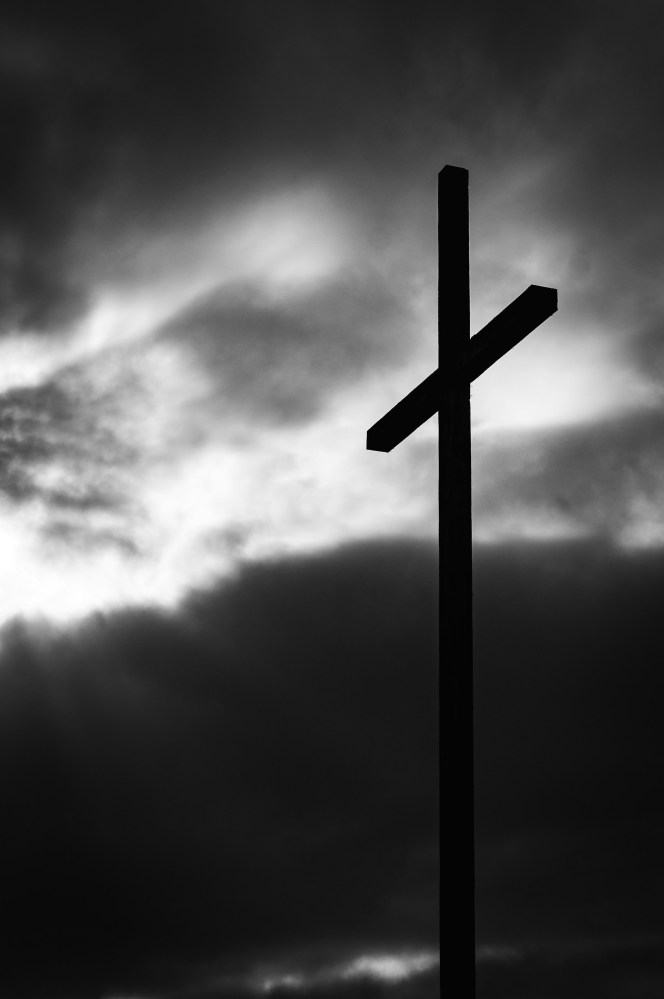
The Cross and the Fury of God

Shortly after the death of King David, the kingdom was split into two: 10 of the twelve tribes becoming Israel, and the remaining 2 (Judah and Benjamin) becoming Judah.  Much of the OT history and prophets tells the story of how these 2 kingdoms – first Israel and then Judah – fell away from worship of the true God into idolatry.  But the prophets also emphasize that idolatry resulted in social sins – God’s people not treating others the way He wanted them to treat them.  In both nations, religious observance became an exercise in trying to buy God’s favor so people could live however they wanted to, but God condemned this empty religion, saying instead that:

He has told you, O man, what is good;
            and what does the LORD require of you
but to do justice, and to love kindness,
            and to walk humbly with your God?” (Micah 6:8)

God wanted His people to love people the way He loved people.  But our God is also a God of justice, who cannot overlook any violation of His commands to love Him and others.  When Israel and Judah failed to live as they should, God’s wrath and anger was poured out on them, in sometimes shocking ways.  The book of Ezekiel is full of alarming images and revelations about the sins of God’s people and His vengeance on them, and in Ezekiel 5:10-12, the people are told what the consequences of their sin would be:

Therefore fathers shall eat their sons in your midst, and sons shall eat their fathers. And I will execute judgments on you, and any of you who survive I will scatter to all the winds.  Therefore, as I live, declares the Lord GOD, surely, because you have defiled my sanctuary with all your detestable things and with all your abominations, therefore I will withdraw. My eye will not spare, and I will have no pity.  A third part of you shall die of pestilence and be consumed with famine in your midst; a third part shall fall by the sword all around you; and a third part I will scatter to all the winds and will unsheathe the sword after them.”

God’s people would suffer siege conditions so severe under their enemies that cannibalism would be the only way to survive!  And most who survive the siege will be struck down: a third by pestilence and famine, a third by the sword, and the last third would be scattered, torn away from the Promised Land God had given to them.  God’s people would go into exile: Israel to Assyria and Judah to Babylon.  These nations would be instruments in God’s hands, executing His judgement on His people Israel and Judah.  As Hebrews 10:31 says: “It is a fearful thing to fall into the hands of the living God,” and the Old Testament does not shy away from how horrible this can be.

The next verse in Ezekiel (5:13) says: “Thus shall my anger spend itself, and I will vent my fury upon them and satisfy myself. And they shall know that I am the LORD—that I have spoken in my jealousy—when I spend my fury upon them.”  Through conquest and exile, the LORD was determined to show His people that His justice and His fury are real, and He is not to be trifled with.  When He commands His people to do something, He means it.
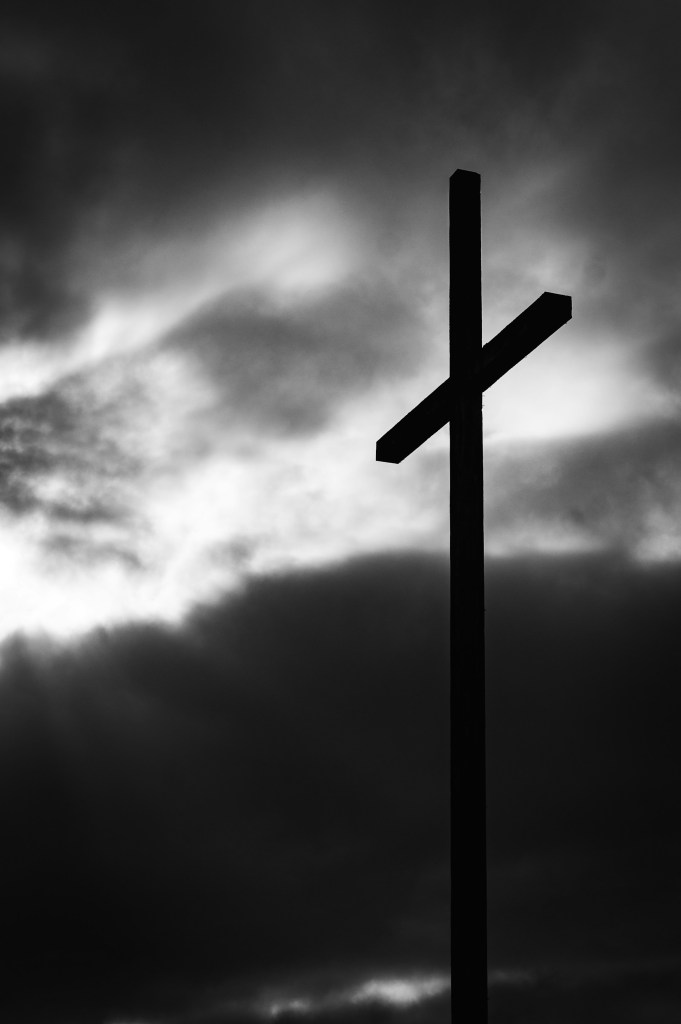
Photo by Anderson Rian on Unsplash

Which brings us to Jesus and the cross.  The New Testament tells us that the fury and wrath of God toward all of mankind – not just the ancient tribes of Israel and Judah – was spent upon Jesus on the cross.  God the Father poured out all of His fury on God the Son, on our behalf.  The anguish Jesus must have felt comes into a bit more focus when we consider the venting and satisfying of God’s anger in the Old Testament relative to what Jesus had to endure on the cross.  His suffering had to be enough to fulfill the justice necessary in God’s eternal, unchanging character.  Instead of our sin leading to our own suffering, He took our suffering upon Himself.

Jesus went to the cross and died that we may be forgiven and restored to a right relationship with God, but did God pour His wrath on Jesus so we could just continue living as we choose to live?  Certainly not!  God still wants from His church what He wanted from His people in ancient times:

He has told you, O man, what is good;
            and what does the LORD require of you
but to do justice, and to love kindness,
            and to walk humbly with your God?

Consider how much God hates sin and consider why.  It’s because sin is the opposite of people doing justice, being kind, and being humble toward the God who loves them and commands them to love others.  Sin harms us and harms other human beings.  Sin repeats Adam and Eve’s determination to live their own way, no matter what God has to say about it.  Sin tarnishes God’s reputation and glory.  Sin even damages our world and environment.  Sin deserves wrath for these reasons, but God has always preserved a remnant of people who would be sinless in eternity.  People who would live the way they were intended to live.  People who would not deserve wrath because they would be sinless.  People who would glorify Him.  These people are His church.

Are we willing to accept Jesus’ sacrifice for us so that we may live this life?

Pray that we will. Amen.

Beware the Bugblatter Beast of Traal

Regular readers will know that I am a fan of Douglas Adams’ science fiction comedy novel The Hitchhiker’s Guide to the Galaxy.  Adams makes a comic art form of extreme absurdity, and one such creation is the Ravenous Bugblatter Beast of Traal.  In the book, intergalactic hitchhikers are urged to always travel with a towel, and among the reasons is that a towel is handy to wrap around your head to “avoid the gaze of the Ravenous Bugblatter Beast of Traal (such a mind-boggingly stupid animal, it assumes that if you can’t see it, it can’t see you)”[1]  By simply covering your eyes, you can escape being devoured by this Beast, one of the least intelligent creatures in existence.

I thought of this Beast when reading Psalm 50:17, which says: “For you hate discipline, and you cast my words behind you.”  Why cast words behind us?  So we can’t see them, and if we can’t see them, we think we can safely ignore them.  Perhaps God will leave us alone, as if He does not exist.  But the verse is a warning not to be like the Ravenous Bugblatter Beast of Traal.  God can’t be swept under a rug and ignored.

There is an episode in the book of Ezekiel that would be comical if it weren’t so tragically similar to this Beast.  Ezekiel’s many images, object lessons, and visions are designed to stir God’s people from complacency and turn back to Him.  To fully convince Ezekiel that the nation was casting God’s word behind them, Ezekiel was taken in a vision inside the temple in Jerusalem, and this is what he saw:

So I went in and saw. And there, engraved on the wall all around, was every form of creeping things and loathsome beasts, and all the idols of the house of Israel.  And before them stood seventy men of the elders of the house of Israel, with Jaazaniah the son of Shaphan standing among them. Each had his censer in his hand, and the smoke of the cloud of incense went up.  Then he said to me, “Son of man, have you seen what the elders of the house of Israel are doing in the dark, each in his room of pictures? For they say, ‘The LORD does not see us, the LORD has forsaken the land.’” – Ezekiel 8:10-12

Ezekiel was a prophet to Jews already exiled to Babylon, but Jerusalem itself had not yet fallen, and many Jews thought it was impossible.  But inside the temple, the very place symbolizing God’s presence and glorious light, the elders of Israel were worshipping Egyptian-style animal deities and using incense to ward off evil spirits.  They sinned, while saying God couldn’t see them because they don’t see evidence of Him in their circumstances: “the LORD has forsaken the land.”  How like the Ravenous Bugblatter Beast of Traal!

Later, in Ezekiel 9:9, the prophet records:“Then [God] said to me, “The guilt of the house of Israel and Judah is exceedingly great. The land is full of blood, and the city full of injustice. For they say, ‘The LORD has forsaken the land, and the LORD does not see.’

Can this dry land live again? Photo by Tobias Jelskov on Unsplash

Sometimes by casting His words behind us, we may think we are forsaken.  We interpret His word in light of our circumstances, instead of interpreting our circumstances in light of His word.  It is when the church acts like God doesn’t see that we should be fearful.  When the church claims Jesus as Savior but not as Lord.  When the church trusts in worldly power, not God’s power.  When the church struggles to see how their very Maker and King is, as they say, “relevant.” 

In Ezekiel chapter 10, the glory of Lord departs the Jerusalem temple entirely, and all of Judah was exiled, but Ezekiel’s message wasn’t finished.  He also proclaims hope, most dramatically in chapter 37, the “Valley of Dry Bones” vision.  Ezekiel sees dry bones scattered everywhere across a valley, symbolizing how spiritually dead God’s own people appear.  The vision is a test for Ezekiel: would he look at the valley and assume, based on the immediate circumstances, that “The LORD has forsaken the land, and the LORD does not see”?  In verse 3, he writes: “And he said to me, ‘Son of man, can these bones live?’”  Ezekiel doesn’t jump to conclusions but trusts that God knows best: “And I answered, ‘O Lord GOD, you know.’”  Symbolizing new life in Christ, even from death, God re-assembles the dry bones, adds sinew and flesh and skin, then breathes life into them, “and they lived and stood on their feet, an exceedingly great army.”[2]

In the Valley of Dry Bones, Ezekiel learned that God does see our dire situation, and He has a plan, even if we choose to look the other way.  This plan is infinitely and eternally more “relevant” than any present (and temporary) circumstances.

In the New Testament the plan continues with an Ebenezer[3] moment, as the apostle Paul wrote: “But God, being rich in mercy, because of the great love with which he loved us, even when we were dead in our trespasses, made us alive together with Christ – by grace you have been saved – and raised us up with him and seated us with him in the heavenly places in Christ Jesus” (Ephesians 2:4-6)


[1] Adams, Douglas. The Hitchhiker’s Guide to the Galaxy.  (1980).
[2] Ezekiel 37:10b
[3] Ebenezer, the ‘But God…’ Squirrel, is the blog’s mascot and a reminder that, no matter the situation, God can overcome it, and the words “But God…” in the Bible are often moments where that happens.

Sodom and Gomorrah’s Selfishness

Fellow travelers,

The story of Sodom and Gomorrah from the book of Genesis is well-known even to many who aren’t religious.  Genesis 18 and 19 describe the two cities as extremely wicked, specifically mentioning homosexuality and rape.  The English term “sodomy” even comes from the name of the city of Sodom.  In the Genesis story, Lot and some of his family escape based on Abraham pleading with God for them, “Then the LORD rained on Sodom and Gomorrah sulfur and fire from the LORD out of heaven.  And he overthrew those cities, and all the valley, and all the inhabitants of the cities, and what grew on the ground.”  (Genesis 19:24-25).  This is the most well-known part of the story, and some explanations of why the cities were destroyed found on the internet and elsewhere say Genesis has the “full account” of the story.  Sodom and Gomorrah were destroyed for their excessive sexual sins.

However, there is more.

Ezekiel, a prophet to Jews captive in Babylon centuries after Sodom was destroyed, said: “Behold, this was the guilt of your sister Sodom: she and her daughters had pride, excess of food, and prosperous ease, but did not aid the poor and needy.  They were haughty and did an abomination before me. So I removed them, when I saw it.”  (Ezekiel 16:49-50). Ezekiel was describing the sins of Judah to explain why they had been sent into exile from their Promised Land and said they don’t compare favorably even to Sodom.  Surprisingly, Ezekiel doesn’t even mention any sexual sins in this description.  Not that these sins were irrelevant, but in Ezekiel’s view, Sodom would have been destroyed even without them.  Sodom’s other sins were also abominations.

What’s the point?  I can’t say it any better than the Life Application Study Bible, which notes on Ezekiel 16:49: “Sodom was destroyed because of its pride, laziness, gluttony, and unconcern for the poor and needy. It is easy to be selective in what we consider gross sin. If we do not commit such horrible sins as adultery, homosexuality, stealing, and murder, we may think we are living good enough lives.”

We can’t pick and choose which sins are more or less deserving of God’s judgement, because in His holiness and justice, He must and will judge all sin.  While “lifestyle” sins without repentance may be more dangerous to a church or congregation, even sins we may not consider extreme are dangerous as well.  Ezekiel’s point is that selfishness and a disregard for those in need should be repented of as much as any other sin.  Ezekiel wrote, “Behold, this was the guilt of your sister Sodom: she and her daughters had pride, excess of food, and prosperous ease, but did not aid the poor and needy.  They were haughty and did an abomination before me. So I removed them, when I saw it,” but he also wrote that Judah would be restored by a coming Messiah, the Christ.

That restoration comes through Christ’s sacrifice for all sins, and anyone can have salvation through faith, which drives us to confession and repentance.  As John wrote in 1 John 1:8-10, “If we say we have no sin, we deceive ourselves, and the truth is not in us.  If we confess our sins, he is faithful and just to forgive us our sins and to cleanse us from all unrighteousness.  If we say we have not sinned, we make him a liar, and his word is not in us.”

At the end of our journey, all of God’s people will be cleansed of all of their sins, not just the most noticeable ones, because “he is faithful.”  Not because any of us are less sinful than others.

Beware the Bugblatter Beast of Traal

Regular readers will know that I am a fan of Douglas Adams’ science fiction comedy novel The Hitchhiker’s Guide to the Galaxy.  Adams makes a comic art form of extreme absurdity, and one such creation is the Ravenous Bugblatter Beast of Traal.  In the book, intergalactic hitchhikers are urged to always travel with a towel, and among the reasons is that a towel is handy to wrap around your head to “avoid the gaze of the Ravenous Bugblatter Beast of Traal (such a mind-boggingly stupid animal, it assumes that if you can’t see it, it can’t see you)”[1]  By simply covering your eyes, you can escape being devoured by this Beast, one of the least intelligent creatures in existence.

I thought of this Beast when reading Psalm 50:17, which says: “For you hate discipline, and you cast my words behind you.”  Why cast words behind us?  So we can’t see them, and if we can’t see them, we think we can safely ignore them.  Perhaps God will leave us alone, as if He does not exist.  But the verse is a warning not to be like the Ravenous Bugblatter Beast of Traal.  God can’t be swept under a rug and ignored.

There is an episode in the book of Ezekiel that would be comical if it weren’t so tragically similar to this Beast.  Ezekiel’s many images, object lessons, and visions are designed to stir God’s people from complacency and turn back to Him.  To fully convince Ezekiel that the nation was casting God’s word behind them, Ezekiel was taken in a vision inside the temple in Jerusalem, and this is what he saw:

So I went in and saw. And there, engraved on the wall all around, was every form of creeping things and loathsome beasts, and all the idols of the house of Israel.  And before them stood seventy men of the elders of the house of Israel, with Jaazaniah the son of Shaphan standing among them. Each had his censer in his hand, and the smoke of the cloud of incense went up.  Then he said to me, “Son of man, have you seen what the elders of the house of Israel are doing in the dark, each in his room of pictures? For they say, ‘The LORD does not see us, the LORD has forsaken the land.’” – Ezekiel 8:10-12

Ezekiel was a prophet to Jews already exiled to Babylon, but Jerusalem itself had not yet fallen, and many Jews thought it was impossible.  But inside the temple, the very place symbolizing God’s presence and glorious light, the elders of Israel were worshipping Egyptian-style animal deities and using incense to ward off evil spirits.  They sinned, while saying God couldn’t see them because they don’t see evidence of Him in their circumstances: “the LORD has forsaken the land.”  How like the Ravenous Bugblatter Beast of Traal!

Later, in Ezekiel 9:9, the prophet records:“Then [God] said to me, “The guilt of the house of Israel and Judah is exceedingly great. The land is full of blood, and the city full of injustice. For they say, ‘The LORD has forsaken the land, and the LORD does not see.’

Can this dry land live again? Photo by Tobias Jelskov on Unsplash

Sometimes by casting His words behind us, we may think we are forsaken.  We interpret His word in light of our circumstances, instead of interpreting our circumstances in light of His word.  It is when the church acts like God doesn’t see that we should be fearful.  When the church claims Jesus as Savior but not as Lord.  When the church trusts in worldly power, not God’s power.  When the church struggles to see how their very Maker and King is, as they say, “relevant.” 

In Ezekiel chapter 10, the glory of Lord departs the Jerusalem temple entirely, and all of Judah was exiled, but Ezekiel’s message wasn’t finished.  He also proclaims hope, most dramatically in chapter 37, the “Valley of Dry Bones” vision.  Ezekiel sees dry bones scattered everywhere across a valley, symbolizing how spiritually dead God’s own people appear.  The vision is a test for Ezekiel: would he look at the valley and assume, based on the immediate circumstances, that “The LORD has forsaken the land, and the LORD does not see”?  In verse 3, he writes: “And he said to me, ‘Son of man, can these bones live?’”  Ezekiel doesn’t jump to conclusions but trusts that God knows best: “And I answered, ‘O Lord GOD, you know.’”  Symbolizing new life in Christ, even from death, God re-assembles the dry bones, adds sinew and flesh and skin, then breathes life into them, “and they lived and stood on their feet, an exceedingly great army.”[2]

In the Valley of Dry Bones, Ezekiel learned that God does see our dire situation, and He has a plan, even if we choose to look the other way.  This plan is infinitely and eternally more “relevant” than any present (and temporary) circumstances.

In the New Testament the plan continues with an Ebenezer[3] moment, as the apostle Paul wrote: “But God, being rich in mercy, because of the great love with which he loved us, even when we were dead in our trespasses, made us alive together with Christ – by grace you have been saved – and raised us up with him and seated us with him in the heavenly places in Christ Jesus” (Ephesians 2:4-6)


[1] Adams, Douglas. The Hitchhiker’s Guide to the Galaxy.  (1980).
[2] Ezekiel 37:10b
[3] Ebenezer, the ‘But God…’ Squirrel, is the blog’s mascot and a reminder that, no matter the situation, God can overcome it, and the words “But God…” in the Bible are often moments where that happens.

Sodom and Gomorrah’s Selfishness

Fellow travelers,

The story of Sodom and Gomorrah from the book of Genesis is well-known even to many who aren’t religious.  Genesis 18 and 19 describe the two cities as extremely wicked, specifically mentioning homosexuality and rape.  The English term “sodomy” even comes from the name of the city of Sodom.  In the Genesis story, Lot and some of his family escape based on Abraham pleading with God for them, “Then the LORD rained on Sodom and Gomorrah sulfur and fire from the LORD out of heaven.  And he overthrew those cities, and all the valley, and all the inhabitants of the cities, and what grew on the ground.”  (Genesis 19:24-25).  This is the most well-known part of the story, and some explanations of why the cities were destroyed found on the internet and elsewhere say Genesis has the “full account” of the story.  Sodom and Gomorrah were destroyed for their excessive sexual sins.

However, there is more.

Ezekiel, a prophet to Jews captive in Babylon centuries after Sodom was destroyed, said: “Behold, this was the guilt of your sister Sodom: she and her daughters had pride, excess of food, and prosperous ease, but did not aid the poor and needy.  They were haughty and did an abomination before me. So I removed them, when I saw it.”  (Ezekiel 16:49-50). Ezekiel was describing the sins of Judah to explain why they had been sent into exile from their Promised Land and said they don’t compare favorably even to Sodom.  Surprisingly, Ezekiel doesn’t even mention any sexual sins in this description.  Not that these sins were irrelevant, but in Ezekiel’s view, Sodom would have been destroyed even without them.  Sodom’s other sins were also abominations.

What’s the point?  I can’t say it any better than the Life Application Study Bible, which notes on Ezekiel 16:49: “Sodom was destroyed because of its pride, laziness, gluttony, and unconcern for the poor and needy. It is easy to be selective in what we consider gross sin. If we do not commit such horrible sins as adultery, homosexuality, stealing, and murder, we may think we are living good enough lives.”

We can’t pick and choose which sins are more or less deserving of God’s judgement, because in His holiness and justice, He must and will judge all sin.  While “lifestyle” sins without repentance may be more dangerous to a church or congregation, even sins we may not consider extreme are dangerous as well.  Ezekiel’s point is that selfishness and a disregard for those in need should be repented of as much as any other sin.  Ezekiel wrote, “Behold, this was the guilt of your sister Sodom: she and her daughters had pride, excess of food, and prosperous ease, but did not aid the poor and needy.  They were haughty and did an abomination before me. So I removed them, when I saw it,” but he also wrote that Judah would be restored by a coming Messiah, the Christ.

That restoration comes through Christ’s sacrifice for all sins, and anyone can have salvation through faith, which drives us to confession and repentance.  As John wrote in 1 John 1:8-10, “If we say we have no sin, we deceive ourselves, and the truth is not in us.  If we confess our sins, he is faithful and just to forgive us our sins and to cleanse us from all unrighteousness.  If we say we have not sinned, we make him a liar, and his word is not in us.”

At the end of our journey, all of God’s people will be cleansed of all of their sins, not just the most noticeable ones, because “he is faithful.”  Not because any of us are less sinful than others.