
“Let Not the Flood Sweep Over Me”

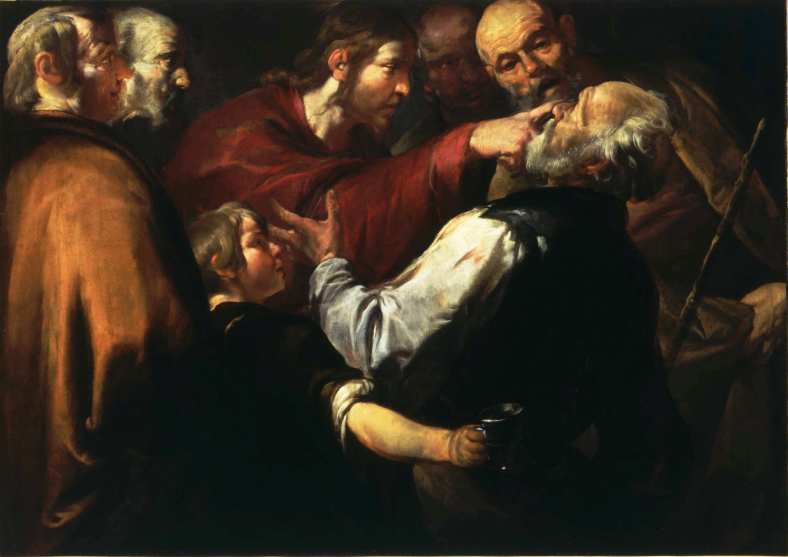
A recent post was about Jeremiah’s comparison of false religion to a broken cistern, with God alternatively being “the fountain of living waters.”[1]  Jeremiah lived when most of God’s people – including most of the priests and prophets – had turned from Him to follow other gods.  As Jeremiah remained faithful, correctly predicting that Jerusalem would fall to Babylon, he was persecuted, including this instance in Jeremiah 38:6, where King Zedekiah’s officials “took Jeremiah and cast him into the cistern of Malchiah, the king’s son, which was in the court of the guard, letting Jeremiah down by ropes. And there was no water in the cistern, but only mud, and Jeremiah sank in the mud.”

Since God is “the fountain of living waters,” the only path to eternal blessing, it’s incredibly ironic that Jeremiah, one of the few remaining faithful prophets and therefore a rare source of God’s “living waters,” should be cast into a cistern with no water.  Perhaps it was broken.  King Zedekiah thought he could silence the “living waters” Jeremiah represented by casting them into a cistern, trading truth for falsehood.

Photo by Mishal Ibrahim on Unsplash

Later, Jeremiah seems to recall the cistern experience in Lamentations 3:52-57, where he said:

I have been hunted like a bird
            by those who were my enemies without cause;
they flung me alive into the pit
            and cast stones on me;
water closed over my head;
            I said, ‘I am lost.’
‘I called on your name, O LORD,
            from the depths of the pit;
you heard my plea, ‘Do not close
            your ear to my cry for help!’
You came near when I called on you;
            you said, ‘Do not fear!’”

Returning to the book of Jeremiah, we read that Ebed-melech, an Ethiopian eunuch, heard of Jeremiah’s situation and pleaded his case: “My lord the king, these men have done evil in all that they did to Jeremiah the prophet by casting him into the cistern, and he will die there of hunger, for there is no bread left in the city.”[2]  This unlikely source – a foreigner – was Jeremiah’s deliverance from God to rescue Jeremiah from the well.  Ebed-melech gathered 30 men, “Then they drew Jeremiah up with ropes and lifted him out of the cistern. And Jeremiah remained in the court of the guard.”

Jeremiah was not the only Old Testament figure to suffer for his faithfulness.  Many years earlier, King David also referred to “sinking in the mire” in the Messianic Psalm 69, verses 14-15:

“Deliver me
            from sinking in the mire;
let me be delivered from my enemies
            and from the deep waters.
Let not the flood sweep over me,
            or the deep swallow me up,
            or the pit close its mouth over me.”

David knew this feeling of sinking came not because of his sin, but when he was faithfully serving his Lord.  David’s “sinking in the mire” happened under these circumstances from verse 9 of the same Psalm:

For zeal for your house has consumed me,
            and the reproaches of those who reproach you have fallen on me.”

In Jeremiah’s case, as well as David’s and that of Jesus, whom Psalm 69 foreshadowed[3], we know we that cannot judge our faithfulness based on whether it improves our circumstances.  When we do, we might stop being faithful because it seems we are “sinking in the mire.”  Being reproached by the world and feeling down aren’t the circumstances we prefer, but “Blessed are those who are persecuted for righteousness’ sake, for theirs is the kingdom of heaven.”[4]  Through these and all other circumstances, God develops in us deeper trust in Him.

Therefore, with David may we pray:

But as for me, my prayer is to you, O LORD.
            At an acceptable time, O God,
            in the abundance of your steadfast love answer me in your saving faithfulness.” – Psalm 69:13

And in His time, He will deliver us, perhaps in ways we don’t expect.

Coda

In 1995, Christian rock group Jars of Clay released their self-titled album, and the track “Flood” has similar themes to this post.  The song was also a mainstream hit, charting as high as No. 12 on the Billboard Modern Rock Tracks chart,[5] amazing for a song that is essentially a prayer like David’s in Psalm 69.

You can check out the song’s lyrics here: https://genius.com/Jars-of-clay-flood-lyrics

Or, if you have 3 ½ minutes, watch the music video here:


[1] Jeremiah 3:13
[2] Jeremiah 38:9
[3] John 2:17, 15:25, Acts 1:20, Romans 11:9-10, 15:3
[4] Matthew 5:10
[5] https://en.wikipedia.org/wiki/Flood_(Jars_of_Clay_song)

Don’t Fear Jezebel’s Algorithm

Sometimes we can get frustrated with the way the media, either traditional or social, seems to ignore or block out positive stories about God or Christianity.  Online networks like X (formerly Twitter) and Facebook can be very efficient at this, using complex algorithms to filter information, but on top of that human editors can intervene and block users they decide don’t fit their “community standards.”  However, resistance to spreading God’s word is as old as time, and God has never needed the assistance of any kind of media to accomplish what He wants to accomplish.

Consider the Old Testament story of Elijah, who prophesied during the reign of Israel’s evil king Ahab and his wife Jezebel.  According to Who’s Who in the Bible, “Jezebel devoted herself to bringing the worship of Baal and his consort Asherah to Israel. She employed 450 prophets of Baal and 400 prophetesses of Asherah (1 Kings 18:19), and persecuted the prophets of the Lord, including Elijah (1 Kings 19:1-9).”[1]  Many prophets were killed.

Elijah despaired, as written in 1 Kings 19:10 – “I have been very jealous for the LORD, the God of hosts. For the people of Israel have forsaken your covenant, thrown down your altars, and killed your prophets with the sword, and I, even I only, am left, and they seek my life, to take it away.”  It was as if all Christian voices but Elijah had been silenced by the authorities, and even he couldn’t feel safe.

Apostles also struggled to stay strong, including Paul.  When he was frustrated at resistance and lack of progress in Corinth, “the Lord said to Paul one night in a vision, ‘Do not be afraid, but go on speaking and do not be silent, for I am with you, and no one will attack you to harm you, for I have many in this city who are my people.”[2]

When Paul needed an example to encourage others to persist, he used Elijah’s story in Romans 11:2 – “God has not rejected his people whom he foreknew. Do you not know what the Scripture says of Elijah, how he appeals to God against Israel?  ‘Lord, they have killed your prophets, they have demolished your altars, and I alone am left, and they seek my life.’  But what is God’s reply to him? ‘I have kept for myself seven thousand men who have not bowed the knee to Baal.’” Corinth seemed like a lost cause, but God reminded Paul not to trust his own judgment.  God had it under control.

Therefore, our hope is not in the editors of our newspaper, or in social networks where we can share God’s message, or in the benevolence of the programmers of algorithms that choose who sees what we post, or in the regulators and legislators who monitor the public square, or in the founding political documents that give us rights.  But:

For as the rain and the snow come down from heaven
            and do not return there but water the earth,
making it bring forth and sprout,
            giving seed to the sower and bread to the eater,
so shall my word be that goes out from my mouth;
            it shall not return to me empty,
but it shall accomplish that which I purpose,
            and shall succeed in the thing for which I sent it.” – Isaiah 55:10-11

Like Jezebel killing all the prophets while promoting Baal and Asherah, censorship of Christian content may seem to be everywhere.  However, social network algorithms, editors, regulators, and governments are not our enemy, but our enemy is the one who tries to convince us we need these things more than we need the God who made them and who made us all.  His word will accomplish its purpose, and we have Elijah’s and Paul’s words and actions as evidence.

What then shall we say to these things? If God is for us, who can be against us?” – Romans 8:31


[1] Gardner, Paul D., editor.  The Complete Who’s Who in the Bible.  (1995)
[2] Acts 18:9-10

Learning Godly Fear

Does being forgiven by God cause us to fear Him less, or to fear Him more?  Perhaps it’s both.

Psalm 130:4 tells us this about God: “But with you there is forgiveness, that you may be feared.”  To one way of thinking, this seems backwards: why does knowing that God has forgiven us make us fear Him more?  Shouldn’t we fear Him less when forgiven?  It depends on what we mean by fear.

For me, getting Psalm 130:4 to make sense with the order of forgiveness and fear required a re-thinking of repentance.  My conclusion was: the one who has not been forgiven has not repented, and the reason they did not repent was that they did not fear God.  They did not understand Him properly.  They might be afraid of God, but that’s not the kind of fear referred to in Psalm 130.

In contrast, the one who has been forgiven has repented, and they repented because they understood it was the best thing for them to do, out of a fearful respect for God.  A proper understanding of God’s character makes us turn to Him with our guilt, rather than run away from Him.  We should not be afraid of God, where we are motivated to be passive – avoiding mistakes that would anger the one we fear.  We should fear God in that we revere Him and respect His authority, and therefore actively seek to please Him.

A lot goes into repentance.  When we pray and ask for forgiveness, it’s often a simple prayer made with the proverbial faith of a child, but there are a lot of assumptions we make when we say that prayer.  Every prayer of repentance directly or indirectly acknowledges some or all of these things:

1) God as the source of the law, the ultimate arbiter of right and wrong
2) Him as the righteous judge who is personally offended by our sin
3) His omniscience, knowing we cannot hide our sin
4) His uniqueness, as there is no other God to turn to
5) His steadfast love for us, knowing He bore the cost of our sin, therefore enabling us to approach Him
6) His compassion for us, since He lived as a man
7) His power and willingness to heal us of sin
8) His consistency of character: that He is not arbitrary

If we don’t implicitly or explicitly believe these things, why would we repent and ask forgiveness from God?  Why would we expect to get it?  Exploring that set of statements could fill multiple volumes of theology books, but we don’t need that knowledge.  In His grace, He honors our simple, heartfelt confessions.  He paid the price for all our inadequacies – even when we don’t fully understand our own prayers or who we’re praying to.  The Spirit pleads with the Father on our behalf[1].  Mercifully, our forgiveness is based on His faithfulness to us, not on our detailed theological knowledge.  1 John 1:9 tells us: “If we confess our sins, he is faithful and just to forgive us our sins and to cleanse us from all unrighteousness.”

Even our faith is imperfect, but His faithfulness bridges the gap between our childlike faith and His omniscience.  He knows all our doubts and all their answers.  We come as we are, but with fearful respect, and are forgiven.

Only through acceptance of the cross, where Christ’s atoning blood was shed for us, can God in His Holiness commune with us.  Only through forgiveness will the Holy Spirit come and live in us.  Only by tasting of His goodness do we really know what He is like, not before.  And if we never repent, we don’t learn what it tastes like, we only know what you’ve been told about God, and we might not have been told the truth.

Psalm 130:4 shows us that genuine repentance leads to forgiveness and gives us a better appreciation of who God is.  As we experience Him more, we live Psalm 34:8 for ourselves:

“Oh, taste and see that the LORD is good!
                        Blessed is the man who takes refuge in him!”


[1] Romans 8:26-27

Who’s Afraid of the Big, Bad News?

One day when my son was almost 4, he greeted me at the door after work, crying, and said “mommy turned on CNN!”  It wasn’t CNN in particular that was the problem.  It could have been any network, and we watch a variety of news outlets in our house.  While they each have their own point of view, the one thing they all seem to have in common is described in this 1974 quote from CBS journalist Eric Sevareid:

“The biggest big business in America is not steel, automobiles, or television. It is the manufacture, refinement and distribution of anxiety.”

It’s a sad truth that news outlets know that if they get an emotional response from us, we’re more likely to keep watching, which is how they make money.  This is nothing new.  They also know we’re more likely to respond to bad news than good news.  It’s sometimes enough to make anyone cry, not just a 3-year-old.

The problem also has a lot to do with the subjects covered.  Much of what’s in the news has to do with politics, which reminds me of this 1923 quote from H.L. Mencken:

“The whole aim of practical politics is to keep the populace alarmed (and hence clamorous to be led to safety) by an endless series of hobgoblins, most of them imaginary.”

Just like anxiety is big business for the media, keeping us “alarmed” is big business for politicians because if they can make us terrified of something and present themselves as the only solution, they can keep us hooked to their side, sometimes for life.  They’re after our undying allegiance and if fear of the enemy is what gets that allegiance, then fear of our enemy is what they’ll create.  The bigger the hobgoblin the better, even if it’s bad for the viewer’s health.

However, we don’t have to be anxious and alarmed by everything we see in the news.  Psalm 112:7 describes a particular sort of person:

He is not afraid of bad news;
            his heart is firm, trusting in the LORD.” – Psalm 112:7

Who is this fortunate person?  Does this person really exist in this hyper-partisan, 24-hour news cycle world?  The author (unnamed) begins Psalm 112 with this verse:

Praise the LORD!
Blessed is the man who fears the LORD,
            who greatly delights in his commandments!

So, who is not afraid of bad news?  The one who fears the LORD and delights in His commands.  With God’s help, we can overcome the fear and anxiety generated by our politicians and their media outlets.

The “man who fears the Lord” knows that God is capable of overcoming these problems, and if there’s something wrong in the world there’s a reason for it.  He’s in control.  They not only know that He is capable, but also that only He is capable.  No politician can do everything they promise to do, including getting rid of the hobgoblins.  Sometimes political promises are so outlandish that believing them would amount to idolatry.  Only God will keep all of His promises and can handle all of the world’s bad news.  If we really believe this, we will not be afraid of bad news.

The one who “greatly delights in his commandments” knows that nowhere does God command us to address every problem we’re aware of, everywhere in the world.  Nowhere does God command us to swear blind allegiance to any politician who warns us of “an endless series of hobgoblins,” because only He can ultimately deliver us.  They know that although God commands us to love our neighbor, we all have limits in what we are able to do.  But the person in Psalm 112:1 also knows that we have no excuse to ignore the problems we can address.  We don’t need to have anxiety about things we can do nothing about, because nothing escapes God’s attention and in His commands to His people, He has considered all possibilities.

So, does the news cause you alarm and anxiety?  If you do, you’re definitely not alone.  I struggle with it.  The solution can be found in cultivating a deeper relationship with, and reverent fear of, the Lord.  Spend regular time in the word, rather than in the TV, to build confidence in God’s character.  Spend time praying and meditating, sharing with God your concerns.  Spend time with God’s people and avoid rabid political partisans who draw your attention away from God’s peace to the hobgoblins and the pretend saviors.  It’s hard, because there’s an entire industry designed to make us fearful and anxious.  But over time, while we may take 2 steps forward and one step back, we always know that He is with us.

Does the news not cause you alarm and anxiety?  Count yourself blessed.  But for all of us:

Praise the LORD!
Blessed is the man who fears the LORD,
            who greatly delights in his commandments!

Weather or Not, God Loves Us

Marylanders like to joke about how unpredictable our weather is.  People here sometimes say “if you don’t like the weather right now, wait 5 minutes.”  The weather might be different then.  There’s also this funny “chart” using the Maryland flag to make the same point:

We don’t get long, consistent seasons, only a few days or a couple weeks of the same weather at a time.  Maybe for Marylanders, Psalm 148:7-8 is harder to swallow.  It says:

Praise the LORD from the earth,
            you great sea creatures and all deeps,
fire and hail, snow and mist,
            stormy wind fulfilling his word!

The second half of these verses describe weather, mostly bad weather, and says the different kinds of weather are all “fulfilling his word”!  To God, the weather isn’t unpredictable at all.  It’s doing exactly what He knows it will do.  I’m not saying we should praise God for devastating wildfires and hurricanes, but the Psalm is saying that the weather itself should praise the Lord.  Therefore, we should praise the Lord for the weather, whatever it is!

Also consider that the weather we might consider so unpredictably annoying is obeying God better than we do.  If we’re frustrated by the weather, imagine how frustrating we must be to God.  Fortunately, God is more than willing to forgive us for all the things we do or don’t do that dishonor Him.  Through the death of Jesus, God’s wrath is fulfilled, and through His resurrection we are given new life and in the future world, we will always be “fulfilling his word.”

Whether you’re frustrated with the weather today or not, remember that God loves you even if you’re as unpredictable as the weather (or more).  So, praise God today for the weather and praise God for the sacrifice of Jesus that reconciles us to Him.