Letting God Pick Our Battles

Image by Richard Mcall from Pixabay

Picking your battles, rather than trying to fight and win every fight that comes your way, is a good piece of advice.  However, who should pick which battles to fight?  The Old Testament book of Judges is a record of the consequences of Israel’s failure to completely conquer the promised land, a battle God gave them to fight and win.  Judges also shows more generally what happens when anyone picks the wrong battles to fight: they end up with less than what God intended for them.

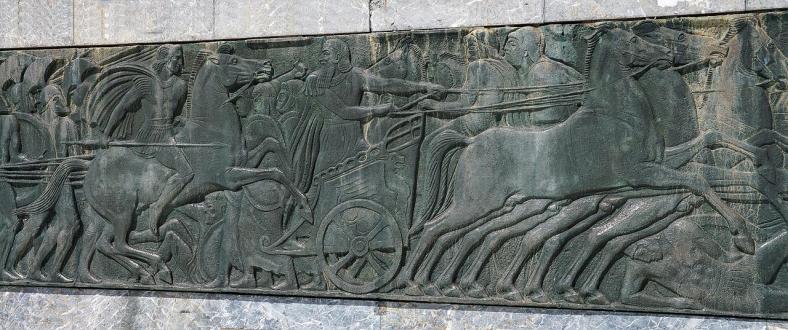
For example, Judges 1:19 tells us: “And the LORD was with Judah, and he took possession of the hill country, but he could not drive out the inhabitants of the plain because they had chariots of iron.

This verse, especially the second part, is written from a human perspective.  God did not tell Israel to conquer all of the promised land, except for the plains.  God is not afraid of chariots.  He told them to conquer all of it, but Israel thought that chariots couldn’t be defeated, so they decided not to fight in the plain.  By using their own judgement and preferring to fight in hills or forests where chariots were less effective, they failed to fully receive what God had promised them.

An application to us is that our inheritance is Christ’s righteousness, and Jesus tells us “Blessed are those who hunger and thirst for righteousness, for they shall be satisfied.[1]  Jesus is telling us that righteousness is like food and drink.  We can never have enough because no matter how much we eat and drink, our hunger and thirst soon return.  We are all in different places, at different levels of knowledge and maturity, but in Christ we are all on the same path and have an appetite only He can satisfy.

To be satisfied, we cannot settle for what we have already accomplished, the hill country we have already taken.  To be satisfied, we must fight the chariots in the plains if that is what God wants us to do, so that we learn to rely on His strength.  To be satisfied, we move from only fighting battles we choose based on our own wisdom and ability to choosing the battles we will win in His strength.

Sometimes life is hard on purpose, so that God alone may be glorified in victory, and also so that we may grow in our faith in His strength.  When we let Him pick our battles, we learn that His righteousness is the only thing that will satisfy us.  Nothing less will do.


[1] Matthew 5:6

The Benefit of Faith

One of my favorite comedians (and the only one I’ve paid to see live) is Steven Wright.  His deadpan delivery and observational humor were a combination no other comedian could do like him.  One of his lines is: “You know when you’re sitting on a chair, and you lean back so you’re just on two legs and you lean too far so you almost fall over but at the last second you catch yourself? I feel like that all the time…”  He has a bit of a bizarre personality, so you’re tempted to believe him.

In that moment, we feel a sense of danger.  We’re convinced that we’re going to fall.  That the chair isn’t going to what we expect it to do and what it’s designed to do – support us.  In other words, we lose faith in the chair and that feeling of doubt shocks us into catching ourselves.  However, it was our faith in the chair that gives us the confidence to sit on it in the first place, and our misuse of the chair that almost made us fall.

See, the purpose of a chair is not to make us believe it is strong enough for us to sit on, but to give us a place to sit when we need it, when we use it correctly.  A chair doesn’t exist to generate an abstract, unused faith, but it exists to provide a specific benefit when we exercise our faith in it.  It serves a specific need, but it won’t fill that need if we don’t trust it.  Mere faith in a chair gives us no benefit.

Photo by insung yoon on Unsplash

In some ways, our relationship with God is like this.  When we believe in Him, we can have a purpose and meaning to our lives because we understand our origin and destiny.  We can know we aren’t accidents that nobody cares about, but that we are created, loved, beings.  However, we may live like we’re constantly at that place where we feel like we’re going to fall backwards if we don’t trust God enough to do what we were designed to do – which is to love Him and to love our fellow man.

The purpose of our faith in God isn’t to make us only believe that He can give our lives direction and meaning, but our faith exists to enable us to trust Him when He tells us that the way He designed for us to live is actually the way we should live.  We can feel secure living our lives to glorify Him not because we have an abstract, unused faith, but because we decide to actually live our lives to glorify Him.

When we feel like we’re going to fall spiritually, we may actually be feeling that way because we’re not exercising our faith as we’re supposed to.  We may need to ask God where we aren’t living out our trust in Him, and He may show us the right path where we can feel (and actually be) secure.  But we need to decide to walk on that path, otherwise our faith has little benefit.

So, you know when you’re sitting on a chair (on all 4 legs), and you are fully trusting the chair to support you? You can feel like that all the time…but it takes some faith, maybe repentance, and maybe even effort.

A Spiritual Lesson from a Roller Coaster

Intimidator 305 at King’s Dominion. The first hill at the top, with the following airtime hill in the middle.

My teenage son is a roller coaster enthusiast.  He memorizes how tall they all are, how many inversions they each have, who the manufacturers are, how they work, and anything else he can find out.  He takes lots of pictures of roller coasters, including the one I used for this post.  Fortunately, I like them too.  We’ve been on well over 100 different coasters together and will ride anything, but we do have slightly different tastes.  Usually, he likes airtime more than I do, and I like intensity more than he does.  As an enthusiast, he’s the one who told me what a greyout is: “a transient loss of vision characterized by a perceived dimming of light and color, sometimes accompanied by a loss of peripheral vision.”[1]  Caused by low brain oxygen levels, a greyout can happen on roller coasters and can be a precursor to fainting.

Intimidator 305 at King’s Dominion in Virginia was my first greyout.  The ride, with a 90-mph top speed on the 300-foot first drop, is themed after NASCAR driver Dale Earnhardt, whose nickname was “The Intimidator.”  At the bottom of that first drop, the track banks into a 270-degree turn to the right, and the first time on it, the edges of my vision began to fade as blood rushed to my legs and feet.  I felt the intensity rising, and my field of vision gradually narrowed into a small pinpoint, and I nervously tensed up.  However, before I knew it, I was fine and back to enjoying the ride.

After we got off, I mentioned my greyout and my enthusiast son explained why I recovered so quickly.  It was no accident.  Intimidator 305 was designed by people who knew what the ride would do to people, so after the 270-degree turn, there is a 150-foot airtime hill.  As the train comes up this hill, the track bends down at a lower angle than the train would go on its own momentum, which not only gives riders “airtime” as they feel weightless, but also gives a rush of blood to the brain.  So, by design, I experienced greyout, followed by an amazingly quick return to normal, without fainting. 

What’s the spiritual lesson in this?  There are times where our lives feel like we’re in that disorienting 270-degree turn at 90 mph.  Our awareness narrows to where we can only see the problems in front of us and our body begins to feel stress.  In some cases, the stress itself might become the only thing we can see, having forgotten what caused it.  That intense turn can seem like it will never end, and we can’t see the relief ahead of us.  Sometimes it comes after a great success, perhaps right after the thrill of dropping down a hill at high speed…Or perhaps after experiencing a miracle.  Peter had such faith that he walked on water, “But when he saw the wind, he was afraid, and beginning to sink he cried out, ‘Lord, save me.’”[2]  Even Apostles felt hopeless sometimes.

Like Peter, when we cry out “Lord, save me” we may need a reminder of 1 Corinthians 10:13, where Paul wrote: “No temptation has overtaken you that is not common to man. God is faithful, and He will not let you be tempted beyond your ability, but with the temptation he will also provide the way of escape, that you may be able to endure it.”

We may need a reminder from a Christian enthusiast, or maybe from our Father Himself, that we have a way of escape by design. After every sharp turn we think will never end is a refreshing moment where we feel weightless, held by our Lord in His loving embrace. In Peter’s case, “Jesus immediately reached out his hand and took hold of him, saying to him, ‘O you of little faith, why did you doubt?’ And when they got into the boat, the wind ceased.[3] In the Father’s wisdom, relief will not always be immediate – it may take longer than we expect, but it is inevitable because He promises it.

That day, we rode Intimidator 305 three more times and every time I wasn’t as worried about the greyout because I knew that airtime hill was coming.  It’s now one of my favorites.  Thankfully, our lives also are in the hands of a Designer who knows how to teach us to trust Him, and also how to heal us when life’s troubles feel like they’re going to knock us out.


[1] https://en.wikipedia.org/wiki/Greyout
[2] Matthew 14:29-30
[3] Matthew 14:31-32

The God Who is Never Inadequate

Once upon a time, “Moses was keeping the flock of his father-in-law, Jethro, the priest of Midian, and he led his flock to the west side of the wilderness and came to Horeb, the mountain of God.”[1]  It seemed like a normal day for a shepherd until he saw a burning bush, but not any burning bush.  This one, though on fire, was not consumed by the fire.  As anyone would, Moses was curious and stopped to look.  Then, “When the LORD saw that he turned aside to see, God called to him out of the bush, ‘Moses, Moses!’ And he said, ‘Here I am.’”[2] [emphasis mine]

But just a few verses later, “Moses said to God, ‘Who am I that I should go to Pharaoh and bring the children of Israel out of Egypt?’”[3]  Moses’ “Here I am” quickly became a “Who am I,” and why?  Because God had spoken to Moses from the bush saying that He had come to deliver the Jews from their affliction as slaves under the Egyptians.  God wanted Moses to be His representative before Pharaoh, but Moses objected not just this one time, but three more times:

Then Moses said to God, ‘If I come to the people of Israel and say to them, ‘The God of your fathers has sent me to you,’ and they ask me, ‘What is his name?’ what shall I say to them?’” – Exodus 3:13
Then Moses answered, ‘But behold, they will not believe me or listen to my voice, for they will say, ‘The LORD did not appear to you.’’” – Exodus 4:1
But Moses said to the LORD, ‘Oh, my Lord, I am not eloquent, either in the past or since you have spoken to your servant, but I am slow of speech and of tongue.’” – Exodus 4:10

“What should I say?”  “Who are you?”  “What if they don’t listen?”  “I’m not a good speaker” …These were the objections Moses weighed against the fact staring him in the face that God was there, burning a bush without the fire consuming it.  Moses went from amazement to avoidance incredibly fast, once given a seemingly difficult task.

It’s easy to criticize Moses, but do we also change our view of God, and of ourselves, based on what God asks us to do?  Do we praise God on Sunday morning and in our private times, yet say we’re busy when asked to do something specific for God that might be uncomfortable?

If so, all of us, and Moses, are in plentiful company.  Gideon likewise pushed back on God’s call in Judges 6:15 – “And he said to him, ‘Please, Lord, how can I save Israel? Behold, my clan is the weakest in Manasseh, and I am the least in my father’s house.’”[4]

Jeremiah tried to argue with God in Jeremiah 1:6 – “Then I said, ‘Ah, Lord GOD! Behold, I do not know how to speak, for I am only a youth.’”[5]

Isaiah, like the others, claimed he was no good for what God asked him to do, and in Isaiah 6:5 “said: ‘Woe is me! For I am lost; for I am a man of unclean lips, and I dwell in the midst of a people of unclean lips; for my eyes have seen the King, the LORD of hosts!’”

Back to Moses’ case, he was either certain that a God who could make a bush burn without it being consumed could not empower him to speak, or just too scared to do what God had asked.  However, if we rely on God, who is always the I AM, we can do whatever He asks.  But if we focus on who we are, we cannot.  Our “Here I am” will became a “Who am I” when we feel inadequate.

Photo by Kelly Sikkema on Unsplash

We can read on and learn that later, God had strengthened the faith of this same Moses, so that when Israel was terrified and cornered against the Red Sea, with Pharaoh’s army approaching, he declared: “Fear not, stand firm, and see the salvation of the LORD, which he will work for you today. For the Egyptians whom you see today, you shall never see again.  The LORD will fight for you, and you have only to be silent.[6]  The Moses who was once full of excuses was used by God to deliver a nation.

If God is asking you to do something difficult or uncomfortable today, you know what to do.  We can’t read on to the rest of our story, but He has, and He knows what He is doing.


[1] Exodus 3:1
[2] Exodus 3:4
[3] Exodus 3:11
[4] I wrote about Gideon’s call in Giving Gideon the Benefit of the Doubt
[5] Likewise, in God Equips Those He Calls
[6] Exodus 13:13b-14

O Ye of Little Faith

Does it sometimes feel like our faith is useless?  Like it’s not big enough to be effective?  To enable us to trust God?  Also, do we often feel like we should be perfect, but we’re not?  Like sin continues to conquer some areas of our lives, regardless of our best efforts?  In Mark 4, Jesus tells two parables that can reassure us that we shouldn’t lose heart when we feel this way.

The first parable is about how the kingdom of God grows from small, scattered seeds to a full and bountiful harvest.  This short parable has a lot to say, and makes (among others) these two points, just in verse 28: “The earth produces by itself, first the blade, then the ear, then the full grain in the ear.”  Jesus says that from the seed, “the earth produces by itself.”  The phrase “by itself” in the original Greek is automatos, where we get the English word automatic.  Like we don’t know how literal seeds grow, we also don’t know how the seed of the kingdom of God grows, but Jesus tells us that it grows automatically, meaning not by our own effort.  In the life of a believer, faith and obedience to the kingdom of God will grow because God causes it to grow.  When we feel our faith has failed, God can and will use that failure to grow our faith more than we could imagine.

The second point is made by the phrase “first the blade, then the ear, then the full grain in the ear.”  In Jesus’ day, many Jews expected the Messiah to come and immediately implement His kingdom, overthrowing Rome and restoring Israel to its glory days under King David, but better.  However, the phrase “first the blade…” points out that the kingdom of God comes slowly and in stages.  It first comes to individual believers, then spreads to others, then “when the grain is ripe, at once he puts in the sickle, because the harvest has come”(verse 29).

Jesus was referring to the kingdom as a whole, but I believe it also refers to the life and growth of each believer’s faith.  First, our faith is only enough to restore our relationship to God and He grants us salvation by His mercy and grace.  Over time, our faith grows into a “blade,” then an “ear” in the different areas of our lives.  In some ways we may be faithful, but in others we may continue to struggle, even for very long periods of time.  But someday, when “the harvest has come,” He will bring us home and perfect our faith forever in every area of our lives.  When the time comes, the kingdom will come suddenly and completely, but until then it grows slowly, both in aggregate and in each individual.

The second parable is the parable of the mustard seed, one of the smallest seeds.  “When sown on the ground, is the smallest of all the seeds on earth, yet when it is sown it grows up and becomes larger than all the garden plants.”  Again, Jesus is speaking most directly about the entire kingdom of God, but the truth is also lived out in the life of each of us.  Sometimes our faith seems as small as a mustard seed, but that faith is destined to be perfect and complete.  As pointed out in the first parable, it’s not our own effort that causes our faith to grow, but the power of God that causes it to grow “automatically.”  Everyone’s faith seems small at first and also may seem small at different times and in different ways, but like the mustard seed, it’s not the size of our faith in the beginning or now that really matters, it’s what that seed is destined to grow up to be that’s important.  We might not even notice our faith at some times because it seems so small, but the size of our faith is not what matters, it’s the power of the One we have faith in.

So, does your faith seem useless and small today?  Does it seem like you can’t trust God enough to follow Him in every area of your life, or to overcome some habitual sin (or sins)?  Remember that faith as small as the smallest seed, the mustard seed, will grow so that it overcomes all of our failures.  God will cause it to grow, in ways that seem “automatic” to us.  If He has given us any faith at all, He will see the growth of that faith through to the end.  As Paul wrote in Phillipians 1:6, “And I am sure of this, that he who began a good work in you will bring it to completion at the day of Jesus Christ.”

Amen.