Things God Counts

Fellow travelers,

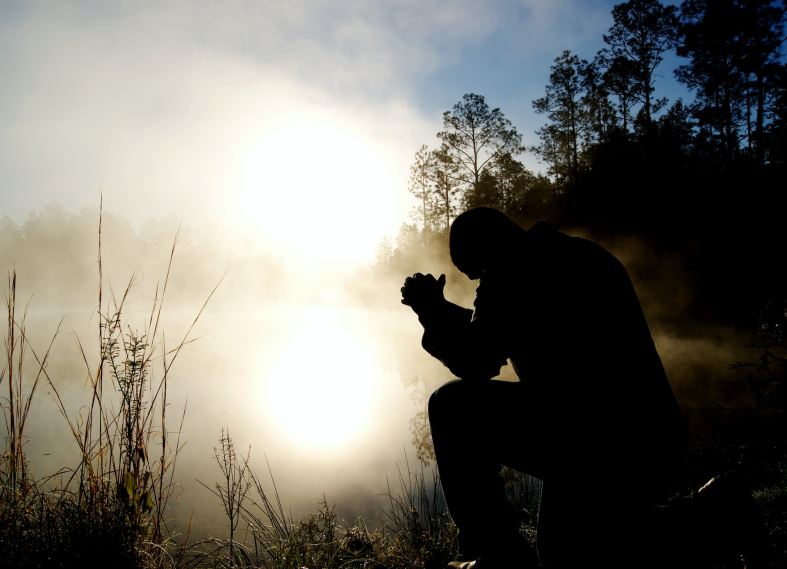
Are you ever so fearful or anxious about something that you lose sleep about it? Are there things out of your control that you toss and turn over? Maybe it’s so bad that you even cry. If you’re like this, you’re definitely not alone, and in fact, King David struggled with this kind of anxiety.

In Psalm 56, David laments that his enemies are constantly out to get him, and then in verse 8, David wrote about God:

You have kept count of my tossings;
            put my tears in your bottle.
            Are they not in your book?

What David means is that God sees all of our anxiety and every detail about how it affects us.  He counts every time we toss and turn at night.  He counts every tear you cry, and keeps track of them all, because he cares.

This realization causes David to write in verses 10 and 11:

In God, whose word I praise,
            in the LORD, whose word I praise,
in God I trust; I shall not be afraid.
            What can man do to me?

Prayer or any religious practice won’t always cure anxiety, but as long as we suffer, God knows and cares about it.  We can trust Him to provide for us, sometime between now and eternity.

As Paul wrote about the glory of our salvation:

If God is for us, who can be against us?  He who did not spare his own Son but gave him up for us all, how will he not also with him graciously give us all things?[1]

Amen


[1] Romans 8:31b-32

God Deserves a Standing Ovation

Do you ever clap for God?  Maybe we’ve clapped during a worship song or after a speech or sermon, but do we just clap for God because He’s God and we’re joyful about it?  Psalm 47:1 tells us to:

Clap your hands, all peoples!
            Shout to God with loud songs of joy!

Ok, but should we, really?  After verse 1 above, verse 2 begins with “For…”, a transition which usually means the writer is about to give us reasons for the thing previously mentioned, which is that we should praise God with clapping and shouts of joy.  So, seeing the “For…” we should ask “Why should we praise God?” and expect an answer in the next verses, which say:

For the LORD, the Most High, is to be feared,
            a great king over all the earth.

He subdued peoples under us,
            and nations under our feet.

He chose our heritage for us,
            the pride of Jacob whom he loves. Selah

Each of the 3 verses gives us reasons to clap our hands and shout in praise.  First, these verses remind us He is “king over all the earth.”  There are many authorities in the world, and many authorities we follow.  We have governments that rule us, cultures that influence us, and even spiritual forces that strive to pull us away from God.  But, however high and mighty these other authorities may be, only the Lord is “Most High”, as King of Kings and Lord of Lords.  While every other authority is flawed and can lead us astray, He is not and does not.  This is a cause for a clap of praise!

The next verse reminds us that He has overcome many opposing people and nations in the past:

He subdued peoples under us,
            and nations under our feet.

To its original audience, this probably referred to God’s victory over Egypt at the Red Sea, or the conquest of Canaan, however it can be read more broadly as God’s victory over any nation that seeks to rival Him.  Consider the Roman Empire, which to many at that time seemed like it ruled the entire world.  Roman emperors such as Nero and Diocletian tried to stamp out Christianity forcefully and violently, but in 410 AD, Germanic tribes would sack the city of Rome and eventually overthrow the empire.  No nation will outlast or overrule the reign of God.  This also is a cause for praise!

Lastly, verse 4 reminds us that however our circumstances might look to us, He loves us, provides for us, and will give us eternal refuge:

He chose our heritage for us,
            the pride of Jacob whom he loves. Selah

Being chosen by God is infinitely better than winning the lottery or anything else we might hope for in this world.  We might say we’ve won the spiritual lottery, only it was not won by chance, but by the favor of the Lord.  Our inheritance, our heritage, is guaranteed by Him.  Another reason to praise Him!  So…

Clap your hands, all peoples!
            Shout to God with loud songs of joy!

Photo by Guillermo Latorre on Unsplash

A Scurry of Ebenezers

What is an Ebenezer?  In the Old Testament, an Ebenezer was a “stone of help,” a kind of monument to times God helped His people.  These markers were a reminder of God’s faithfulness, providing strength for the present and future.  Sometimes in the Bible, these moments where God intervenes are noted by the phrase “but God” followed by a change in the direction of the story.

Ebenezer (pictured) is also a squirrel, and this blog’s mascot.  He represents these “but God” memorials in the Bible.  As a squirrel suddenly and unexpectedly draws our attention, Ebenezers draw our attention to reminders of God’s influence on history and our lives.  If so, a “scurry” of squirrels, as a group of them is called, should get our attention even more!  In the story of Joseph from the book of Genesis, Ebenezer (“but God”) appears multiple times:

  • Genesis 45:8 – “So it was not you who sent me here, but God. He has made me a father to Pharaoh, and lord of all his house and ruler over all the land of Egypt.”
  • Genesis 48:21 – “Then Israel said to Joseph, “Behold, I am about to die, but God will be with you and will bring you again to the land of your fathers.”
  • Genesis 50:20 – “As for you, you meant evil against me, but God meant it for good, to bring it about that many people should be kept alive, as they are today.
  • Gen. 50:24 “And Joseph said to his brothers, ‘I am about to die, but God will visit you and bring you up out of this land to the land that he swore to Abraham, to Isaac, and to Jacob.’

The story of Joseph is long and complicated but is really a story of extreme sibling rivalry and jealousy being turned by God into a story of salvation for all of God’s family.  God intervened in many ways.

Joseph was favored by his father over his brothers, and when he shared his dreams that his family would one day bow down to him, his brothers despised him more and sold him into slavery in Egypt.  Joseph’s brothers directly were responsible this, “but God” accomplished much for Joseph in Egypt, according to Genesis 45:8.  The result of one “but God” is that Joseph had risen to a position of great power.

In addition, Joseph’s brothers hated him enough to not only sell him into slavery, but they also lied to their father, saying Joseph had been killed by wild animals.  “But God” not only used these evil intentions and acts to raise up Joseph, but through Joseph God also “meant it for good,” as Genesis 50:20 says, keeping many people alive.  Joseph had been placed in charge of the distribution of food in Egypt during a long famine.  When Joseph’s brothers came from Canaan to buy food, Joseph concealed his identity and tested them, but eventually revealed himself and gave them a new home in Egypt, providing food and a livelihood for them for years.  God made something great out of the evil of Joseph’s brothers.

There are more bad events in Joseph’s life that God overcame, without a direct “but God” reference.  Joseph had been wrongly accused of attempted rape by the wife of his earlier Egyptian employer, Potiphar.  While spending time in prison on this charge, Joseph also suffered an extended sentence because the cupbearer, who promised to advocate for Joseph to Pharaoh, forgot about him for 2 years.  All of these things Joseph overcame, with God intervening all along the way.

One last example.  Joseph also prophesied another “but God” in the future, in Genesis 50:24.  While Egypt initially welcomed Israel with open arms, giving them land in a choice area of Egypt, as the nation of Israel grew, they were eventually bound in slavery when a Pharaoh saw their size as a threat.  Joseph knew Israel would be delivered from this slavery, and “God will visit you and bring you up out of this land to the land that he swore to Abraham, to Isaac, and to Jacob.”  The people would return to Canaan.

What does this mean for us?  That God is always intervening in our lives in more ways than we know, or probably could even comprehend.  Sometimes our lives can seem out of control and overwhelming, “but God” intervenes in our past, present, and future.

Every moment, we are surrounded by a scurry of Ebenezers, including many we are not aware of.

“God is always doing 10,000 things in your life, and you may be aware of three of them.” – John Piper


Faithful Affliction

Sometimes the Bible surprises us by explaining things differently than how our natural instincts would like.  In the case of Psalm 119:75, there are two words that we might not think of together:

“I know, O LORD, that your rules are righteous,
            and that in faithfulness you have afflicted me.”

How often do we associate God’s faithfulness with affliction?  Don’t we usually associate it with our blessings?  Yet there it is: “in faithfulness you have afflicted me.”

Earlier, in verse 71, David wrote:

“It is good for me that I was afflicted,
                        that I might learn your statutes.”

Then he says the benefit he gets from learning this is more than “thousands of gold and silver pieces”. Since we benefit from discipline, would God be unfaithful if He did not discipline us?  Or do we only consider Him faithful when things seem to go well?

My son, do not despise the LORD’S discipline
            or be weary of his reproof,
for the LORD reproves him whom he loves,
            as a father the son in whom he delights.” – Proverbs 3:11-12

He is faithful, always.  Even in affliction.  Perhaps especially.

Daily Exhortation

“But exhort one another every day, as long as it is called ‘today,’ that none of you may be hardened by the deceitfulness of sin.” – Hebrews 3:13

All need regular encouragement to listen to His voice above others.  Knowing our commonality in failure and struggle, as well as in obedience and triumph, gives us strength to stay on the path of faith.

Today is an opportunity to exhort.  As one of the elders at my church says: “How do you know someone needs encouragement?  They’re breathing.”