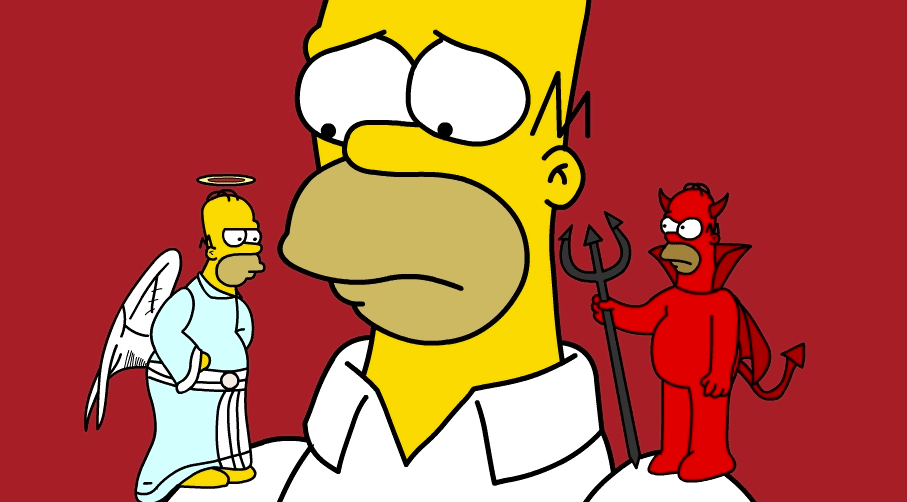
Bible in a Year: Week of March 18 – 24

Fellow travelers:

Below are the chapters to read this week if you’re following along in my Bible in a year schedule, divided into morning and evening readings.  Follow along any way you want: just do the evening reading, flip the morning and evening, read it all.  Whatever works for you and your schedule!  It doesn’t have to be Bible in a Year for everyone.

This week we finish 2 Kings and begin 1 Chronicles.  After the 2 Chronicles books, we move to Ezra and Nehemiah, then on to the New Testament, starting with the gospel of Matthew.

Monday, March 18
Morning: Psalm 78, 2 Kings 23
Evening: Exodus 28

Tuesday, March 19
Morning: Psalm 79, 2 Kings 24
Evening: Exodus 29

Wednesday, March 20
Morning: Psalm 80, 2 Kings 25
Evening: Exodus 30

Thursday, March 21
Morning: Psalm 81, 1 Chronicles 1
Evening: Exodus 31

Friday, March 22
Morning: Psalm 82, 1 Chronicles 2
Evening: Exodus 32

Saturday, March 23
Morning: Psalm 83, 1 Chronicles 3-4
Evening: Exodus 33

Sunday, March 24
Morning: Psalm 84, 1 Chronicles 5-6
Evening: Exodus 34

Holiness is Like a Bowl of M&Ms?

Rock stars get a bad reputation for big egos and decadent lifestyles, and often for good reason.  But sometimes it’s just a misunderstanding.  Over the years, rock band Van Halen has been criticized over the infamous “brown M&M” clause in their contract with concert promoters.  Listed among many requirements, including how they want the stage set up and safety concerns, was buried a requirement that there should be a bowl of M&Ms backstage.  But not just any bowl: it had to have absolutely no brown-colored M&Ms.  This clause gained the band a bad reputation, because what kind of egomaniac would make someone go through the work of picking out every brown M&M?  Don’t all the colors taste the same anyway?

However, the clause had nothing to do with the band’s taste in M&M flavors or colors.  In addition to all the contract terms needed to cover many “important things,” they also needed a quick and easy way to know that the workers at the arena had thoroughly read the contract.  The M&Ms were that way.  Because of the “brown M&M” clause, as soon as the band walked backstage, seeing the bowl of M&Ms would immediately let them know the “important things” would be covered as well.

What’s this story doing on a Christian blog?  In the Bible, God describes His relationship with His people as a covenant, a form of contract, in this case between a King and His subjects.  Some parts of this agreement – consider the long descriptions of the tabernacle and temple in the Old Testament – may seem dull and insignificant.  Much of Exodus 25-27, and most of Exodus 35-40, detail the design of the tabernacle as given by God to Moses.  The collection of the materials, the work of the craftsmen in building the various parts, and finally Moses setting up the completed tabernacle are listed in seemingly repetitive and pointless detail.

However, in addition to God wanting His tabernacle set up correctly, the mere accumulation of detail also makes a point – that God cares about every single detail of His covenant with His people.  Nothing is to be ignored, just like the bowl of M&Ms.  But this concern for detail does not mean that He holds every violation we commit over our head to make us feel guilty.  Instead, it makes two points:

First, anything less than holiness is not good enough for God.  If He accepted less, He would not be just.  As one brown M&M was too much for Van Halen, or one drop of cyanide would be too much to put in our glass of water, one instance of sin is too much for God.  Therefore, only Jesus, by living the perfect life, could be acceptable to God the Father.  Fortunately for all of us, Jesus’ righteousness is offered to us freely.  He met the standard of perfection for us.

Second, the level of detail lets us know that He cares about every detail of our lives.  We can talk to Him about anything because there is nothing He is not concerned about or is not interested in hearing from us, or able to lovingly walk alongside us through.  David wrote in Psalm 23:4 that:

Even though I walk through the valley of the shadow of death,
            I will fear no evil,
for you are with me;
            your rod and your staff,
            they comfort me.”

The rod and staff of our Good Shepherd are not there to punish us, but to guide and lead us through every experience we have in this world, good or bad, and into the next world, where all is holy and good.  His covenant with us – His contractual promise – is to be our God, and we are to be His people.

Our Father in heaven cares about every little thing.  Even brown M&Ms.

Barbs in Our Eyes

As Israel was preparing to enter the Promised Land of Canaan after wandering in the wilderness, God gave them many instructions through Moses about how they were to live when they got there.  One of the instructions was to eliminate all of Canaan’s inhabitants.  Part of the warning not to ignore this comes in Numbers 33:55, which says:

But if you do not drive out the inhabitants of the land from before you, then those of them whom you let remain shall be as barbs in your eyes and thorns in your sides, and they shall trouble you in the land where you dwell.”

What this is communicating is the urgency of getting rid of anything that could influence us to sin, and this applies as much to us as to ancient Israel.  In Israel’s case, the nations they were to remove from Canaan were under God’s judgement for centuries of worship of false gods, which included practices like ritual prostitution and child sacrifice.  God knew that His people would be tempted by these foreign gods and practices unless all trace of them was eliminated.

For us, God also wants to protect us from false gods and harmful practices and habits, and the phrase “barbs in your eyes” is a picture of the urgency for us to get rid of anything that would tempt us.  Think about it: If I had a thorn in my eye, I would drop everything and not be able to do anything else until I got it out.  Until the thorn was gone, it would be my one and only priority.  In modern times, God doesn’t tell His people to attack other nations in judgement, but He does want His people to attack sin with the same zeal.

So when I read “But if you do not drive out the inhabitants of the land from before you, then those of them whom you let remain shall be as barbs in your eyes and thorns in your sides, and they shall trouble you in the land where you dwell” it leads me to ask the question:

Do we remove sources of sin from our lives as urgently as we would a barb in our eye?

Things God Counts

Fellow travelers,

Are you ever so fearful or anxious about something that you lose sleep about it? Are there things out of your control that you toss and turn over? Maybe it’s so bad that you even cry. If you’re like this, you’re definitely not alone, and in fact, King David struggled with this kind of anxiety.

In Psalm 56, David laments that his enemies are constantly out to get him, and then in verse 8, David wrote about God:

You have kept count of my tossings;
            put my tears in your bottle.
            Are they not in your book?

What David means is that God sees all of our anxiety and every detail about how it affects us.  He counts every time we toss and turn at night.  He counts every tear you cry, and keeps track of them all, because he cares.

This realization causes David to write in verses 10 and 11:

In God, whose word I praise,
            in the LORD, whose word I praise,
in God I trust; I shall not be afraid.
            What can man do to me?

Prayer or any religious practice won’t always cure anxiety, but as long as we suffer, God knows and cares about it.  We can trust Him to provide for us, sometime between now and eternity.

As Paul wrote about the glory of our salvation:

If God is for us, who can be against us?  He who did not spare his own Son but gave him up for us all, how will he not also with him graciously give us all things?[1]

Amen


[1] Romans 8:31b-32

God Deserves a Standing Ovation

Do you ever clap for God?  Maybe we’ve clapped during a worship song or after a speech or sermon, but do we just clap for God because He’s God and we’re joyful about it?  Psalm 47:1 tells us to:

Clap your hands, all peoples!
            Shout to God with loud songs of joy!

Ok, but should we, really?  After verse 1 above, verse 2 begins with “For…”, a transition which usually means the writer is about to give us reasons for the thing previously mentioned, which is that we should praise God with clapping and shouts of joy.  So, seeing the “For…” we should ask “Why should we praise God?” and expect an answer in the next verses, which say:

For the LORD, the Most High, is to be feared,
            a great king over all the earth.

He subdued peoples under us,
            and nations under our feet.

He chose our heritage for us,
            the pride of Jacob whom he loves. Selah

Each of the 3 verses gives us reasons to clap our hands and shout in praise.  First, these verses remind us He is “king over all the earth.”  There are many authorities in the world, and many authorities we follow.  We have governments that rule us, cultures that influence us, and even spiritual forces that strive to pull us away from God.  But, however high and mighty these other authorities may be, only the Lord is “Most High”, as King of Kings and Lord of Lords.  While every other authority is flawed and can lead us astray, He is not and does not.  This is a cause for a clap of praise!

The next verse reminds us that He has overcome many opposing people and nations in the past:

He subdued peoples under us,
            and nations under our feet.

To its original audience, this probably referred to God’s victory over Egypt at the Red Sea, or the conquest of Canaan, however it can be read more broadly as God’s victory over any nation that seeks to rival Him.  Consider the Roman Empire, which to many at that time seemed like it ruled the entire world.  Roman emperors such as Nero and Diocletian tried to stamp out Christianity forcefully and violently, but in 410 AD, Germanic tribes would sack the city of Rome and eventually overthrow the empire.  No nation will outlast or overrule the reign of God.  This also is a cause for praise!

Lastly, verse 4 reminds us that however our circumstances might look to us, He loves us, provides for us, and will give us eternal refuge:

He chose our heritage for us,
            the pride of Jacob whom he loves. Selah

Being chosen by God is infinitely better than winning the lottery or anything else we might hope for in this world.  We might say we’ve won the spiritual lottery, only it was not won by chance, but by the favor of the Lord.  Our inheritance, our heritage, is guaranteed by Him.  Another reason to praise Him!  So…

Clap your hands, all peoples!
            Shout to God with loud songs of joy!

Photo by Guillermo Latorre on Unsplash