Many Psalms contemplate the reality of evil and suffering in the world, but in most cases, those Psalms end on a note of hope. For example, Psalm 73 details the Asaph’s envy of the success and prosperity of the wicked in this world. He considered following their path, and verse 2 says “But as for me, my feet had almost stumbled, my steps had nearly slipped.” But by verse 28, the last verse of the Psalm, the writer is hopeful and returning to praise for God in faith:
“But for me it is good to be near God;
I have made the Lord GOD my refuge,
that I may tell of all your works.”
In contrast, Psalm 88 begins like this:
“O LORD, God of my salvation,
I cry out day and night before you.”
And ends like this (verse 18):
“You have caused my beloved and my friend to shun me;
my companions have become darkness.”
This is perhaps the low point of the Psalms, or even the whole Bible, ending with neither hope or praise, but only faith expressed in desperate prayer. The Psalmist, Heman[1] the Ezrahite according to the introduction, describes himself like this: “For my soul is full of troubles, and my life draws near to Sheol” (verse 3). And like this: “Afflicted and close to death from my youth up” (verse 15). After writing that his companions have shunned him, he says that “my eye grows dim through sorrow,” which I take to mean that his sorrow is so great it is clouding his perception of everything. Sorrow is all he can see. Heman feels he is near death, perhaps because of sickness or depression, or maybe because society has rejected him, and he feels left for dead (verse 8).
Such despair isn’t as uncommon as we might think in the face of trouble. The apostle Peter needed to encourage his first-century audience with these words in 1 Peter 4:12: “Beloved, do not be surprised at the fiery trial when it comes upon you to test you, as though something strange were happening to you.” Note that to Peter, suffering is not “strange” for a Christian, nor should we “be surprised” by it. Peter’s comment was immediately referring to persecution, but the same idea applies more broadly. Suffering is part of life in this world – for anyone.
But also notice the first word in the verse: “Beloved.”
Peter begins his statement about suffering with this so that those experiencing suffering do not think that God does not love them. Our circumstances don’t, and can never, mean that we are not loved by God. For us in modern times, we might be “surprised” by trials if we live in places friendly and welcoming to Christian culture. Those who live in places hostile to Christianity may not be as surprised at trials that come, but need reassurance that they are loved. In these places, that trials are not “strange,” but common, could bring people to a place without hope.
However, when we are feeling like Heman, God still loves us, and like Heman we can pour out all our frustration to God. He can take it. Even when we are in “the valley of the shadow of death,”[2] He remains with us and will sustain us. When it seems we have nothing else, He will be there and listen.
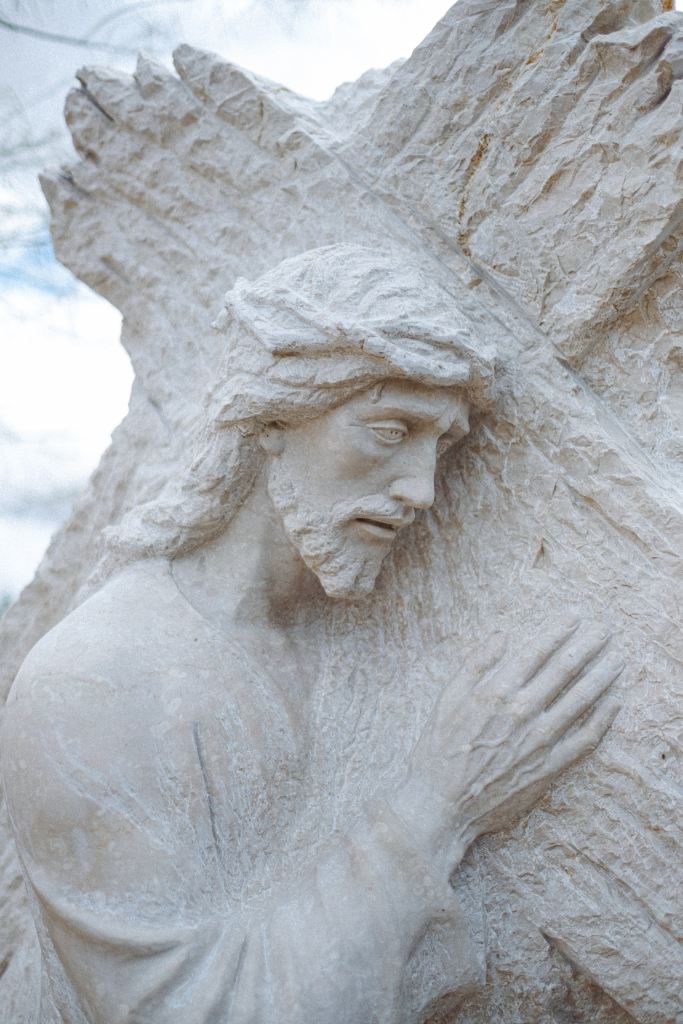
Consider whether the Father did not love the Son when He suffered, or whether His suffering was proof that He loves us? Therefore, Peter goes even farther in 1 Peter 4:13-14 – “But rejoice insofar as you share Christ’s sufferings, that you may also rejoice and be glad when his glory is revealed. If you are insulted for the name of Christ, you are blessed, because the Spirit of glory and of God rests upon you.”
Good Friday was not the end of Jesus’ story, and although the day had three hours of darkness, the Son rose again and there was light! Likewise, Psalm 88 was not the end of the Psalms; the last Psalm (150), begins like this:
“Praise the LORD!
Praise God in his sanctuary;
praise him in his mighty heavens!”
And ends like this:
“Let everything that has breath praise the LORD!
Praise the LORD!”
He is risen and you are Beloved. Amen.
[1] Not He-Man, one of the fictional Masters of the Universe.
[2] Psalm 23:4


 Driving Toward the Morning Sun